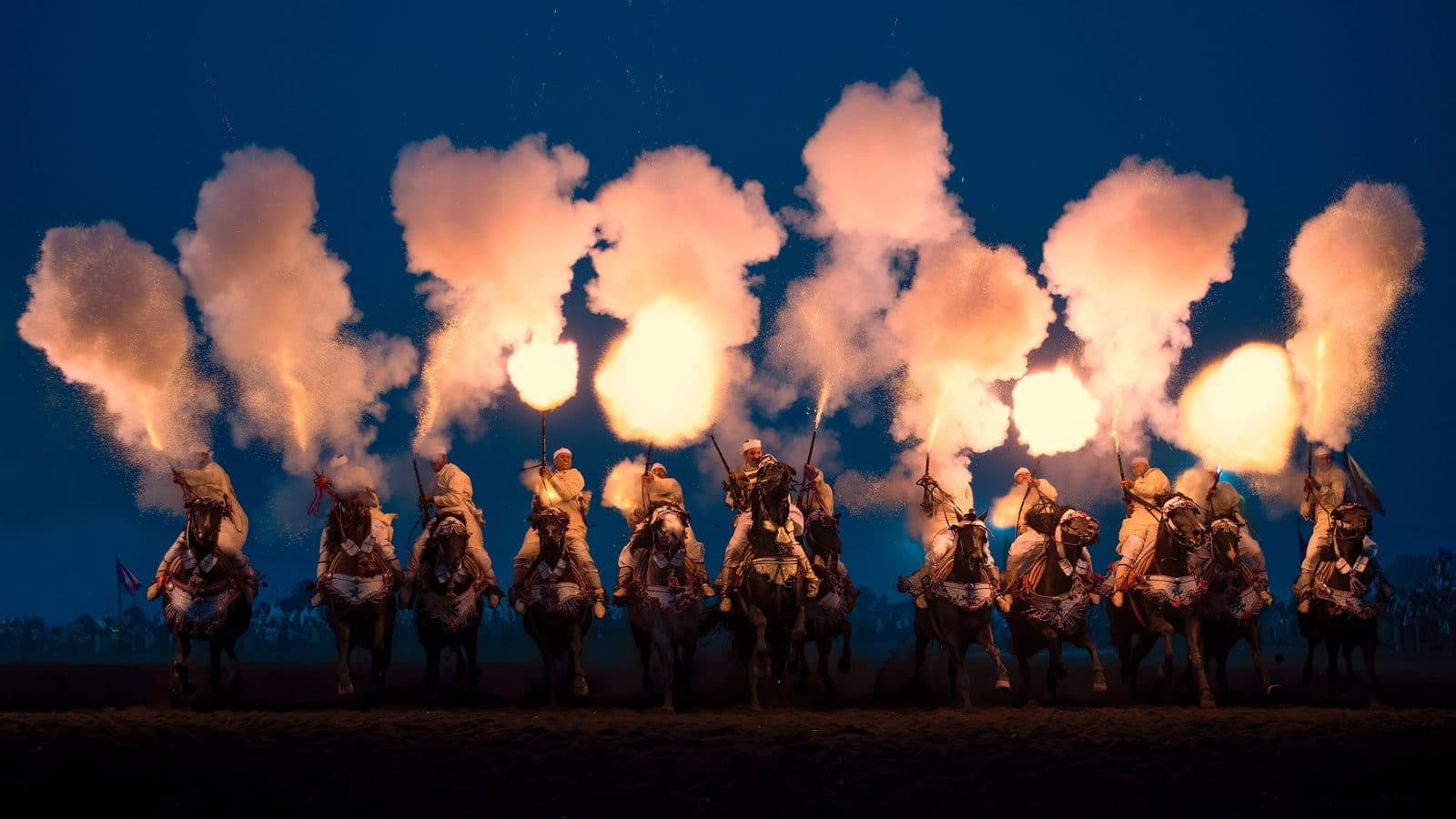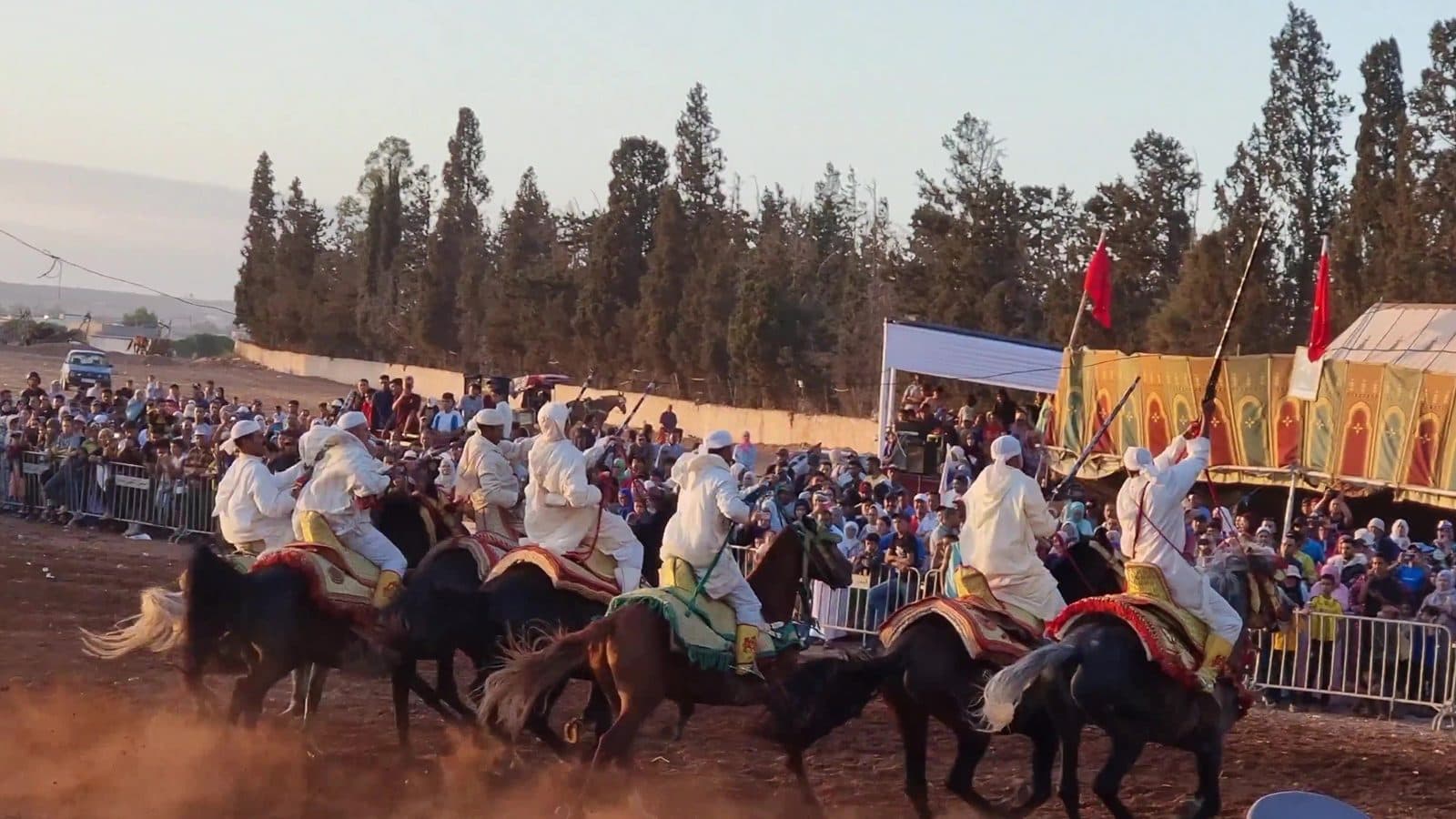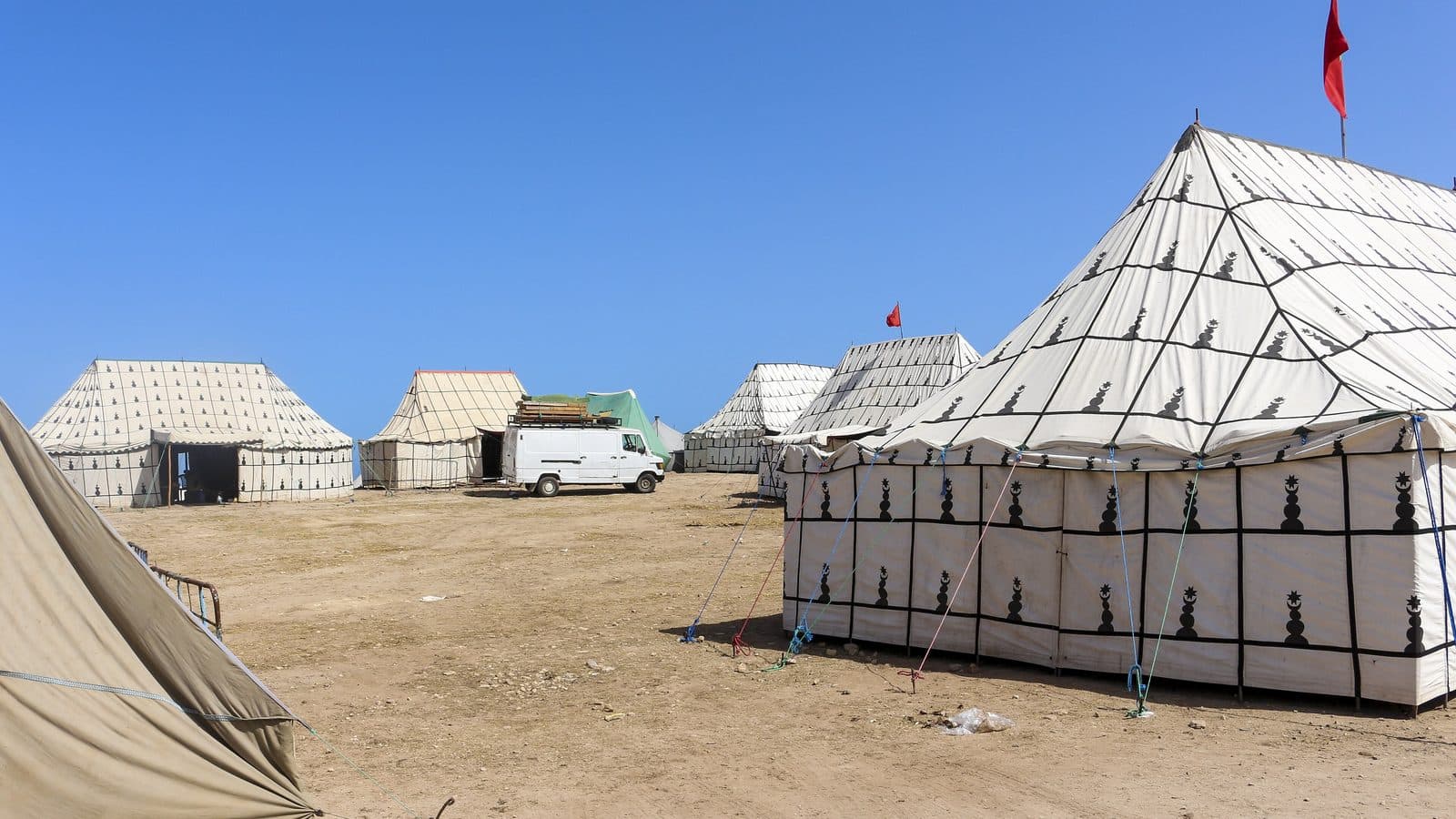
Drive through rural Morocco in summer or autumn and you may suddenly find a field covered with white tents, horses tied in the shade, music in the air and thousands of people walking towards a shrine. You have stumbled on a moussem. So what is a moussem, exactly? It is one of the oldest social institutions in the country: a yearly festival held around the tomb of a saint, which mixes devotion, trade, music and — very often — the thunder of the tbourida.
This guide explains what happens at a moussem, which ones are famous, how to behave as a visitor and how to get to one from Essaouira or Marrakech.
What is a moussem? A short definition
The word comes from the Arabic mawsim, "season". A moussem is an annual gathering around the shrine of a local saint — a wali or marabout, often the founder of a zawiya, a religious lodge. It usually lasts from a few days to a week and takes place at the same period each year, often after the harvest.
The religious visit, the ziyara, is the original reason for the gathering. But a moussem is also a market, a meeting place for families and tribes, a stage for horsemen and musicians and, for many villages, the biggest event of the year.
What happens at a moussem
- The visit to the shrine. Pilgrims pray, bring offerings, light candles and ask for the saint's baraka, the blessing. Readings of the Quran and religious chants mark the opening and closing days.
- The fair. Rows of stalls sell clothes, spices, sweets, toys, household goods and livestock. Tea tents and grills feed the crowds day and night.
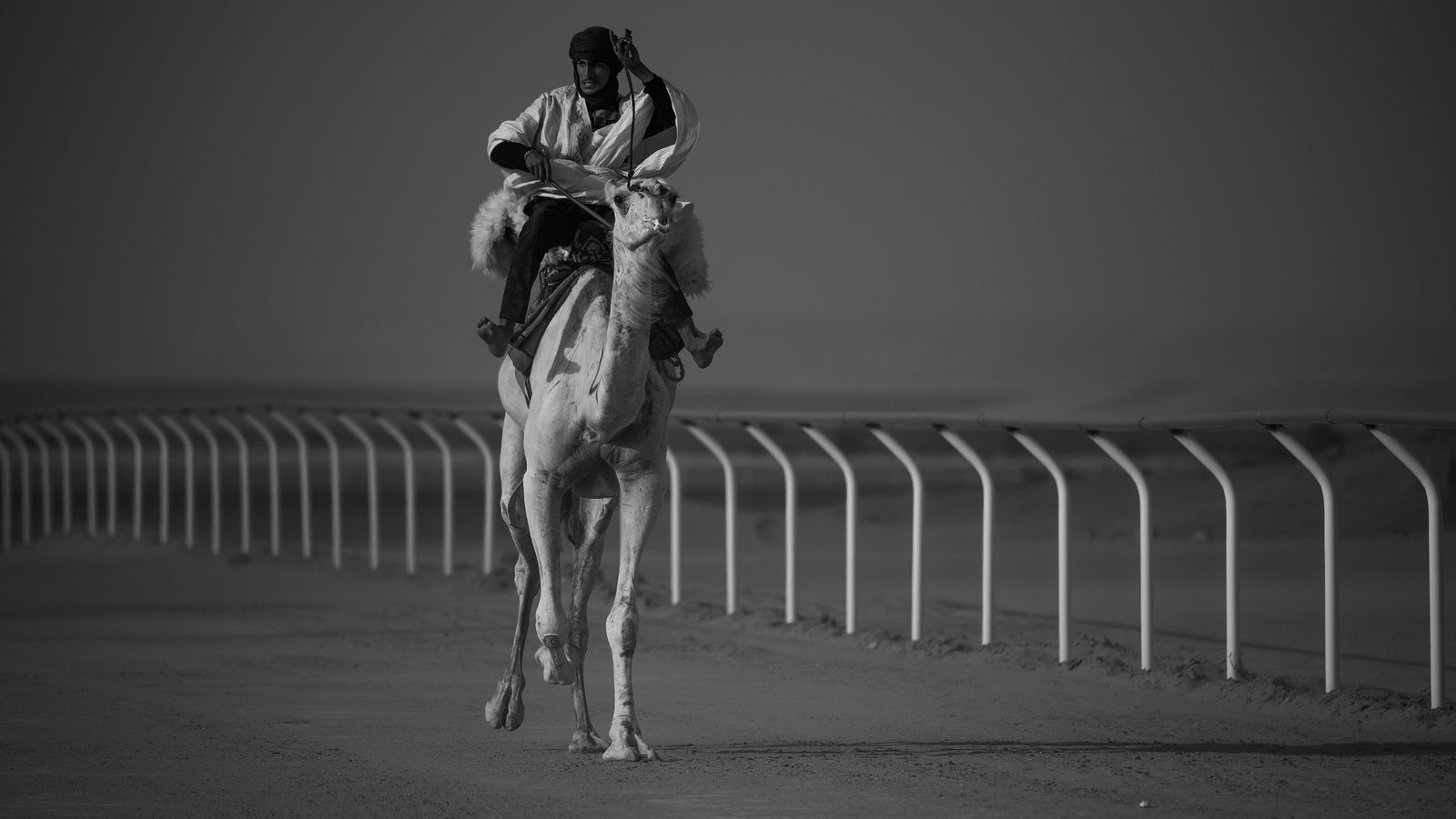
- The tbourida. On a long earth track, troupes of riders gallop in a line and fire their muskets together. It is the highlight for many visitors — our complete guide to the Moroccan fantasia explains it.
- Music and folk troupes. In the evening, local groups play and sing; in some regions you will hear Gnawa, Aissawa or Hamadcha brotherhoods.
- The tent city. At the biggest moussems, families camp for the whole week. At Moulay Abdellah Amghar in 2026, organisers expected some 35,000 tents.
Famous moussems in Morocco
| Moussem | Where | When |
|---|---|---|
| Moulay Abdellah Amghar | Near El Jadida | August (7–14 Aug in 2026) |
| Tan-Tan | Tan-Tan, Saharan south | 30 Oct – 3 Nov 2026; on UNESCO's list since 2008 |
| Sidi El Mokhtar | Chichaoua province | Usually August; 22–25 Oct in 2026 |
| Imilchil "engagement" moussem | High Atlas | Usually September |
| The Regraga pilgrimage | Around Essaouira | About 40 days from the spring equinox |
Hundreds of smaller moussems take place in villages all over the country. Our moussem calendar for 2026–2027 lists the dates as they are announced.
A moussem day, hour by hour
The best way to understand what is a moussem is to spend a whole day at one. Mornings are calm: families visit the shrine, pilgrims pray and the fair slowly opens. Around midday the heat sends everyone to the shade of the tea tents, where whole families share a tagine. From mid-afternoon the crowd moves towards the riding ground, the first troupes warm up their horses and the tbourida begins, passage after passage, until the light fades. After dark the fair lights up, children ride the merry-go-rounds and the musicians take over until late at night. If you can only come for a few hours, choose the second half of the afternoon.
Etiquette for visitors
Visitors are welcome at the fair and the tbourida, and you will often be invited for tea. A few simple rules make the day easier for everyone:
- Shrines are places of prayer. Entry to the mausoleum itself is often reserved for Muslims; admire it from outside unless you are clearly invited in.
- Dress modestly: shoulders and knees covered, for men and women.
- Ask before photographing people, especially women, children and pilgrims at prayer. Riders are usually happy to pose — see our tips on how to photograph a fantasia.
- No alcohol. A moussem is a religious festival.
- Keep an eye on your belongings in the crowd, as at any big fair.
- Accept the tea. Hospitality is part of the moussem spirit; a few words of Arabic or Tamazight go a long way.
When are moussems held?
Most moussems take place between late spring and autumn, with a peak in August, when the harvest is in and families are on holiday. Some follow the lunar calendar and move each year; others follow the solar, agricultural calendar. Dates are often confirmed only a few weeks ahead, and occasionally postponed — as Sidi El Mokhtar was in 2026.
How to visit a moussem from Essaouira or Marrakech
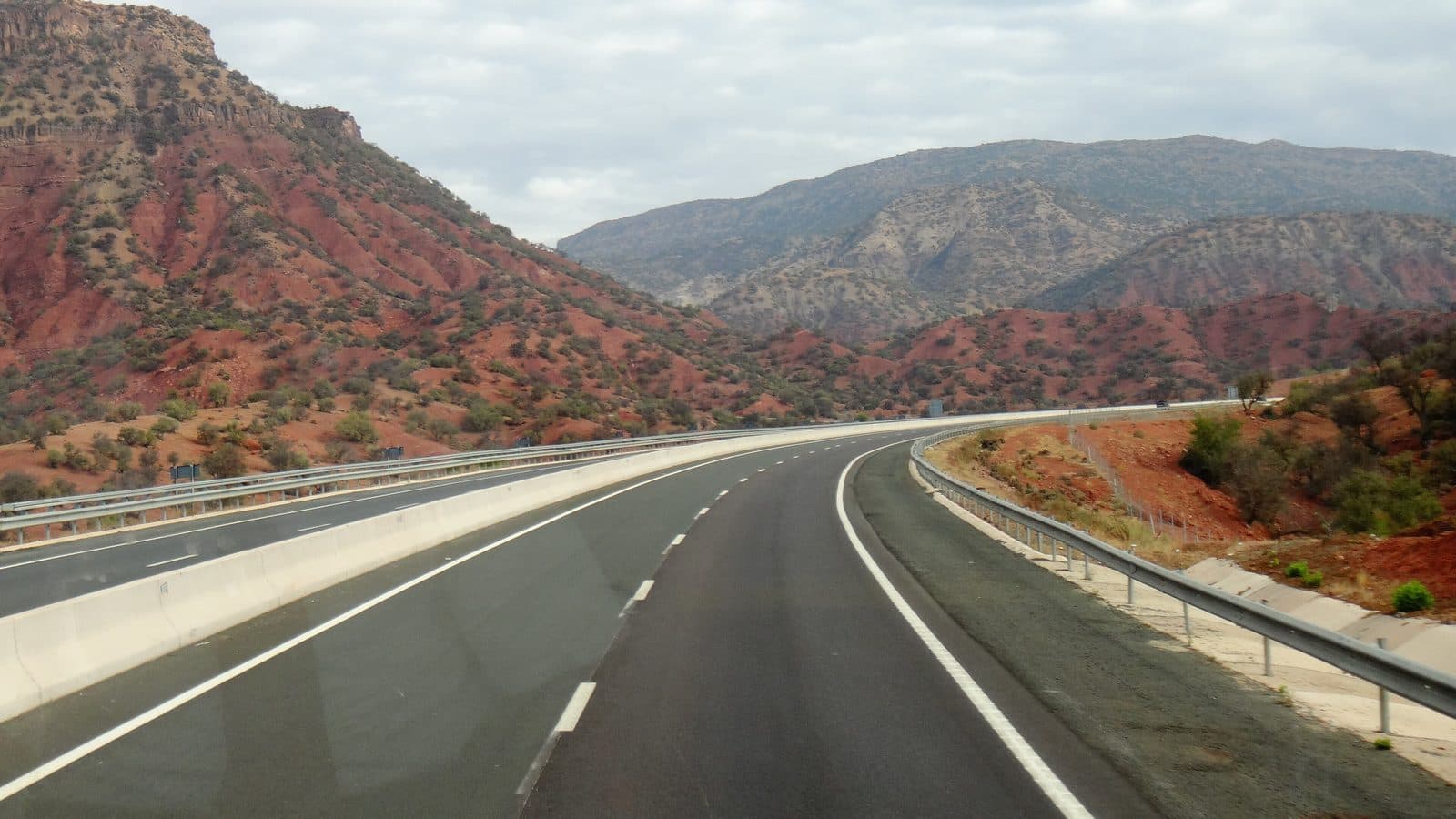
Moussems happen in the countryside, often far from bus routes, and the best part — the late-afternoon tbourida — ends after dark. A private driver who waits for you solves both problems.
- From Essaouira, the closest big moussem in 2026 is Sidi El Mokhtar, about an hour inland. Ask us for a custom afternoon, in the style of our full-day private excursion.
- Between Marrakech and Essaouira, add the moussem as a stop on our Marrakech to Essaouira transfer or the Essaouira to Marrakech transfer — from €90 per vehicle at the time of writing.
Now that you know what a moussem is, all you need is the date and a driver: contact us and we will organise the day.