Long before the music festivals, Essaouira's countryside had its own great annual event — and it still does. Every spring, the members of the Regraga brotherhood set out on the daour, a circular walk of about forty days from shrine to shrine across the Chiadma, the rolling land of argan trees and wheat fields north and east of Essaouira. The Regraga pilgrimage is one of the oldest living religious traditions in Morocco, and one of the least known to visitors.
This guide explains the legend, the route and the rituals, and how to witness the daour with respect if your trip coincides with it.
Who are the Regraga?
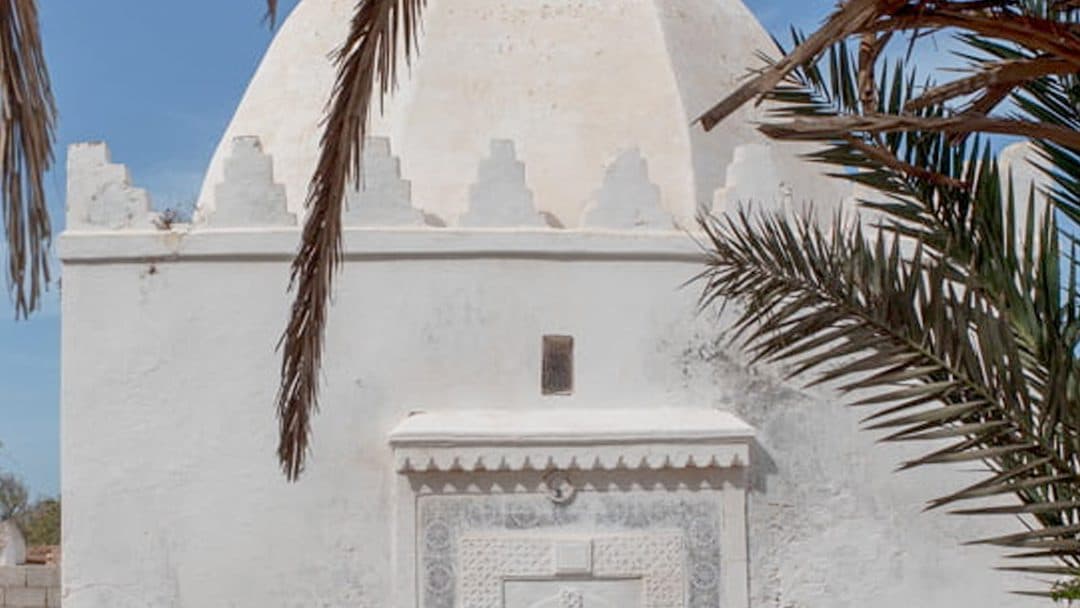
The Regraga are a Sufi brotherhood rooted in the Chiadma, the territory between Safi and Essaouira. They are organised in thirteen zawiyas, religious lodges whose families descend from — or are affiliated with — seven founding saints, whose tombs stand in the region.
Their legend is a beautiful one. According to local tradition, seven Berber holy men travelled to Mecca to meet the Prophet, embraced Islam and were sent back to spread it in the far Maghreb. Their name is said to come from the Arabic rajraja, "to stammer", because their language sounded strange to the people of Arabia. Back home, they toured the tribes every year to teach and bless them — and that annual tour is the origin of the daour.
The daour: how the Regraga pilgrimage works
- The start. The pilgrimage traditionally begins on the Thursday closest to the spring equinox, following the solar, agricultural calendar rather than the lunar one — so, roughly, mid- to late March.
- The length. Sources give between 38 and 44 days; the walk covers forty-four stages and some 450 to 500 km, mostly on foot and with mules or donkeys carrying the baggage.
- The route. It links the shrines of the saints and their descendants across the Chiadma, including the slopes of Jbel Lahdid, the "iron mountain" north of Essaouira, from which the Regraga once fought the Portuguese in the sixteenth century.
- The stations. At each stage, villagers welcome the pilgrims with food, lodging and offerings. A small market and festivities often spring up around them, as at any moussem.
- The entry into Essaouira. A highlight of the daour, when the townspeople greet the pilgrims with chants and shared couscous.
Blessing the land: the meaning of the daour
The Regraga are believed to carry the baraka, the blessing, of their saintly ancestors. As they pass, they bless people, fields and herds — for health, fertility, protection and good harvests. The anthropologist Abdelkader Mana, who has written at length about the Chiadma, describes the daour as a way of "fertilising" the land with baraka for the year ahead, at the very moment winter turns into spring.
Unlike some other brotherhoods, the Regraga do not practise trance, ecstatic dance or music during the daour. It is a sober, walking pilgrimage. Offerings received along the way are shared every day between the zawiyas and the pilgrims.
Witnessing the Regraga pilgrimage respectfully
The daour is not a show organised for visitors, and that is precisely what makes it moving. If your stay in Essaouira falls in late March or April:
- Ask locally where the pilgrims are: your riad, your driver or shopkeepers in the medina will know which village is hosting the next stage.
- Keep a respectful distance from prayers and ceremonies, and do not enter shrines unless you are clearly invited.
- Dress modestly and avoid loud behaviour.
- Ask before taking photographs, and accept a refusal.
- Accept hospitality if it is offered — a glass of tea, a piece of bread — and say thank you, shukran.
Our guides to what a moussem is and Berber culture in Morocco give more background on the customs.
Exploring the Chiadma by road
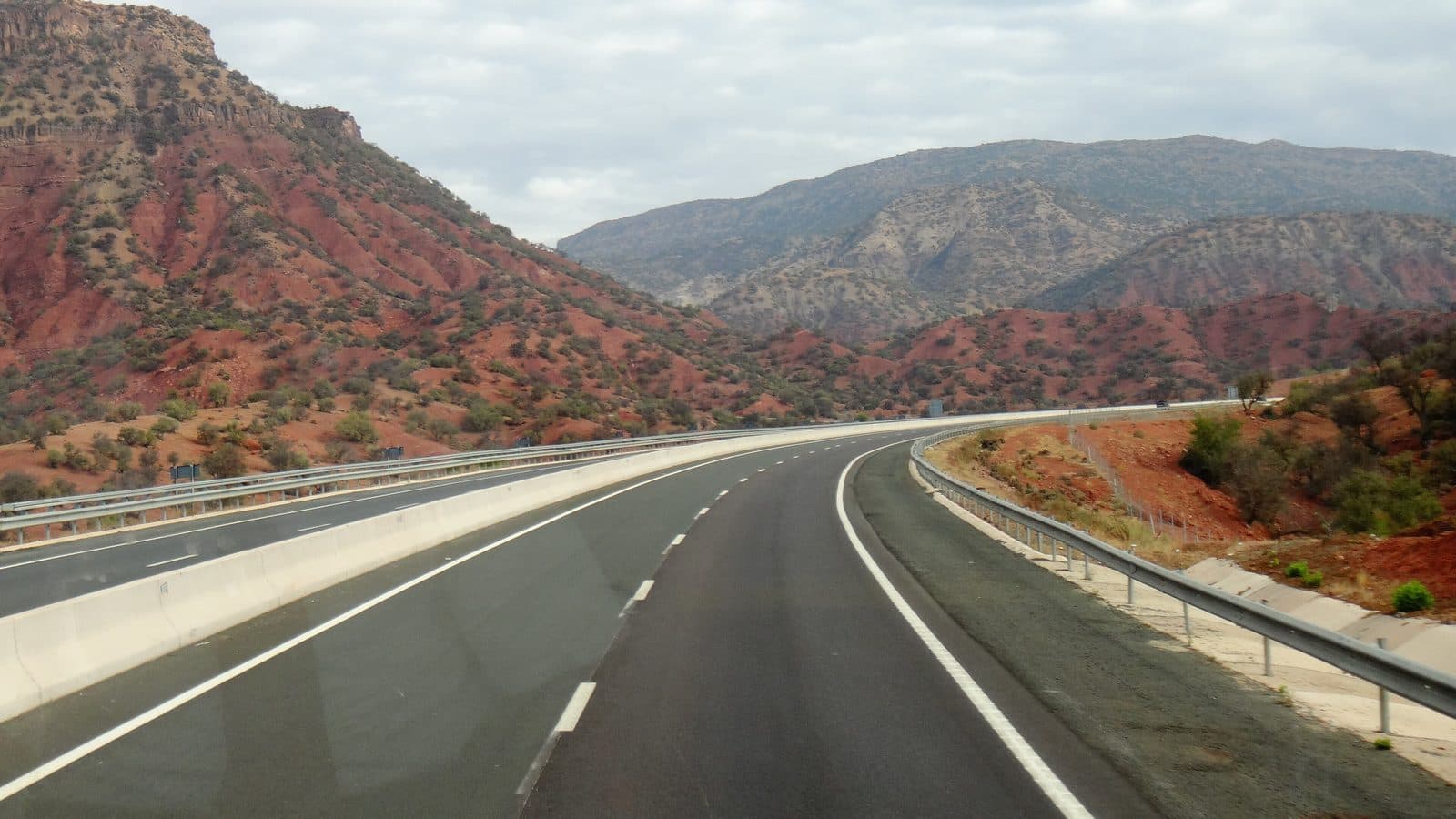
The Chiadma is beautiful at any time of year: argan groves, small whitewashed shrines, Atlantic villages and weekly markets. With a private driver you can reach the villages hosting the daour, or simply explore the region:
- North along the coast, towards Moulay Bouzerktoun, the windsurf village — our Essaouira airport to Moulay Bouzerktoun transfer shows the distance — and on to Safi and Oualidia with the Essaouira to Oualidia transfer.
- Inland, through the argan country and its cooperatives: our half-day excursion along the argan route and our full-day private excursion can be adapted to follow a stage of the pilgrimage, if its location is known that day.
- Weekly souks in the Chiadma are another window into rural life — see our guide to Berber weekly markets.
Other traditions to discover around Essaouira
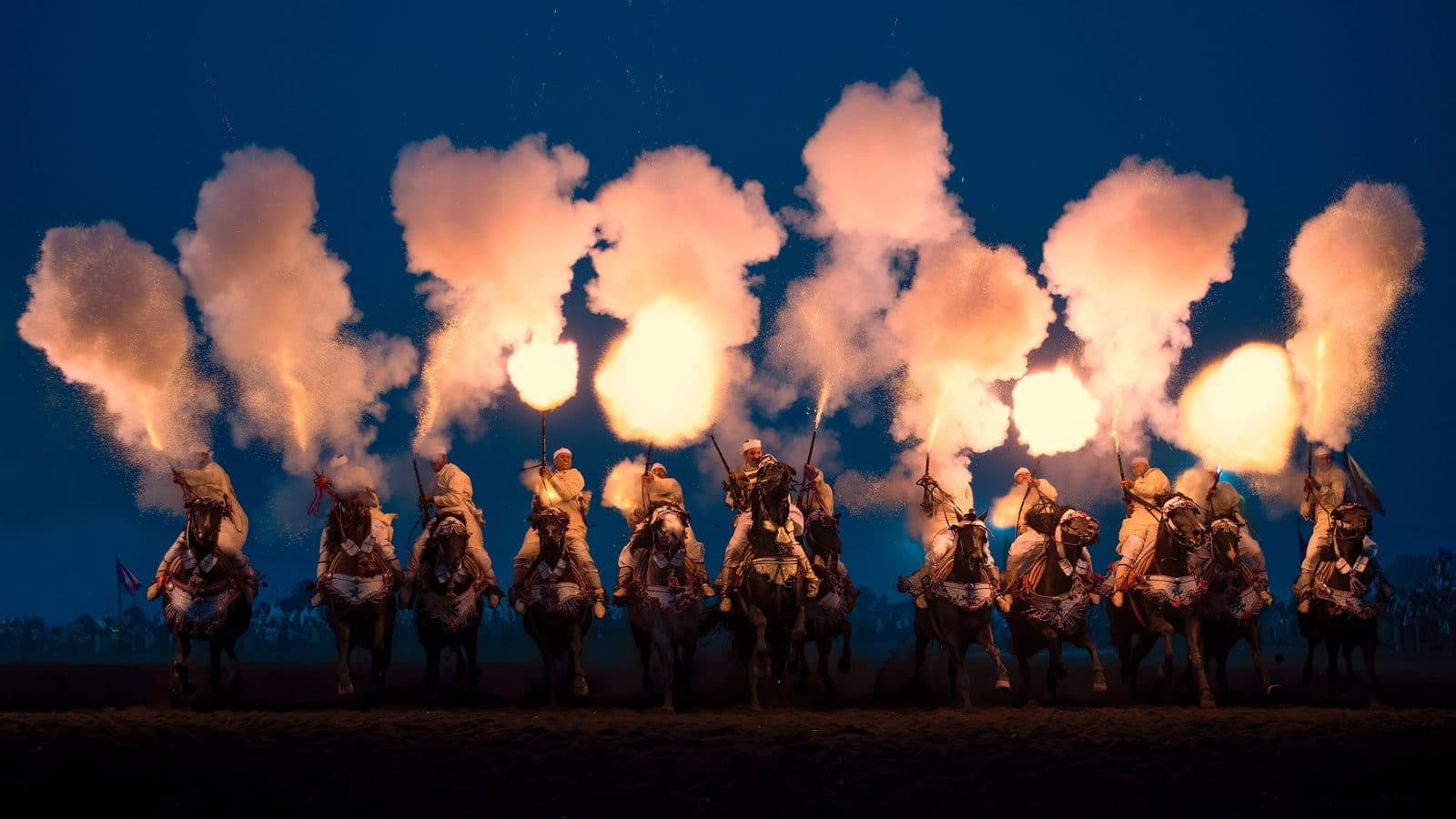
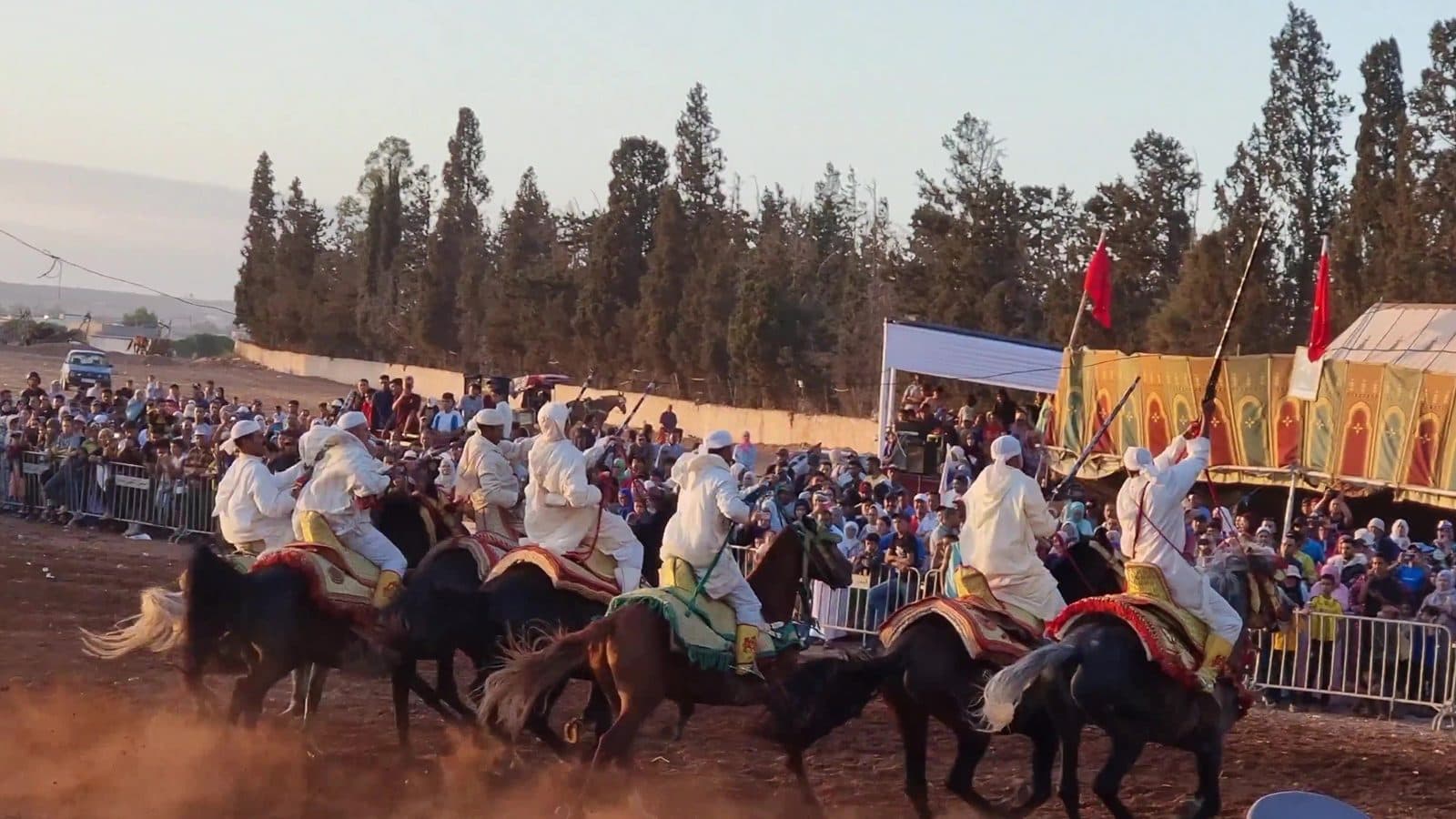
In autumn, the tbourida takes over: the Moussem of Sidi El Mokhtar fills its riding ground from 22 to 25 October 2026, and our moussem calendar lists what comes next. For the Regraga pilgrimage itself, the next daour is expected to begin around the spring equinox of 2027 — contact us as the date approaches and we will tell you what we hear locally.