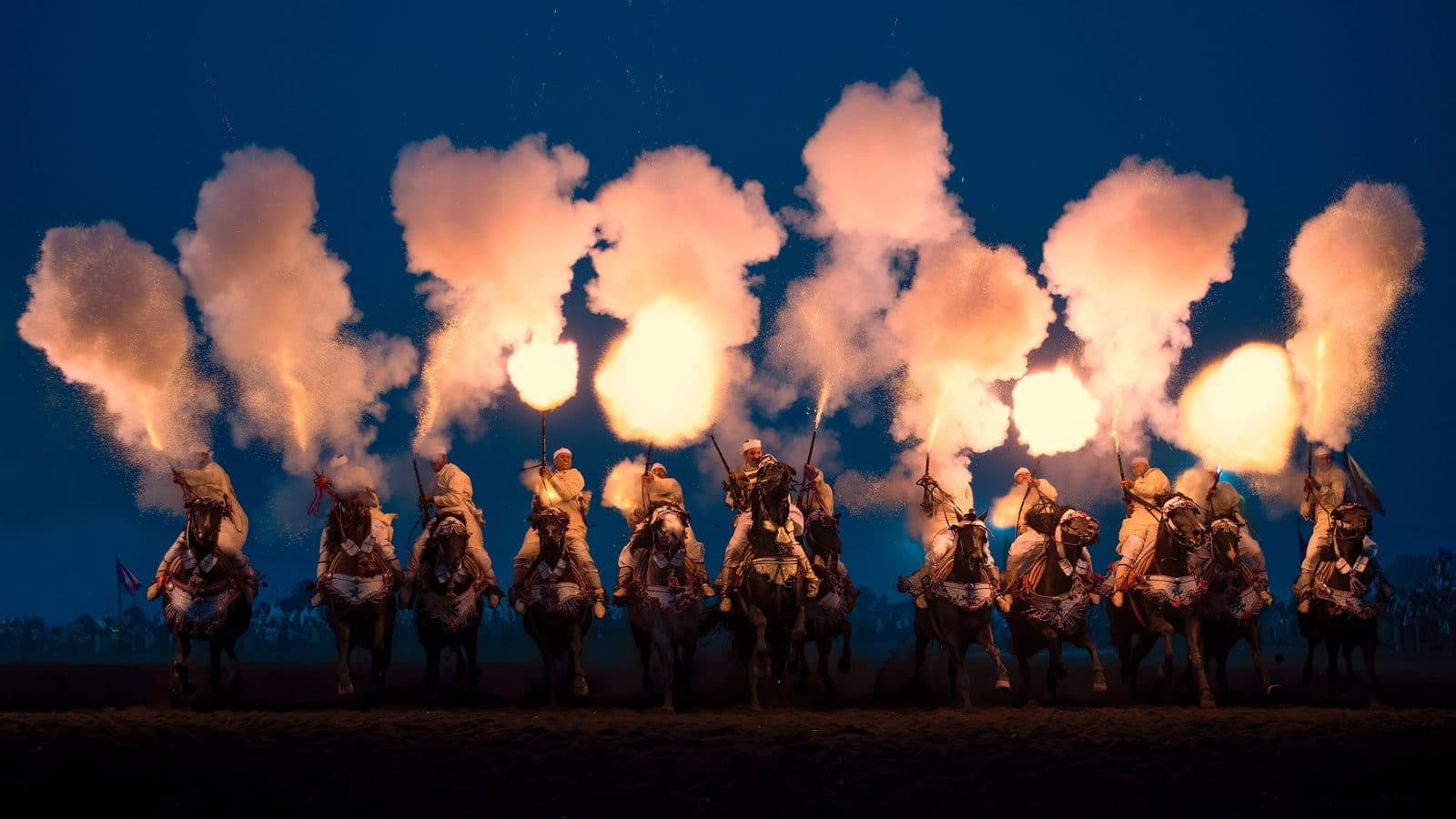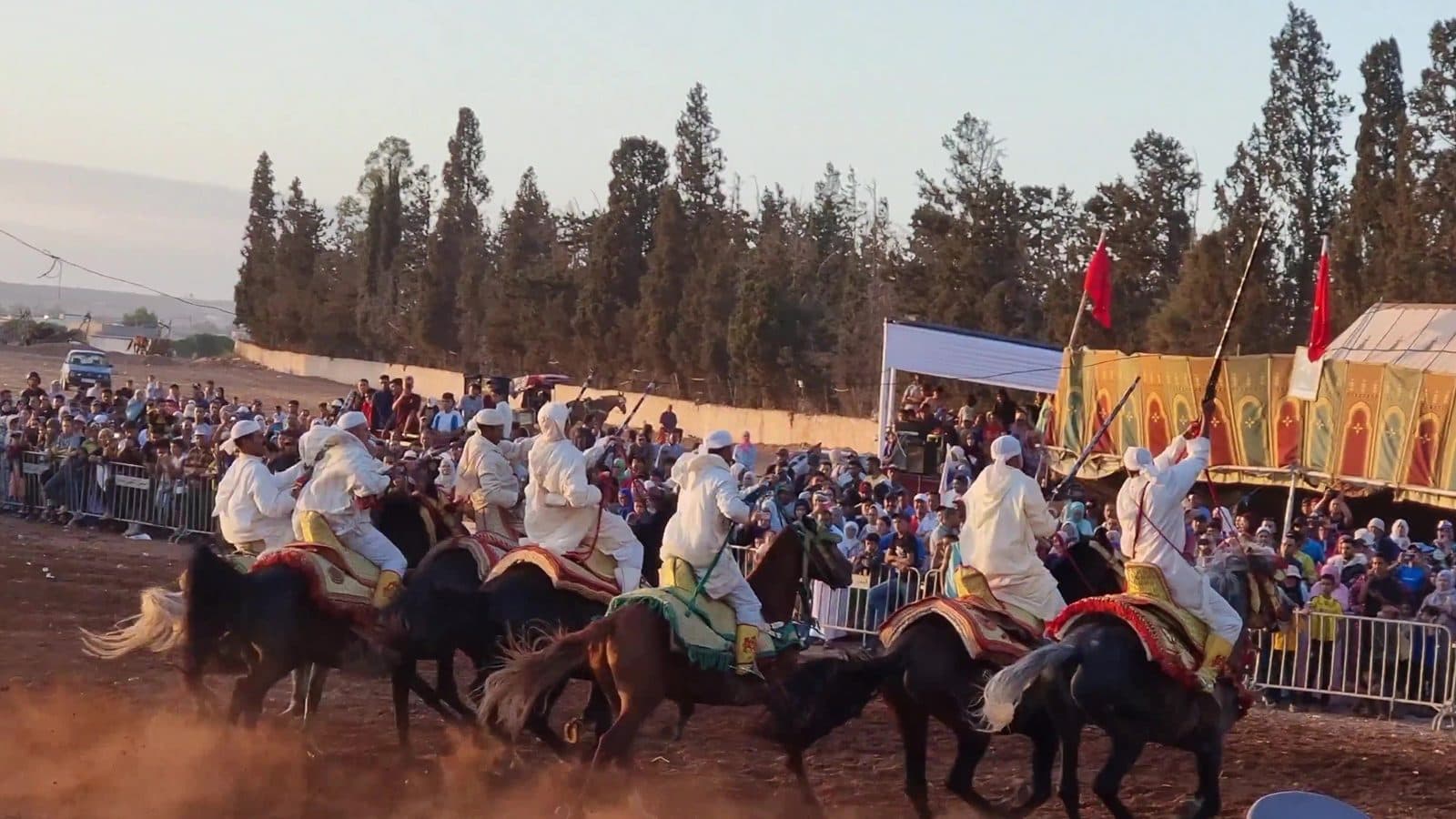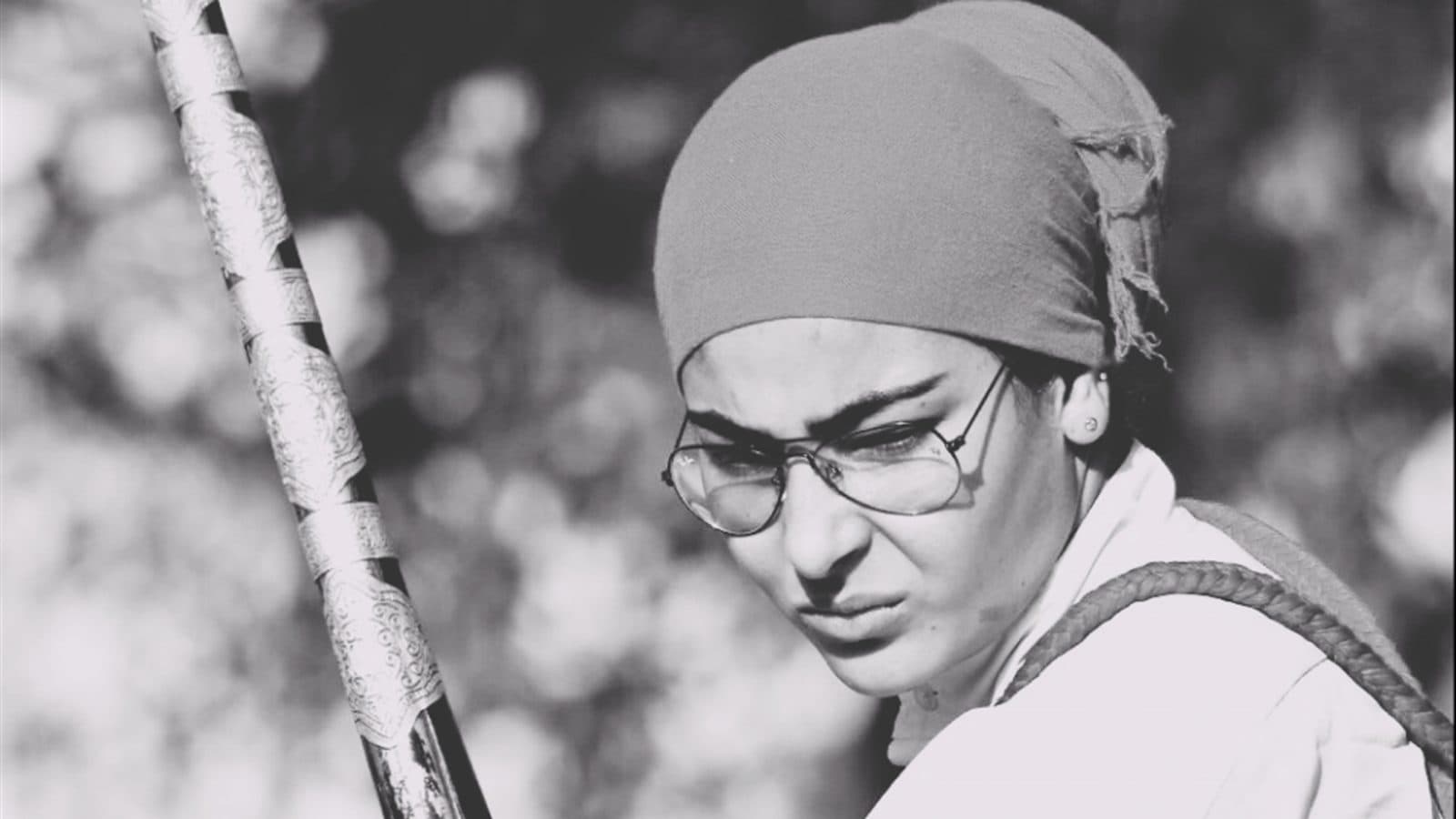
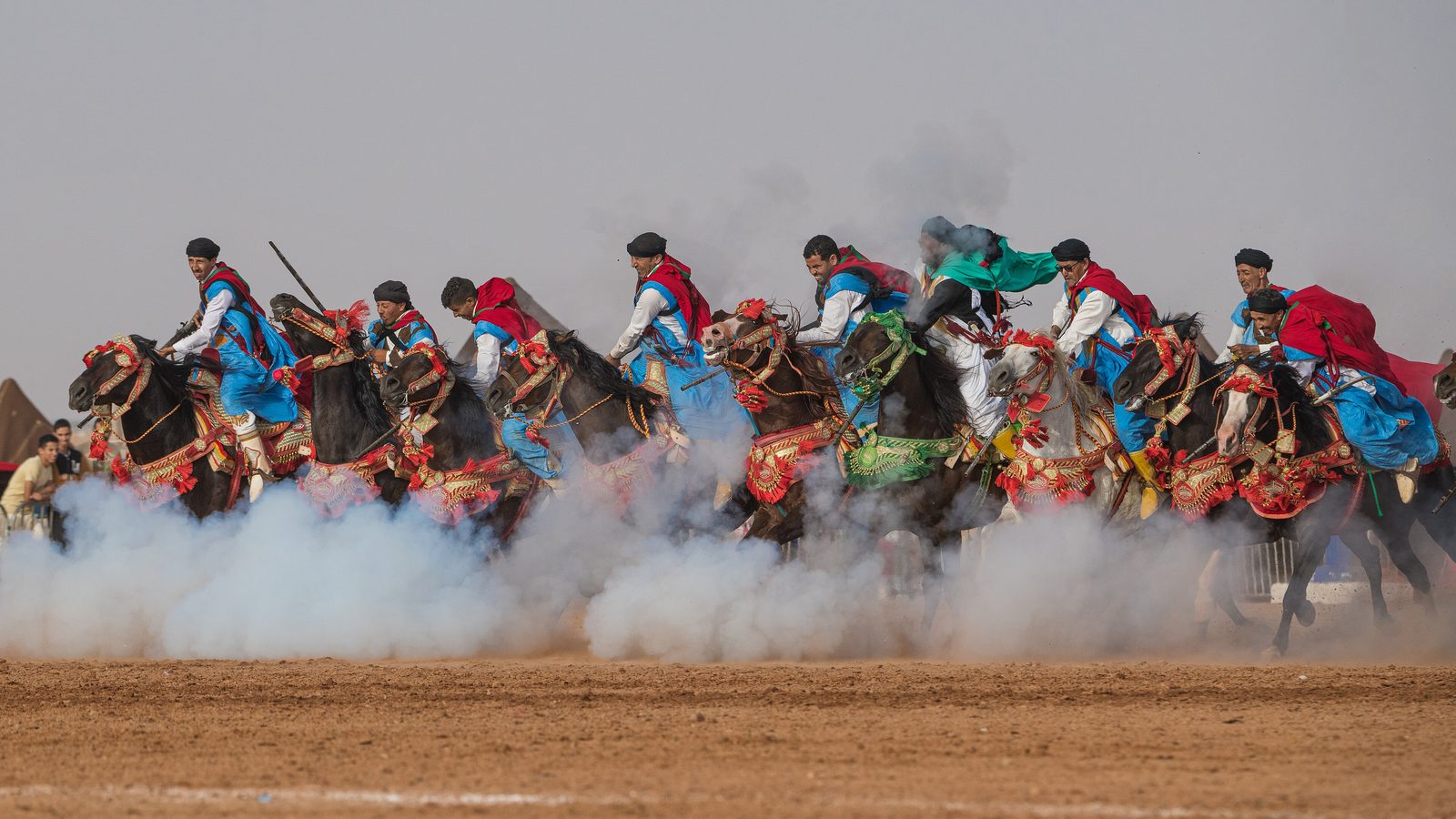
Watch a tbourida today and you may see something that would have been rare a generation ago: a line of women in white, their horses dressed in embroidered saddles, galloping down the track and firing their muskets in one perfect volley. Female tbourida is still a minority within Morocco's equestrian tradition, but it has grown from a handful of pioneers into teams that compete, win medals and draw some of the loudest cheers of any moussem.
Here is the story, how women's troupes work and where you can see them.
A tradition long reserved for men
Tbourida recreates the cavalry charges of the past, and for centuries the riders were men: fathers trained sons, horses and muskets passed from one generation of men to the next. Women were present — preparing the costumes, cheering from the stands, sometimes owning horses — but rarely in the saddle on the track.
That began to change in the early 2000s, when a few determined horsewomen asked to ride in their own troupes, under the same rules as men.
The pioneers of female tbourida
- In the Doukkala region around El Jadida, Zahia Abou Layth is remembered as the first allama — the female form of allam, the troupe leader — and is credited with founding a women's sorba in 2003.
- Around 2005, competitions opened a category reserved for women's teams. One of the first teams to compete and win medals in the following years was led by Amal Ahamri, from the Kenitra area, whose story has been told in documentaries and in the international press.
- Since then, women's sorbas have formed in several regions, and today the biggest gatherings, such as the Moussem of Moulay Abdellah Amghar, include female riders among their thousands of participants.
The movement remains small compared with the hundreds of men's troupes, and many female riders speak of the challenges: the cost of horses and equipment, the time needed for training and, sometimes, the scepticism of their community. That is exactly why their passages are so warmly applauded.
How a women's sorba works
A women's troupe follows the same rules as any other — see tbourida explained:
- The salute, a slow and elegant approach to the start of the track, rifles presented.
- The launch, a gallop in a straight line over a couple of hundred metres.
- The volley, fired at the leader's cry, ideally as a single detonation.
The horses are the same Barb and Arab-Barb horses used by men's troupes — our guide to the Barb horse explains why they are so suited to the task. The riders wear the traditional white robes and turbans or headscarves, with the long mkahla musket, and they are judged on exactly the same criteria: alignment, synchronisation and presentation.
Where to see female tbourida
- The Moussem of Moulay Abdellah Amghar, near El Jadida, every August — in 2026, 134 troupes and 2,140 male and female riders took part. The press has praised the women's passages as one of the highlights.
- The Salon du Cheval in El Jadida, every October, and national competitions.
- Regional moussems, where a local women's troupe may be invited. Ask around: news travels fast among horse people.
Women's troupes do not appear at every moussem, so if seeing one is a priority, plan around the big Doukkala events and check our moussem calendar. Closer to Essaouira, the Moussem of Sidi El Mokhtar, from 22 to 25 October 2026, is the easiest fantasia to reach from the coast.
A new generation in the saddle
Today, many young women discover tbourida through riding clubs and family troupes, and some begin training as teenagers alongside their brothers. Social media has also helped: videos of women's passages circulate widely after each big moussem and inspire new riders across the country. For travellers, it means that female tbourida is no longer a curiosity but a living part of the art — and one of the most moving things you can see at a moussem.
Tips for spectators and photographers
- Ask before taking portraits. Many female riders are proud to be photographed with their horses, but always ask, and respect a refusal — see our tips on how to photograph a fantasia.
- Cheer! The crowd's support matters to the riders, and the atmosphere at a women's passage is often electric.
- Talk to the families. Behind each rider there is often a father, brother or husband who trains the horses; they are usually happy to explain.
Getting there
Moussems take place in the countryside, and the best passages end at sunset. A private driver who waits is the easiest solution:
- To Sidi El Mokhtar: a stop on our Marrakech to Essaouira transfer (from €90 per vehicle at the time of writing), or a custom afternoon from Essaouira in the style of our full-day private excursion.
- To El Jadida and Moulay Abdellah: along the coast road, starting with our Essaouira to Oualidia transfer.
For the history and the basics of the art, start with our complete guide to the Moroccan fantasia. And if female tbourida is on your wish list, contact us with your dates — we will tell you where the women's troupes are expected.