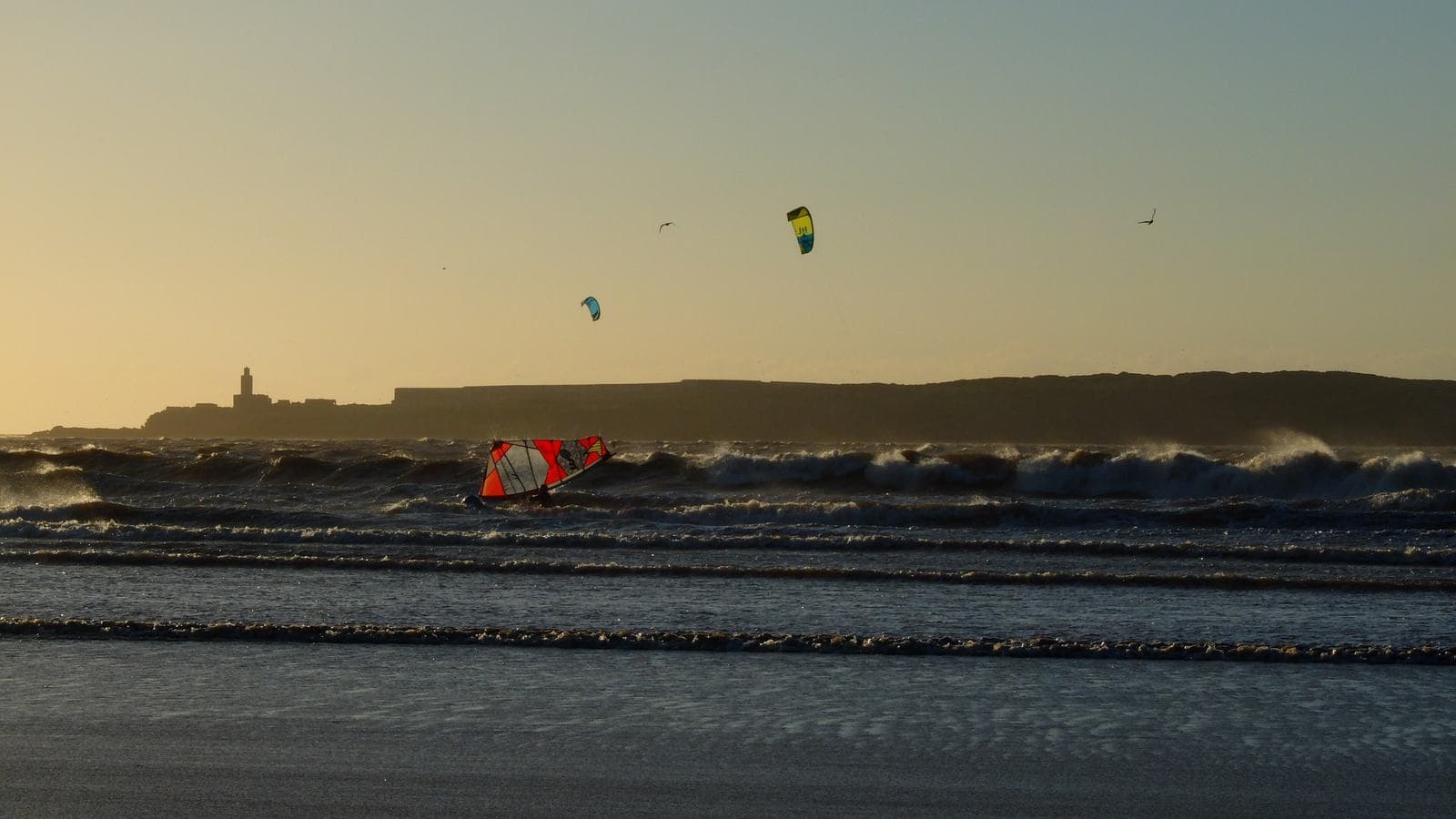
Some towns are known for their monuments. Essaouira is known for its wind. The trade winds that blow along this stretch of the Atlantic — strong, steady and reliable for much of the year — have turned the "Wind City of Africa" into one of the best places in the region to learn and practise kitesurfing. Kitesurfing in Essaouira means a wide sandy bay, consistent afternoons of wind, schools for every level and a medina to explore when your arms need a rest.
Here is what to know before you pack your kite.
When is the wind season?
The trade winds blow most strongly from roughly April to September, with the most consistent conditions in summer. The wind usually builds during the late morning and peaks in the afternoon, which suits a day of breakfast, medina and kiting perfectly. Autumn and winter still bring good sessions, but with fewer windy days and more swell — better news for surfers. Our guide to the best time to visit Essaouira explains the seasons in detail.
The spots
Essaouira bay
The long sandy beach south of the medina is where most schools operate. The bay is wide, the bottom is sand and the wind usually blows side-shore, which makes it a good place to learn. Keep well away from the rocks and the port near the medina, and head further along the beach for more space.
Moulay Bouzerktoun
About 25 km north of town, this small village is a wave-riding spot for experienced kiters and windsurfers, with strong wind and powerful waves. It is not a place for beginners, but it is spectacular to watch.
Sidi Kaouki
Half an hour south, the long wild beach of Sidi Kaouki offers wind, waves and space, with far fewer people than the town beach. Our Sidi Kaouki day trip guide shows what the village is like.
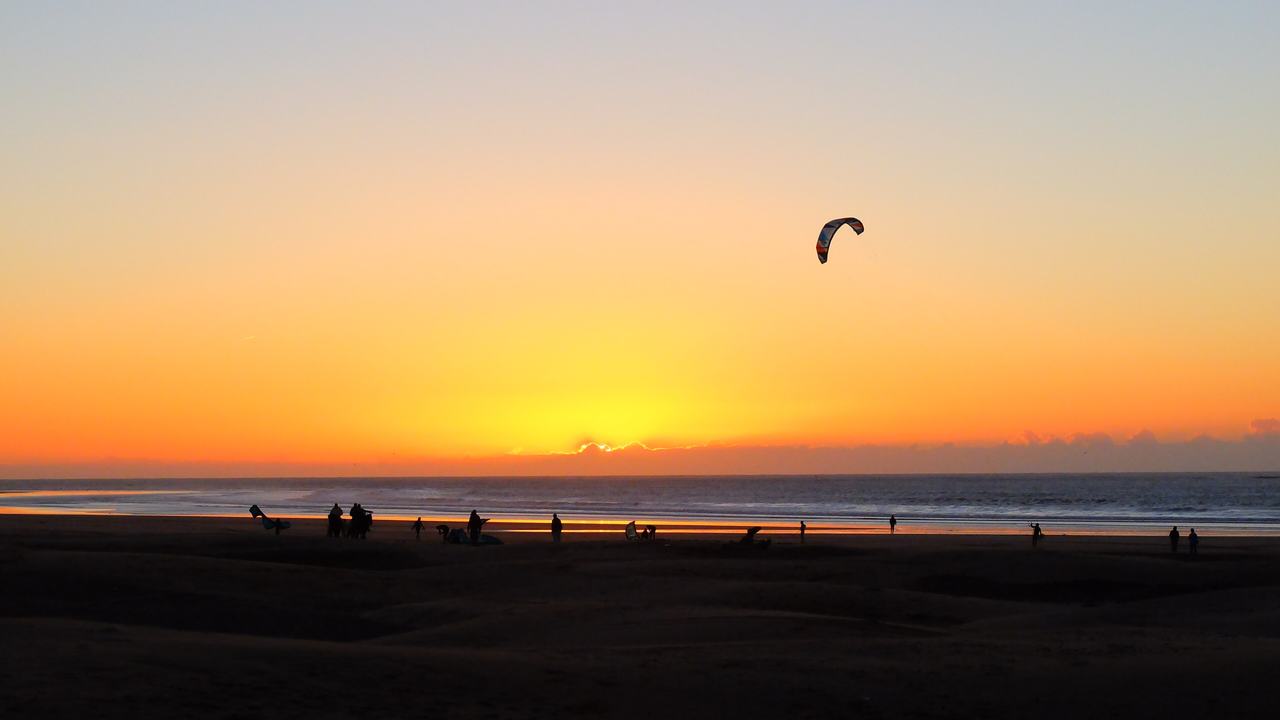
Kitesurfing in Essaouira for beginners
Essaouira is an excellent place for a first course:
- Choose a certified school. Look for instructors with an international certification, radio helmets and a clear safety briefing.
- Plan several sessions. Most beginners need around 8 to 12 hours of lessons before riding independently, spread over several days.
- Start in the morning or late afternoon if the wind is very strong at midday; good schools adapt the lesson to the conditions.
- Consider wing foiling or windsurfing too — both are popular here, and many schools teach them.
A typical kite day in Essaouira
Most kiters settle into an easy rhythm. The morning is calm: breakfast on a riad terrace, a walk through the medina or a surf session while the sea is glassy. Around midday, the flags on the beach start to flutter and the schools set up their kites. The best wind usually arrives in the afternoon, when the bay fills with colourful wings. After a long session, it is time for a hot shower, grilled fish at the port and a sunset drink on a rooftop — and the forecast check for tomorrow.
Wetsuits and water temperature
The Atlantic here is cool: roughly 17–18°C in winter and around 20–21°C at the end of summer. A 4/3 wetsuit is comfortable for most of the year, and a 3/2 is enough in late summer. Wind chill is real, so a windproof jacket for the beach is a good idea too. Schools rent wetsuits and full kit if you travel light.
Safety tips
- Check the forecast and ask the local schools about the day's conditions.
- Never kite alone in an unfamiliar spot, and tell someone where you are going.
- Respect the swimming zones and give plenty of space to other beach users.
- Stay away from the rocks, the port and the harbour entrance.
For friends who do not kite
While you ride, your travel companions have plenty to do: the medina and the Skala ramparts, the port, camel rides on the beach, or a half day on the argan route. See our Essaouira travel guide and our 2-day Essaouira itinerary.
Where to stay
The beachfront hotels and apartments are closest to the schools; the medina is a pleasant walk away for dinner. Serious riders sometimes stay in Sidi Kaouki or Moulay Bouzerktoun. Our guide to where to stay in Essaouira compares the areas.
Getting to Essaouira with your gear
Kite bags and boards travel easily in a van. Our Marrakech to Essaouira transfer takes about two and a half hours; at the time of writing it costs €100 per vehicle for up to four people, or €120 for a van for up to seven — tell us how many bags you have and we will choose the right vehicle. Landing at Essaouira-Mogador airport? The Essaouira airport transfer takes around twenty minutes.
For surfing on the same coast, read our guide to surfing in Morocco. And when the wind drops, remember that kitesurfing in Essaouira always comes with a sunset on the ramparts.