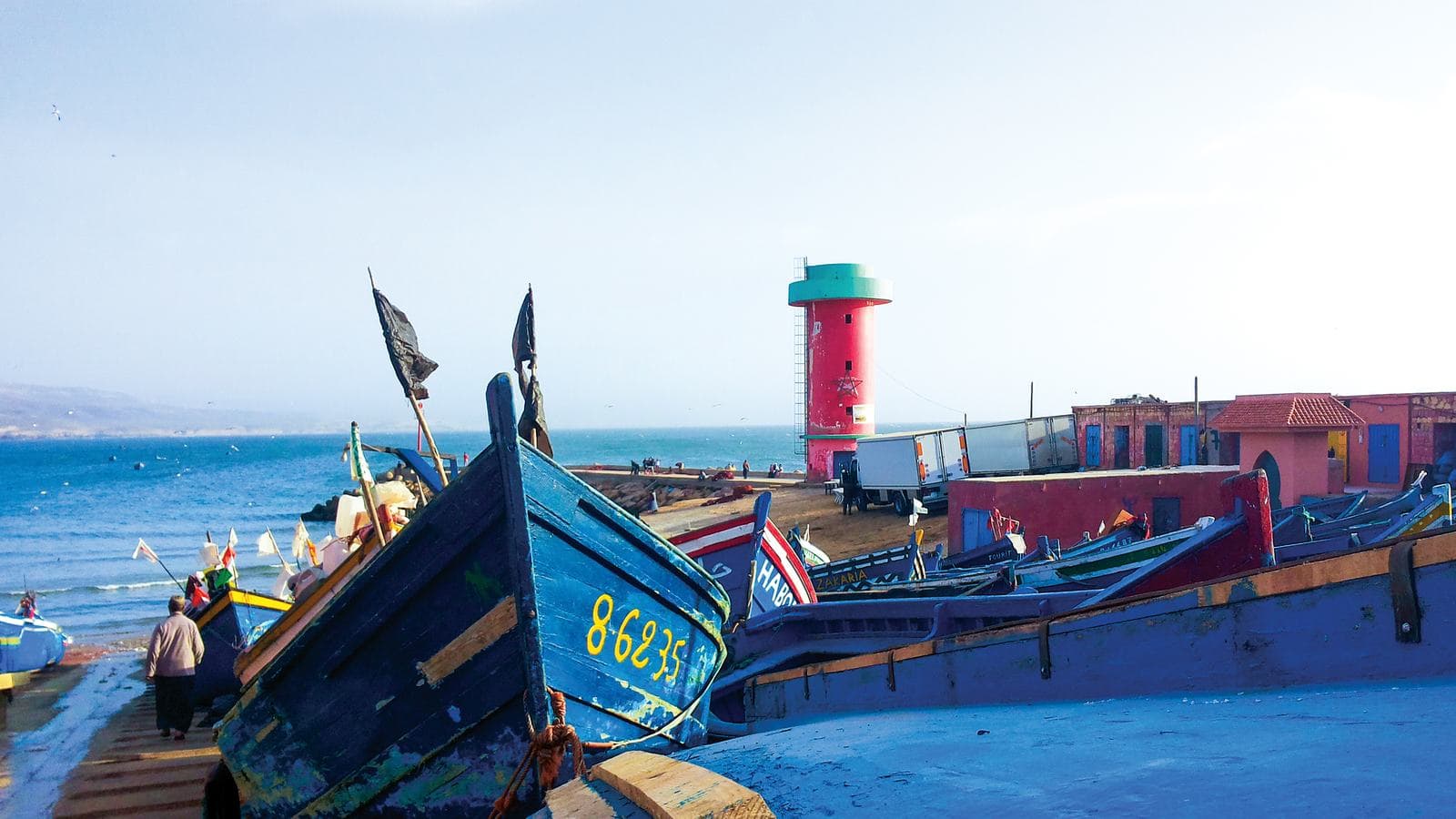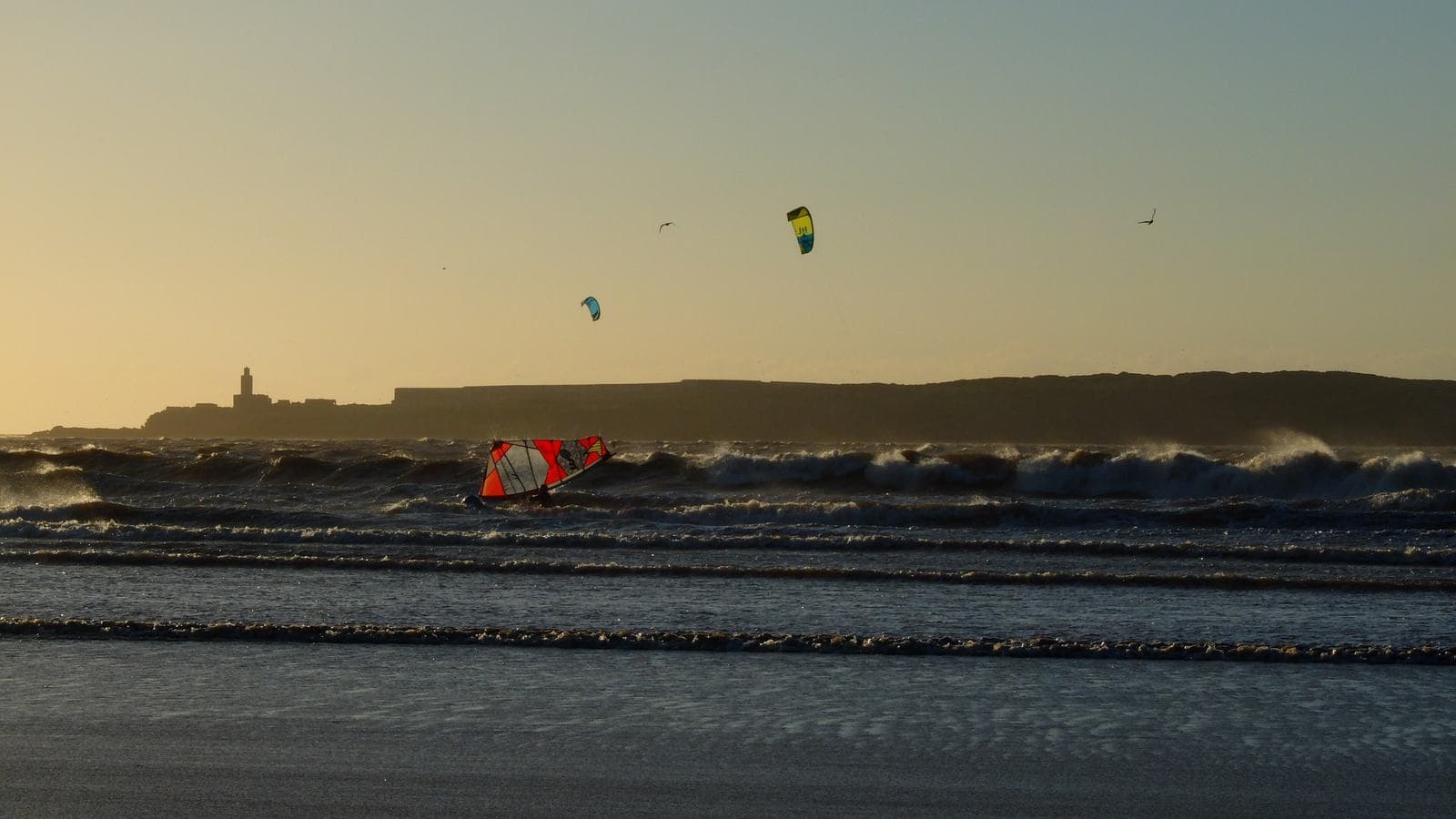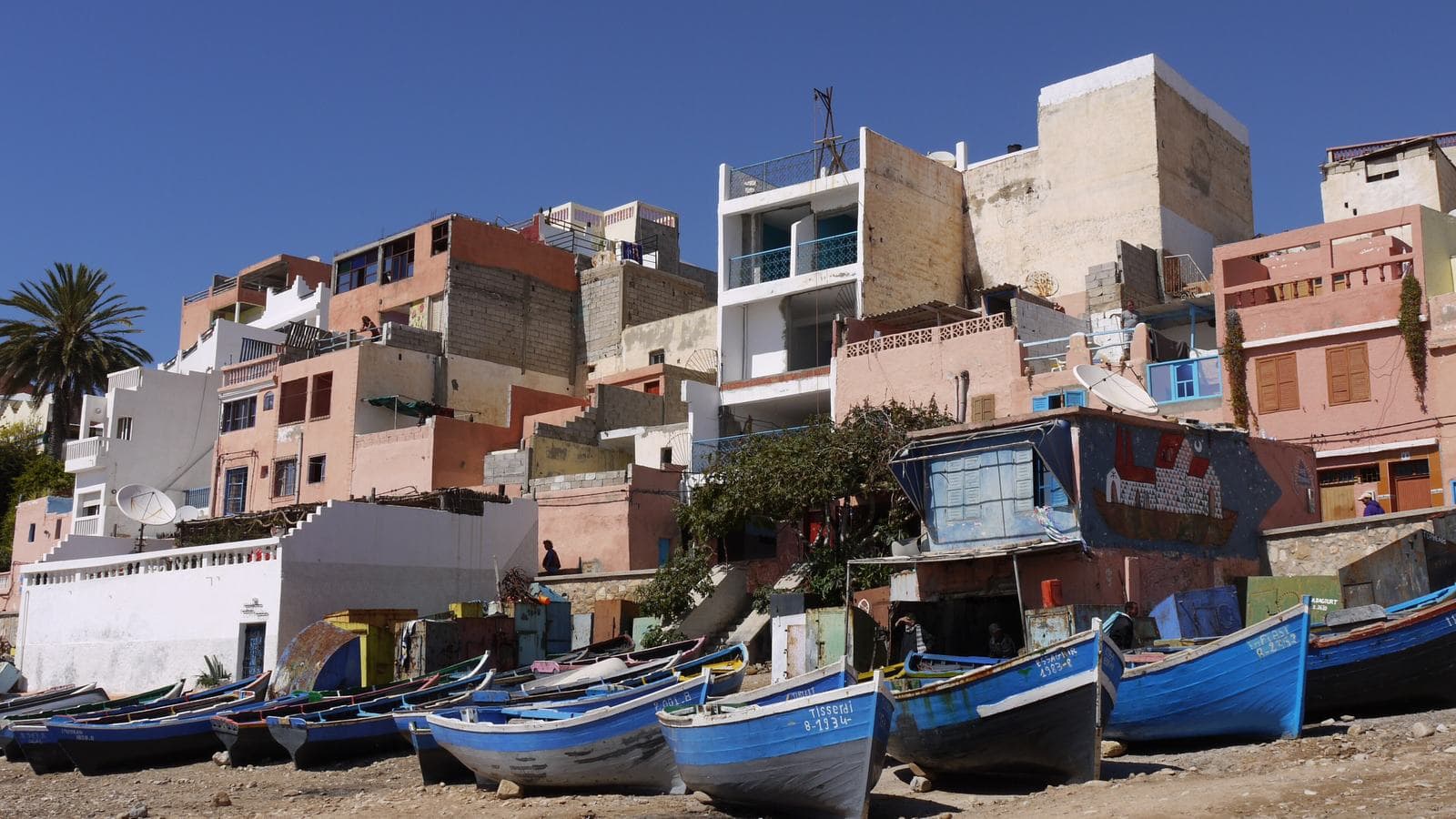
A few decades ago, Taghazout was a quiet fishing village north of Agadir, known only to a handful of travelling surfers who parked their vans by the point. Today it is the heart of surfing in Morocco: surf camps, yoga rooftops, smoothie bars and people from all over the world waxing boards in the lanes. And yet the old village is still there — blue boats on the sand, fishermen mending nets and mint tea at sunset.
Here is our guide for surfers and non-surfers alike.
Where is Taghazout?
The village sits on the Atlantic coast about 20 km north of Agadir, on the coastal road that runs up to Essaouira. Between Agadir and Taghazout, a string of smaller places — Aourir, Tamraght — share the same waves and a similar laid-back atmosphere. South of the village, a large resort area called Taghazout Bay has added international hotels and golf courses.
The surf in Taghazout
The coast around Taghazout is a series of reefs, points and beaches that catch the North Atlantic swell. Some of the best-known breaks:
- Anchor Point — a long, powerful right-hand point break and the most famous wave in Morocco. On a good day, experienced surfers only.
- Killer Point — a heavier point north of the village, for advanced surfers.
- Hash Point — right in front of the village, fun when the swell is big enough.
- Panoramas — a more accessible break by the beach, popular with intermediates.
- Banana Point and the beaches around Tamraght — mellow waves where most surf schools take beginners.
Our guide to surfing in Morocco explains the seasons, water temperatures and wetsuits in detail.
When to go to Taghazout
- October to April — the prime season for intermediate and advanced surfers, with long swells and frequent offshore winds.
- May to September — smaller, friendlier waves, ideal for beginners and surf lessons, warmer water and a busier village in July and August.
The climate is mild all year, with plenty of sunshine. Evenings can be cool in winter, so bring a jumper.
A typical day in Taghazout
Life in Taghazout follows the ocean. Surfers are up at dawn to check the swell from the terraces, often paddling out for a first session before breakfast. Late morning is for a long breakfast of msemen, eggs and fresh juice, or a yoga class while the wind is light. Lunch is grilled fish or a tagine in a café above the beach, followed by a lazy early afternoon. When the tide and wind are right, everyone heads out again for a second session, and the day ends on a rooftop, watching the sun sink into the Atlantic with a mint tea in hand.
Surf camps: what is usually included
Many visitors stay in a surf camp or surf house. Packages vary, but they usually combine accommodation with breakfast and dinner, daily lessons with an instructor, the use of boards and wetsuits, and transport to the spot that suits the day's conditions. Some add yoga classes or video analysis. Check exactly what is included, the number of students per instructor and the level of the group before you book.
Things to do in Taghazout if you do not surf
- Yoga — many surf houses offer daily classes on rooftop terraces overlooking the ocean.
- Sunset from the village — the terraces above the beach are the place to be at the end of the day.
- Paradise Valley — a palm-filled gorge with natural rock pools in the hills behind Aourir, about an hour away. It is especially beautiful in spring; avoid it after heavy rain.
- The fishing port and the beach — watch the boats come in and walk along the sand to the next village.
- Agadir — the city's long beach, marina and kasbah are twenty minutes away; see our Agadir travel guide.
Where to stay in Taghazout
- In the village — surf camps, surf houses and small guesthouses, often with rooftops, shared meals and lessons included. The social choice.
- In Tamraght and Aourir — a little quieter, with good access to beginner beaches.
- In the resort area — international hotels with pools and golf, for comfort and families.
Book early for the winter surf season and the European school holidays.
Practical tips
- Bring some cash — card payment is not accepted everywhere.
- Dress modestly in the village: swimwear is for the beach and the surf, not the lanes.
- Respect the line-up. The famous points are shared with local surfers; wait your turn and never drop in.
- Sun protection — the Atlantic breeze hides how strong the sun is.
How to get to Taghazout
- From Marrakech: our Marrakech to Taghazout transfer takes about three hours and includes surfboard transport. At the time of writing, it costs €130 per vehicle for up to four people, €150 for a van for up to seven and €170 for a minibus.
- From Essaouira: the scenic coast road via Imsouane takes around two and a half to three hours — read our Essaouira to Agadir coast road guide.
- From Agadir airport: the airport is less than an hour away; our Agadir airport guide explains the options.
Many surfers combine Taghazout with the long, slow wave of Imsouane further north — see our Imsouane guide. Tell us how many boards you are bringing, and we will make sure Taghazout is the easiest part of your trip.