Most travellers land in Marrakech knowing "merci" and perhaps "shukran". Yet a little Darija for travellers — a dozen more words of Moroccan Arabic — makes the medina, the souks and even the drive from the airport feel very different: smiles come faster, prices soften and conversations begin.
This guide to Darija for travellers gives you the 20 words and phrases that matter most on a first trip, explains how to read Darija written in Latin letters, and shows how to prepare in a few weeks before you fly.
French gets you by, Darija gets you closer
Riad staff, guides and many shopkeepers in Marrakech switch easily between French, English and Spanish. You can spend a whole week without a single word of Arabic. Yet the language you hear in the street, at the café counter and between the stalls of the souk is Darija, the Arabic spoken in Morocco.
It has little in common with the Arabic of textbooks: its vocabulary borrows from Amazigh, French and Spanish, and when Moroccans write it in their messages, many use Latin letters and a few numbers.
How to read Darija: what the 3 and the 7 mean
That last detail is good news for visitors: you do not need to learn a new alphabet to say your first sentences. In Latin script, 3 and 7 simply stand for two sounds that English does not have, as in 3la or bsh7al. Read the rest as it is written, and you will be understood.
Day one: greetings and polite words
Greetings matter in Morocco. Walking into a shop or a riad without one feels a little abrupt, while a greeting in Darija almost always earns a smile, and sometimes a long conversation.
- Salam alikoum: the everyday greeting, literally "peace be upon you". The answer is wa alikoum salam.
- Sbah el khir: good morning. You will hear sbah en-nour in return, "a morning of light".
- Shukran: thank you. If someone thanks you, reply la shukran ala wajib, "no need to thank me".
- Afak: please — the word you will use most.
- L-hamdullah: thank God, the usual answer when someone asks how you are.
- Bssaha: said after a meal, a bit like "enjoy" or "to your health".
In the souk: bargaining in Darija
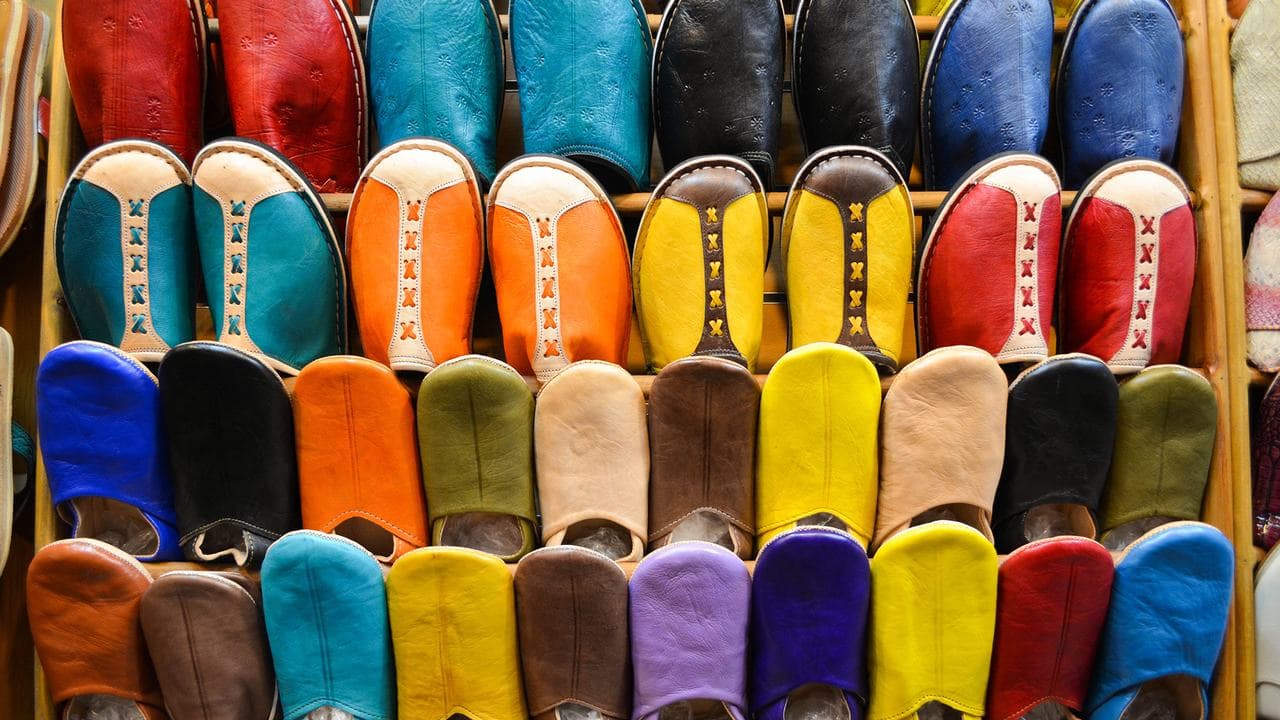
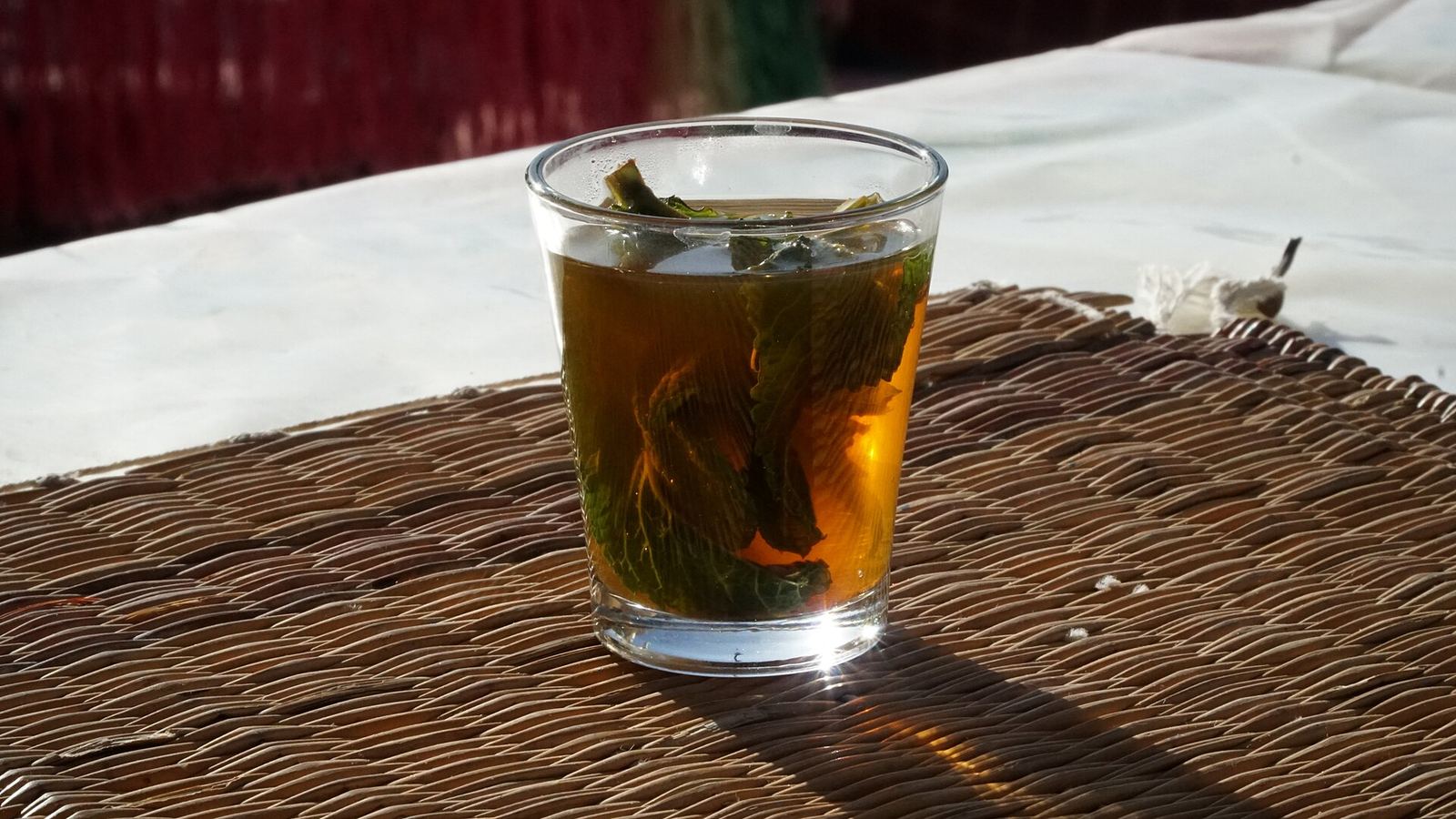
In the souks of Marrakech, the first price is only a starting point, and a few words of Darija change the tone of the exchange. A seller does not expect a tourist to ask bsh7al had babush? (how much are these slippers?), and what follows is usually more relaxed.
- Bsh7al?: how much?
- Ghali bzaf!: too expensive. The opposite, cheap, is rkhis.
- Wakha: OK, agreed. You will hear it all day long.
- Fin?: where? Handy when the alleys of the medina start to look the same.
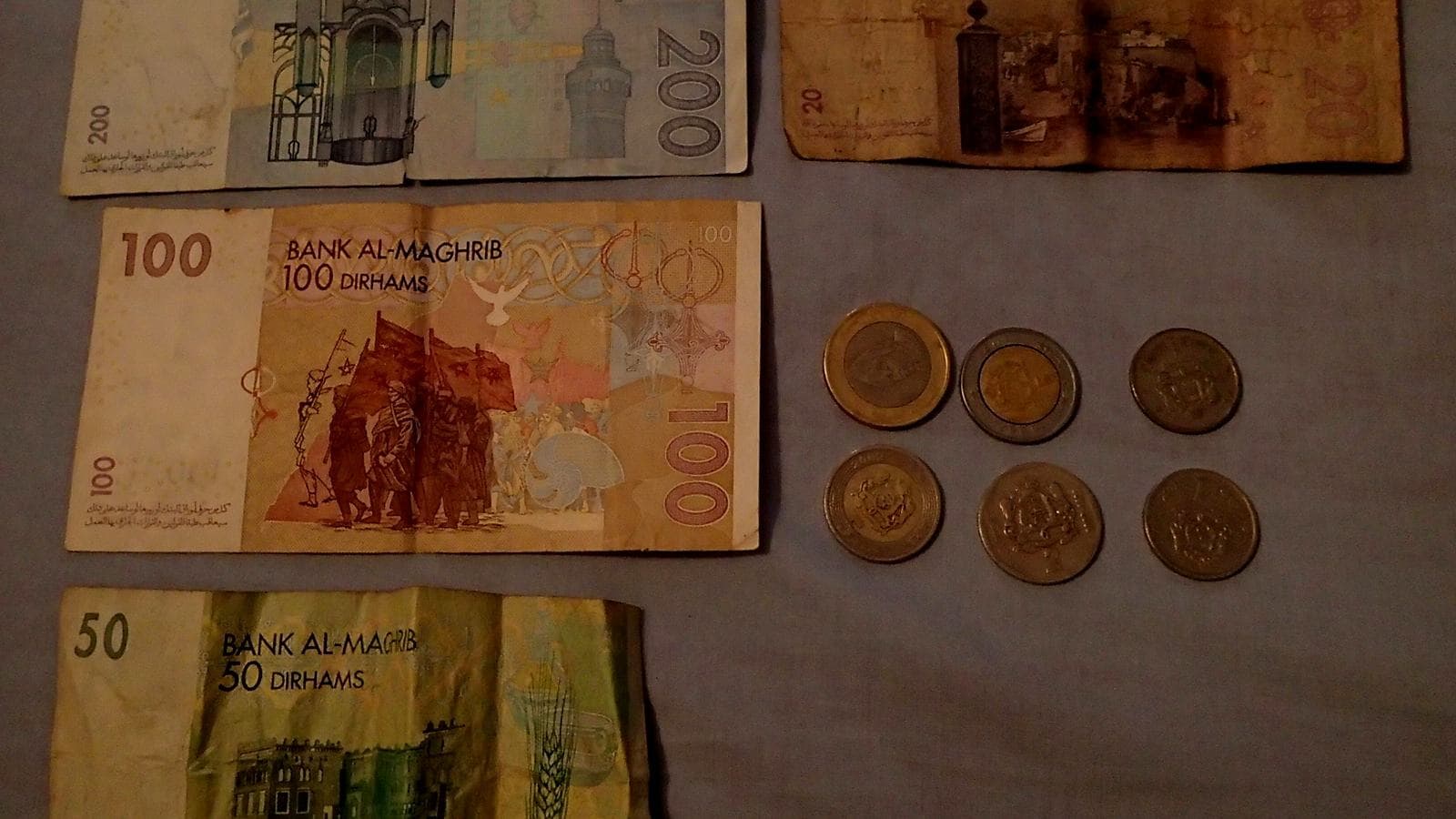
- Flous: money. Prices are given in drhm, dirhams.
A typical exchange, taken from a lesson on traditional clothing:
- You: Bsh7al had babush? — How much are these slippers?
- Seller: 200 dirhams, jild dial Fes. — 200 dirhams, Fez leather.
- You: Ghali bzaf! — Too expensive!
- Seller: Wakha, 150 lik. — OK, 150 for you.
Before you go shopping, read our guide to the souks of Marrakech and our tips on money in Morocco: dirhams, ATMs and tipping.
Five more words for the road
- La, shukran: no, thank you — the polite way to decline an offer in the souk.
- Smhli: excuse me, sorry — useful in a crowded alley.
- Mzyan: good, fine. Mzyan bzaf means very good.
- Shwiya shwiya: slowly, little by little — ask for it when someone speaks too fast.
- Bslama: goodbye.
Darija for travellers: your cheat sheet
| Darija | Meaning | When to use it |
|---|---|---|
| Salam alikoum | Hello (peace be upon you) | Entering a shop, a riad, a taxi |
| Shukran | Thank you | All day long |
| Afak | Please | Every request |
| Bsh7al? | How much? | In the souk |
| Ghali bzaf | Too expensive | When bargaining |
| Wakha | OK, agreed | To close a deal |
| Fin? | Where? | When you are lost in the medina |
| La, shukran | No, thank you | To decline politely |
| Bssaha | Enjoy (your meal) | After a meal |
| Bslama | Goodbye | Leaving |
Learn Darija in a few weeks before you fly
A phrasebook of Darija for travellers helps, but the real difficulty with the language is the ear. People speak fast, and the sounds written 3, 7 or kh take some practice. The most effective preparation is to hear the language from native speakers, then to say it out loud before you leave.
That is the idea behind Targumi, an online platform where you can follow Moroccan Darija classes built around speaking. The course has 258 short lessons in 50 modules, from beginner to advanced, and every word is recorded by a native speaker, with a slow-down button for the sounds that go by too quickly. The beginner level starts with sounds, greetings and numbers. Live classes in small groups — two to five students at the same level — let you practise conversation with a native teacher, and each class is recorded, so you can watch it later if you missed it. A 7-day free trial lets you try it before deciding.
Fifteen minutes a day in the month before you fly is enough to greet your host, thank your driver and ask the price of a rug without sounding as if you were reading from a guidebook.
Once you are in Marrakech
Use what you know, even clumsily. Moroccans appreciate the effort and will often correct you kindly, then teach you one more word. Start with a salam alikoum when you arrive at the riad, a shukran for whoever pours your mint tea and an afak in every shop. By the end of the stay, wakha will come out on its own.
Travel to Marrakech with Rouasse Travels
Darija for travellers is easier to practise when the logistics are taken care of. Rouasse Travels runs private transfers and tours from Marrakech and Essaouira, at fixed prices per vehicle, not per person.
Marrakech airport transfer with meet and greet
Your first salam alikoum can be for your driver. He waits in the arrivals hall with a name sign, follows your flight and waits free of charge for 60 minutes after landing, then drives you to your riad or hotel in about 30 minutes. Our Marrakech airport transfer costs from €20 for 1–3 passengers, €30 for 4–7 and €50 for 8–17, at the time of writing. Read our meet-and-greet guide to find your driver in seconds.
Private transfers across Morocco
| Route | Duration | 1–3 passengers | 4–7 passengers | 8–17 passengers |
|---|---|---|---|---|
| Marrakech → Essaouira | 2 h 30 | €90 | €120 | €170 |
| Marrakech → Agadir | 2 h 45 | €120 | €130 | €170 |
| Marrakech → Casablanca airport | 3 h | €120 | €130 | €170 |
| Marrakech → Ouarzazate | 3 h 30 | €150 | €170 | €220 |
Door to door, with a private driver: see our guide to private drivers in Morocco.
Day trips and tours from Marrakech
- Ourika Valley day trip: a full day in the Atlas foothills, from €120 per vehicle with hotel pickup.
- Atlas & Aït Ben Haddou, 3 days: kasbahs, mountain passes and the ksar of Aït Ben Haddou, from €600.
- Sahara: Zagora & the Draa Valley, 4 days and Grand South & Sahara, 5 days: palm groves, gorges and a night in the desert.
Book online on our booking page or contact us by WhatsApp: we confirm within 24 hours, usually much faster. Bslama, and see you in Marrakech!