Nothing prepares you for the first steps into the Marrakech souks. The lanes narrow, the light filters through reed roofs, mopeds squeeze past donkey carts, and every doorway spills over with lanterns, slippers, spices and rugs. It is noisy, fragrant, a little chaotic — and one of the most memorable shopping experiences anywhere in the world.
With a few keys, it is also a lot of fun. Here is what we tell our passengers before their first visit.
How the Marrakech souks are organised
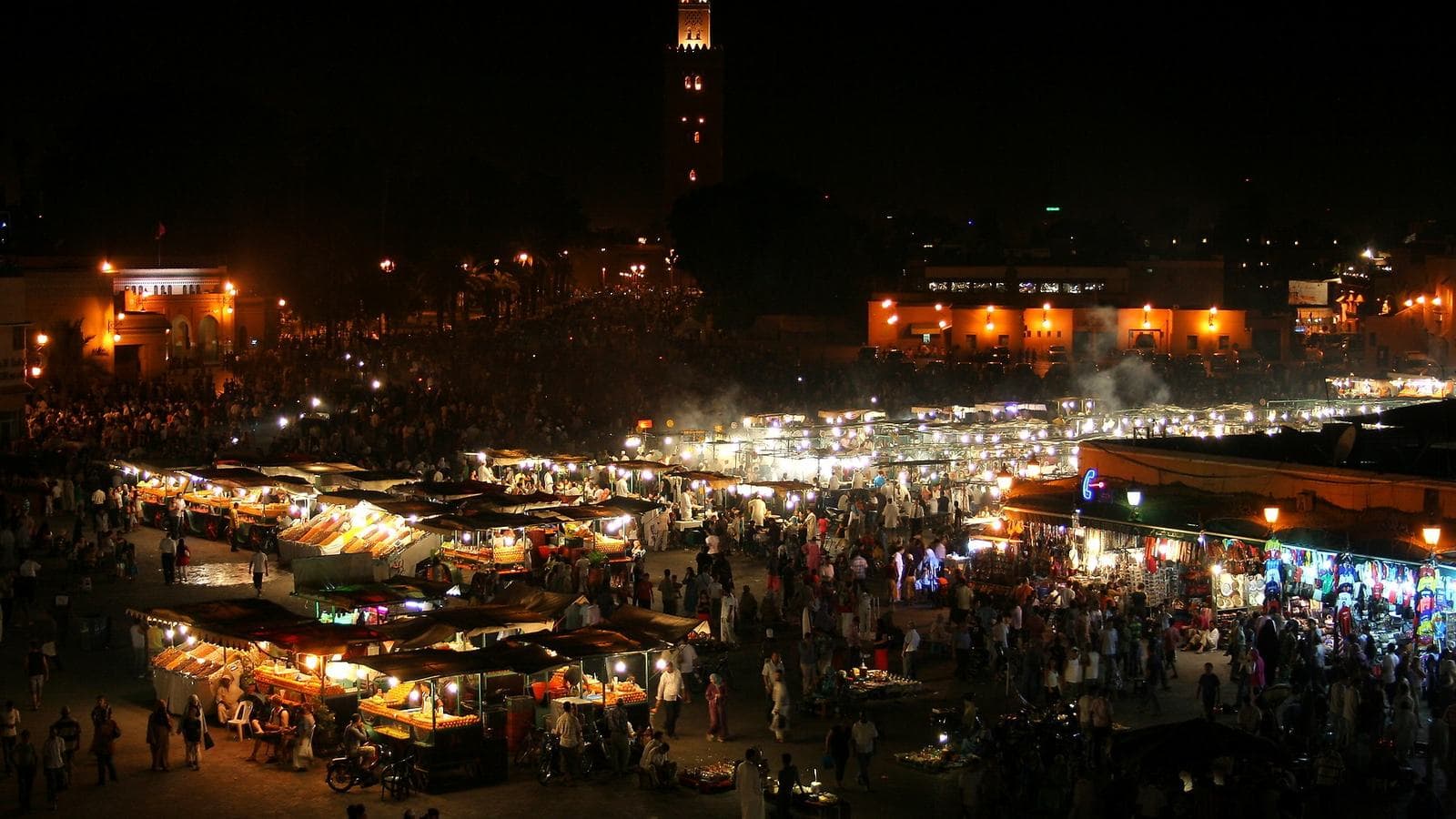
The souks spread north from Jemaa el-Fnaa in a maze of covered lanes. Traditionally, each area was devoted to one trade, and that logic still largely holds:
- Souk Semmarine, the main artery from the square, is lined with textiles, souvenirs and ceramics — a good place to get your bearings.
- The spice square, a small open plaza deeper in, is surrounded by spice sellers and apothecaries offering herbs, remedies and cosmetics, plus stalls of baskets and straw hats.
- The dyers' souk, where skeins of freshly coloured wool hang to dry above the lane, is one of the most photogenic corners of the medina.
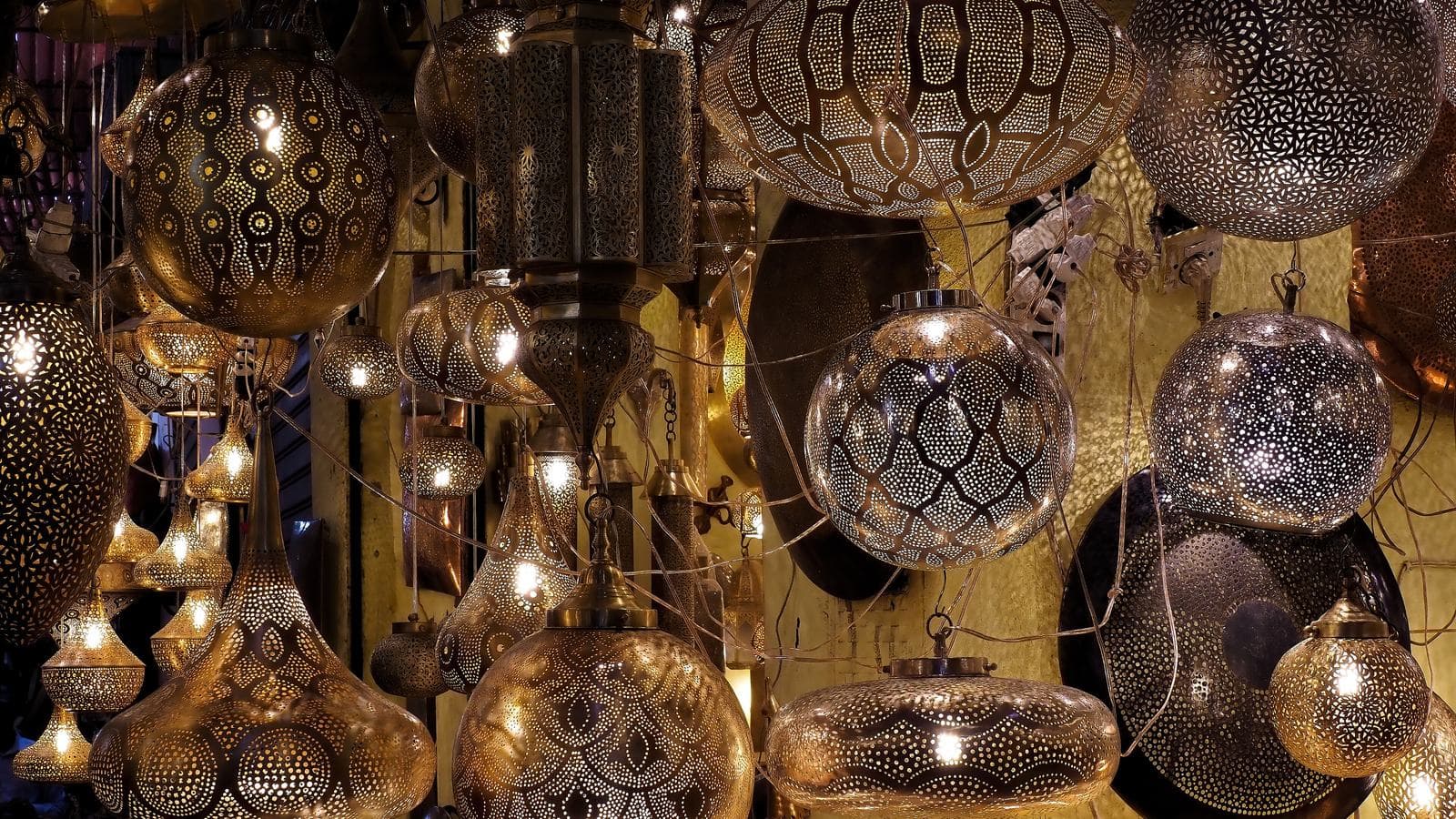
- The metalworkers' lanes, where craftsmen hammer and pierce the lanterns you see everywhere.
- The leather lanes, full of bags, belts, poufs and babouches.
Do not try to follow a precise map. Wander, keep the main lanes as your reference, and use an offline map app to find your way back to the square.
What to buy in the Marrakech souks
- Babouches — soft leather slippers in every colour, from simple to embroidered.
- Lanterns — pierced metal and coloured glass; small ones travel well in hand luggage.
- Leather goods — bags, poufs and belts. Check stitching and smell: good leather should not reek of chemicals.
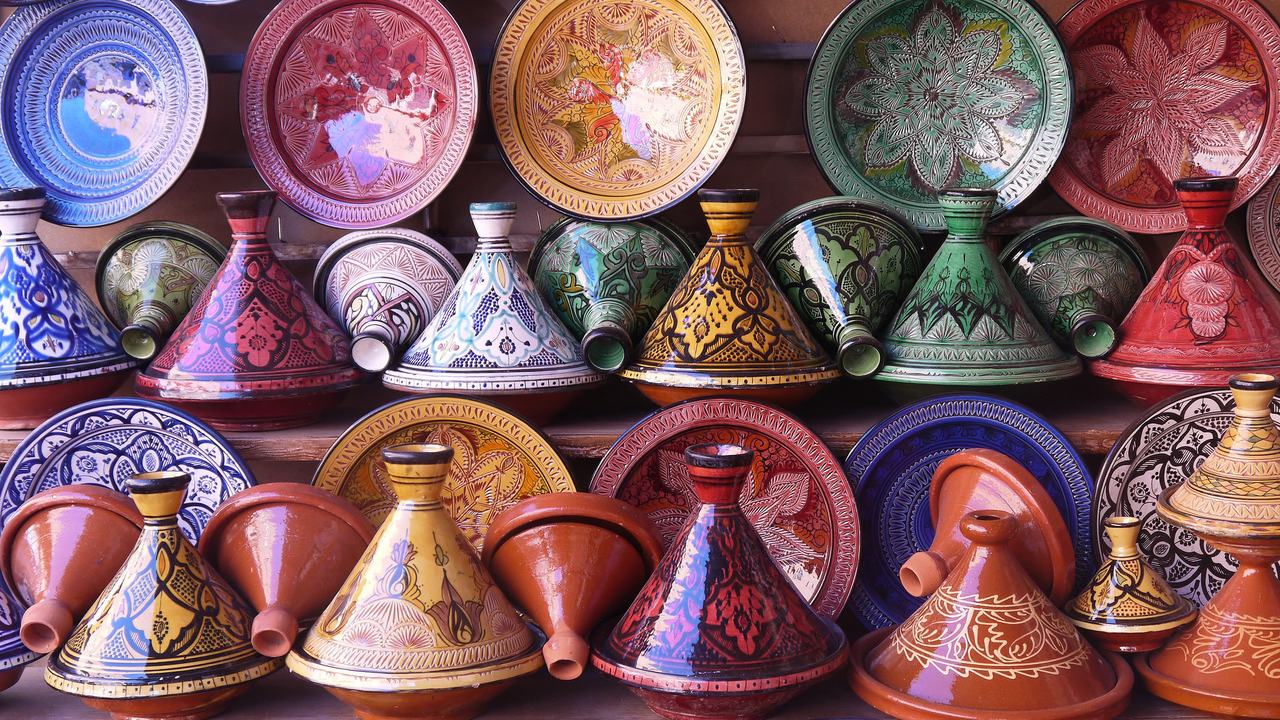
- Ceramics and tagines — decorative plates, bowls and cooking tagines. Only unglazed or food-safe glazed tagines should be used for cooking.
- Carpets — flat-woven kilims, thick Berber rugs and colourful recycled boucherouite rugs. Take your time: a good carpet purchase is a slow conversation over tea.
- Spices — cumin, paprika, ras el hanout. Be wary of very cheap "saffron", which is often fake.
- Tea sets — engraved teapots and painted glasses, the perfect souvenir of Moroccan hospitality.
- Argan oil — buy it from a women's cooperative if you can; our argan cooperative guide explains how to spot the real thing.
How to bargain, with a smile
Bargaining is expected in the souks, and it is a social game rather than a fight.
- Look first, buy later. Spend the first hour comparing prices and quality without committing.
- Decide your price before you ask — what the item is worth to you.
- Let the seller start. First prices are often far above the final price; many shoppers counter at around a third to a half and meet somewhere in between.
- Stay friendly and patient. Laugh, accept the tea, take your time.
- Walking away is allowed. If the price does not suit you, thank the seller and leave. Sometimes you will be called back; sometimes not — both are fine.
- Do not start if you are not interested. Naming a price is seen as a commitment.
Never bargain in restaurants, at fixed-price shops or over tiny amounts: a few dirhams matter more to the seller than to you.
Fixed-price alternatives
If haggling is not your thing, visit the Ensemble Artisanal, a government-supported crafts centre near the Koutoubia where prices are fixed and quality is good. It is also a useful place to get a reference price before heading into the souks. Concept stores in the Mouassine area and in Guéliz also sell contemporary Moroccan design at fixed prices.
Traps to avoid
- "This way to the tannery" or "the square is closed". Unrequested guides usually lead you to a shop that pays them a commission.
- "Berber market, only today!" A classic line to hurry you into a purchase.
- "Cactus silk" and "real saffron" at suspiciously low prices are usually neither.
- Carpet shipping. If you ship a rug home, get a written receipt with the description, the price and the delivery terms, and pay by card for extra protection.
Our guide to safety in Morocco covers these tricks in more detail, and our guide to money in Morocco explains when to use cash or cards.
Practical tips
- Go in the morning, when lanes are calmer and shopkeepers are setting up.
- Friday midday is quieter, as many shops close for prayers.
- Carry small notes — change is not always available.
- Listen for "balak!" — it means "watch out", usually because a cart or moped is coming through.
- Want more authentic markets? Rural weekly souks are a different world; see our guide to visiting a Berber market.
Bringing it all home
Heavy purchases are easier with a car at the door. Our transfers can send a larger vehicle if you have extra luggage — just tell us when you book your Marrakech airport transfer. For the rest of your stay, read our guides to the best things to do in Marrakech and Jemaa el-Fnaa — and enjoy getting lost in the Marrakech souks.