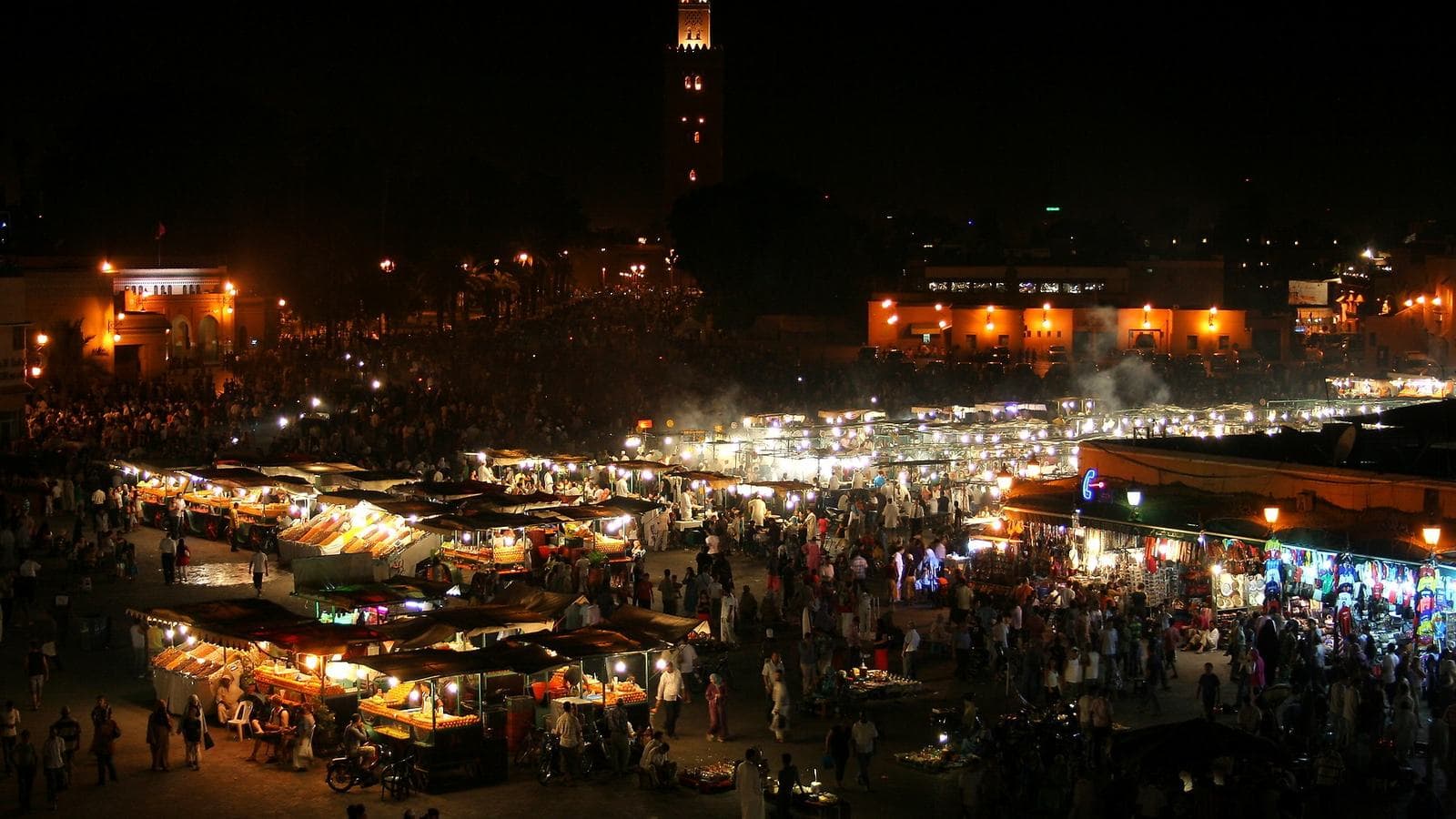
There is no square in the world quite like Jemaa el-Fnaa. By day it is a wide, sun-baked space with orange-juice sellers and herbalists; by night it becomes an open-air theatre and the biggest restaurant in Marrakech, wrapped in smoke from a hundred grills and the sound of drums. Every first-time visitor ends up here, usually on the first evening — and most come back every night of their stay.
Here is how to make the most of it.
What is Jemaa el-Fnaa?
Jemaa el-Fnaa is the great square at the heart of the Marrakech medina, a few minutes' walk from the Koutoubia Mosque, whose 12th-century minaret towers over the rooftops. For centuries it has been a meeting place for traders, travellers and performers, and the origin of its name is still debated. Its living tradition of storytelling, music and street performance was so remarkable that UNESCO recognised the cultural space of the square as a masterpiece of the oral and intangible heritage of humanity.
Jemaa el-Fnaa, hour by hour
Morning: juice and calm
In the morning, the square is almost peaceful. Rows of carts sell freshly squeezed orange and grapefruit juice, herbalists lay out remedies, and henna artists wait under umbrellas. It is the best time to cross the square on your way into the souks, which start on its northern side.
Midday: heat and siesta
Around midday in summer, the square is hot and empty. Do as the locals do and retreat to the shade of the souks, a museum or your riad.
Late afternoon: the performers arrive
From late afternoon, circles of spectators — called halqa — form around storytellers, musicians, acrobats and dancers. Gnaoua musicians play their iron castanets and three-stringed guembri, and the square fills with families from all over the city.
Sunset: the grills fire up
As the light fades, dozens of numbered food stalls appear as if from nowhere, with benches, lamps and grills. The smoke rises, the Koutoubia glows and the square reaches its most magical moment. Watch it from above first, then dive in.
Night: the big party
The square stays busy late into the evening, especially at weekends and in summer. It is lively, noisy and generally good-natured.
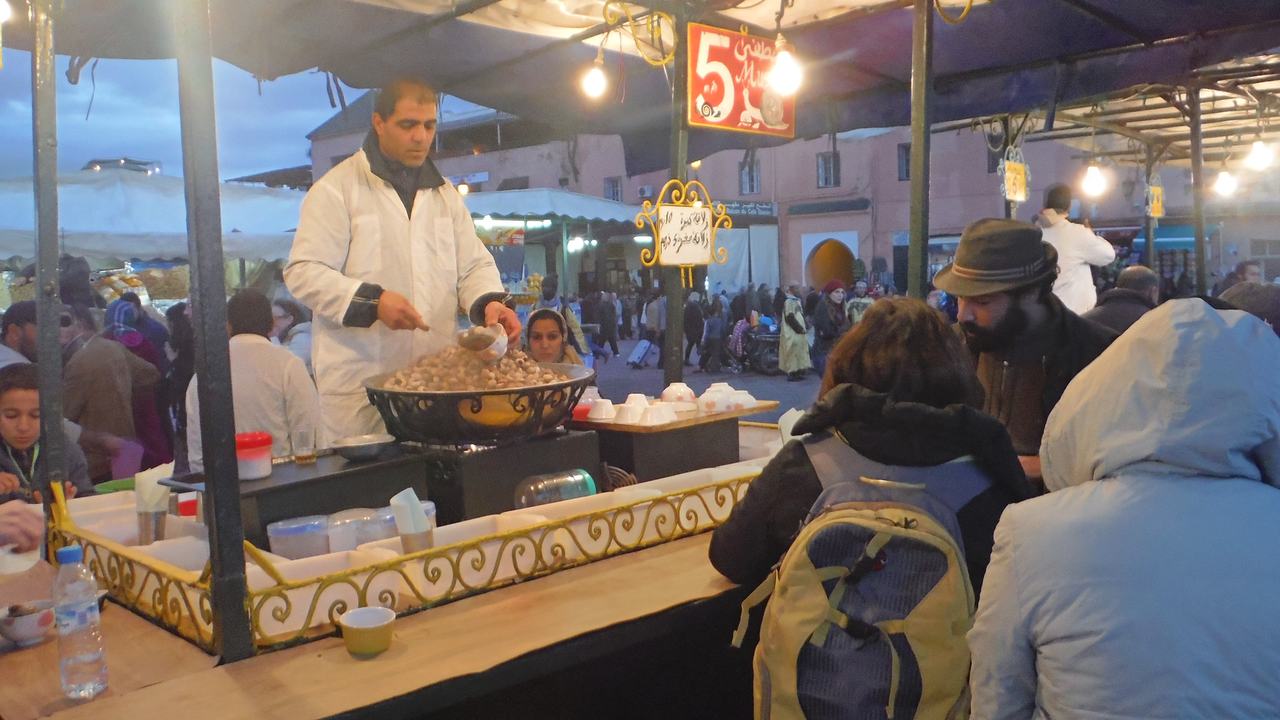
Eating at the Jemaa el-Fnaa food stalls
Eating at the stalls is part of the experience. A few favourites:
- Harira — tomato, lentil and chickpea soup, often served with dates and a sweet pastry.
- Grilled brochettes and merguez — skewers of beef, lamb or chicken, and spicy sausages.
- Fried fish and calamari, served with salads.
- Snail soup — a local classic served in small bowls at dedicated stalls, for the adventurous.
- Khoudenjal — a hot, spiced galangal drink served with a dense spice cake.
Choose stalls that are busy with Moroccan families, check prices before you order, and politely refuse dishes you did not ask for — bread and olives sometimes arrive unrequested and may appear on the bill.
The best views over the square
Several cafés around Jemaa el-Fnaa have terraces overlooking the square. Buying a drink is the price of the view, and sunset is the most popular — and busiest — time. Arrive a little early to find a seat by the railing.
Etiquette and traps to avoid
- Photos cost money. Performers expect a tip if you photograph or film them. Keep a few small coins ready, or enjoy the show without a camera.
- Animals. Snake charmers and men with monkeys will insist on photos. Many visitors prefer not to encourage the use of animals at all.
- Henna. Some henna artists grab a hand and start drawing before any price is agreed. Keep your hands to yourself unless you want a design, and agree the price first.
- Pickpockets. Keep phones and wallets zipped away in the evening crowds.
- Unofficial guides. Friendly strangers offering to show you the way usually expect a fee. A smile and a firm "no thank you" is enough.
Our guide to safety in Morocco covers the most common scams in more detail.
Around the square
- The Koutoubia Mosque and its gardens, just to the south-west. Non-Muslims cannot enter the mosque, but the minaret and the gardens are beautiful at sunset.
- The souks, starting from the northern side of the square. Read our Marrakech souks shopping guide before you go.
- The rest of the medina's sights — palaces, madrasas and gardens — are covered in our guide to the best things to do in Marrakech.
Getting there
Cars cannot drive into the square itself. From most riads, it is a short walk; from hotels in Guéliz or Hivernage, a petit taxi takes about ten minutes. Arriving from the airport, our Marrakech airport transfer drops you at the nearest point to your riad, and our airport arrival guide explains how it works.
Jemaa el-Fnaa is the first stop of our 3-day Marrakech itinerary, and for good reason. Come at sunset, eat at the stalls, and let the square do the rest. For more street food ideas, see our guide to what to eat in Marrakech.