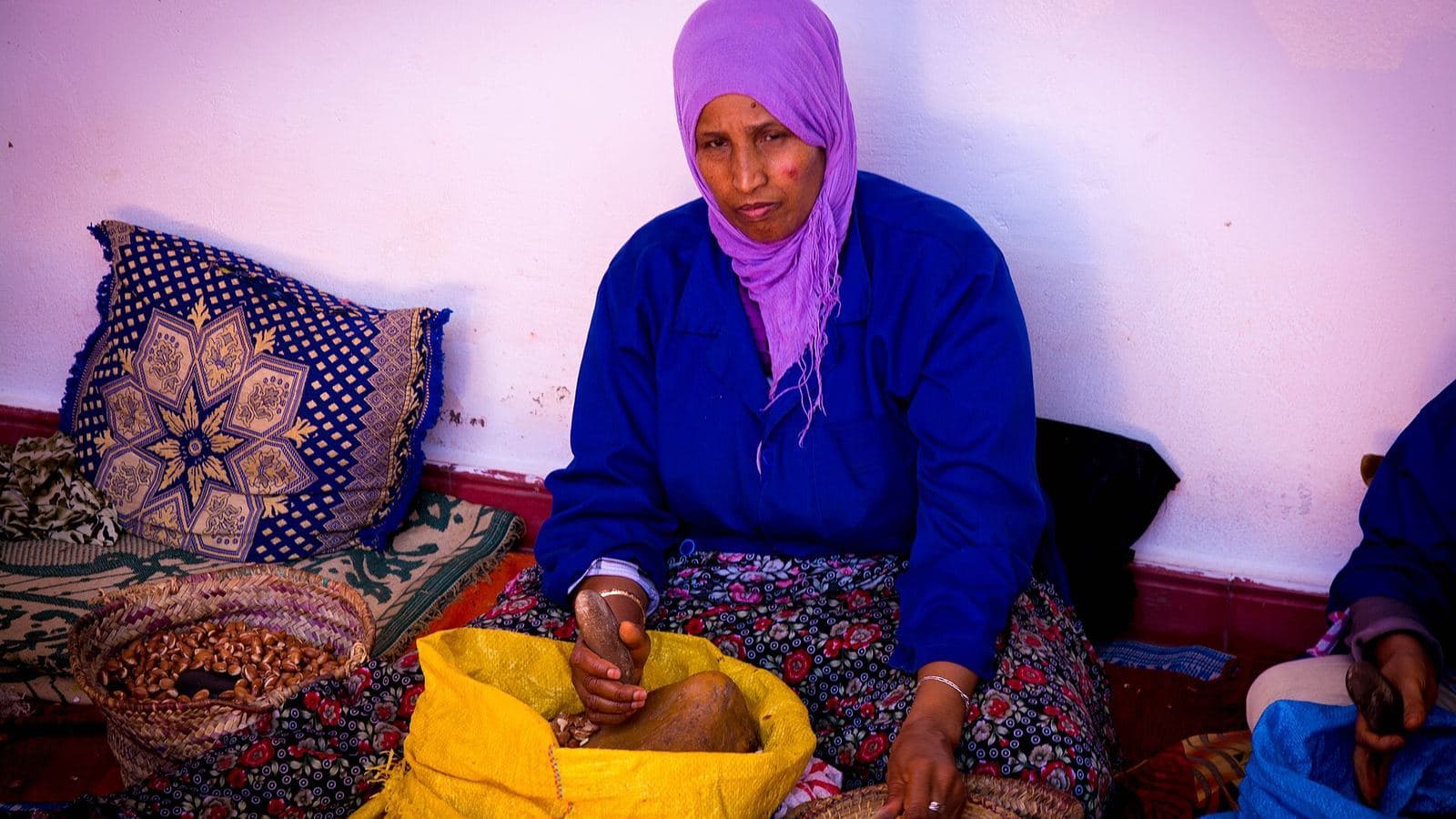
Sit on a cushion in a whitewashed room near Essaouira and listen. The sound you hear — a steady, patient tock, tock, tock — is a stone striking an argan nut on another stone. Women have made this sound in the villages of southwest Morocco for generations, and a visit to an argan oil cooperative is the easiest way to see where one of the country's most famous products really comes from.
Here is what to expect, what to taste and how to buy well.
Why argan is special
The argan tree (Argania spinosa) is a thorny, drought-resistant tree that grows naturally in only one region of the world: the southwest of Morocco, between Essaouira, Agadir and the foothills of the Anti-Atlas. Its forests hold back the desert, shade the crops, feed the goats and provide oil, wood and income to thousands of rural families.
Its importance is recognised far beyond Morocco. UNESCO declared the area an Arganeraie Biosphere Reserve in 1998 and added the practices and know-how of the argan tree to its list of Intangible Cultural Heritage in 2014. Since 2021, the United Nations has celebrated an International Day of Argania every 10 May.
What happens at an argan oil cooperative
Most cooperatives you can visit are run by women from the surrounding villages. They were created to give women a fair, regular income for work they have always done, and many use part of their profits for literacy classes and community projects. The visit itself is simple and free:
1. From fruit to nut
A guide — often one of the members — shows you the dried fruit. The outer pulp is removed (goats do part of this job in the wild, hence the famous goats in trees), leaving a nut that is astonishingly hard.
2. Cracking by hand
This is the heart of the visit. Seated on the floor, women crack each nut between two stones to free the small kernels inside. It looks easy until you try — and you will be invited to try. Cracking by hand is still the slowest part of the process, and it is why real argan oil is never cheap.
3. Roasting, grinding and kneading
For culinary oil, the kernels are lightly roasted, which gives the oil its nutty flavour and golden colour. For cosmetic oil, they stay raw. Traditionally the kernels are ground in a stone hand mill into a thick brown paste, which is then kneaded with a little water until the oil separates. Today many cooperatives also use mechanical presses for part of their production.
4. The tasting
The best part. Bread arrives with small dishes of culinary argan oil and amlou, a spread of roasted almonds, argan oil and honey that most visitors adore. Then comes the shop, with oils, soaps, creams and spreads.
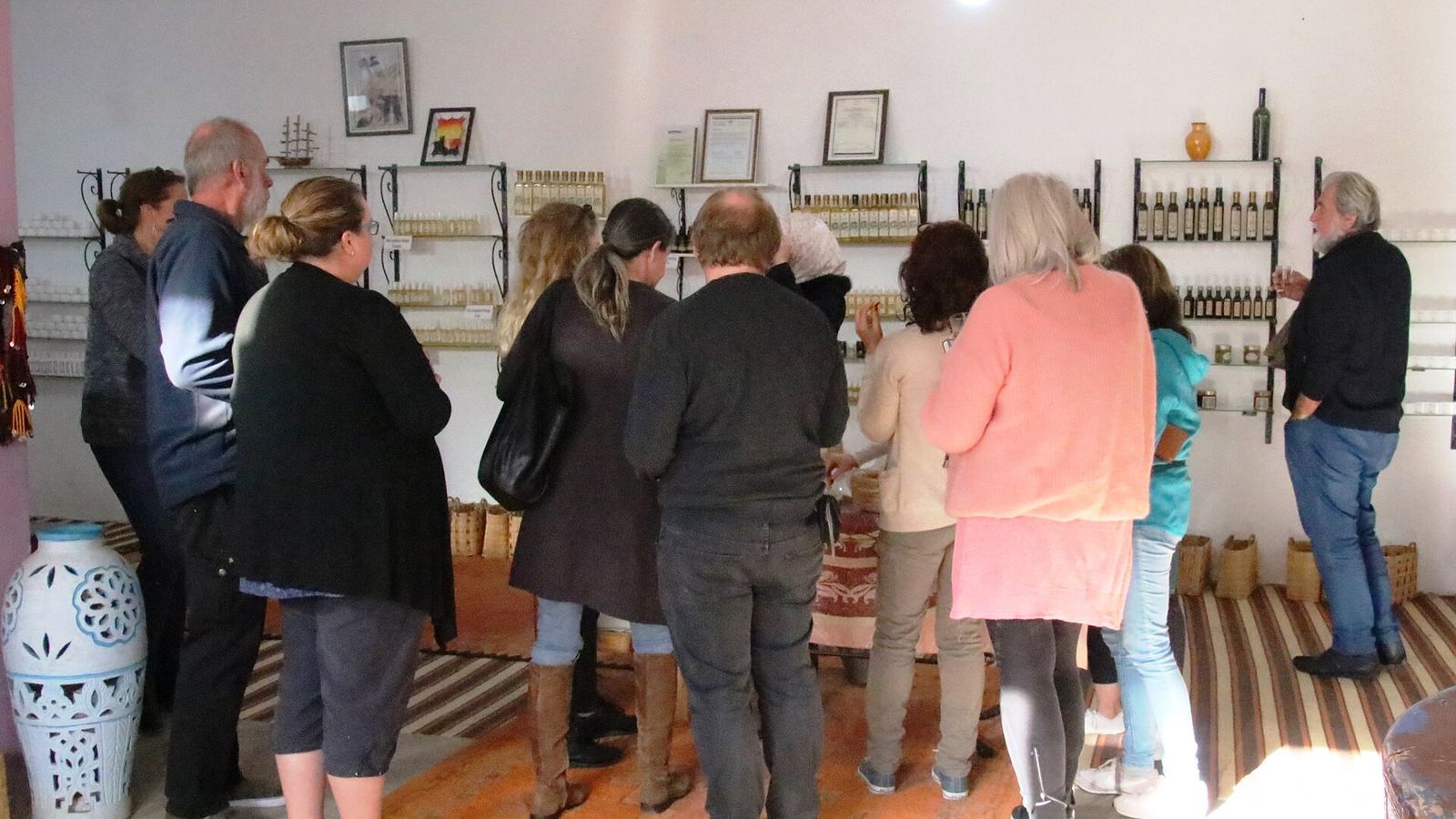
How to spot genuine argan oil
Argan oil is often diluted or faked, especially in plastic bottles sold at roadside stalls. A few simple checks:
- Culinary oil should smell and taste clearly of toasted nuts. Cosmetic oil has a much lighter, slightly nutty scent — a strong smell usually means it was roasted or is old.
- Look for dark glass bottles, a label with the cooperative's name and a production date.
- A price that looks like a bargain is a warning sign. Producing a single litre by hand takes many hours of work.
- Buying directly at a cooperative is the simplest way to know where your money goes.
A practical tip: bottles over 100 ml belong in your checked luggage, not your cabin bag.
The goats in the argan trees
Yes, goats really do climb argan trees to reach the fruit, and you will see them in the countryside around Essaouira. Along the busiest stretch of the Marrakech road, some herders keep a few goats in a roadside tree for photographs and ask for a small tip. Our drivers are happy to stop; just keep a few coins ready.
How to include an argan oil cooperative in your trip
You do not need a special excursion — a cooperative stop fits into several of our trips:
- On the way to the coast. With our Marrakech to Essaouira private transfer, short stops at a cooperative and at the goat trees are part of the journey. Our Marrakech to Essaouira guide describes the whole road.
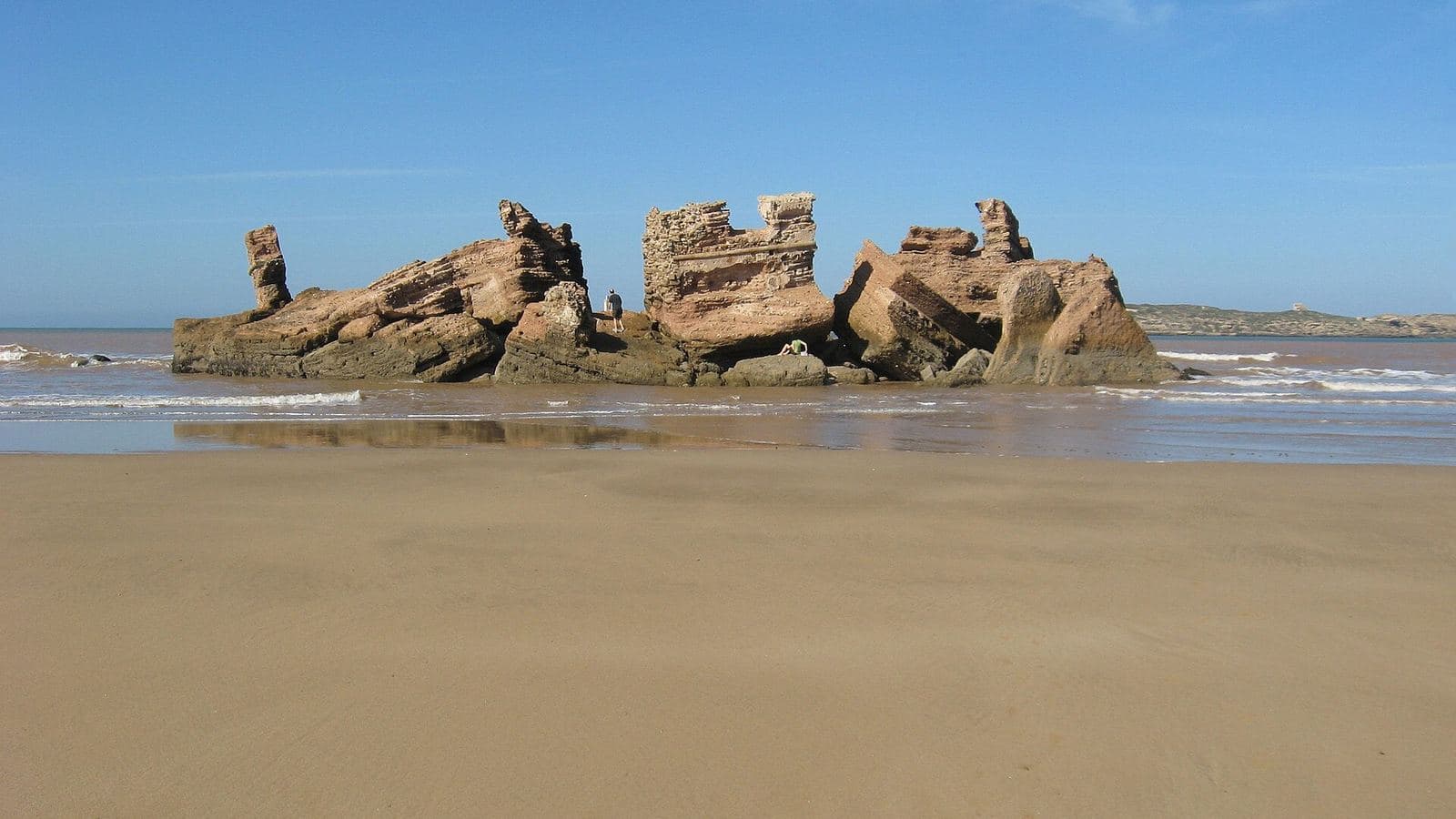
- On a half day around Essaouira. Our Essaouira half-day tour ends with a women's cooperative after the Diabat ruins and the dunes.
- On a full day in the countryside. The Sidi Kaouki day trip crosses the argan forest and can include a cooperative too.
- From Marrakech. Cooperatives in the lower Ourika valley produce argan oil and herbal products — see our Ourika Valley day trip guide.
Our private Essaouira half-day excursion costs, at the time of writing, from €80 per vehicle for up to three people, with hotel pickup, water, fuel and parking included — and the cooperative visit is free, with no obligation to buy.
A few good manners
Ask before photographing the women at work; most are happy to pose, but not everyone. Try the nut-cracking, laugh at your own clumsiness, and if you enjoyed the visit, buying even a small jar of amlou is a direct way to support the argan oil cooperative that welcomed you. For more ideas in the area, see our guide to day trips from Essaouira.