Essaouira was never designed for mass tourism. Its medina is made for walking, its fishermen still bring the catch to the port every morning, and the countryside around it is covered by a forest found almost nowhere else on Earth. That is why sustainable tourism in Essaouira feels less like a label and more like common sense. This guide explains what makes the region special, which activities leave a light footprint, and how to travel in a way that supports the people who live here.
What sustainable tourism in Essaouira really means
Sustainable travel rests on three pillars: protecting nature, keeping money in the local economy and respecting culture. Essaouira scores on all three. The town is compact, so you rarely need a car; the economy relies on crafts, fishing, argan and small family businesses; and its heritage — the UNESCO-listed medina, Gnawa music, the Jewish quarter — is still lived in, not staged.
The challenge is balance. Summer and festival weeks bring crowds, water is precious after several dry years, and plastic is a constant battle on the beaches. Each traveller's choices count.
The argan forest: a UNESCO biosphere reserve at the gates of town
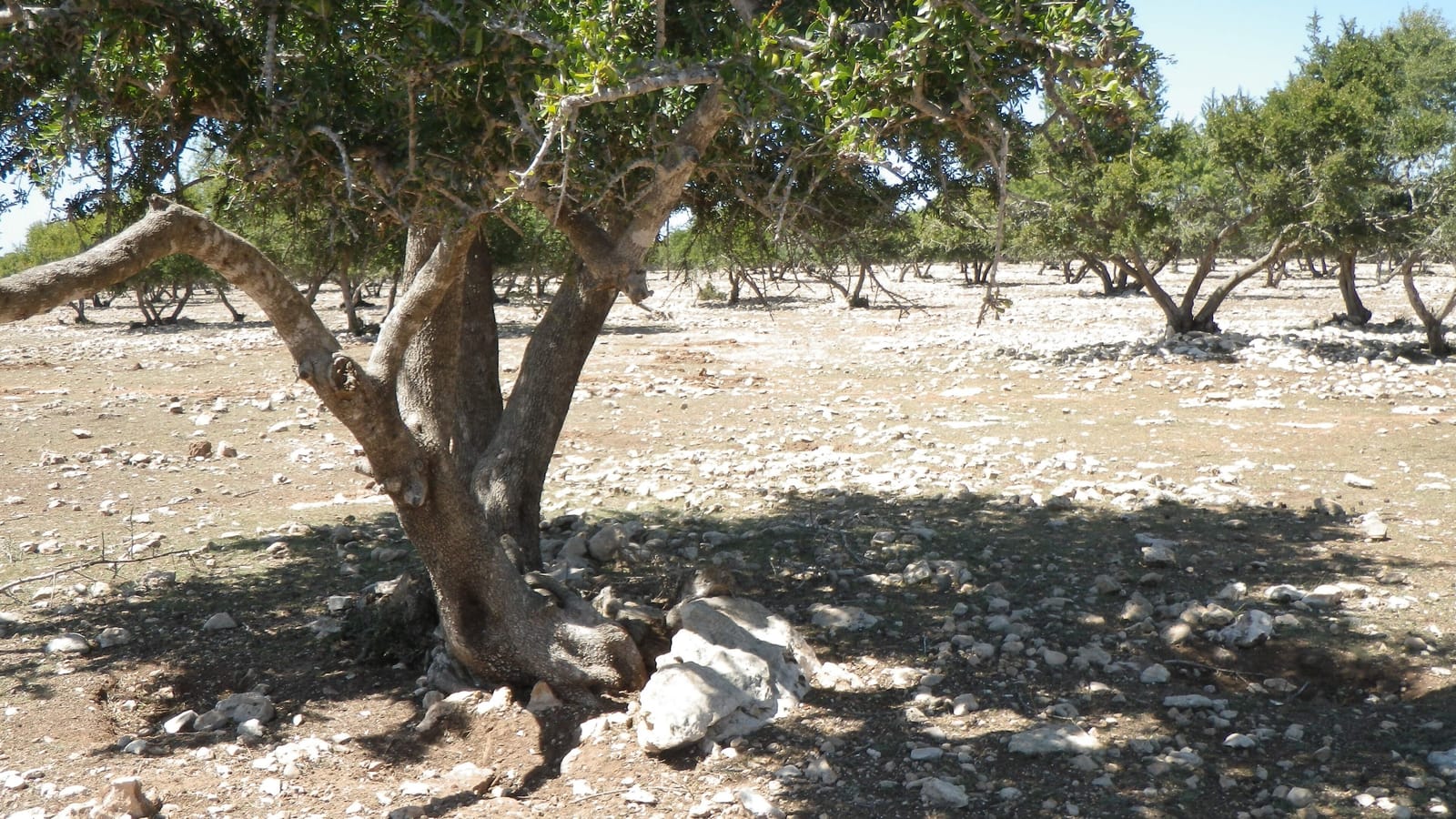
Leave Essaouira in any direction inland and you enter the arganeraie, the forest of argan trees that covers south-western Morocco. In 1998 UNESCO declared it a biosphere reserve — the Arganeraie Biosphere Reserve stretches over more than 2.5 million hectares — and in 2014 the practices and know-how linked to the argan tree joined UNESCO's list of intangible cultural heritage.
The tree holds the soil against desertification, shelters crops and feeds families. Its oil is produced largely by women's cooperatives, where you can watch the traditional cracking and grinding of the kernels and buy directly from the producers.
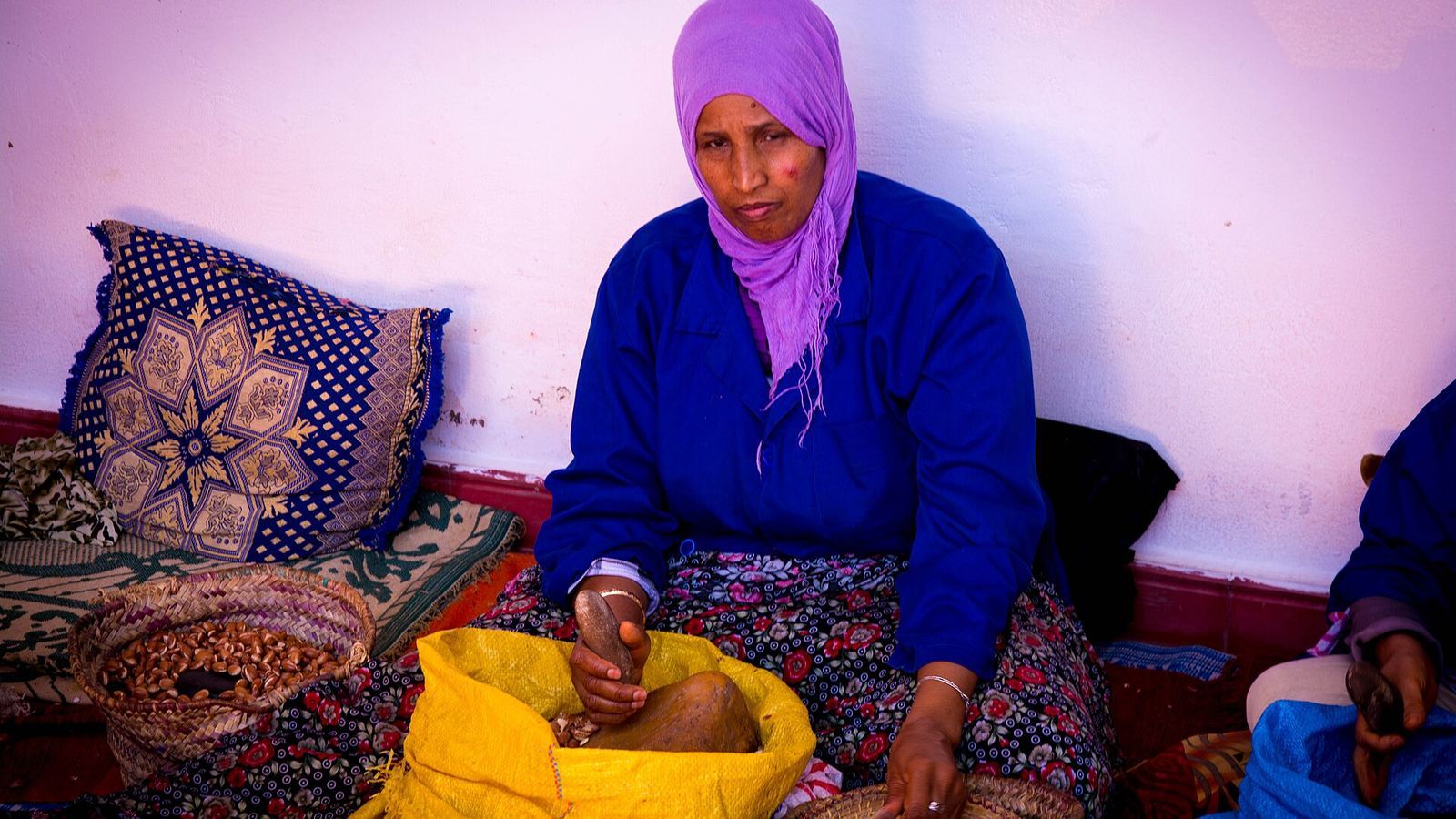
How to visit respectfully:
- Buy at the cooperative itself rather than at roadside stalls of uncertain origin.
- Don't pay for goat photos staged in trees: goats do climb argan trees, but some are placed there for tourists.
- Combine the visit with a walk in the forest, especially in spring when the countryside is green.
Our visit to an argan cooperative explains what to expect, and families love the argan goats outing. For a gentle half-day, the Essaouira half-day excursion follows the argan route to Diabat.
Wind and sun: the energy of the trade winds
The same trade winds that make Essaouira one of Morocco's kitesurf capitals also produce electricity. The Amogdoul wind farm at Cap Sim, south of town, has been running since 2007, and the larger Jbel Lahdid wind farm turns in the province. Inland, the Noor solar complex near Ouarzazate is one of the largest of its kind in the world. Read more in our article on digital transformation in Morocco.
For travellers, the wind is also a gift: no engines needed for the best sports here. Kitesurf lessons, wingfoil and surf lessons are powered by nature alone.
Low-impact activities around Essaouira
- Horse riding on the beach — a ride along the bay and the dunes at walking pace or gallop.
- Birdwatching — the Ksob estuary and the islands host waders, gulls and, in summer, the rare Eleonora's falcon; join a birdwatching outing with binoculars.
- Yoga facing the ocean — a morning session to start the day slowly.
- Cooking with local produce — market shopping and a tagine in a cooking class.
- Crafts — meet the woodworkers of the Skala in a thuya wood workshop and buy directly from the maker.
All our activities are run by independent local professionals: you request availability, and the money goes to people who live here.
Eight slow-travel habits that make a difference
- Stay longer, move less. Five nights in one place beat five towns in five days — the logic behind Essaouira for digital nomads.
- Travel off-season. Autumn and spring are mild, quiet and better for local businesses outside the peaks.
- Walk the medina. Everything inside the walls is a few minutes apart.
- Eat the catch of the day at the port grills or in small family restaurants — see where to eat in Essaouira.
- Save water. Short showers, reuse towels, refill bottles where filtered water is offered.
- Refuse single-use plastic and bring a tote bag to the souk.
- Ask before photographing people, and dress modestly away from the beach.
- Buy from makers: thuya wood, argan oil, weaving and pottery bought at the source support whole families.
Getting there and moving around responsibly
The greenest trip is the one with fewer, longer journeys. Some European cities have direct flights to Essaouira-Mogador airport, 20 minutes from town; most visitors land in Marrakech, about 2 h 30 away by road.
Transport is never impact-free, but it can be smarter: one private transfer from Marrakech for a family or a group replaces several separate taxis, and a single well-planned circuit avoids back-and-forth trips. Our Essaouira & Atlantic coast circuit is built around short drives — Diabat, Sidi Kaouki, the argan forest — with time to walk and breathe. For a day outdoors, the private picnic excursion takes you to quiet coastal spots.
Heritage to protect
Some places are best admired from a distance. Mogador island is a nature reserve where landing is not permitted, to protect its falcon colony and its archaeological remains — read the story of Mogador island. The prehistoric Bizmoune cave, where the world's oldest known shell beads were found, is a research site, not a tourist attraction.
Sustainable tourism in Essaouira is simple: slow down, buy local, respect the wind and the water. Tell us how you like to travel through our contact page, and we will suggest the transport and the outings that fit — with the lightest footprint we can.