On the road between Marrakech and the Atlantic, the town of Chichaoua is easy to miss — unless you notice the rugs hanging in front of the shops, glowing red in the sun. Chichaoua carpets are among the most recognisable rugs in Morocco, and a stop here is one of the best ways to understand Moroccan weaving before you face the carpet sellers of the souks.
Chichaoua, a market town at a crossroads
Chichaoua lies about 75 km west of Marrakech, where the road to Agadir and the road to Essaouira part ways. It is the capital of the province of the same name, a market town surrounded by the farmland of the Haouz plain and the first hills towards the Atlas. For generations, the women of the villages around it have woven rugs, sold in the town and, today, in the souks of Marrakech and well beyond Morocco.
What makes Chichaoua carpets recognisable
- The colour: a deep red or orange-red background, sometimes with touches of black, cream, orange or yellow.
- The motifs: geometric designs — diamonds, chevrons, crosses, zigzags and horizontal bands — often spaced out across the field rather than covering it completely.
- The little figures: many Chichaoua rugs include small stylised shapes — animals, people, combs, lamps — scattered like signatures. Each weaver has her own vocabulary.
- The feel: knotted pile rugs, usually with a medium or fairly low pile, light enough to be practical in a warm region. Flat-woven rugs, called hanbel, are made in the area too.
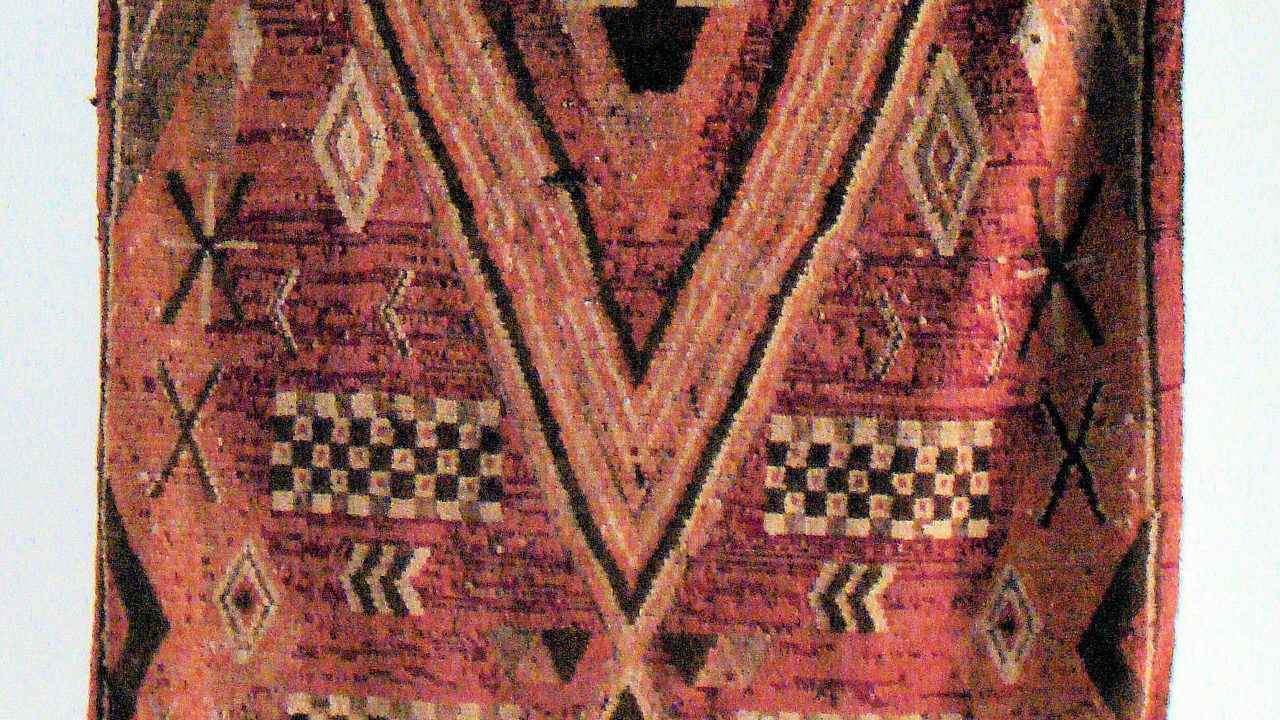
Reading the motifs
Ask a seller about the meaning of a motif and you will often hear stories: a diamond for protection, a hand or an eye against bad luck, a zigzag for water, a small figure for a family member or an animal of the farm. Interpretations vary from one weaver to another, and many motifs are simply chosen because they are beautiful. What matters is that each rug carries the personal vocabulary of the woman who made it — which is what makes Chichaoua carpets so endearing.
How a carpet is woven
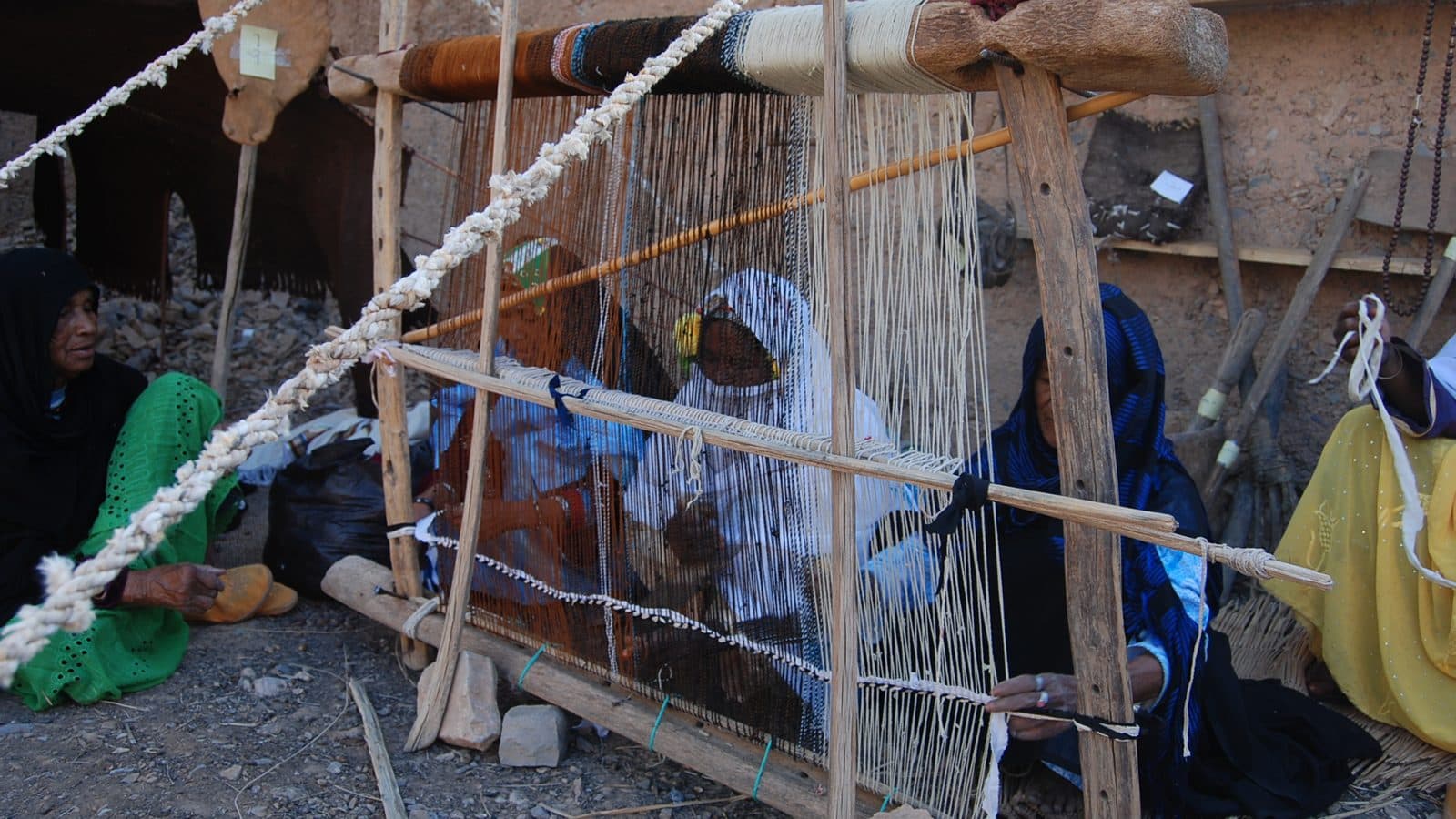
Rugs are made on a vertical loom set up in the house or in the courtyard of a cooperative. The weaver ties each knot by hand around the warp threads, row after row, and beats each row down with a heavy comb. A medium-sized rug can take weeks or months of work, often shared between several women of the same family. Patterns are rarely drawn in advance: they come from memory and from the weaver's own imagination — which is why no two rugs are the same.
Buying a Chichaoua carpet: our tips
- Turn it over. The back shows the knots: a regular, dense pattern is a sign of careful work.
- Feel the wool. Good wool is soft, springy and slightly oily; very harsh or shiny fibres may be synthetic.
- Ask about the dyes. Natural dyes give slightly irregular, harmonious shades; strong, uniform colours are often synthetic — not necessarily a problem, but it should be reflected in the price.
- Measure your space before you go, and take photos of the room where the rug will go.
- Take your time and compare. A first price is an invitation to discuss. Never feel obliged to buy after a glass of tea.
- Ask about shipping if the rug is large: many shops ship abroad, but confirm the cost and delivery time in writing.
Our guide to the Marrakech souks has more advice on bargaining, and our guide to weekly Berber markets shows where rugs are traded in the countryside.
Where to see and buy Chichaoua carpets
- In Chichaoua itself, in the shops and women's cooperatives along the main road — the most direct way to buy from the region.
- In the souks of Marrakech, where Chichaoua rugs sit alongside rugs from the Middle Atlas, the High Atlas and the south.
- In Essaouira, in a few carpet shops of the medina, and in the town's ethnographic collections, which display textiles of the region.
Stopping in Chichaoua on your transfer
Chichaoua is about an hour from Marrakech on both the road to Essaouira and the road to Agadir, so it fits naturally into a transfer:
- Marrakech → Essaouira: our Marrakech to Essaouira transfer costs from €90 per vehicle for up to three passengers at the time of writing; ask your driver for a stop in Chichaoua, then continue with breakfast in Sidi El Mokhtar — see the best stops on the Marrakech to Essaouira road.
- Essaouira → Marrakech: with the Essaouira to Marrakech transfer, Chichaoua makes a good lunch stop.
- Marrakech → Agadir: our Marrakech to Agadir transfer also passes the Chichaoua junction.
Short stops are normal on a private transfer; for a longer visit to a cooperative, mention it when you book. In late October 2026, you can also combine Chichaoua with the tbourida of the Moussem of Sidi El Mokhtar, 25 km further on.
Make it a day in the countryside
Once in Essaouira, our half-day argan route excursion continues the story of rural crafts with a women's argan cooperative. Chichaoua carpets, argan oil, pottery from Safi: the road to the ocean is a road of craftswomen — contact us and we will plan the stops with you.