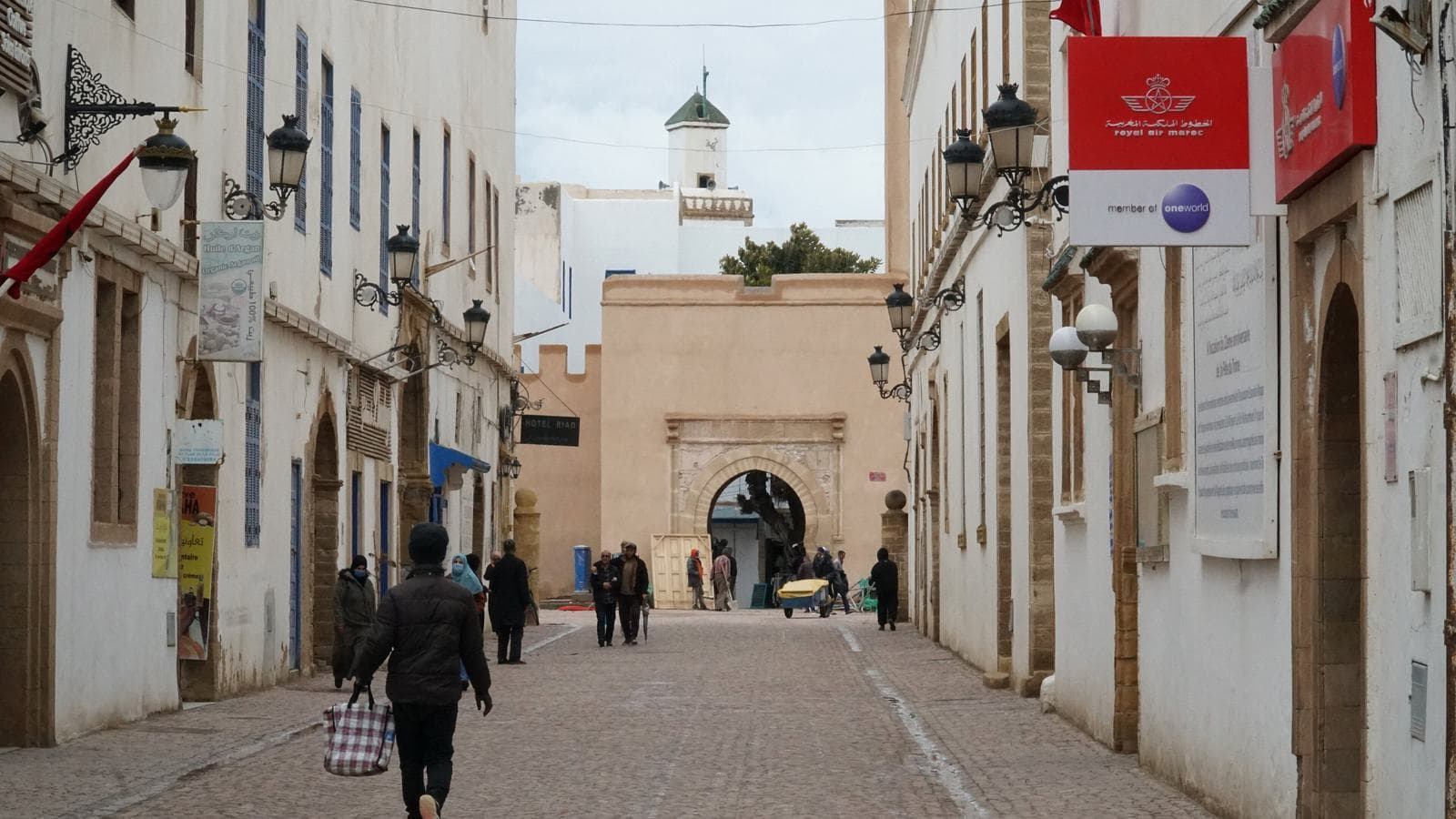
Some old towns overwhelm you. The Essaouira medina does the opposite: its main streets are straight, its alleys are short, the sea is never more than a few minutes away and you can cross the whole thing in fifteen minutes. That makes it the perfect place to explore on foot, at your own pace, without a guide pulling you from shop to shop.
Here is the walk we suggest to our passengers on their first morning in town.
A short history of the Essaouira medina
People have used this sheltered bay for a very long time, and in the early 16th century the Portuguese built a fortress here. But the town you walk through today dates from the 1760s, when Sultan Mohammed ben Abdallah decided to build a new royal port on the Atlantic. Part of the plan was drawn by the French engineer Théodore Cornut, which explains the European-style bastions and the unusually regular grid of streets inside the walls.
For a century, the town — known to Europeans as Mogador — was one of Morocco's busiest ports, trading with Europe and with the caravan routes of the Sahara. Merchants of many origins lived here, including a large Jewish community. In 2001, the Essaouira medina was listed as a UNESCO World Heritage Site as an exceptional example of a fortified 18th-century port town.
A walking route through the Essaouira medina
Allow two to three hours at an easy pace, more if you stop in the workshops. The route is flat, and you can pause for a coffee or a fresh orange juice at almost any corner.
1. Moulay Hassan Square and the port
Start on the big open square between the medina and the harbour. Cafés with terraces face the sea wind, and this is the place for a first mint tea. A few steps away, the fishing port fills with blue boats, gulls and nets; go in the late morning when the catch is landed.
2. The Skala du Port
The sea fortress at the harbour entrance is one of the icons of Essaouira. For a small entry fee you can climb onto its walls for the famous view back across the port to the white-and-blue medina. It is also a superb spot at sunset.
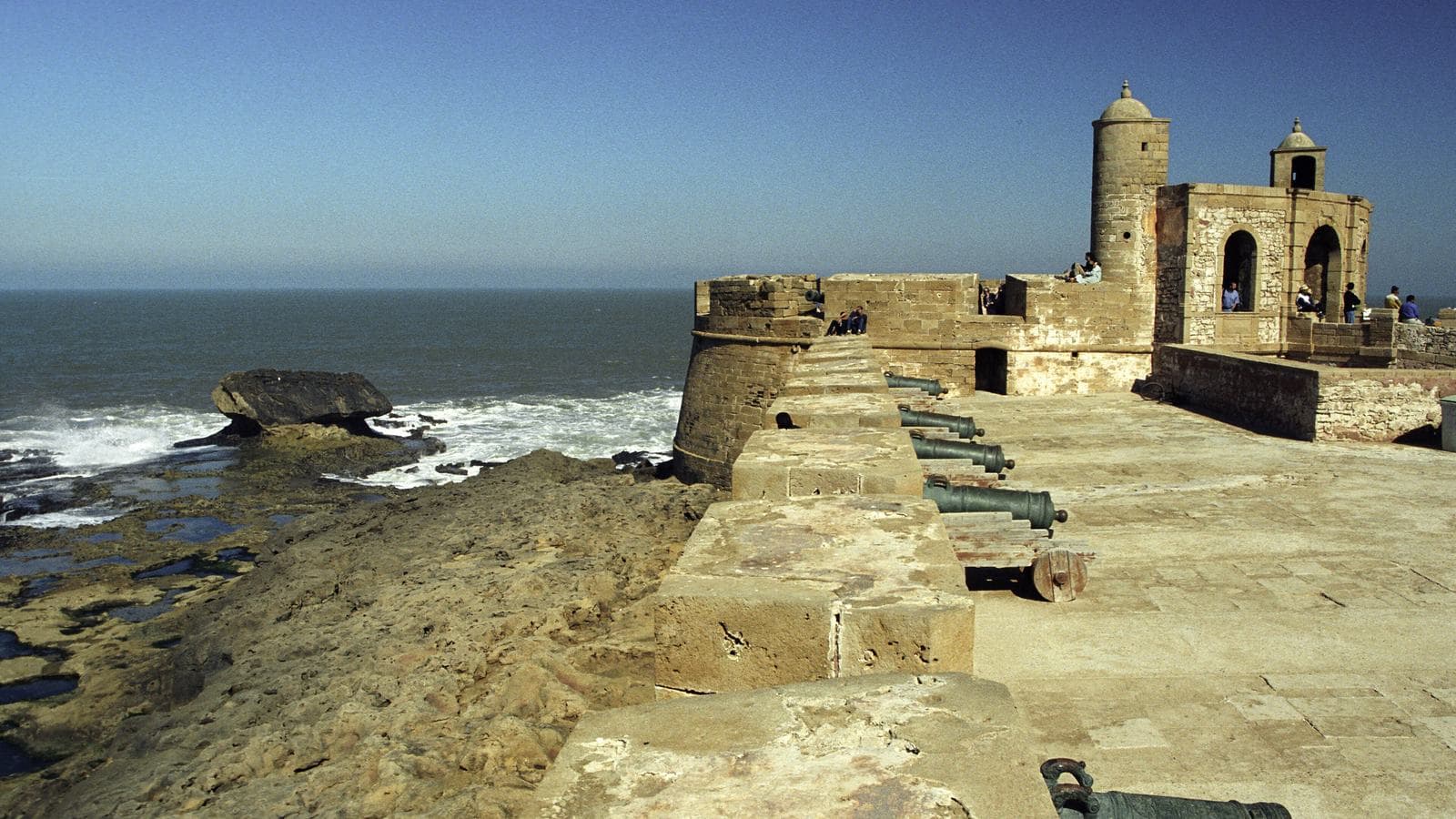
3. The Skala de la Ville and its cannons
Walk back into the medina and follow the ramparts north to the Skala de la Ville, a long sea bastion lined with old cannons pointing out to the Atlantic. Waves break on the rocks below and the view stretches along the coast. Film lovers may recognise it: Orson Welles shot scenes of his Othello here, and much later the walls became the city of Astapor in Game of Thrones.
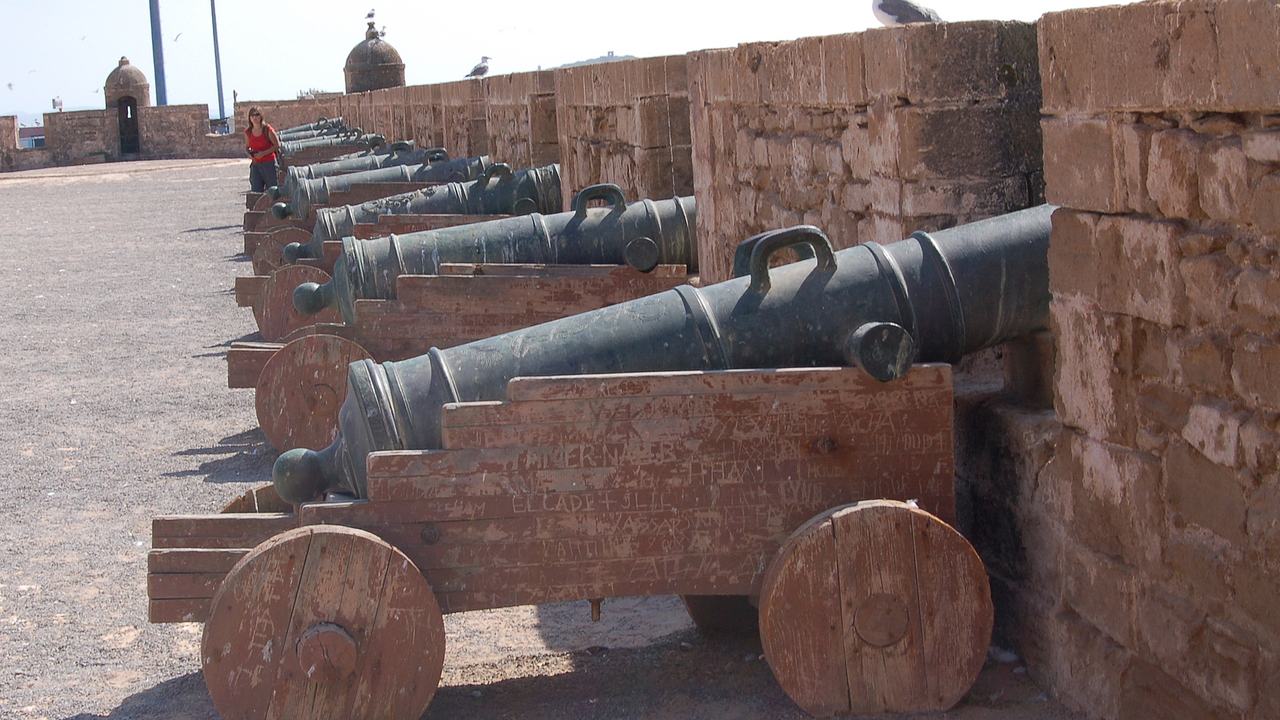
4. The thuya wood workshops
Built into the arches beneath the Skala de la Ville are the workshops of Essaouira's thuya wood craftsmen. Thuya is a fragrant local wood, and its burl is carved and polished into boxes, bowls and chessboards, often inlaid with lighter woods. Step inside, breathe in the scent and watch the work — nobody minds if you just look.
5. The Mellah
At the northern end of the medina lies the Mellah, the historic Jewish quarter. Its streets are quieter and some houses are still being restored. Visit Bayt Dakira, a heritage house that tells the story of the Jewish community that once made up a large part of the town's population.
6. The main streets and the souks
Walk back south along the two long main streets, lined with shops selling spices, silver jewellery, argan products and textiles. Around the central crossroads, the covered markets sell fish, spices and grain to local families. The atmosphere is relaxed: shopkeepers call out, but rarely insist.
7. The gates
Finish at one of the medina's monumental gates, such as Bab Doukkala in the north-east or Bab Marrakech to the east, where the old walls meet the modern town.
Practical tips for exploring
- Go early or late. Mornings are calm and the light is soft; the Skala de la Ville is at its best at sunset.
- Bring a layer. The sea wind on the ramparts can be cool, even in summer.
- Wear flat shoes. The ramparts and old paving are uneven in places.
- Ask before photographing people, especially craftsmen at work.
- Carry small change for the Skala du Port entrance, a coffee and small purchases.
Beyond the walls
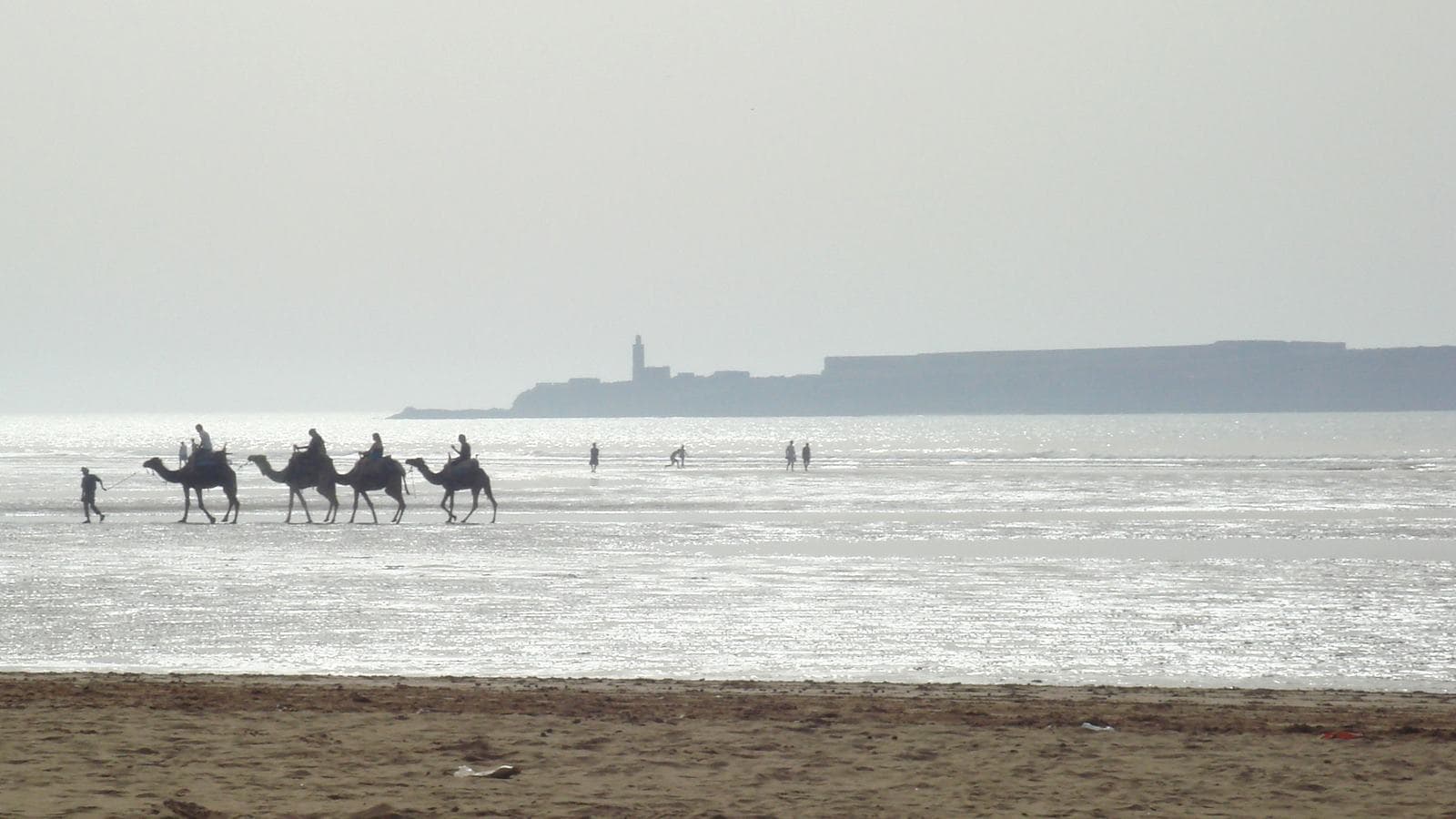
The Essaouira medina is only the beginning. The beach, the dunes and the argan countryside start a few minutes away — our Essaouira half-day tour covers the best of them in four hours. For the bigger picture, read our Essaouira travel guide, then plan your stay with our guides to where to stay in Essaouira and where to eat in Essaouira. Arriving from Marrakech? Our Marrakech to Essaouira transfer drops you at the gate nearest your riad, ready to start walking.