Few Moroccan towns were shaped by their Jewish community as deeply as Essaouira, the former Mogador. A Moroccan academic study published in the journal Hespéris-Tamuda notes that, at certain periods of its history, Jews made up between 50% and 60% of the town's population, and André Azoulay, quoted by Le360, describes it as the only town in the land of Islam to have had a Jewish majority. The Jewish heritage in Essaouira — the mellah, the synagogues, the old cemetery and Bayt Dakira — is the visible trace of that history.
This guide sums up what Moroccan historians, the Moroccan press and official sources say about it, then suggests a walk. All the sources are listed at the end of the article.
A short history of Jewish Mogador
Sultan Sidi Mohammed Ben Abdallah (1757–1790) chose Mogador to host a royal port, designed as a centre of trade open to the world. As soon as the port opened, writes the historian Mina El Mghari of Mohammed V University in Rabat, the sultan surrounded himself with Jewish advisers. One of them, Samuel Sumbal, selected the most respected Jewish merchants of the country's main trading centres and brought them to Essaouira. These tujjar as-sultan, "the sultan's merchants", lived in the first core of the town, the old Qasba.
At a round table organised by the Essaouira-Mogador association and reported by Hespress, the researcher Sidney Corcos explained that the sultan encouraged these merchants to settle in order to boost the port. Fluent in foreign languages and well connected abroad, they helped the port of Mogador handle, at certain periods, nearly 80% of Morocco's trade flows.
The community kept growing. In 1774 the town received its first large wave of Jewish immigrants, some 2,000 people from Agadir and its surroundings, according to El Mghari. And according to the figures André Azoulay gave Le360, at the beginning of the nineteenth century Mogador had 22,000 inhabitants, 16,000 of them Jews.
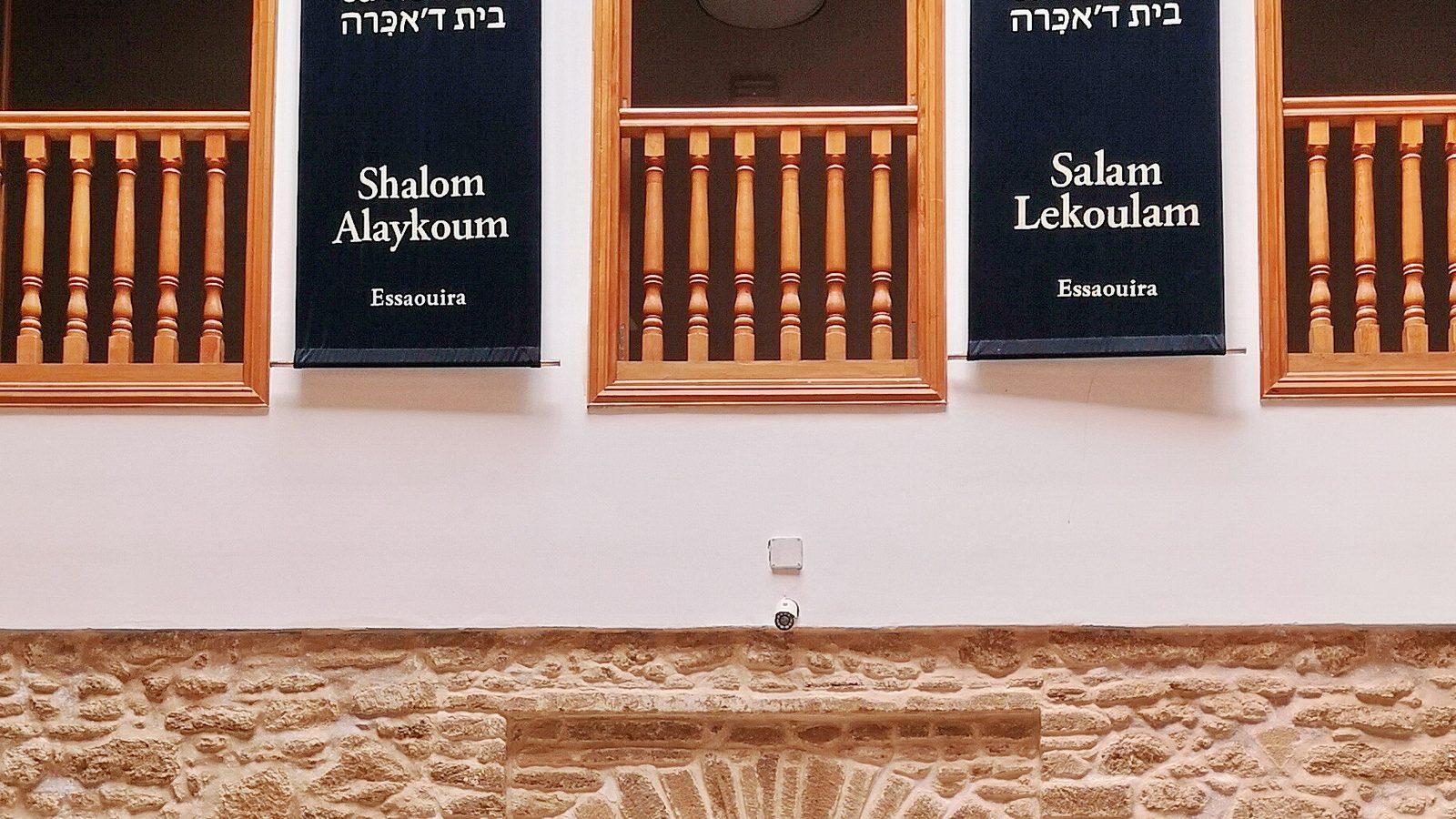
The twentieth century reversed the trend. Le360 recalls that Moroccan Jews numbered about 250,000 at the end of the 1940s, nearly 10% of the country's population, and that many left after 1948. In Essaouira, Hespress reported in 2017 that the Jews of the town had left the mellah after independence, and that only one Jewish resident born in the town still lived there. Since January 2020, Essaouira has had a place dedicated to this memory: Bayt Dakira.
The mellah
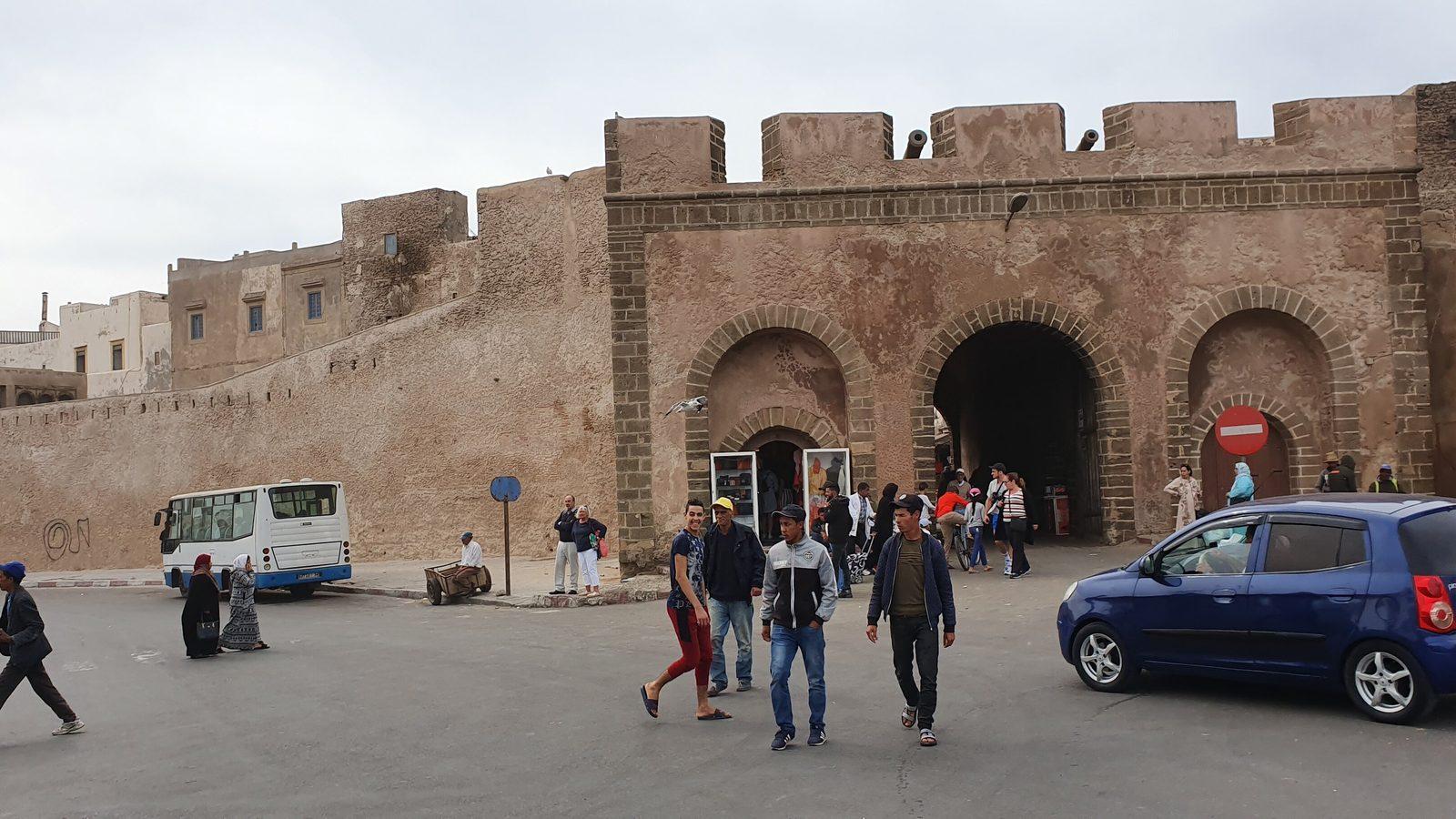
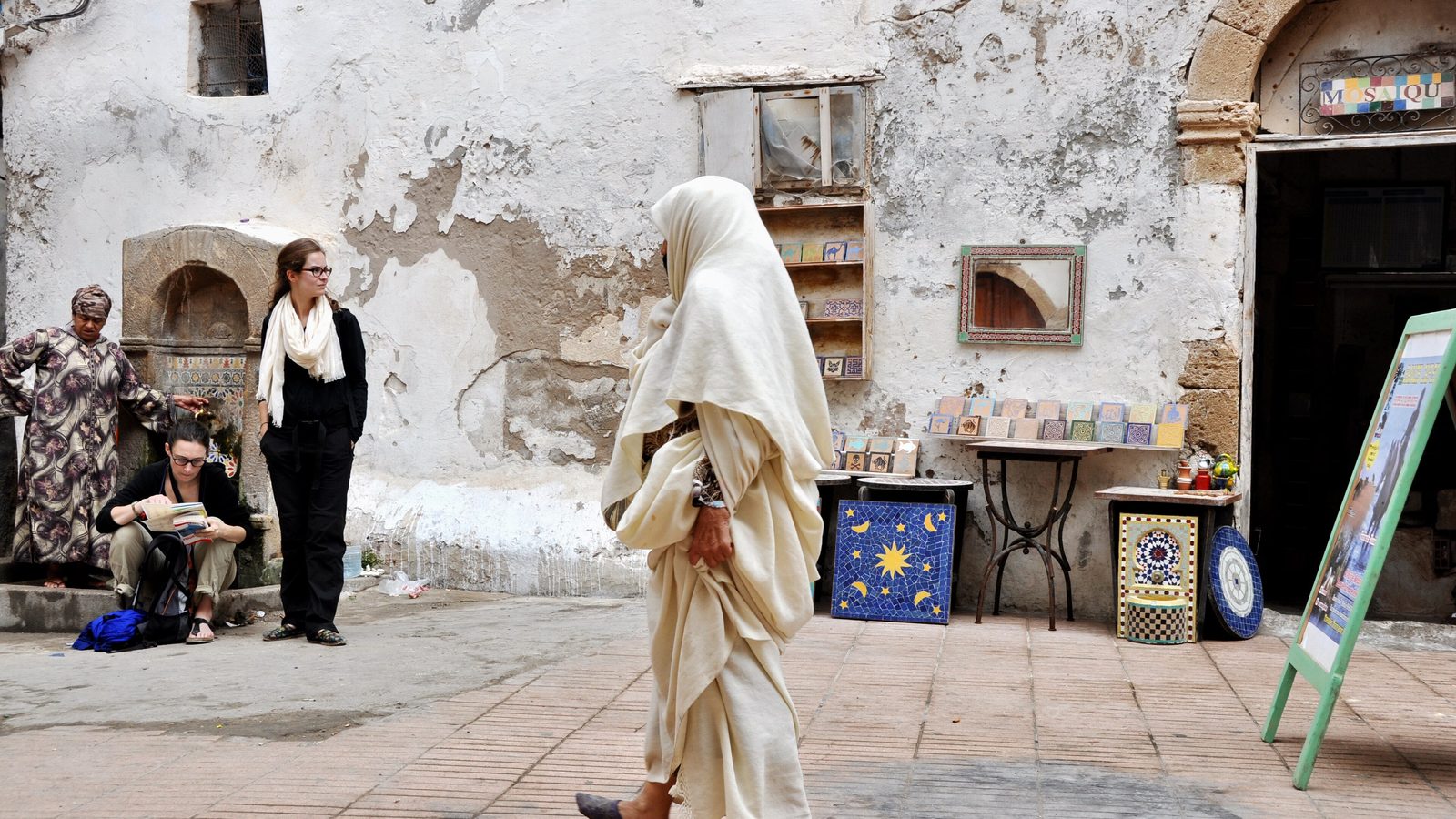
The mellah is the old Jewish quarter of the medina. According to El Mghari, from 1804 the name came to designate a quarter of about four hectares built on the western sea front, protected on the ocean side by the town wall. It was entered on one side through a covered street (sabat) next to the great stone arch of Bab Doukkala, and on the other through a wide square, Boutouil, which joins the rest of the medina; it was never walled off from the town. The historian describes multi-storey houses, mills, ritual baths (mikvaot) and synagogues, and quotes a letter from the French consul of 1865 describing major works: paved streets, drainage and lantern lighting.
More recently, the complementary programme to rehabilitate the old medina (2019–2023, about 300 million dirhams) included the redevelopment of the El Mellah I and II squares and the restoration of the Slat El Kahel synagogue, Le360 reported in 2020.
The synagogues
Mogador had a great many places of worship. El Mghari counts, at certain periods, more than 29 synagogues in the mellah and 9 in the Qasba; Le360 gives a total of 37, most of them now in ruins; a MAP dispatch published by Al3omk speaks of about 40 in the past. Before Aaron Aflalo (who died in 1849) built the first large synagogue of the town, prayer rooms were set up inside the large houses.
Today, two synagogues mark the mellah:
- The Rabbi Haim Pinto synagogue, in the heart of the mellah. When Hespress visited in 2017, a guardian was welcoming visitors and telling them its story. Read our article on the hiloula of Rabbi Haim Pinto.
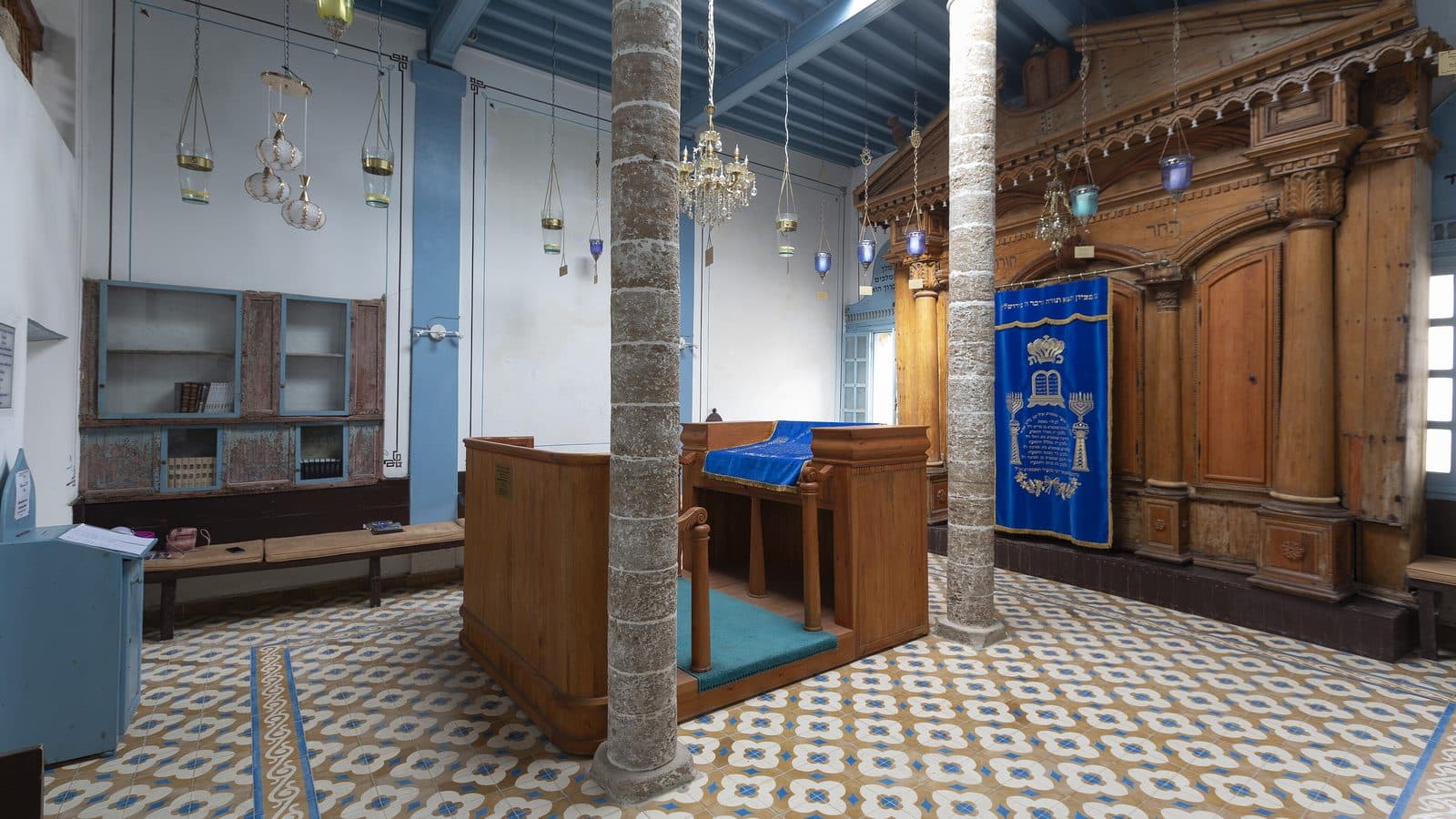
- Slat Lkahal, about 100 metres away, according to Hespress. El Mghari explains that it was built entirely by the Jewish community of Essaouira from 1850, with funds collected at funeral ceremonies — hence its name, "the synagogue of the community". Morocco reopened it in October 2017, in line with the policy of protecting Jewish heritage (MAP dispatch published by Al3omk).
A third synagogue, Slat Attia (or Simon Attias), is at the heart of Bayt Dakira. El Mghari calls it the most important Jewish place of worship of the nineteenth century, a synagogue and rabbinical court with a large blue-painted wooden door framed by dressed stone. Le360 tells its story: construction began in 1892 at the initiative of Mima, widow of the merchant Simon Attia, and the building was restored between 2015 and 2018 — see our guide to Bayt Dakira.
The old Jewish cemetery
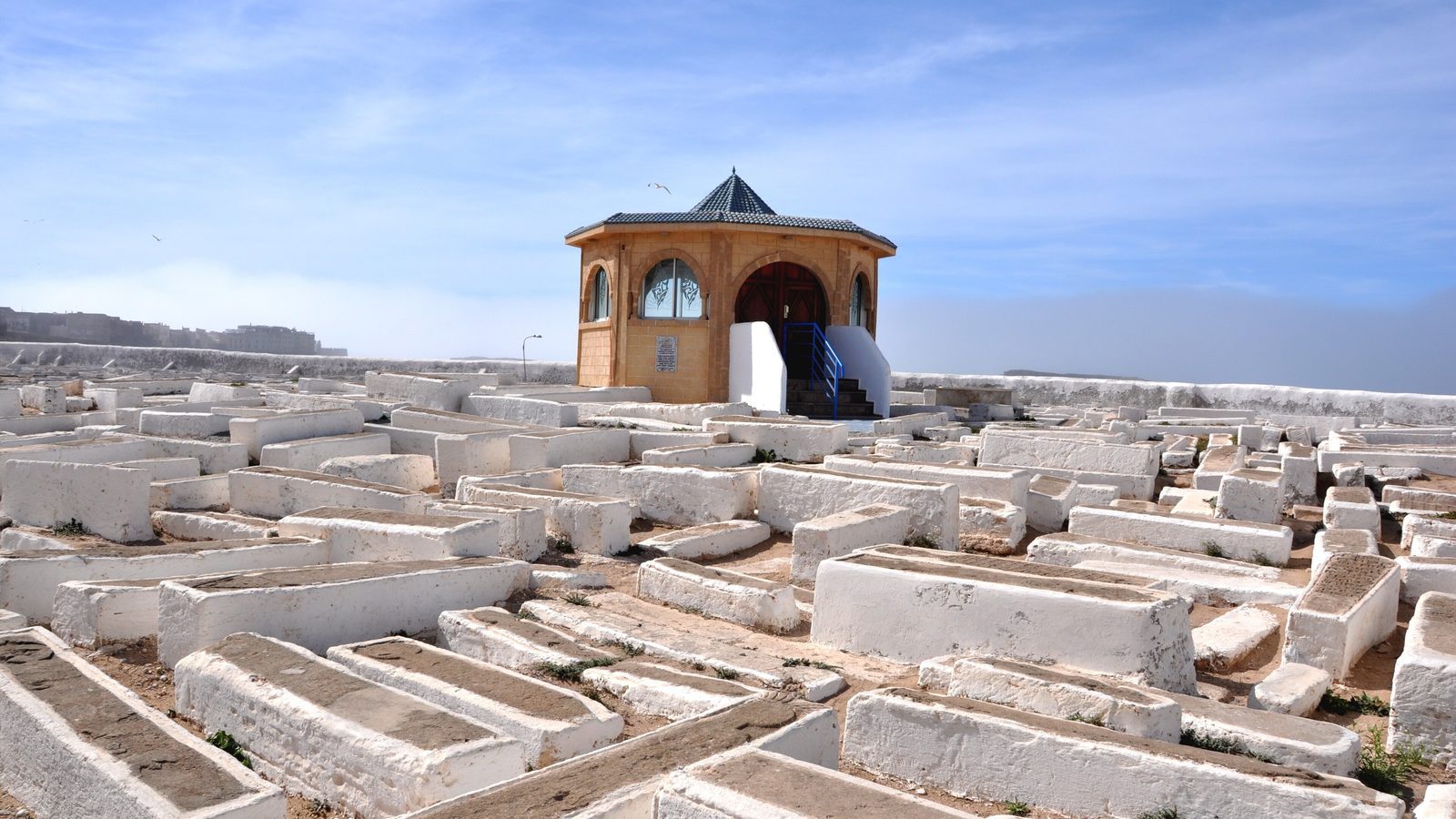
The tomb of Rabbi Haim Pinto lies in the old Jewish cemetery of Essaouira, the heart of the annual hiloula, according to Hespress. The same outlet describes a vast cemetery next to a Christian cemetery, both opening onto a main street used by the Muslim residents of the town, and guarded by a Muslim family who inherited the task. Le360 adds that, with those of Tangier, Tetouan and Fez, Essaouira's is one of only four Jewish cemeteries in Morocco to have been studied in depth, and that some tombs on the coast are anthropomorphic: in Essaouira, the human form is clearly visible.
A walk through the Jewish heritage of Essaouira
- Enter the mellah on the Bab Doukkala side, where El Mghari places the historic covered entrance to the quarter — our guide to Essaouira's medina gates explains where your driver will drop you.
- See the Rabbi Haim Pinto synagogue, in the heart of the mellah.
- Walk on to Slat Lkahal, about 100 metres away.
- Visit Bayt Dakira and the Slat Attia synagogue.
- Pay your respects at the old Jewish cemetery and the tomb of Rabbi Haim Pinto.
Then continue with our medina and ramparts walking guide.
When to visit
Two events bring this heritage to life:
- The hiloula of Rabbi Haim Pinto, held on the anniversary of his death, 26 Elul in the Hebrew calendar (Hespress). The editions covered by the Moroccan press took place in September.
- The Festival des Andalousies Atlantiques, which André Azoulay describes as the moment when "Islam and Judaism meet, once a year" (Hespress). Its 21st edition takes place from 29 to 31 October 2026, with a forum at Bayt Dakira (Le360). Our listener's guide to Andalusian music in Morocco explains the repertoire.
Getting to Essaouira
From Marrakech, our Marrakech to Essaouira transfer takes about 2 h 30 and costs from €90 per vehicle at the time of writing. If you arrive via Casablanca, our Essaouira to Casablanca airport transfer covers the route in about four hours, from €190 per vehicle. From Essaouira-Mogador airport, the airport transfer takes twenty minutes. To discover the countryside around the town, add our half-day argan route excursion.
Contact us and we will help you plan the trip.
Sources
- Mina El Mghari, "Présence juive à Mogador/Essaouira (1760-1873)", Hespéris-Tamuda LI (2), 2016 — Mohammed V University, Rabat.
- Hespress FR, "Essaouira : Rencontre-débat autour de l'histoire de la communauté juive de la ville", 24 December 2019.
- Le360, "Mémoire commune entre juifs et musulmans : à Essaouira, l'important travail de préservation d'un héritage plurimillénaire", 19 January 2020.
- Le360, "De Slat Attia à Bayt Dakira : une histoire d'amour, de foi et de mémoire judéo-marocaine", 21 September 2025.
- Le360, "Essaouira : forte impulsion royale au programme complémentaire de réhabilitation de l'ancienne médina", 15 January 2020.
- Le360, "Près de 180 cimetières et sanctuaires juifs restaurés depuis 2010, une deuxième campagne attendue", 21 October 2026.
- Le360, "Essaouira : la rencontre longtemps rêvée du Piyut et des Gnaoua aux Andalousies Atlantiques", 20 October 2026.
- Hespress, "بازارات وأحياء الصويرة .. التعايش يلم يهودا ومسلمين ومسيحيّين", 25 September 2017.
- Hespress, "حضور هيلولة الصويرة يحطم رقما قياسيا", 19 September 2022.
- Hespress, "الطائفة اليهودية: صلوات هيلولة الصويرة تنشد تحقيق السلام للجميع", 22 September 2025.
- Hespress FR, "Andalousies Atlantiques d'Essaouira ou quand un festival restitue la mémoire de la communion judéo-musulmane", 13 January 2021.
- Al3omk (MAP dispatch), "من بين 40 كنيسا يهوديا بالصويرة.. المغرب يعيد افتتاح صلاة الكحل", 29 October 2017.
- MAP, "المدينة العتيقة للصويرة .. أمير المؤمنين يزور بيت الذاكرة", 15 January 2020.