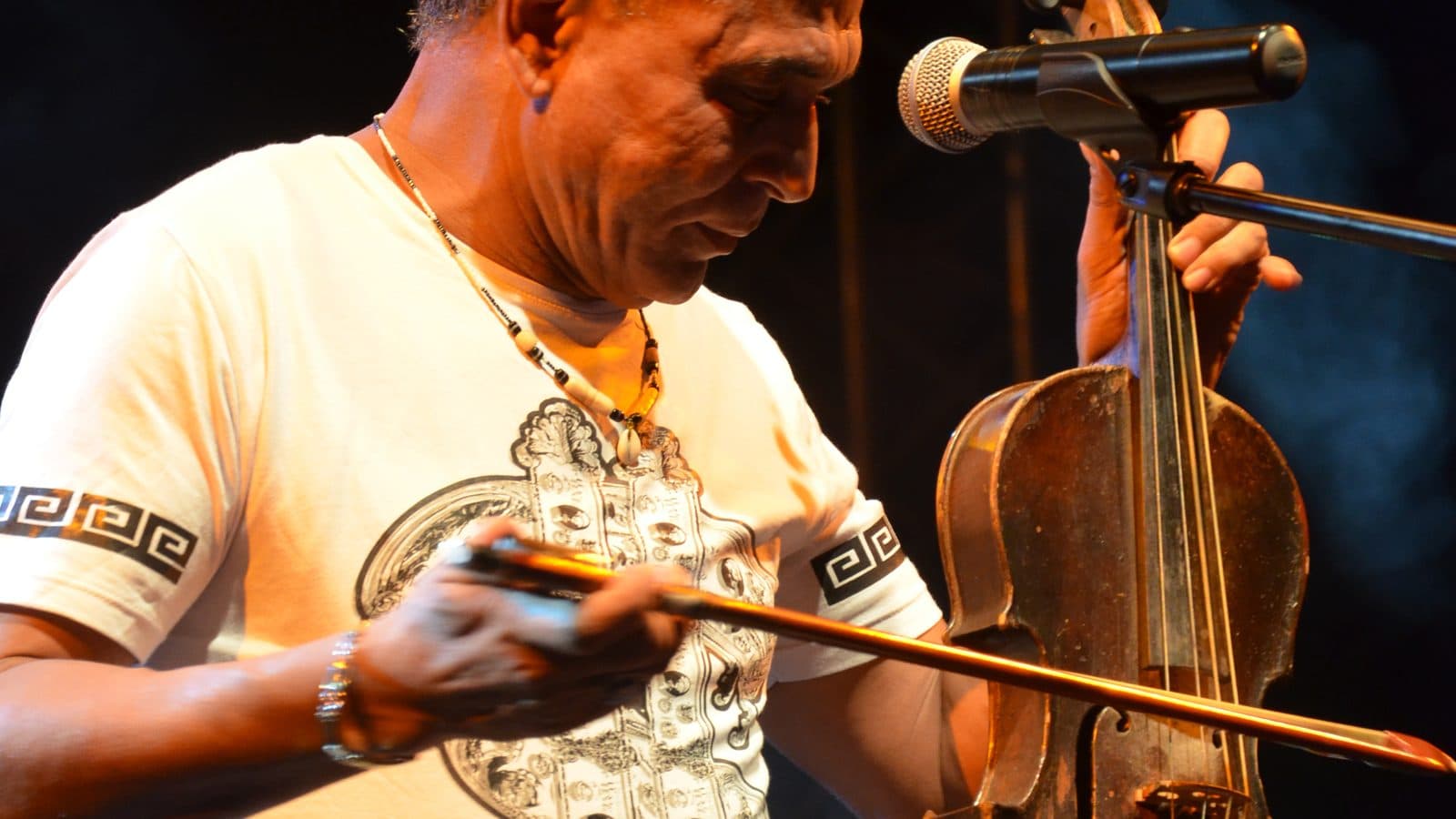
The first time you hear a Moroccan Andalusian orchestra, you may be surprised: a violin played upright on the knee, a lute, a small drum, a choir answering the soloist — and pieces that last not three minutes but an hour, slowly gathering speed. Andalusian music in Morocco is a classical tradition that crossed the Mediterranean centuries ago and still fills concert halls, weddings and festivals today, including Essaouira's Andalousies Atlantiques.
You do not need to be a musicologist to enjoy it. This guide gives you the keys in ten minutes.
Where Andalusian music in Morocco comes from
The tradition was born in al-Andalus, the Muslim Iberian Peninsula, between the ninth and the fifteenth centuries. Tradition credits the musician Ziryab, who arrived in Córdoba in the ninth century, with founding its first great school. As the Christian kingdoms advanced and Granada fell in 1492, Muslims and Jews from al-Andalus settled in North Africa, bringing their poetry and their music with them.
In Morocco, the repertoire took root in the cities of the north and the centre — Fez, Tetouan, Chefchaouen, Rabat, Salé, Tangier, Meknes — and was passed down orally, from master to pupil, for generations. In the eighteenth century, the scholar al-Haik compiled the sung poems in an anthology that orchestras still use.
Al-âla and the nuba: how a concert is built
Moroccan Andalusian classical music is called al-âla, "the instrument" — to distinguish it from the a cappella religious chant. It is organised in nubas, long suites each built on one musical mode. Legend speaks of twenty-four nubas; eleven have survived in the Moroccan tradition.
Each nuba is divided into five movements, each with its own rhythm:
| Movement | Character |
|---|---|
| Basît | Slow, majestic opening |
| Qâ'im wa nisf | Moderate, swaying |
| Btâyhî | Broad and lyrical |
| Darj | Livelier, more dancing |
| Quddâm | Fast, joyful finale |
Within each movement, the tempo accelerates. That is the secret of the genre: the music starts calmly and carries the audience towards a rapid, exhilarating finish. A full nuba can last several hours; concerts usually present extracts.
The instruments
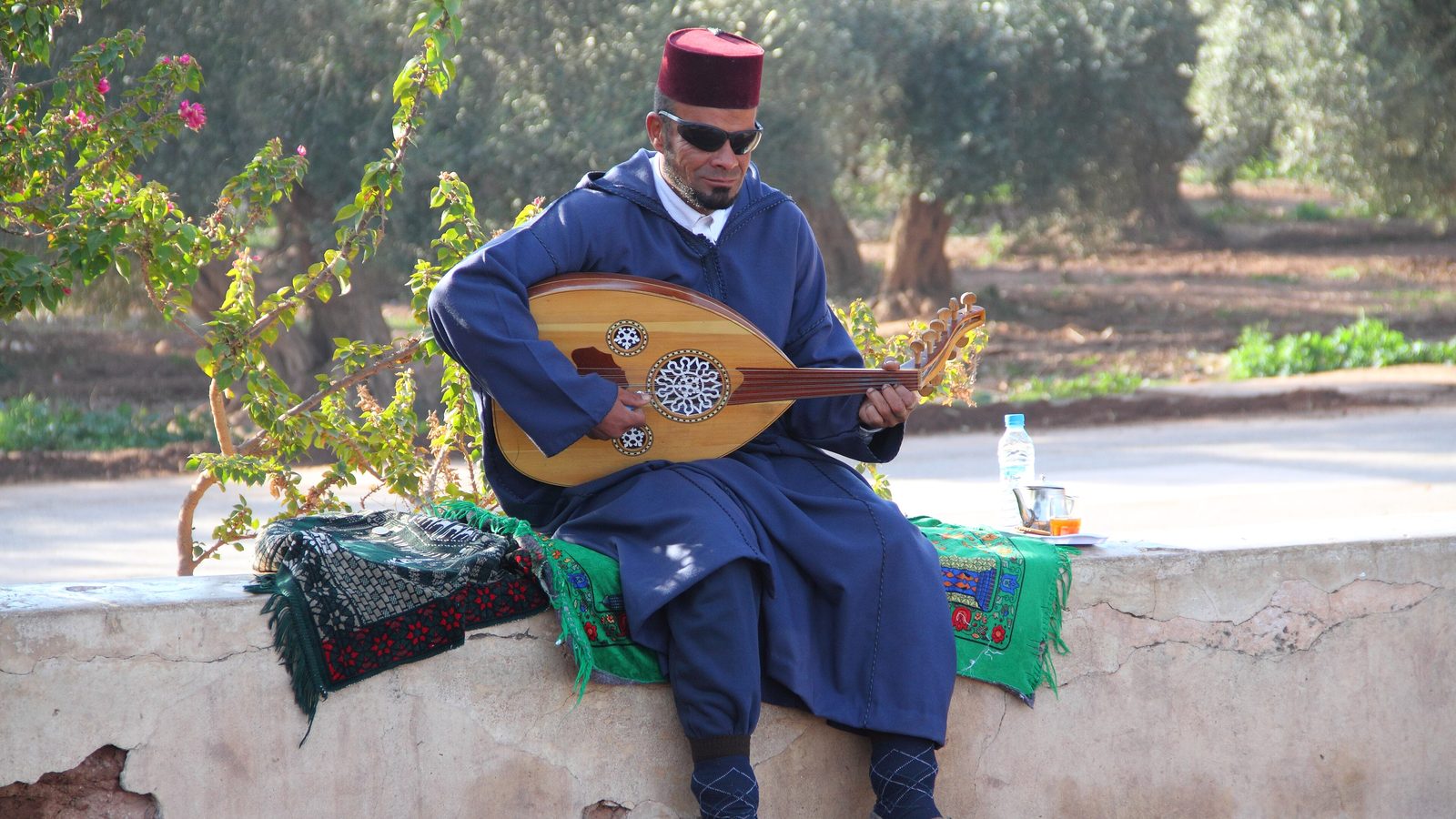
- Oud: the short-necked lute, voice of the orchestra.
- Rebab: a two-string bowed instrument, the historical leader of the ensemble.
- Kamanja: the violin, played vertically on the knee — the image you will remember.
- Qanun: a plucked zither, in some ensembles.
- Tar and darbuka: a small frame drum with cymbals and a goblet drum for the rhythm.
The singers — a soloist and a choir that is often the orchestra itself — alternate verses in classical Arabic and in more popular forms.
Gharnati, matrouz and malhoun: the cousins
- Gharnati, "from Granada", is a related Andalusian tradition kept alive in Oujda and Rabat, as well as in western Algeria.
- Matrouz, literally "embroidered", is a Judeo-Moroccan art of song that weaves Arabic and Hebrew verses together. Jewish and Muslim musicians long shared the same masters and the same stages — which is exactly what the Andalousies Atlantiques celebrate in Essaouira.
- Malhoun is not strictly Andalusian but often heard alongside it: sung poetry in Moroccan Arabic, born in the cities of Fez, Meknes, Marrakech and Salé, and added by UNESCO to its intangible heritage list in 2023.
Three masters to know
If you want to listen at home before or after the festival, three names will lead you to the classic recordings of the twentieth century. Abdelkrim Raïs led the great Andalusian orchestra of Fez and trained generations of musicians. Moulay Ahmed Loukili shaped the Rabat school, and the city's orchestra still bears his name. In Tetouan, Mohamed Larbi Temsamani directed the orchestra that made the northern style famous. Their recordings are the best introduction to the nubas — and you will recognise the refrains when the audience sings along in Essaouira.
How to enjoy a concert
- Let it build. The beginning is slow on purpose; the energy comes with the accelerations.
- Watch the audience. Listeners sing along to refrains they know and greet a beautiful phrase with an "Allah!" — the Andalusian equivalent of applause.
- Read the context. At the Andalousies Atlantiques, the morning talks at Bayt Dakira give the music its history — see our guide to Bayt Dakira, Essaouira's house of memory.
- Dress for a cool hall. Late-October evenings are fresh in Essaouira's stone buildings.
Where to hear Andalusian music in Morocco — and in Essaouira
- Essaouira: the Festival des Andalousies Atlantiques at the end of October, plus concerts through the year at Dar Souiri. Our 3-day Andalousies Atlantiques weekend plan helps you organise a stay around the festival.
- Fez, Tetouan, Rabat and Chefchaouen: the historic homes of the great orchestras, with regular concerts and festivals.
- Weddings and family celebrations across northern and central Morocco.
Getting to the concerts in Essaouira
Most visitors come from Marrakech with our Marrakech to Essaouira transfer: about 2 h 30, from €90 per vehicle for up to three passengers at the time of writing. Flying in? The Essaouira airport transfer takes about twenty minutes, from €20. And for the way home after the festival, our Essaouira to Casablanca airport transfer gets you to your flight. Between two concerts, the half-day argan route excursion is a perfect morning out.
Andalusian music in Morocco rewards curious listeners — give it an evening, and contact us for the transport.