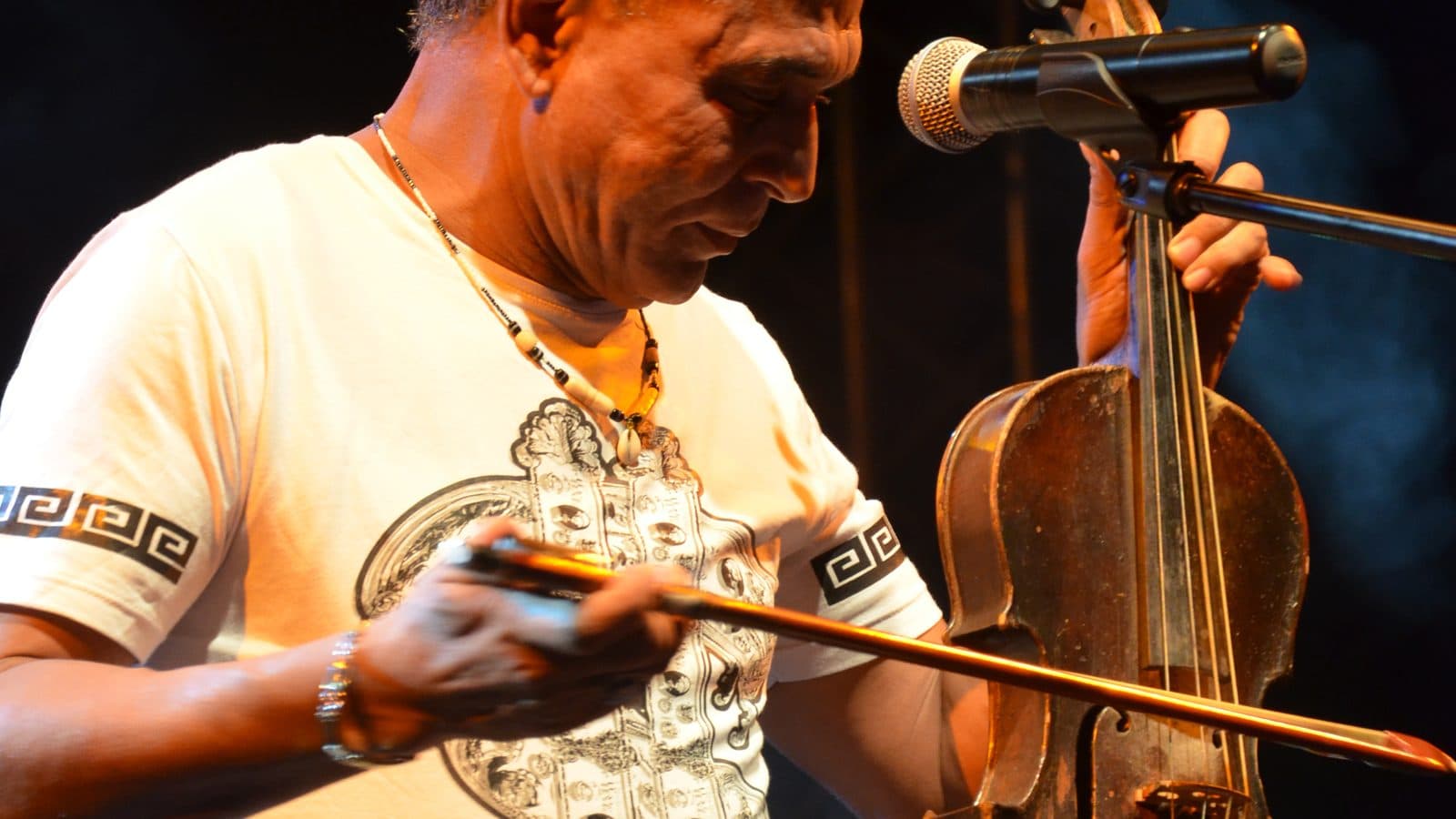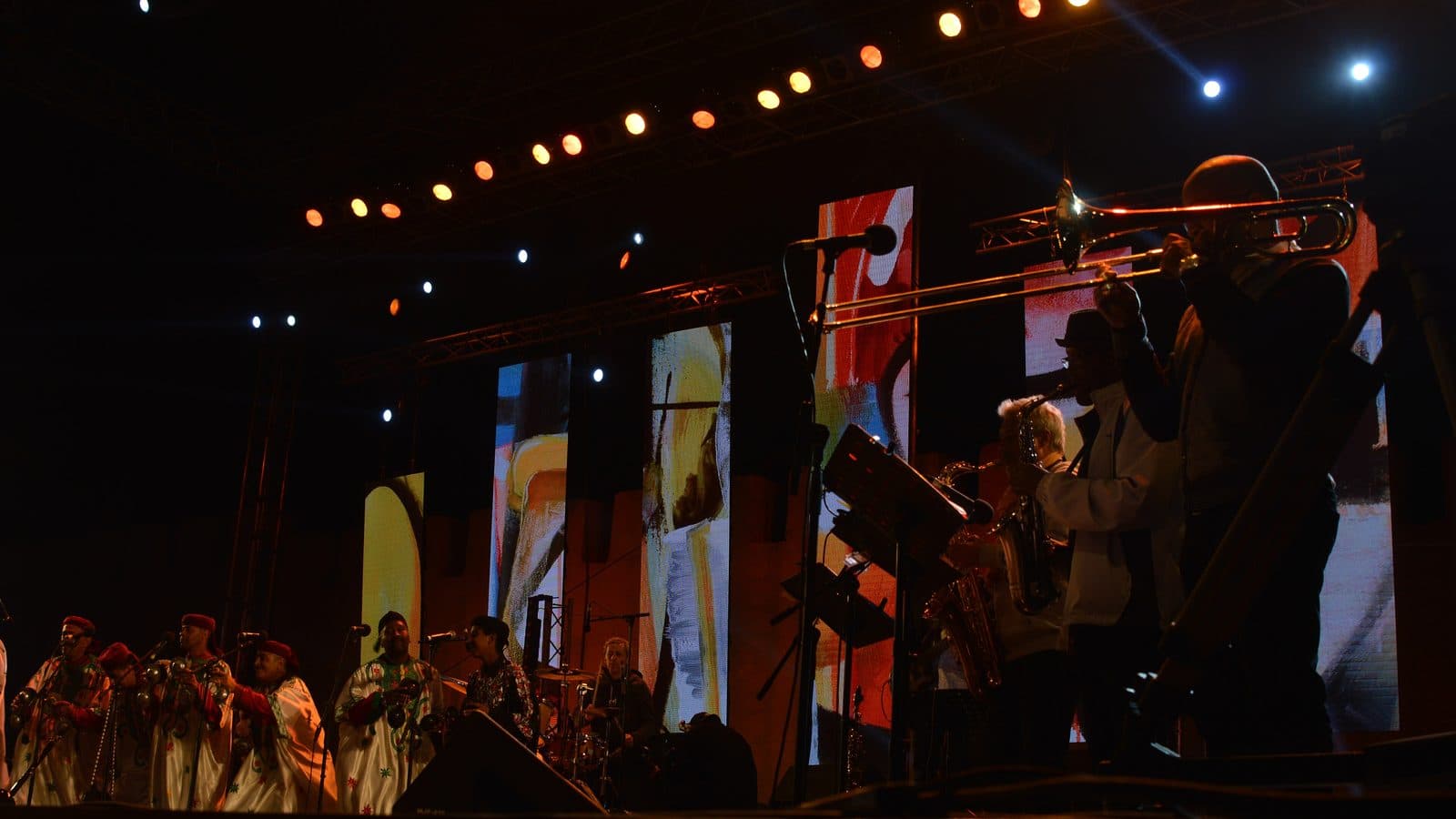
Close your eyes during a fusion concert in Essaouira and you will hear two worlds talking: the deep, hypnotic pulse of the guembri and the rattle of iron castanets on one side, a saxophone, a double bass or a drum kit on the other. Gnawa jazz is not a marketing label — it is the result of half a century of encounters between Moroccan masters and jazz musicians, and Essaouira is where those encounters became a tradition of their own.
Who are the Gnawa?
The Gnawa are a Moroccan brotherhood whose roots go back to sub-Saharan Africa. Their music accompanies the lila, an all-night ceremony of healing and trance, led by a master musician, the maâlem. Three elements define the sound:
- the guembri (or hajhouj), a three-string bass lute covered with camel skin;
- the qraqeb, heavy iron castanets played by the chorus;
- call-and-response singing, built on short, repeated phrases that slowly lift the listener.
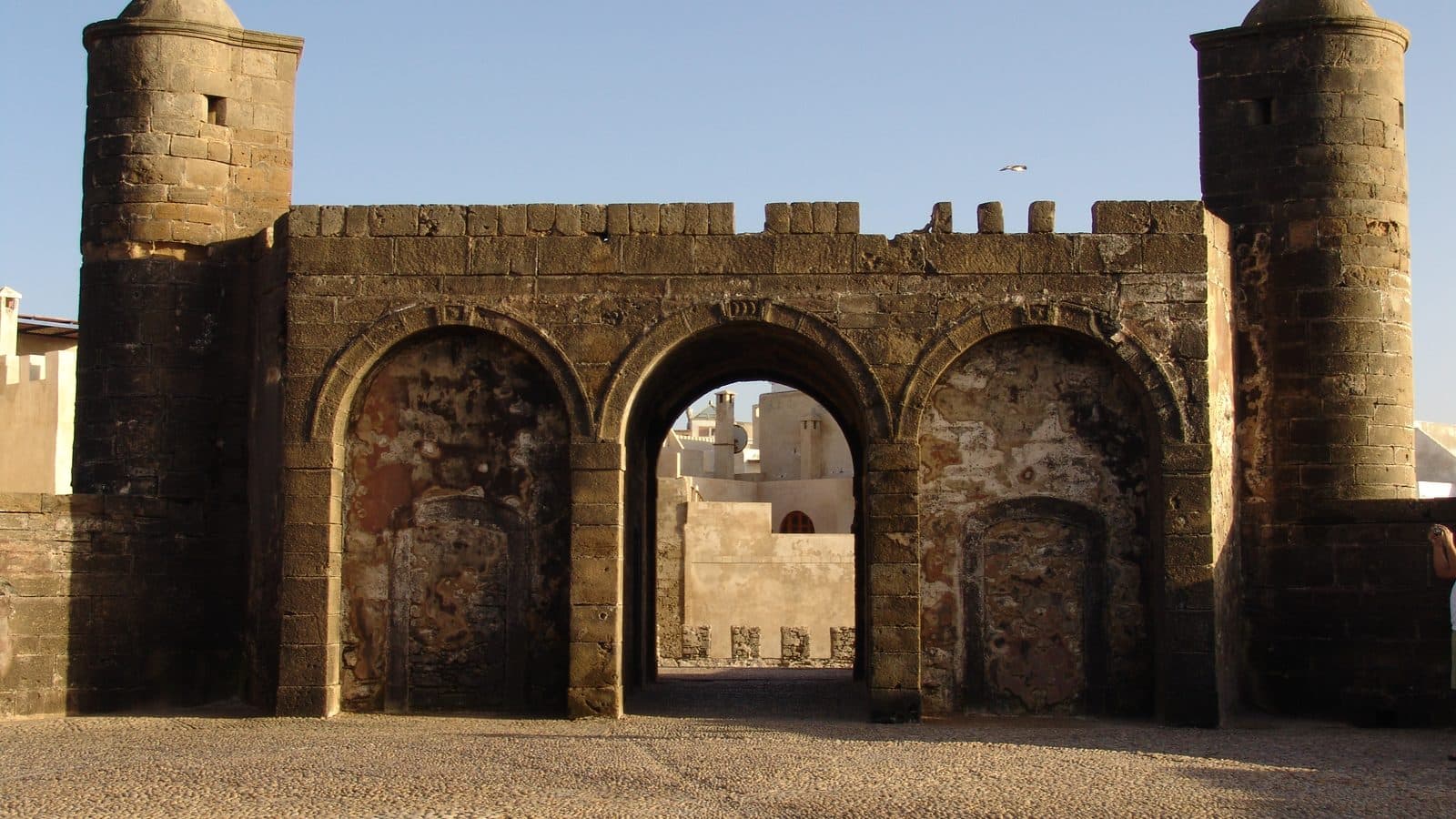
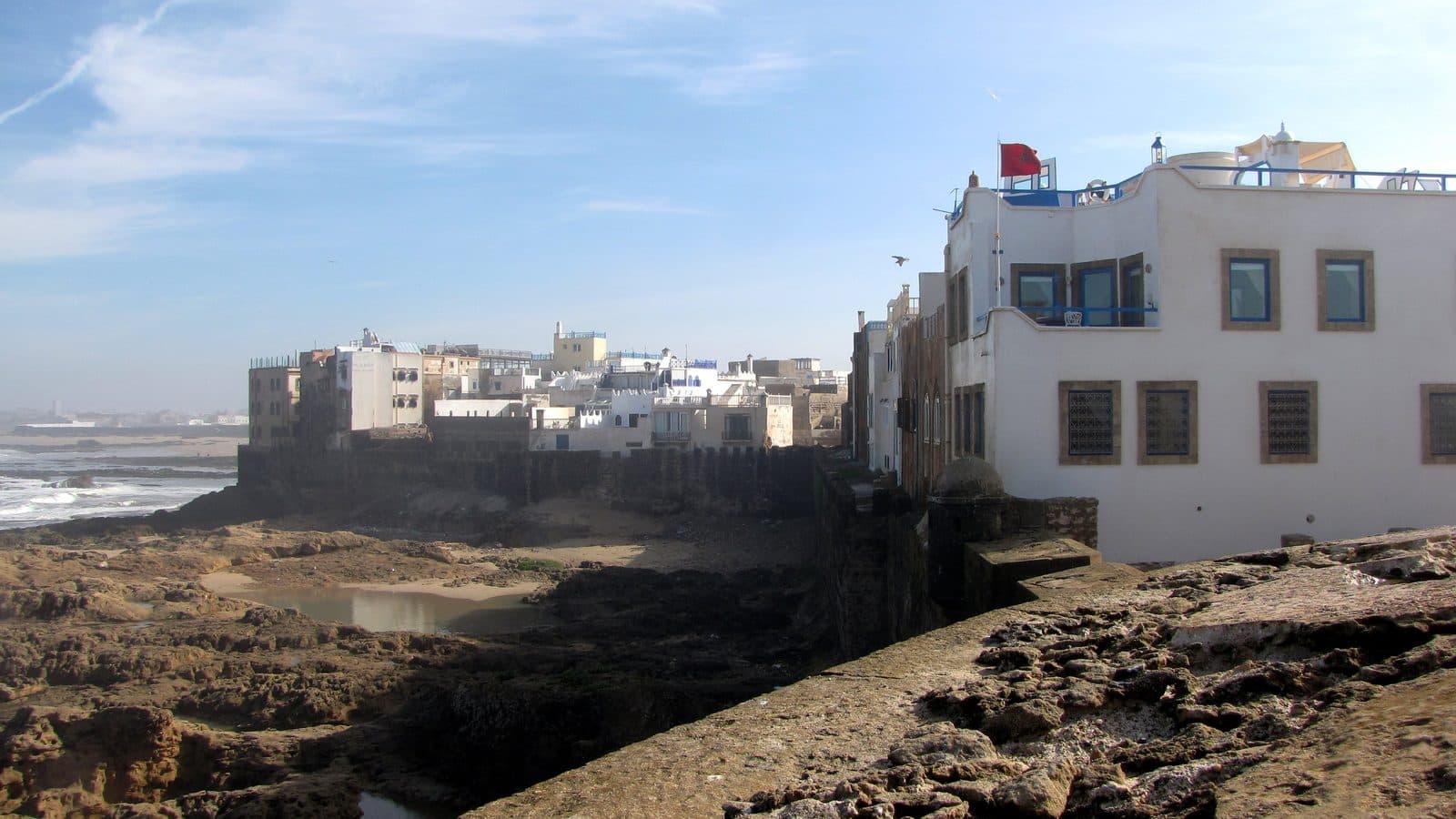
In December 2019, UNESCO inscribed Gnawa on its list of the Intangible Cultural Heritage of Humanity. Essaouira, with its large Gnawa community and its zaouia in the medina, has long been one of the brotherhood's homes.
When Gnawa met jazz
The two musics share a lot: African roots, blues-like scales, repetition, improvisation and a strong spiritual dimension. Jazz musicians recognised that kinship early on.
- The American pianist Randy Weston, who lived in Morocco in the late 1960s and early 1970s, played and recorded with Gnawa musicians for decades and helped introduce their music to jazz audiences.
- The saxophonist Pharoah Sanders recorded The Trance of Seven Colors in the 1990s with Maâlem Mahmoud Guinia of Essaouira, a landmark of Gnawa jazz.
- Moroccan musicians such as Majid Bekkas, who plays guembri and oud with jazz ensembles, have carried the fusion forward from the Moroccan side.
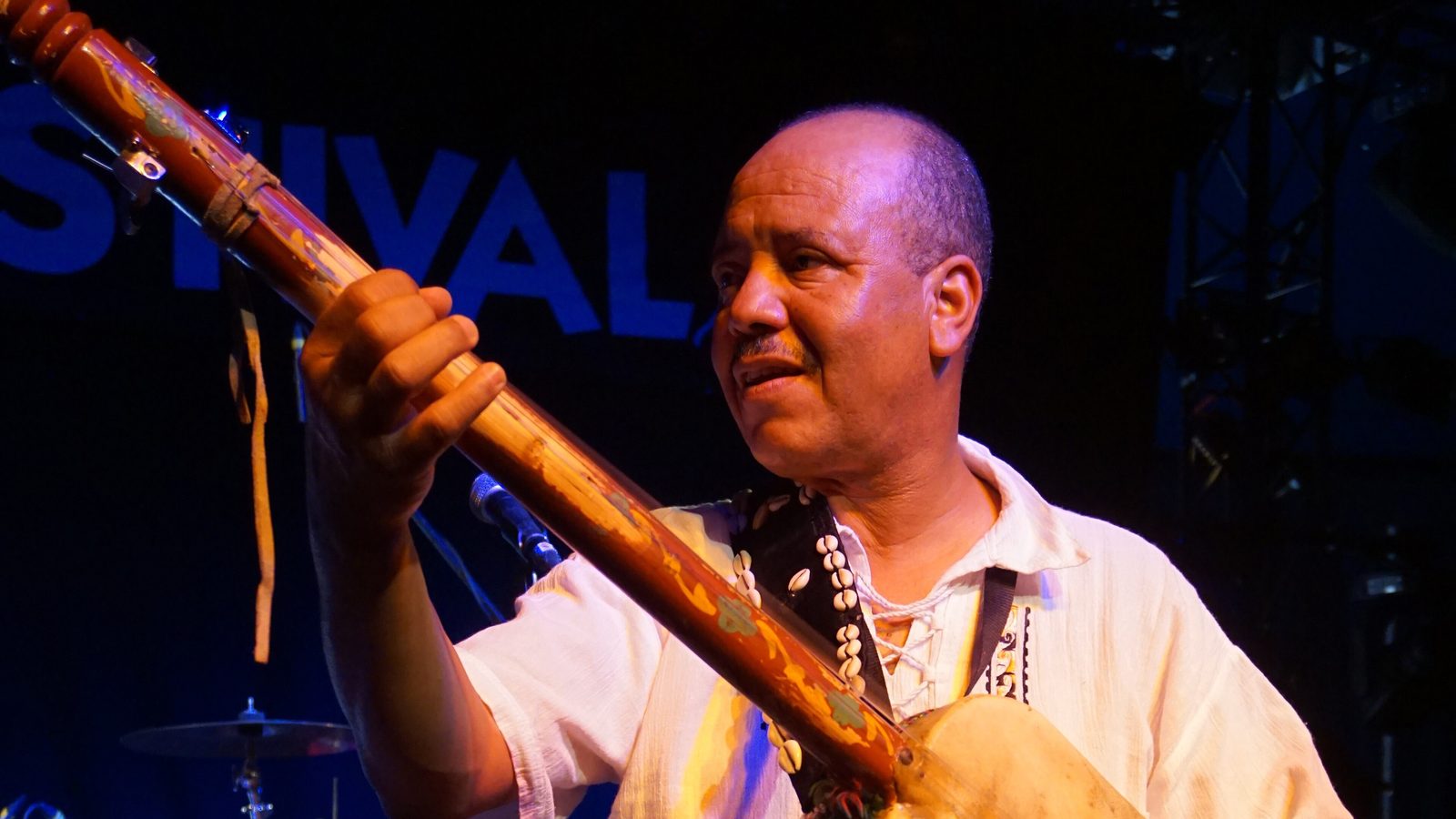
Essaouira, the stage of the fusion
In the late 1990s, Essaouira created the Gnaoua and World Music Festival, which brought the maâlems out of the private ceremonies and onto public stages. Its signature became the fusion: a Gnawa master and his chorus share the stage with jazz, blues, rock or African musicians, often after only a short rehearsal. Some of the most memorable moments in the festival's history are these improvised conversations. In 2027 the festival is announced for 24–26 June — see our Gnaoua festival 2027 guide.
In 2019 Essaouira also joined UNESCO's network of Creative Cities of Music, recognising a musical life that goes far beyond one festival.
Jazz sous l'Arganier: the winter chapter
Between Christmas and New Year, the Essaouira-Mogador association organises Jazz sous l'Arganier, a small festival where Moroccan and international jazz musicians play in intimate venues of the medina, often with Gnawa guests. Concerts end with late jam sessions. Local agendas list 26–28 December 2026 (to be confirmed); our Jazz sous l'Arganier 2026 guide has the details, and Essaouira in December explains what else is on.
Where to hear Gnawa jazz — and Gnawa music — in Essaouira
- At the festivals: the Gnaoua festival in June and Jazz sous l'Arganier in December. Our comparison of Essaouira music festivals helps you choose.
- At Dar Souiri, which hosts concerts through the year — see our Dar Souiri guide.
- In the evenings, in restaurants and cafés of the medina that invite Gnawa musicians; our guide to Essaouira at night lists the best options.
- Further afield, the village of Khamlia near Merzouga keeps a Gnawa tradition alive in the desert — read Khamlia, the village of Gnawa music.
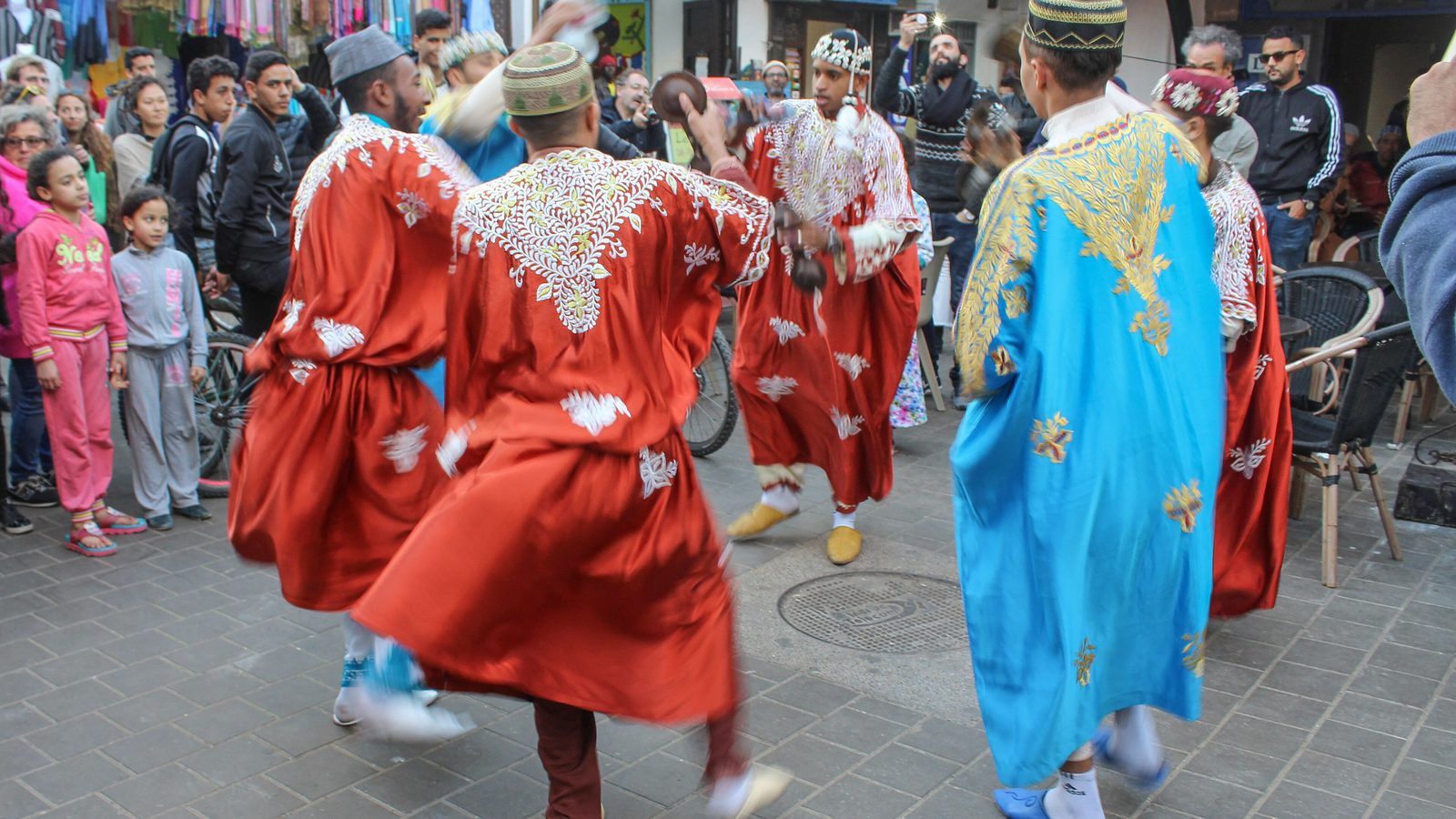
Inside a lila: what the jazz musicians are answering
A traditional lila lasts all night. It opens with a procession and with songs of praise, then the maâlem plays a long sequence of pieces, each dedicated to a family of spirits and associated with a colour, a perfume and a rhythm. As the guembri repeats its patterns and the qraqeb lock in, some participants enter a trance. When jazz musicians play with a maâlem, they are not adding solos to a folk tune: they are entering that cycle of repetition and release, finding space for improvisation inside a ritual that has its own logic. That is what makes the best Gnawa jazz concerts so intense.
Listening before you go
A few starting points: Randy Weston's recordings with Gnawa masters, Pharoah Sanders and Mahmoud Guinia's The Trance of Seven Colors, and the albums of Majid Bekkas. Listen to a traditional Gnawa lila recording too — you will understand better what the jazz musicians are answering.
Getting to Essaouira for the music
Our Marrakech to Essaouira transfer takes about 2 h 30, from €90 per vehicle for up to three passengers at the time of writing; the Essaouira airport transfer takes about twenty minutes, from €20. For the trip back, book the Essaouira to Marrakech transfer in advance — festival days are busy. Between concerts, our half-day argan route excursion shows you the countryside that gave Jazz sous l'Arganier its name.
Gnawa jazz is best heard live, late, in a small room by the ocean. Contact us and we will get you there.