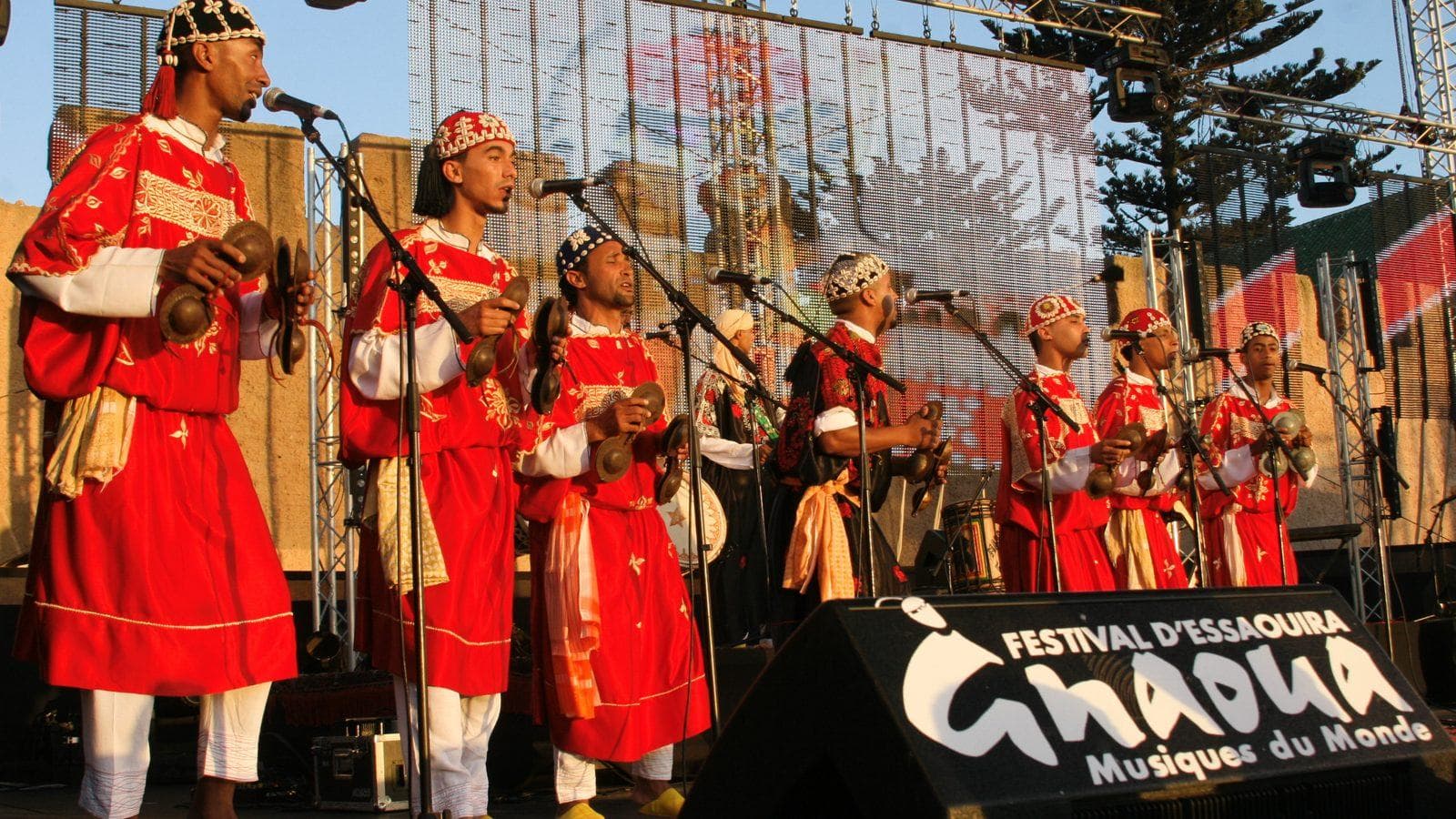
For three days every June, the hypnotic bass of the guembri and the metallic clatter of the qraqeb fill every corner of Essaouira. The Gnaoua & World Music Festival — simply "the Gnaoua festival" to everyone in Morocco — created in 1998, has become one of Africa's great music festivals: Gnawa masters (maâlems) share the stage with jazz, blues, reggae and African stars, concerts run until the early hours and the whole town becomes a festival ground.
It is unforgettable — and, logistically, demanding. Here is our guide to the Gnaoua festival 2027, from the music to the drive home.
Gnaoua festival 2027 dates
The 28th edition is announced for Thursday 24 to Saturday 26 June 2027. The 2026 edition ran from 25 to 27 June, opening on the Thursday with a parade through the medina. As always, the detailed programme is published in the spring.
What is Gnawa music?
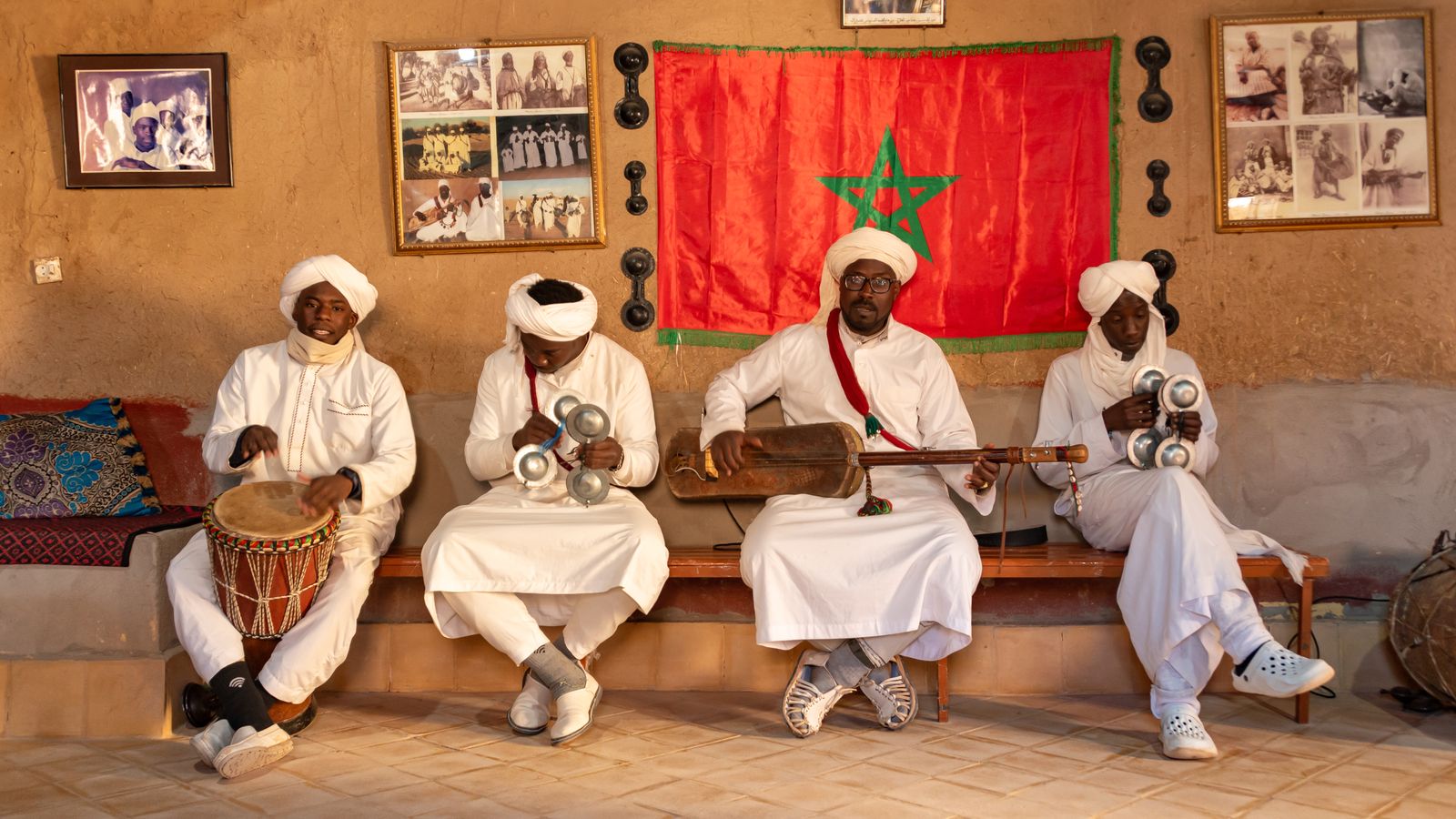
Gnawa music comes from the descendants of sub-Saharan Africans brought to Morocco centuries ago. It is both spiritual and festive: in the traditional lila ceremony, the maâlem leads a night of music and trance with the three-stringed guembri, while the musicians answer with chants and the iron castanets called qraqeb. In 2019, Gnawa culture was inscribed by UNESCO on the list of the Intangible Cultural Heritage of Humanity. To hear Gnawa in a village setting, read our guide to Khamlia, the Gnawa village near Merzouga.
How the festival works
- Free open-air concerts on the large stages — traditionally on Place Moulay Hassan, by the port, and on the beach — draw huge crowds in the evening.
- Fusions: the festival's signature, when a Gnawa master improvises with international musicians.
- Intimate concerts in historic venues such as Dar Souiri or the Borj Bab Marrakech bastion, usually ticketed and with limited seats — see our Dar Souiri guide.
- A forum on human rights has accompanied the festival for years; its 13th edition took place in June 2026.
Where to stay during the Gnaoua festival
This is the hardest part. The medina is small and fills up months in advance, and prices rise.
- Book early — as soon as the dates are confirmed, ideally in the winter before.
- In the medina: the best atmosphere and everything on foot, but noisy until late.
- On the beachfront or in Diabat: calmer, 10–20 minutes from the stages; ideal for families.
- In Ghazoua or Sidi Kaouki: plenty of guesthouses when the town is full, but plan your transport back at night.
Our guide to where to stay in Essaouira compares the areas.
Tips for festival days
- Expect crowds: the evening concerts on Place Moulay Hassan are packed. Keep your phone and wallet in a front pocket.
- Dress for wind: late June is the windy season; days are often around 22–25°C, but evenings by the sea are cool.
- Eat early or late: restaurants are full at peak hours; the grilled-fish stalls at the port are a quick option.
- Plan quiet time: a morning walk on the empty beach or a trip to the countryside is the perfect antidote. Our full-day excursion to Sidi Kaouki and the argan route works well on the day after.
What to pack for the Gnaoua festival
- A windproof jacket or a sweater: evenings by the sea are cool, even in late June.
- Comfortable shoes: you will stand and dance for hours on cobbles and sand.
- Sun protection: hat, sunglasses and sunscreen for the daytime parades and beach stages.
- A small cross-body bag to keep your phone and money in front of you.
- Earplugs: useful near the big speakers, and for sleeping in a lively medina.
- A power bank: you will film more than you think.
Getting to the Gnaoua festival — and back
The road from Marrakech is busy on the Thursday and very busy on the Sunday after the festival. A private driver takes the stress out of it:
- Marrakech → Essaouira: our Marrakech to Essaouira transfer takes about 2 h 30 in normal traffic, door to door from your riad or from Marrakech airport. At the time of writing it costs €100 per vehicle for up to three passengers, €120 in a van for four to seven and €170 in a minibus for groups of up to seventeen.
- Essaouira-Mogador airport: the transfer to the medina takes about twenty minutes, and the transfer to Diabat and Ghazoua about fifteen, both from €20.
- Going home: book your Essaouira to Marrakech transfer when you book your arrival — drivers are in high demand on festival weekends.
- Groups: coming with friends or a company? Our group transport guide explains how a minibus can follow your schedule.
For all the practical details of arriving for any festival, see getting to Essaouira for a festival, and for the rest of the year, the Essaouira events calendar.