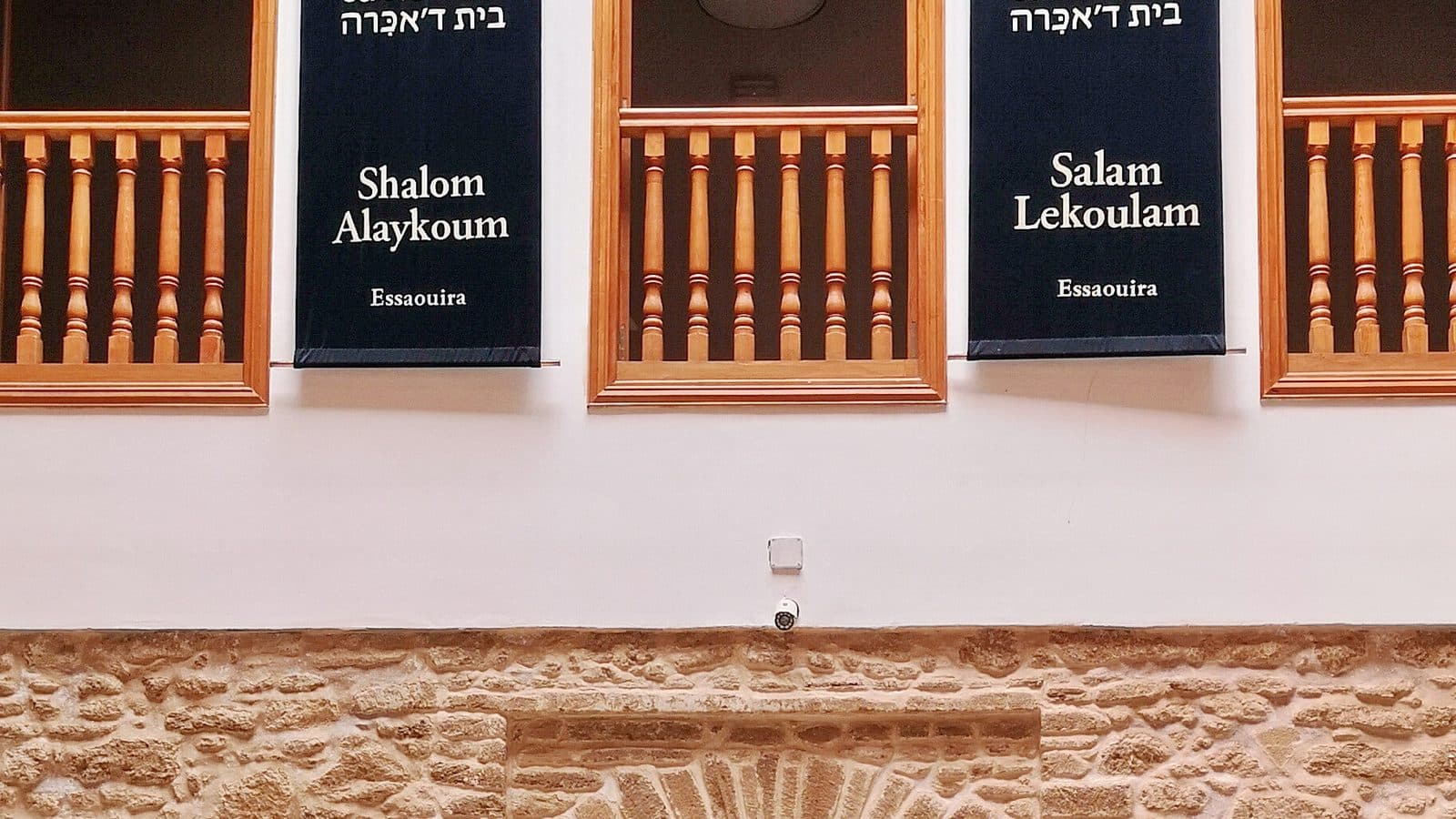
Walk through the north-eastern corner of Essaouira's medina and look up: above some doors you will still see a carved Star of David, a Hebrew inscription, a balcony built for a merchant's family. The Jewish heritage in Essaouira is everywhere once you know where to look. For two centuries the Jewish community of Mogador was among the largest in Morocco, and today the town is one of the best places in the country to understand that shared history.
This guide tells the story, then proposes a self-guided walk.
A short history of Jewish Mogador
Essaouira was founded in the 1760s by Sultan Sidi Mohammed ben Abdallah as a royal port open to world trade. To run that trade, the sultan invited Jewish merchant families from across Morocco — the tujjar al-sultan, "the sultan's merchants" — who settled in the new town and connected it to London, Amsterdam and Livorno. Rabbis, scholars, artisans and musicians followed. In the nineteenth century, Jews made up a very large share of the population — at times close to half, by some estimates.
Over the twentieth century, most of the community emigrated to Casablanca, Israel, France and the Americas. Only a handful of Jewish residents remain, but descendants come back every year, and since 2020 the town has had a place dedicated to that memory: Bayt Dakira.
The mellah
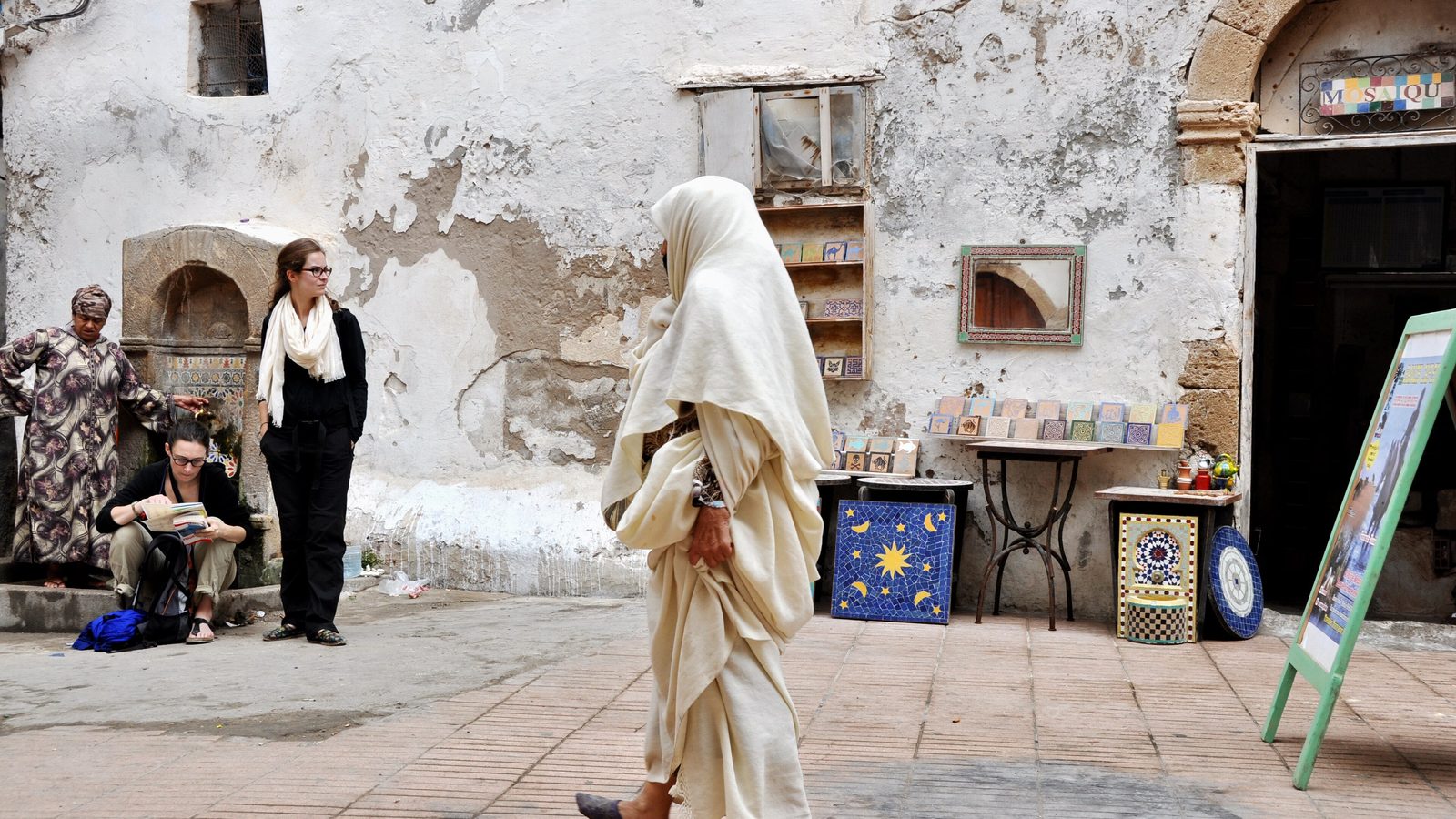
The mellah, the Jewish quarter, occupies the northern part of the medina, between the ocean ramparts and Bab Doukkala. Its lanes are narrower and some houses more fragile than elsewhere in the medina, but restoration projects have brought several buildings back to life. Walk slowly, look at the door frames and the balconies, and you will see the traces of a busy merchant quarter.
The synagogues
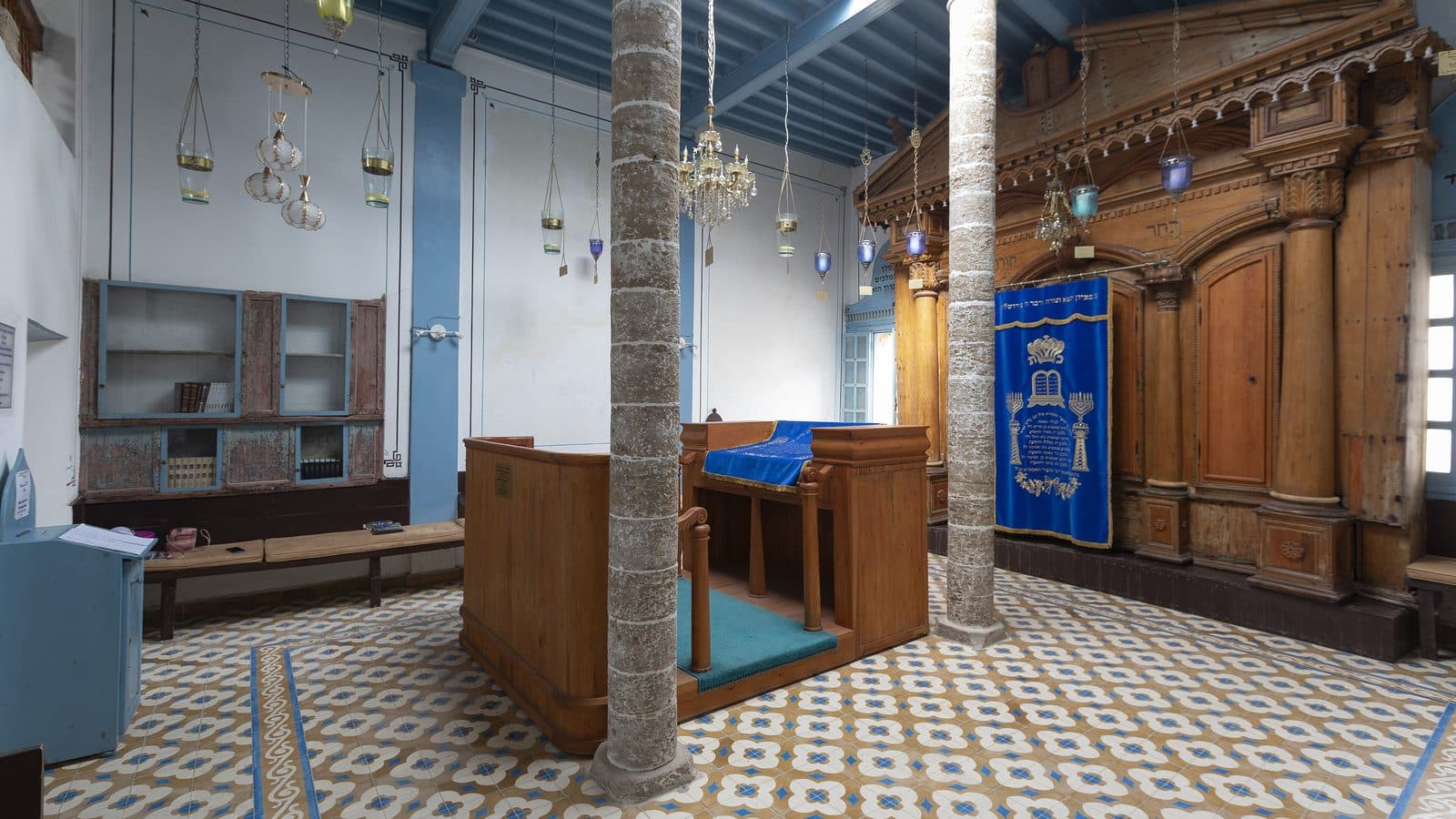
Mogador once counted dozens of synagogues, many of them private prayer rooms inside merchants' houses. A few have been restored and can be visited:
- Slat Lkahal, the community synagogue, with its carved wooden ark, blue walls and painted ceiling.
- The Rabbi Haim Pinto synagogue, in the former house of the town's most revered sage, a place of pilgrimage every September — read about the hiloula of Rabbi Haim Pinto.
- The Simon Attias synagogue, restored as part of Bayt Dakira, the "house of memory" inaugurated in January 2020 — see our guide to Bayt Dakira.
Opening hours vary and some sites close on Saturdays and Jewish holidays; a guardian usually opens the door in exchange for a small contribution.
The old Jewish cemetery
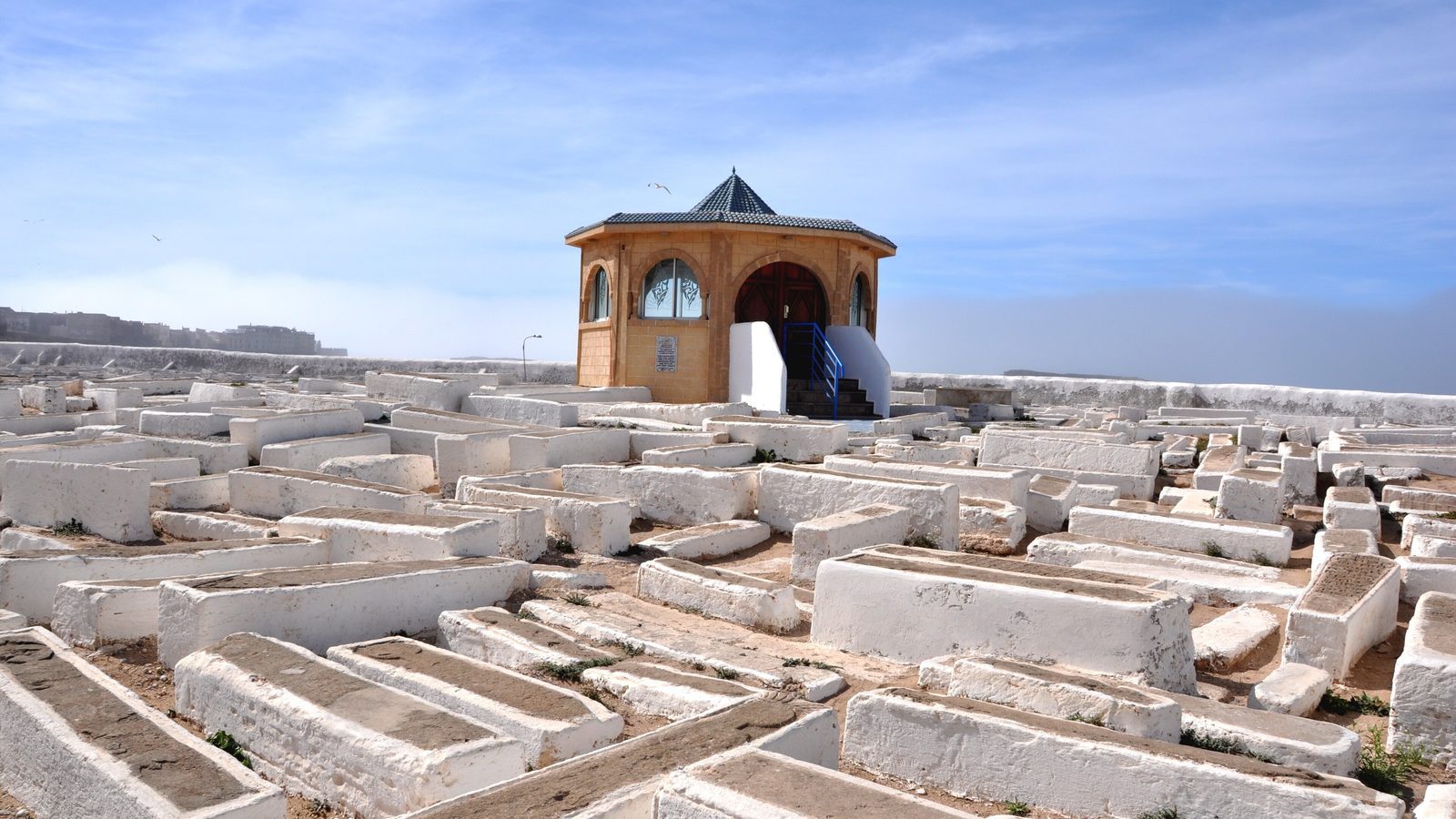
Just outside the walls, near Bab Doukkala and facing the ocean, the old Jewish cemetery is one of the most moving places in Essaouira: rows of white, whitewashed tombs, some with inscriptions in Hebrew, Spanish or French, under a sky full of seagulls. The tomb of Rabbi Haim Pinto is here. Visit respectfully, and ask the guardian before taking photographs.
A self-guided walk: two to three hours
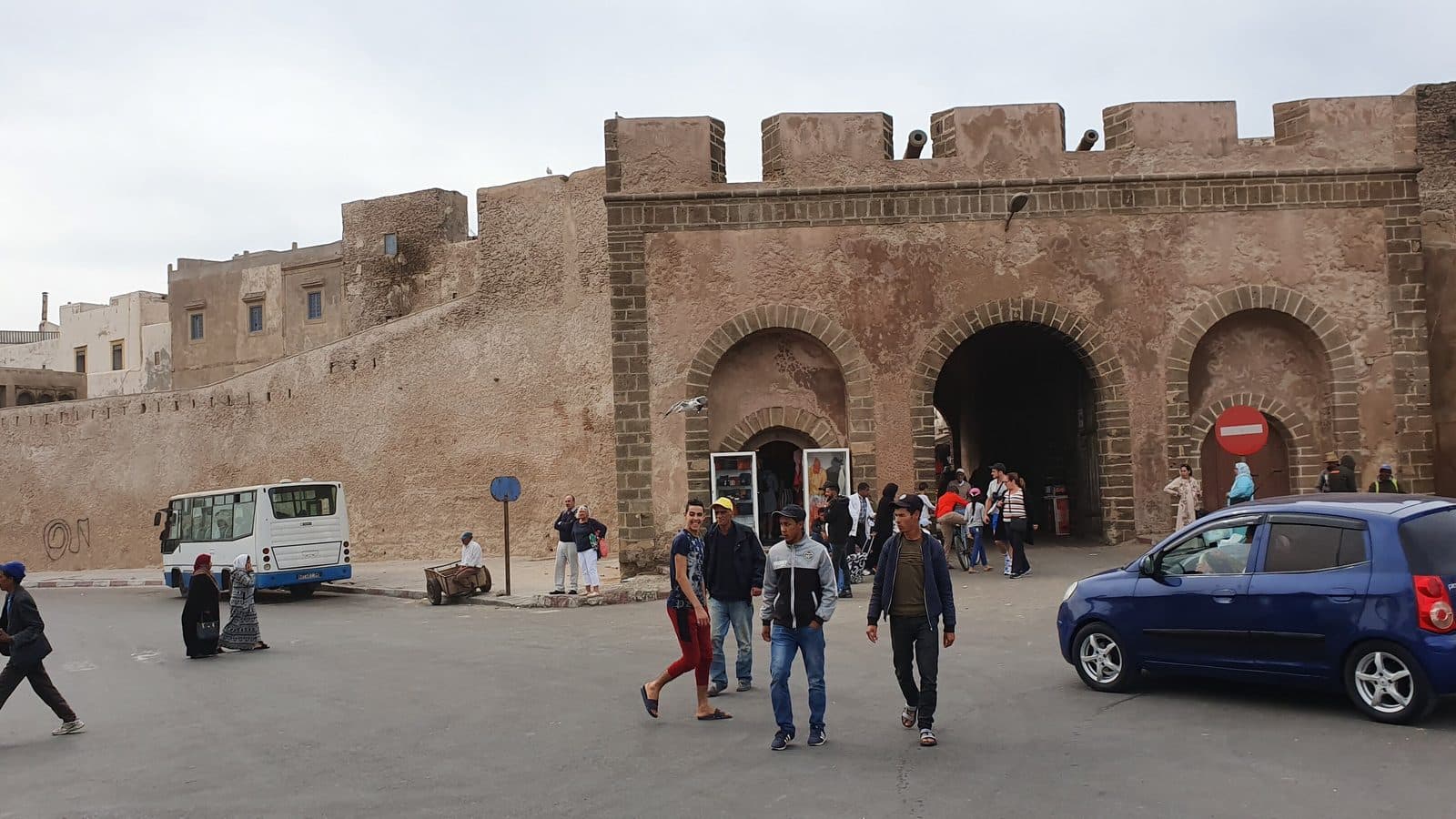
- Start at Bab Doukkala, the gate where most cars from Marrakech stop — our guide to Essaouira's medina gates explains where your driver will drop you.
- Visit the old Jewish cemetery, a few minutes away along the walls.
- Enter the mellah and wander through its lanes towards the ramparts.
- See the Rabbi Haim Pinto synagogue and Slat Lkahal.
- Continue to Bayt Dakira and the Simon Attias synagogue.
- End on the Skala de la Ville, the sea ramparts, for the sunset — our medina and ramparts walking guide continues from there.
Jewish heritage in Essaouira today
Today the Jewish heritage in Essaouira is cared for by a mix of institutions, families and townspeople. Restoration projects have saved synagogues and houses in the mellah, Bayt Dakira keeps the memory alive with exhibitions and research, and every year descendants of Mogador families come back — for the hiloula, for a wedding anniversary or simply to see the house where a grandparent was born. Moroccan Muslims of the town often speak with pride of this shared past. Exploring the Jewish heritage in Essaouira is therefore not only a history lesson: it is a living story of memory and friendship, and one of the most moving ways to understand the town.
When to visit
Any time of year, but two moments are special: September, for the hiloula of Rabbi Haim Pinto, and late October, for the Festival des Andalousies Atlantiques, when Jewish and Muslim musicians share the stage and Bayt Dakira hosts morning forums.
Practical tips
- Dress modestly; men may be offered a kippa in synagogues.
- Bring small change for the guardians.
- Combine with the music: our listener's guide to Andalusian music in Morocco explains the shared repertoire.
Getting to Essaouira
From Marrakech, our Marrakech to Essaouira transfer takes about 2 h 30 and costs from €90 per vehicle at the time of writing. Many visitors on a Jewish heritage tour of Morocco arrive via Casablanca: our Essaouira to Casablanca airport transfer covers the route in about four hours, from €190 per vehicle. From Essaouira-Mogador airport, the airport transfer takes twenty minutes. To discover the countryside around the town, add our half-day argan route excursion.
The Jewish heritage in Essaouira is a story of trade, faith and friendship — contact us and we will help you plan the trip.