From the tanneries of Fès to the thuya workshops of Essaouira, Moroccan handicrafts are one of the great joys of travelling in the country. Every city and region has its own trades, passed down in family workshops and cooperatives, and many of them are still made entirely by hand.
This guide takes you region by region: what to look for, where to see it made, how to buy well — and how to build a few craft stops into your route.
Moroccan handicrafts at a glance
| Craft | Where | What to look for |
|---|---|---|
| Thuya marquetry | Essaouira | Scented burl, fine inlays, polished finish |
| Silver jewellery | Essaouira (Deg Souiri), Tiznit | Weight, hand engraving, solid silver |
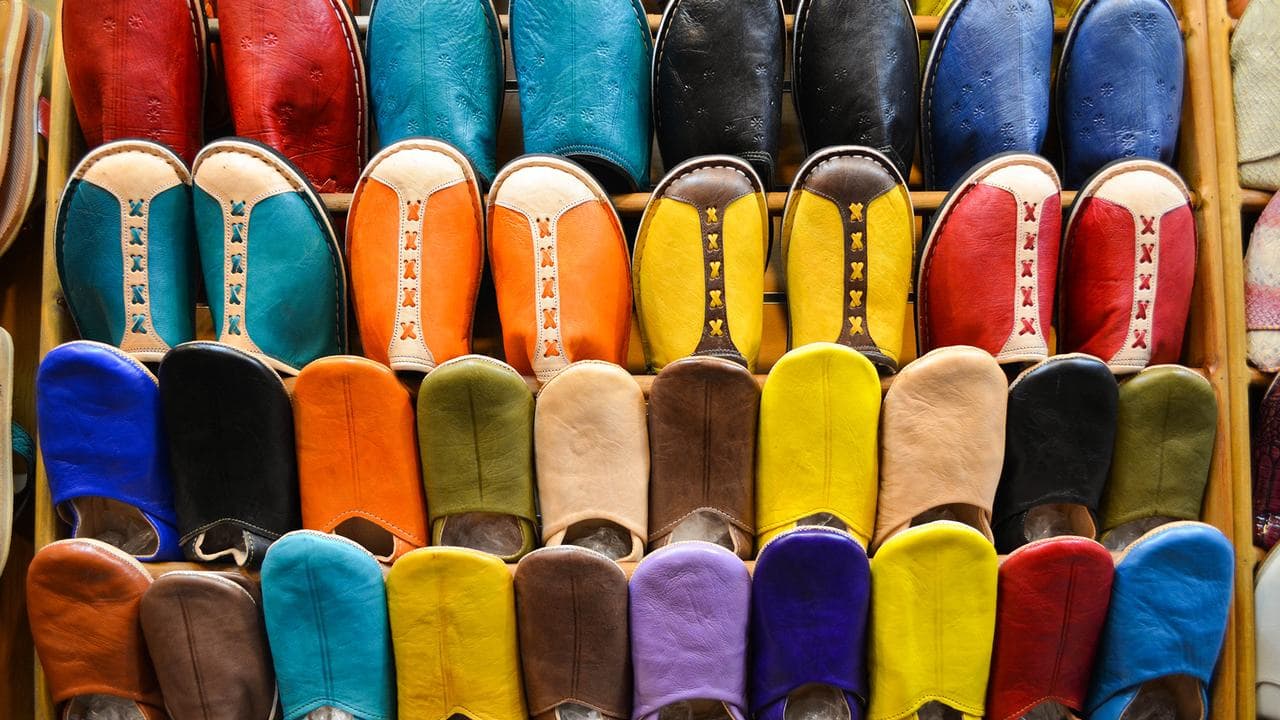
| Leather and babouches | Fès, Marrakech | Stitched soles, soft leather |
| Zellige tilework | Fès | Hand-cut tesserae, irregular glaze |
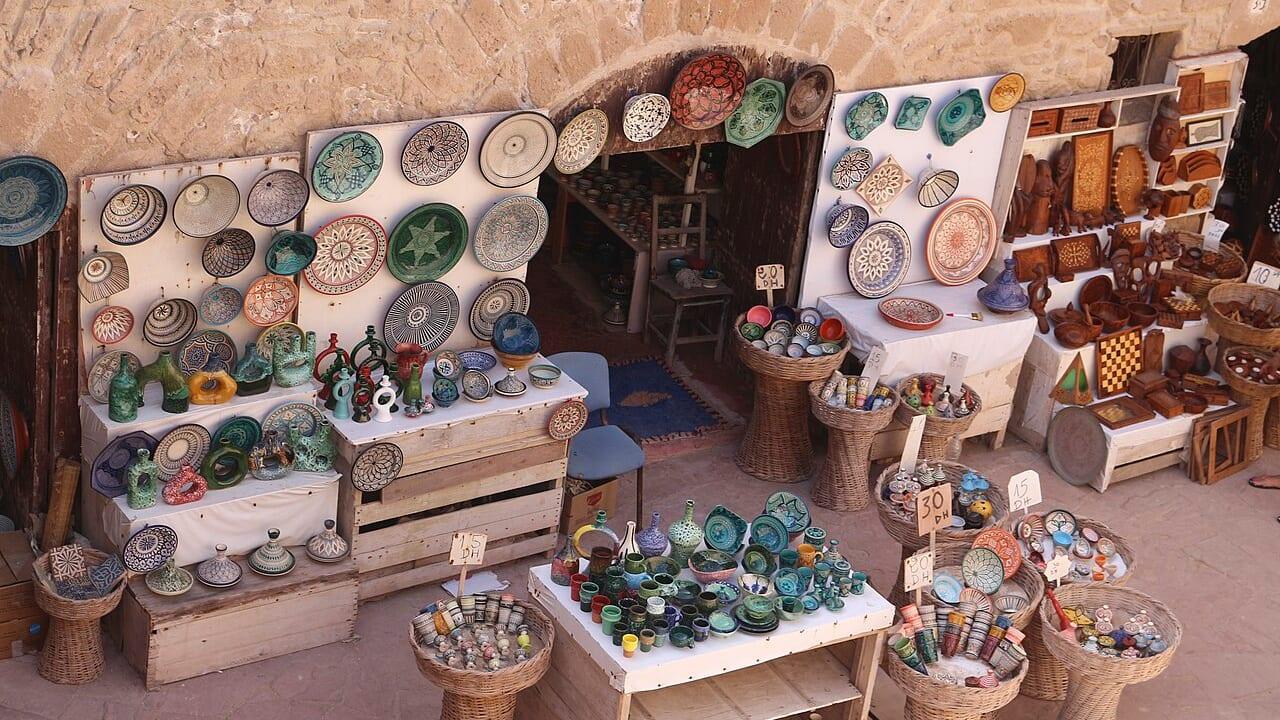
| Pottery and ceramics | Safi, Fès, Tamegroute | Hand painting, glaze depth |
| Rugs and kilims | Middle Atlas, Anti-Atlas, Chichaoua | Hand knots, natural wool and dyes |
| Metal lanterns | Marrakech | Hand-pierced patterns, solid joints |
| Argan products | Essaouira–Agadir region | Cooperative origin, sealed glass bottles |
Essaouira: thuya, silver and weaving
Essaouira is the capital of thuya marquetry: boxes, chessboards and inlaid panels made from the scented burl of a tree that grows on the hills around the town — see our thuya wood guide. The town also has its own silver tradition, Deg Souiri, hammered and engraved by hand, and the countryside weaves rugs and blankets and braids palm fibre into baskets.
The best places to see them made are the Skala workshops and the Argana integrated handicraft complex, home to twenty cooperatives: read our guides to Essaouira's artisans and to what to buy in Essaouira. From 23 to 29 November 2026, the town also hosts a national handicraft exhibition — see our Essaouira handicraft fair guide.
Marrakech: leather, lanterns and the souks
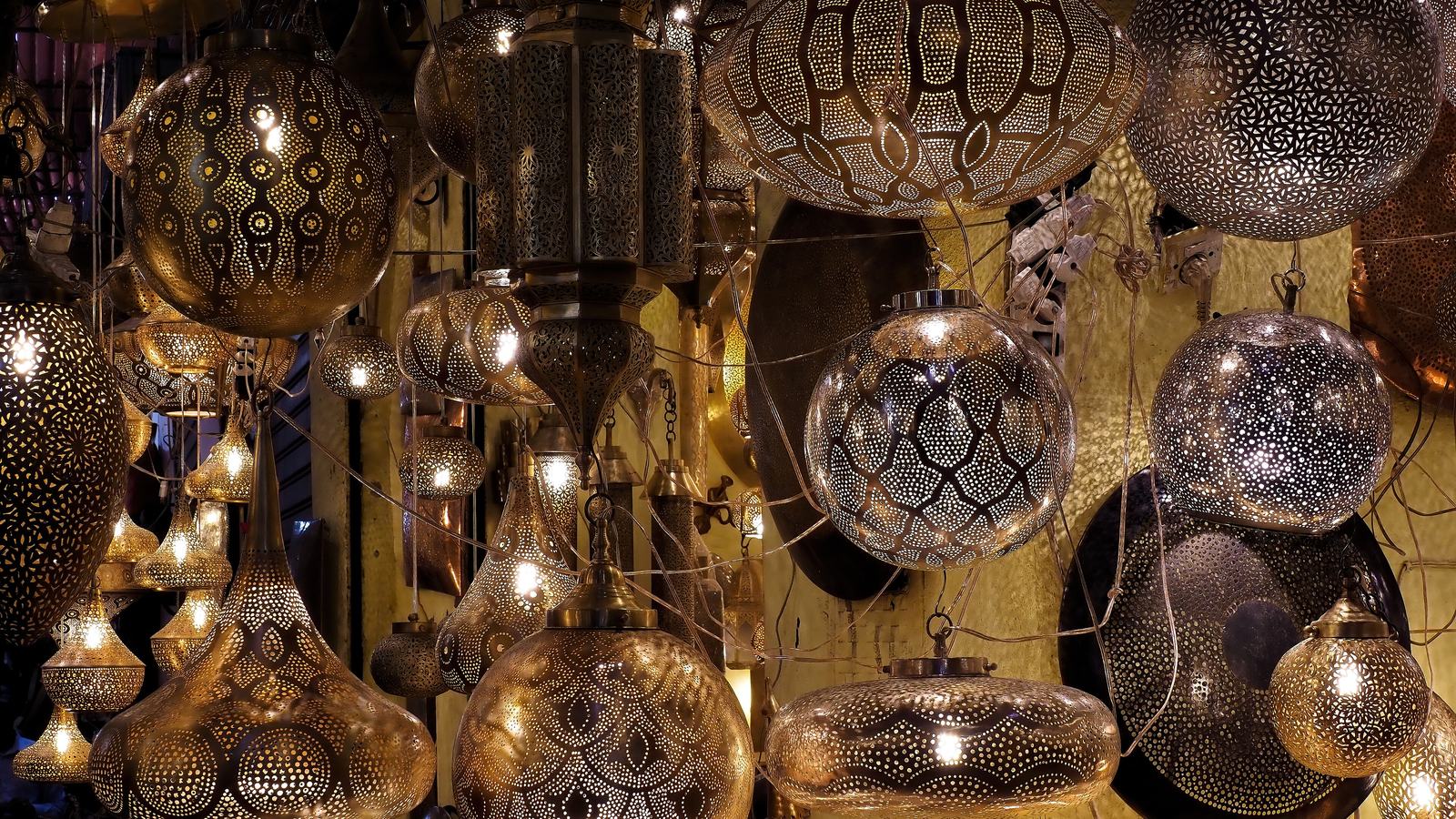
The souks of Marrakech are a showcase of crafts from all over the country, but some are made right there: in Souk Haddadine, metalworkers hammer and pierce lanterns; in the dyers' souk, skeins of wool dry above the alleys; and leatherworkers turn out babouches and bags by the thousand. Our Marrakech souks guide explains how to find your way.
Fès: tanneries, zellige and embroidery
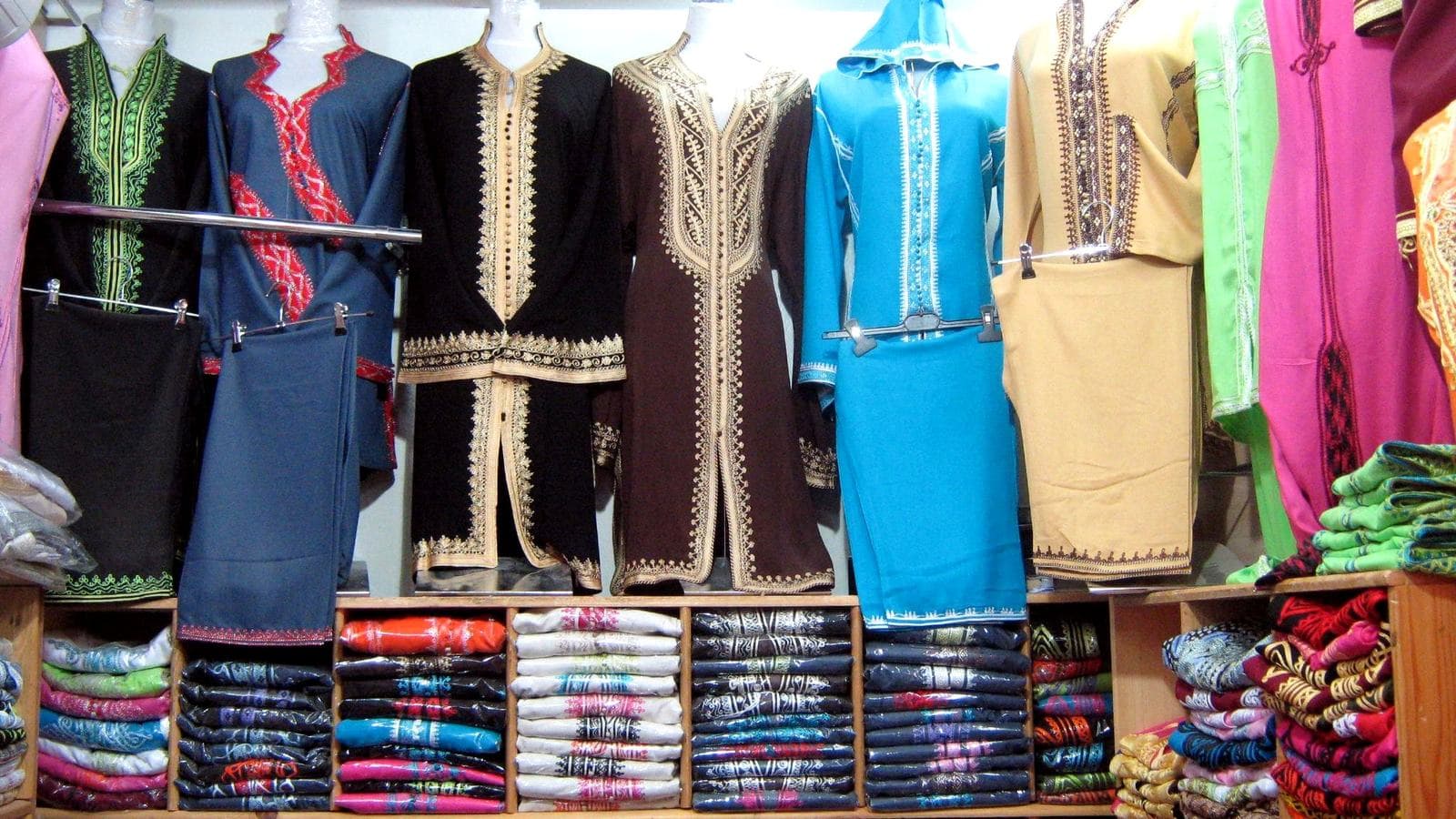
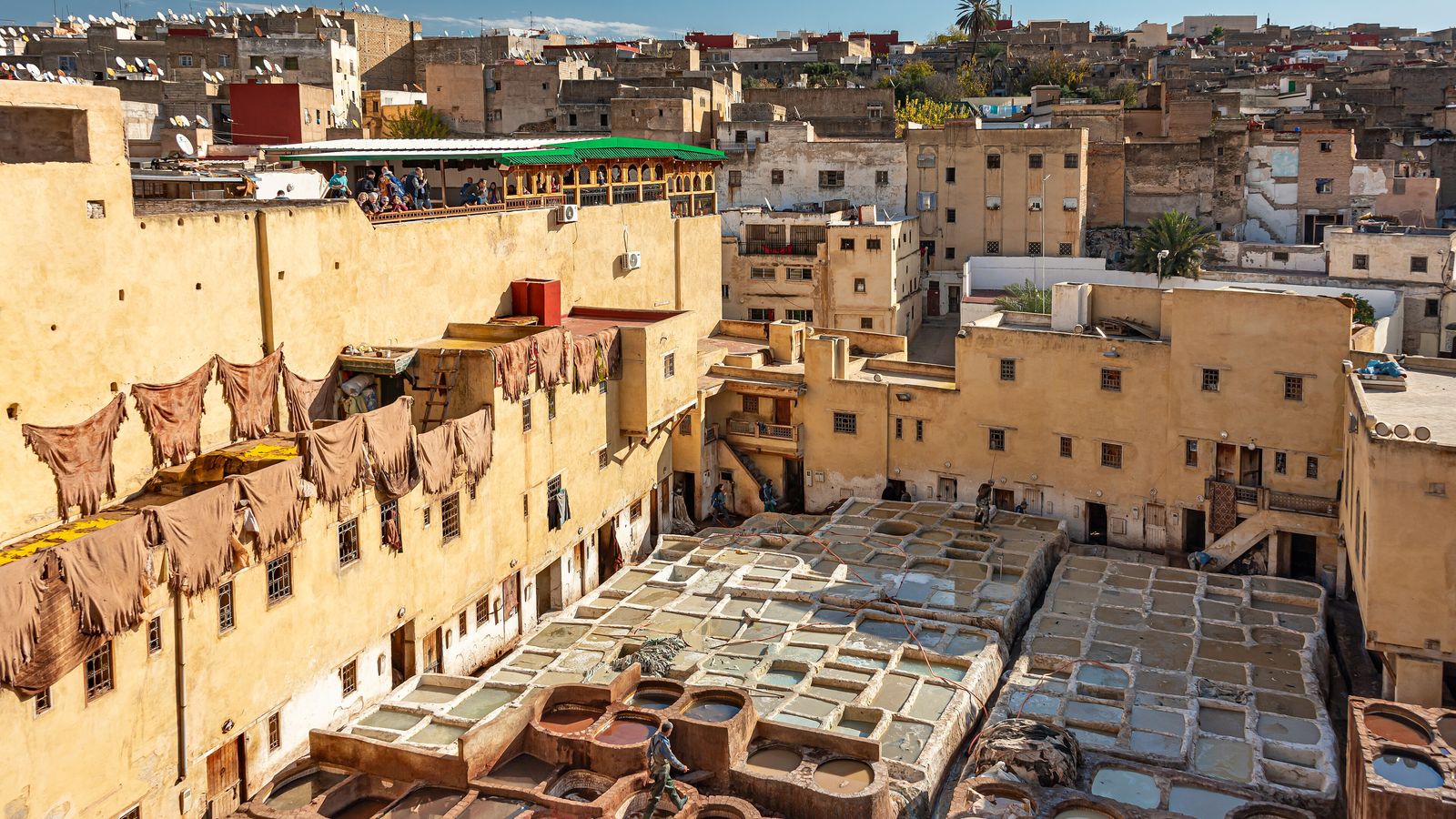
Fès is the historic heart of Moroccan craftsmanship. The Chouara tannery, with its stone vats of dye, has worked leather for centuries; the city's craftsmen cut zellige, the geometric mosaic tiles of Moroccan palaces, piece by piece; and Fès is famous for its cobalt-blue pottery and its fine embroidery. Its medina is a UNESCO World Heritage Site — see our guide to UNESCO sites in Morocco. Our circuit from Casablanca, Fez, Sahara & Kasbahs, passes through the city.
Safi and Tamegroute: the pottery towns
On the Atlantic coast, about two hours north of Essaouira, Safi is the pottery capital of Morocco: on its Hill of the Potters, kilns and workshops produce glazed and painted plates, bowls and tajines. The coast road from Essaouira to Oualidia passes through Safi — mention it when you book our Essaouira → Oualidia transfer if you would like to stop.
Far to the south, in the Draa Valley near Zagora, the village of Tamegroute makes a famous green-glazed pottery in traditional kilns. Our circuit Sahara, Zagora & the Draa Valley takes you to the region.
Rugs of the Atlas and the plains
Moroccan rugs differ from one region to another. In the Middle Atlas, Beni Ouarain rugs are thick and ivory-coloured, with dark geometric lines; in the Anti-Atlas, the town of Taznakht, on the road from Ouarzazate, is known for its colourful rugs; and on the road between Marrakech and Essaouira, Chichaoua weaves rugs in deep reds — see our Chichaoua carpets guide. Flat-woven kilims (hanbel) are lighter and easier to carry home. Our Marrakech → Ouarzazate transfer is the gateway to the Anti-Atlas.
Argan, cooperatives and the solidarity economy
Between Essaouira and Agadir, the argan forest is protected as a UNESCO biosphere reserve, and the know-how around the argan tree is on UNESCO's list of intangible heritage. Women's cooperatives crack the nuts by hand to make culinary and cosmetic oil, soaps and amlou. Buying from them supports the social and solidarity economy — the same sector the Moroccan government groups with tourism and handicrafts in a single ministry. Our argan cooperative guide explains how to visit one.
Where to meet Moroccan artisans
- Ensembles artisanaux: state-supported craft centres in the big cities, with workshops and usually fixed prices — a good way to check prices before you bargain in the souks.
- Integrated handicraft complexes, such as Argana in Essaouira, which combine workshops, training and cooperatives' shops.
- Fairs and exhibitions, regional or national, where artisans and cooperatives sell directly.
- Weekly country markets, where you meet the makers of baskets, pottery and rugs — see our guide to Berber markets.
How to buy Moroccan handicrafts well
- Take your time: look in several shops before you buy, and ask how and where the piece was made.
- Bargain with a smile in the souks; accept fixed prices in cooperatives and craft centres.
- Carry cash: small workshops rarely accept cards — see our guide to money in Morocco.
- Keep receipts for expensive pieces, and check your duty-free allowance at home.
Build a craft route with Rouasse Travels
Rouasse Travels provides the transport: a private vehicle and a professional driver, at fixed prices per vehicle, not per person, for a single transfer or a whole circuit. You choose the stops; accommodation and visits are booked directly by you. From Marrakech, our transfer to Essaouira takes about 2 h 30 (from €100 for 1–3 passengers), and the Essaouira → Agadir road follows the argan coast. Prices at the time of writing.
Planning a trip around Moroccan crafts? Tell us your route on our booking page or on WhatsApp: we confirm within 24 hours.