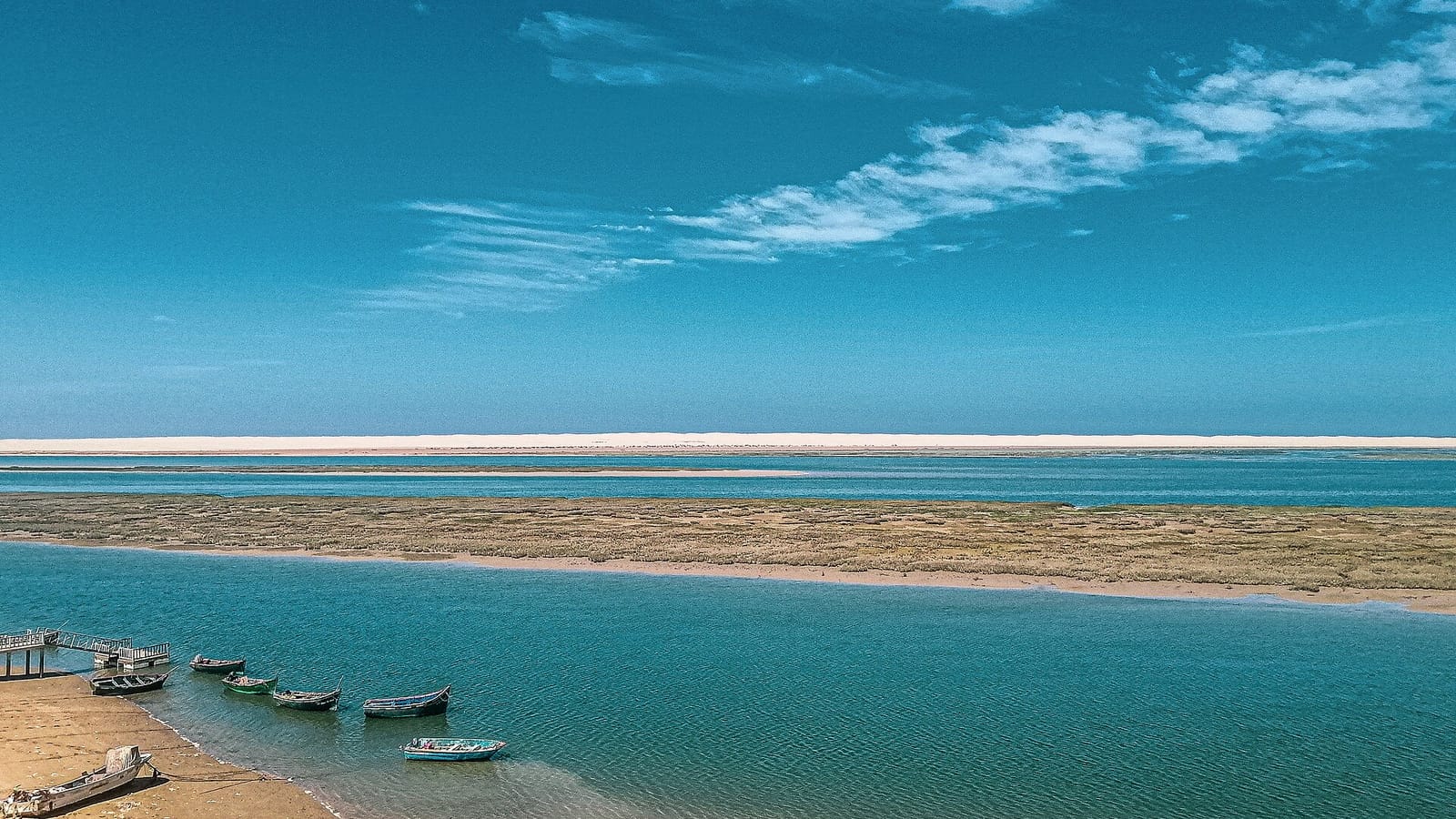
There are few places on Earth where the desert literally slides into the sea. In the far south of Morocco, between Tan-Tan and Tarfaya, golden dunes stop at the edge of a turquoise lagoon where flamingos feed and fishing boats rest on the sand. This is Khenifiss National Park — also spelled Khnifiss — one of the most spectacular natural sites of the Moroccan Atlantic coast, and still largely unknown to travellers. Here is what to see, when to go and how to get there.
Khenifiss National Park at a glance
- Created: 2006, covering about 185,000 hectares in the province of Tarfaya.
- Heart of the park: the Khnifiss lagoon, also called Naila lagoon, a sheltered body of water connected to the Atlantic.
- International status: the bay of Khnifiss was among Morocco's first wetlands listed under the Ramsar Convention, in 1980, and the lagoon appears on Morocco's tentative list for UNESCO World Heritage.
- Nearest villages: Akhfennir, a few kilometres away, and Tarfaya, about 50 km further south.
A lagoon between dunes and ocean
The lagoon stretches behind a barrier of sand and opens to the ocean through a narrow channel. Tides fill and empty it twice a day, uncovering mudflats, salt marshes and channels where fish breed. On one side rise the dunes of the Sahara; on the other, the cliffs and beaches of the Atlantic. Inland, salt flats (sebkhas) shimmer under a huge sky — nearby, the Sebkha Tah depression is the lowest point in Morocco, about 55 metres below sea level.
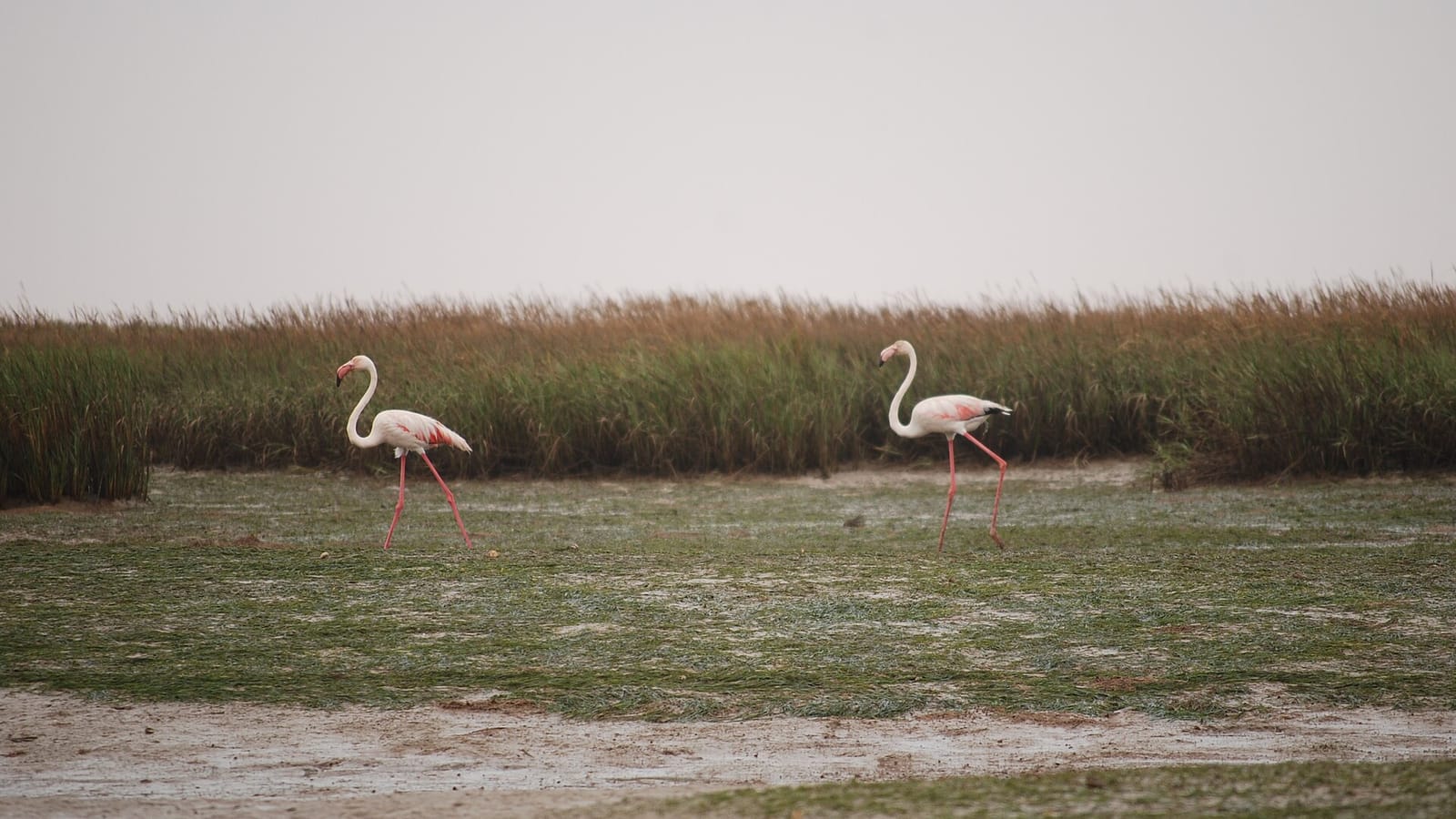
The result is a landscape of extraordinary colours: white sand, ochre cliffs, emerald water and, in winter, the pink of flamingos.
A paradise for birds
The lagoon is a vital stop on the East Atlantic flyway, the migration route linking Europe and West Africa. Each year it shelters more than 20,000 wintering waterbirds. The flamingo is the park's emblem, alongside cormorants, shelducks, herons, gulls, terns and many species of waders. Desert species live in the dunes and steppes around.
Birdwatchers will love it from October to March, when wintering populations peak. If you are a beginner, try a birdwatching outing in Essaouira first — and read about the falcons of Mogador island.
Tarfaya: Saint-Exupéry's Cap Juby
At the edge of the park, the windswept town of Tarfaya has a story that fascinates readers worldwide. In the 1920s it was Cap Juby, a stopover of the Aéropostale airmail line between France, Africa and South America. In 1927–1928, the writer-pilot Antoine de Saint-Exupéry was its station manager; the desert he discovered here inspired Southern Mail and, later, The Little Prince.
- The Saint-Exupéry museum, opened in 2004, tells the story of the Aéropostale.
- The airmail monument on the beach, shaped like a small plane, honours the pilots.
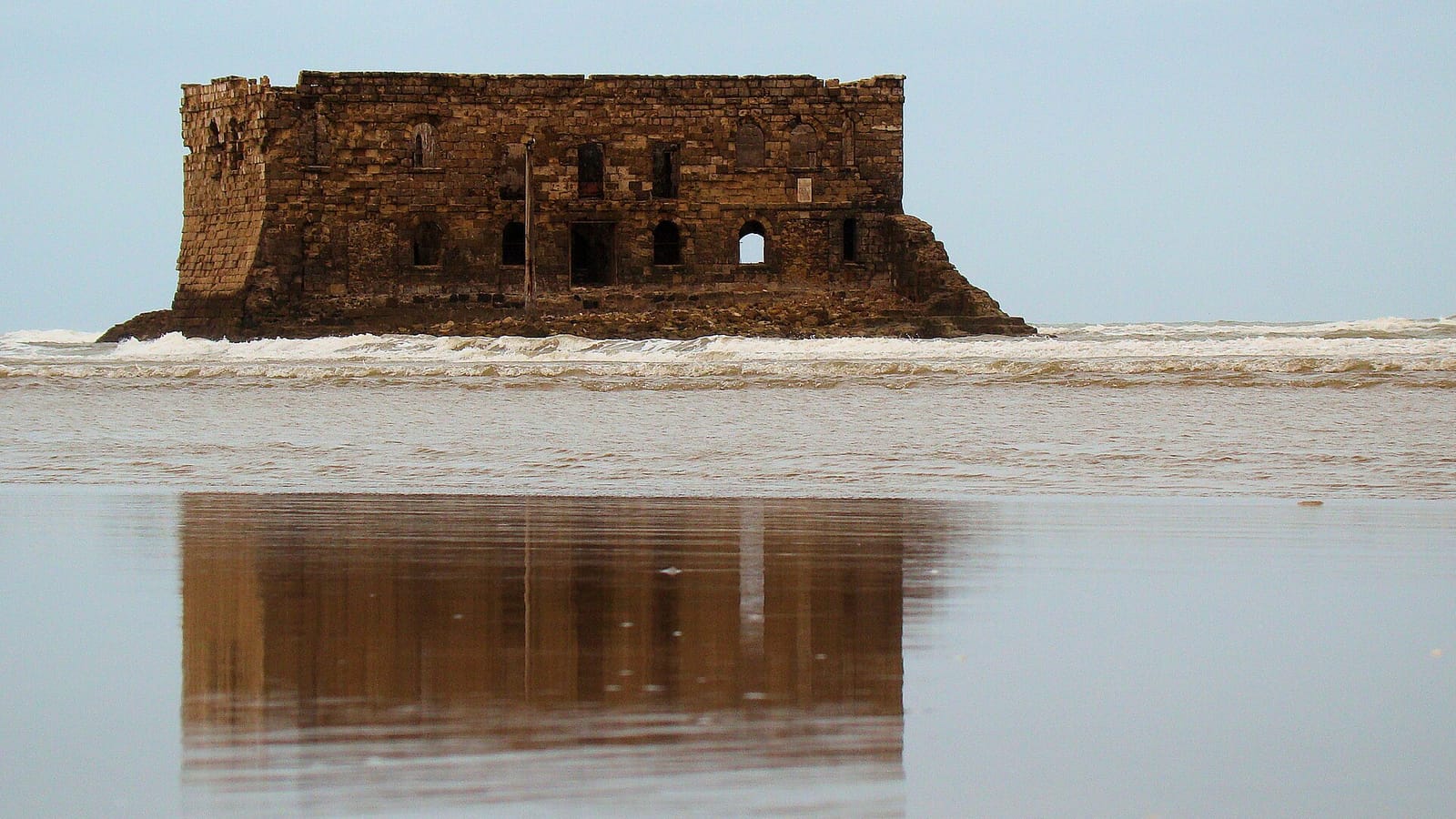
- Casa Mar, a trading post built by the British in the 1880s, stands just off the shore and is surrounded by water at high tide.
When to visit Khenifiss National Park
- October to April: the best season — mild temperatures, the most birds and soft light.
- Summer: the coast stays fresher than the interior thanks to the trade winds, but the wind can be strong and the light harsh at midday.
- All year: carry water, sun protection and a windproof layer; services are limited between towns.
How to get there: the great southern road trip
Khenifiss National Park lies around 450–500 km south of Agadir by the N1, the coastal road that crosses Tiznit, Guelmim — the "gateway to the desert" — and Tan-Tan, where the famous Moussem of Tan-Tan, inscribed by UNESCO as intangible heritage, gathers nomadic tribes. Laâyoune airport, about 100 km south of Tarfaya, is another option.
This is a journey best enjoyed slowly, over several days, with a driver who knows the long straight roads and the checkpoints of the south. A typical tailor-made itinerary:
- Agadir → Tiznit → Sidi Ifni (coast and cliffs)
- Sidi Ifni → Guelmim → Tan-Tan
- Tan-Tan → Khnifiss lagoon → Akhfennir
- Khnifiss → Tarfaya, then return north or continue to Laâyoune
We provide the private transport with driver for this kind of route, on request and on quote — accommodation and local outings are booked directly by you, and we gladly share suggestions from our local knowledge. Most travellers start from Agadir: book a transfer from Marrakech to Agadir airport, an Essaouira–Agadir transfer or a Marrakech–Agadir transfer, then contact us with your dates for the southern leg. Our guide to a tailor-made Morocco tour explains how we build it.
Combine it with other journeys
- Fantasia and moussems: the south is a land of horsemen — see where to see fantasia in Morocco.
- Winter sun: continue the theme of warm winters with our article on the warmest place in Morocco in December, from Agadir to Dakhla.
- Desert and kasbahs: from Agadir, our Grand South & Atlantic tour in 7 days and the Southern Morocco, Sahara & Marrakech circuit explore the other face of the south.
Respecting a fragile ecosystem
Khenifiss National Park is protected for good reasons. Stay on existing tracks, never drive on dunes or mudflats with vegetation, keep your distance from bird flocks, take all waste with you and follow the instructions of park staff. These simple gestures are the heart of responsible travel — the same spirit we promote for sustainable tourism in Essaouira.
Khenifiss National Park is one of Morocco's natural wonders, alongside the cultural treasures described in our guide to UNESCO World Heritage sites in Morocco. Ready to discover where the Sahara meets the Atlantic? Tell us your plans — we'll take care of the road.