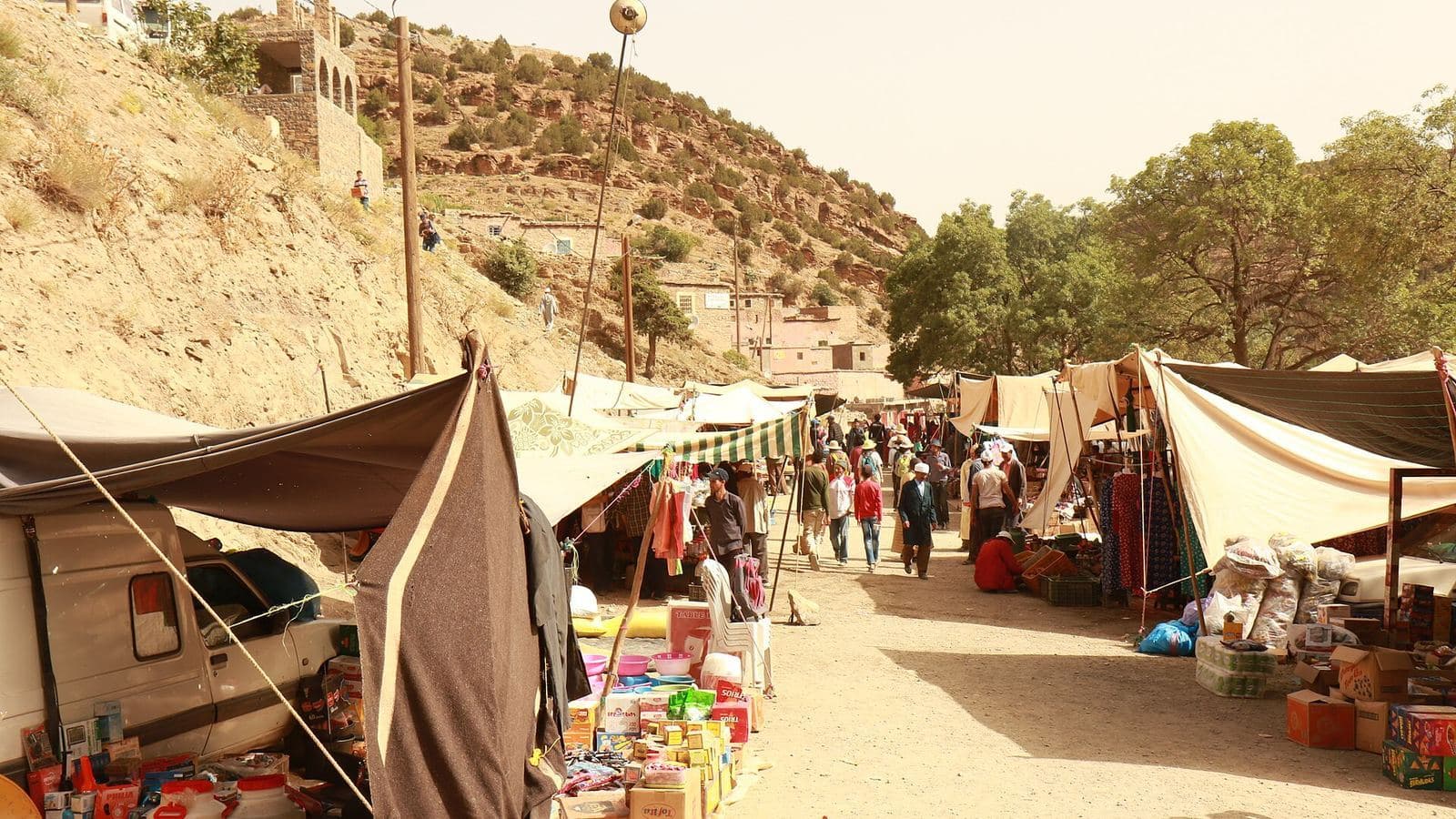
The medina souks of Marrakech are wonderful, but they are open every day and they know you are coming. A rural Berber market is something else entirely. Once a week, an empty field outside a village fills before dawn with trucks, donkeys, tents and thousands of people who have come to buy, sell, get a haircut, fix a radio and catch up on the news. By mid-afternoon, it has all gone.
If you want to see how rural Morocco actually lives, few experiences beat it. Here is how to do it well.
How the weekly souks work
For centuries, villages in the Moroccan countryside have been too small to support permanent shops. Instead, each area holds a market on a fixed day of the week, and farmers, traders and craftsmen move from one market to the next as the week goes by. Many towns are even named after their market day:
- Had — Sunday
- Tnine — Monday
- Tlata — Tuesday
- Arbaa — Wednesday
- Khemis — Thursday
- Jemaa — Friday
- Sebt — Saturday
So when you see a sign for Had Draa or Tnine Ourika, you already know which day to go.
What you will see at a Berber market
- Fruit and vegetables piled on tarpaulins, sold by the kilo from hand scales.
- Spices, dates and olives in sacks and pyramids.
- The livestock area, usually busiest at dawn: sheep, goats, cattle and a lot of serious negotiation.
- The "mule park", where donkeys and mules wait patiently while their owners shop.
- Services under canvas: barbers, tailors, blacksmiths, shoe menders and people repairing phones.
- Hardware, plastic goods, second-hand clothes and everything a rural household needs.
- Food tents, where grilled meat, tagines and endless glasses of tea keep everyone going. In some markets you buy meat from the butcher and have it grilled at the stall next door.
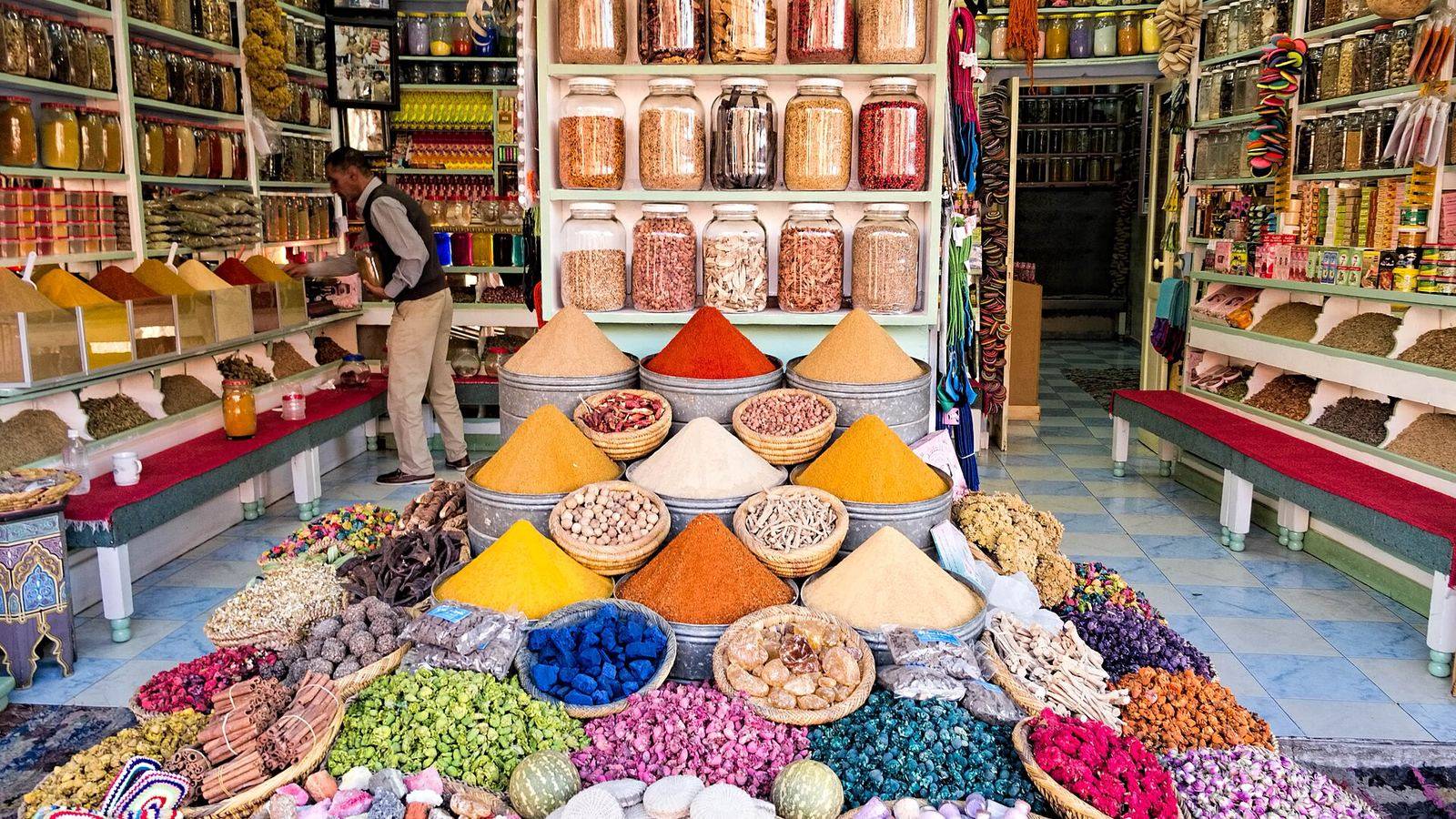
What to buy at a weekly souk
Souvenirs are few, and that is part of the charm. Look for spices sold by weight, dates and dried figs, a jar of local honey, a clay tagine or cooking pot, a woven palm basket or a knitted wool cap. Prices are low and fixed by habit, so a small purchase is also a simple way to say thank you for the welcome at a Berber market.
Berber markets near Essaouira and Marrakech
- Had Draa (Sunday) — about 30 minutes from Essaouira, one of the biggest rural markets in the region, known for its livestock section. See our guide to day trips from Essaouira.
- Around Sidi Kaouki — the villages of the Essaouira countryside hold markets on different days; on our Sidi Kaouki day trip, your driver includes one when the day fits.
- Tnine Ourika (Monday) — the market of the Ourika Valley, easy to combine with the Setti Fatma waterfalls.
- Asni (Saturday) — on the road into the High Atlas towards Imlil, a classic stop on mountain day trips. See our selection of the best day trips from Marrakech.
Etiquette: how to visit a Berber market respectfully
A weekly souk is not a show put on for visitors — it is people's working day. A few simple rules make all the difference:
- Ask before taking photos of people, and accept a no with a smile. Many rural women prefer not to be photographed. Wide shots of the market are generally fine.
- Dress modestly: shoulders and knees covered is the norm in the countryside.
- Bargain politely for anything that is not sold by weight — but remember that prices here are local prices, and a few dirhams matter more to the seller than to you.
- Carry small change in dirhams; nobody takes cards.
- Watch your step and your pockets: the ground is uneven, animals have right of way and crowds are dense.
- Go early. The best atmosphere is between about 8 am and noon; by early afternoon, stalls are packing up.
Our Morocco travel tips cover money, dress and bargaining in more detail.
Why go with a local driver?
Weekly souks are not signposted for tourists, they move with the calendar and they are often off the main road. A local driver knows which market is on today, where to park, which section is worth your time and how to translate a price. Most importantly, they help you feel welcome rather than out of place.
Tours that include a Berber market
- Our Essaouira full-day private excursion combines Sidi Kaouki beach, the argan forests and a traditional weekly souk — €120 per vehicle for up to three people at the time of writing.
- Our Ourika Valley private day trip from Marrakech can include a valley market on the right day — also from €120 per vehicle.
- On a private transfer between Marrakech and Essaouira on a Sunday, ask your driver whether a stop at Had Draa fits your timing.
Tell us your travel dates when you book, and we will tell you which Berber market is on during your stay.