Ask travellers what they miss most after a trip to Morocco and many will answer: the food. The slow-cooked tagines, the couscous on Fridays, the warm bread, the salads of roasted peppers and aubergine, the endless glasses of mint tea. A Moroccan cooking class lets you take a little of that home — and, just as importantly, gives you a few hours in a Moroccan kitchen, where so much of family life happens.
Here is our guide to cooking classes in Marrakech, the Atlas and the desert.
What happens in a Moroccan cooking class?
Most classes last three to four hours and follow a similar pattern:
- A market visit, to choose vegetables, herbs and spices and learn how locals shop.
- The mint tea ritual: green tea, fresh mint, sugar and the art of pouring from a height to create foam.
- Preparation: chopping, marinating, rolling and layering, with explanations of each spice.
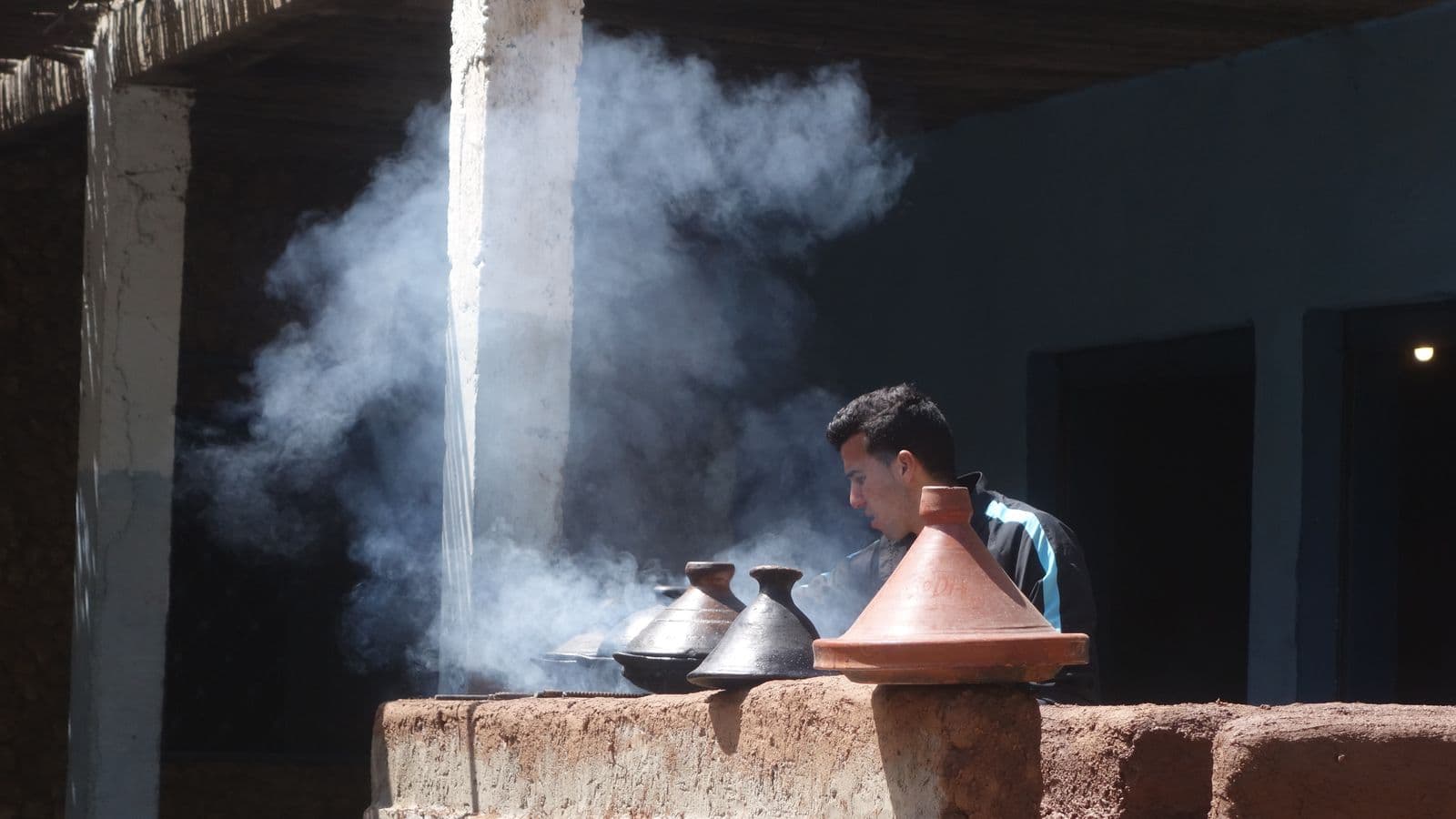
- Cooking: a tagine simmers slowly while you prepare salads and bread.
- The meal: you sit down together to eat what you cooked, and leave with the recipes.
What you will learn to cook
- Tagine: chicken with preserved lemon and olives, beef with prunes and almonds, kefta (meatballs) with eggs, or seasonal vegetables. The secret is patience and low heat.
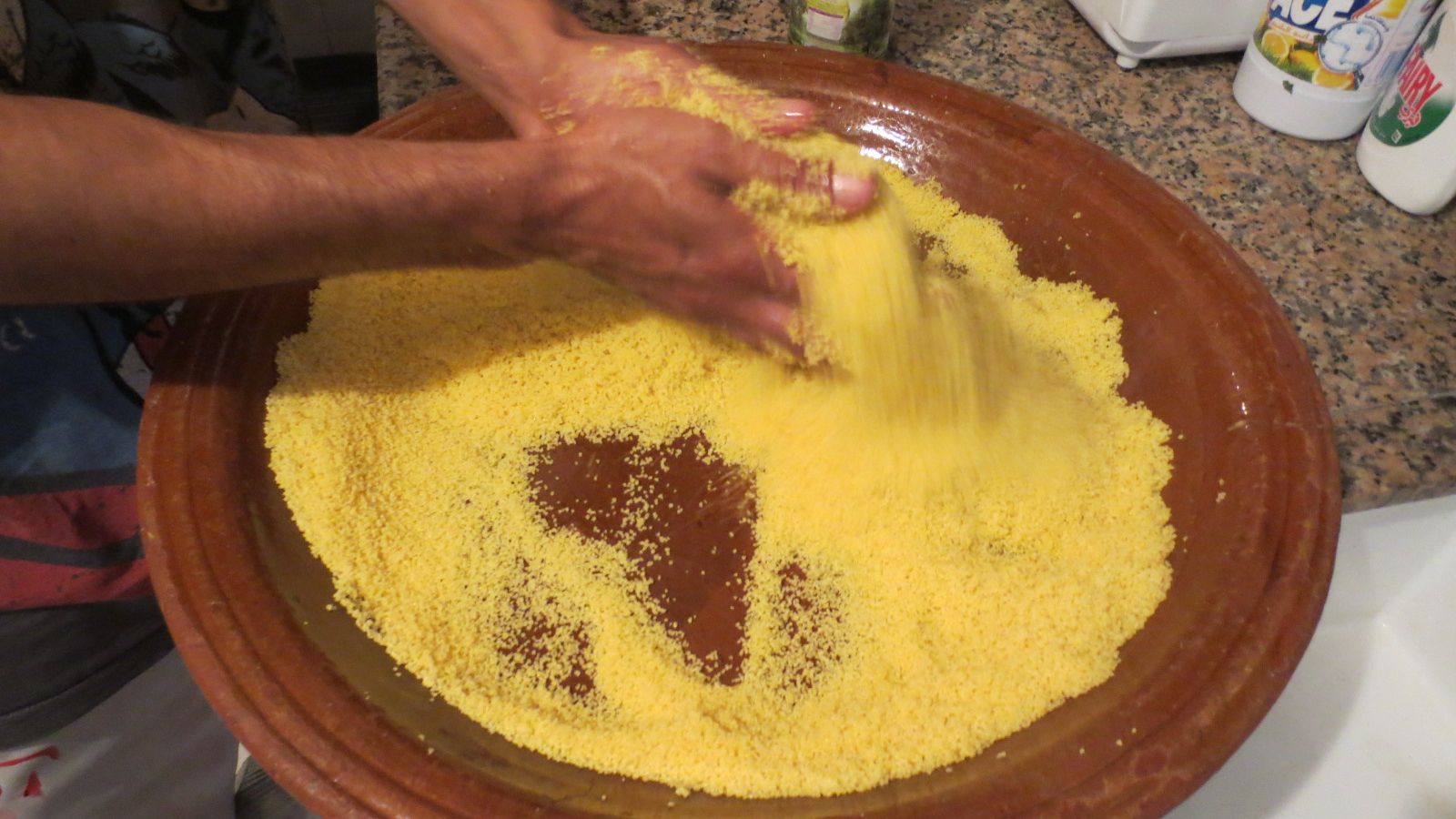
- Couscous: traditionally eaten on Fridays, with seven vegetables; in some classes you roll the semolina by hand and steam it three times.
- Moroccan salads: zaalouk (smoky aubergine), taktouka (peppers and tomatoes), carrot with cumin and orange blossom.
- Bread and pancakes: khobz baked in a clay oven, msemen and baghrir for breakfast.
- Harira: the rich soup of lentils, chickpeas and tomato, famous during Ramadan.
- Desserts: fresh fruit with cinnamon, almond pastries or seffa, sweet vermicelli.
The spices of the Moroccan kitchen
Moroccan cooking is fragrant rather than fiery. The essentials are cumin, sweet paprika, ginger, turmeric, cinnamon and saffron — the finest comes from Taliouine, on the road of our 7-day grand tour between Zagora and Taroudant. Ras el hanout, "the head of the shop", is a blend of up to dozens of spices that each merchant prepares in his own way. Add preserved lemons, olives, fresh coriander and parsley, argan oil and honey, and you have the basis of most dishes. Our Marrakech food guide explains what to try in restaurants.
Where to take a Moroccan cooking class
In Marrakech
Many riads and cooking schools offer classes, often starting with a market visit in the medina. It is the easiest option if you are spending a few days in the city.
In a Berber village in the Atlas
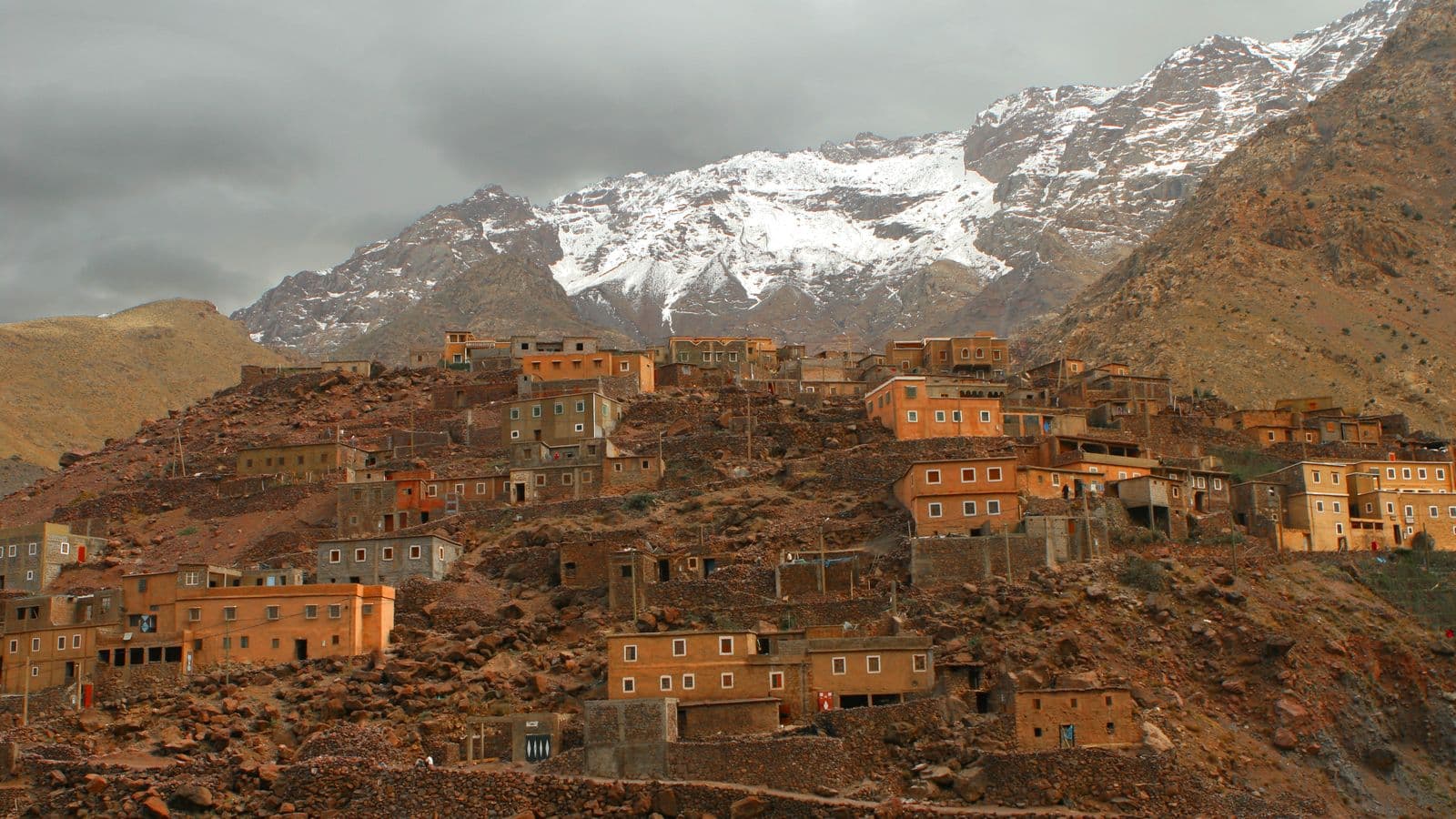
Cooking with a family in a mountain village — over a charcoal fire, with vegetables from the garden — is a more intimate experience. It fits perfectly into our 3-day Atlas & Agafay tour, where lunch is already served in a family home around Imlil. See our Imlil guide.
In the desert
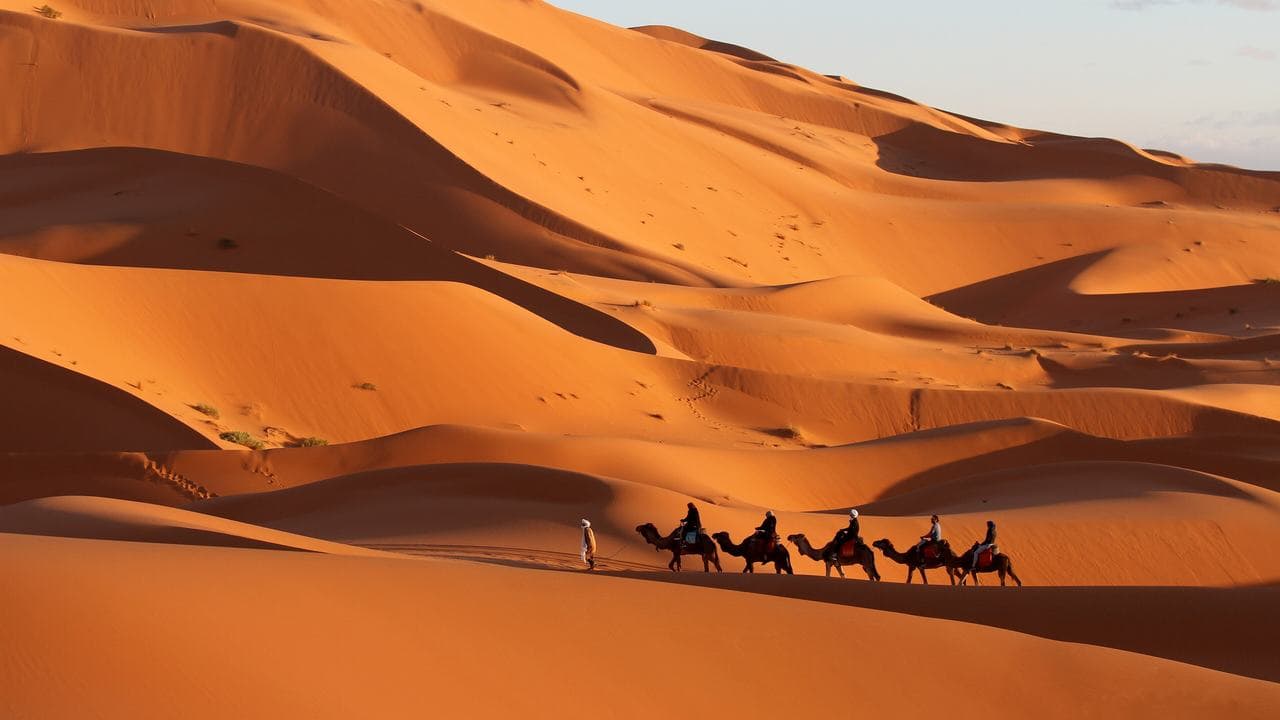
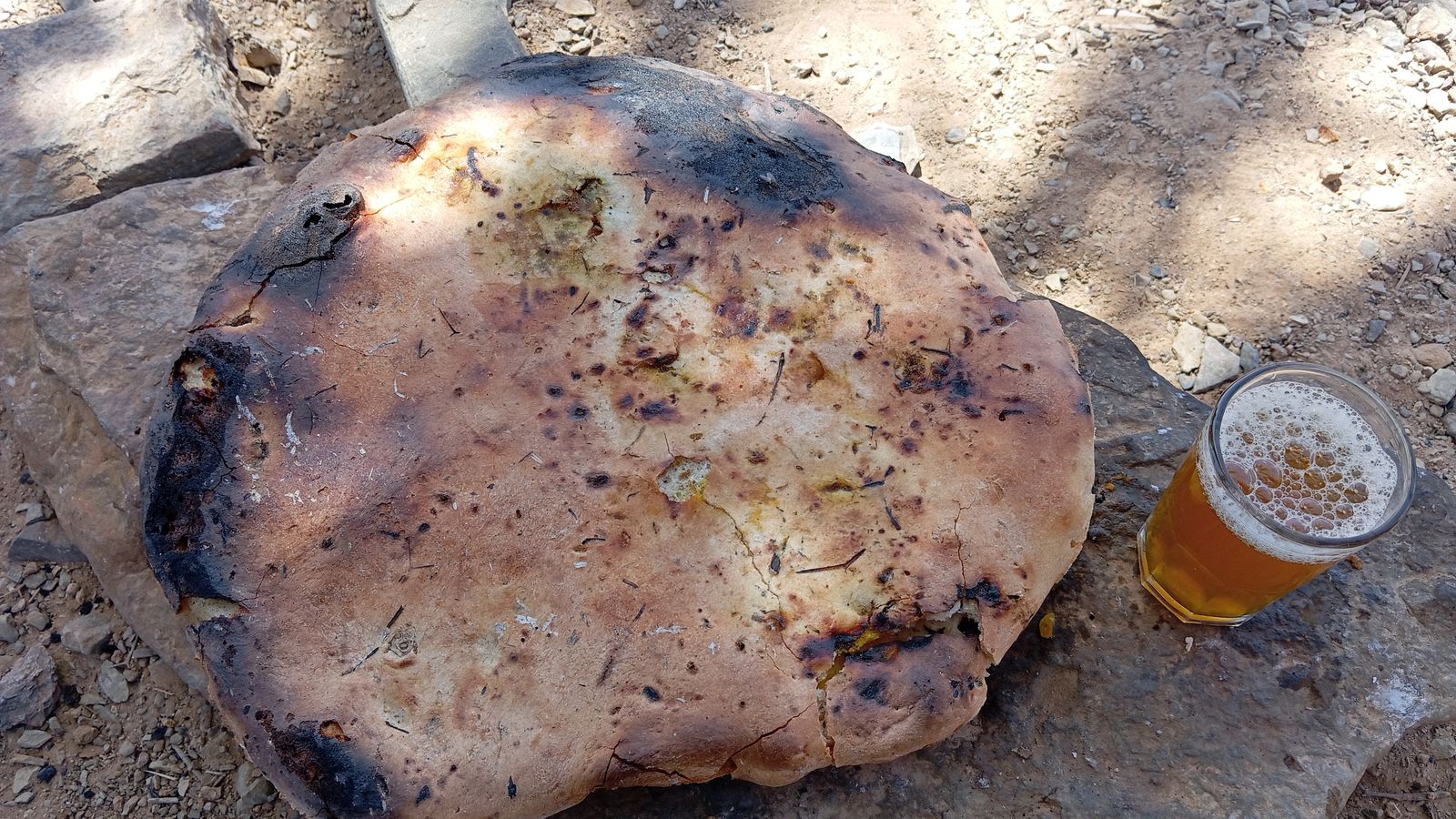
In Merzouga, the local speciality is madfouna, a flatbread stuffed with meat, onions and spices, baked in a fire pit in the sand. Some families and camps also bake bread directly in the hot sand — a fascinating thing to watch. See our Merzouga guide.
Tips for your Moroccan cooking class
- Mention allergies and dietary needs (vegetarian, gluten-free) when booking; classes adapt easily.
- Bring a small notebook or your phone for notes and photos.
- Buy your spices at the end of the class or at the market you visited, sealed in bags for travel.
- If you buy a clay tagine pot, choose a glazed one for daily use and ask how to "season" it before the first cooking.
- Argan oil, amlou and saffron make lovely edible souvenirs — see our argan cooperative guide.
Table customs worth knowing
Cooking with a family also means eating like one. The tagine is placed in the middle of the table and everyone eats from the section in front of them, using a piece of bread rather than a fork — traditionally with the right hand. Hosts will keep pushing the best pieces of meat towards their guests; it is polite to accept a little more than you planned. Mint tea is served throughout the day, often in three rounds, and refusing it entirely can seem cold: a single glass is enough to show appreciation. During Ramadan, families break the fast at sunset with dates, milk and harira, and being invited to that meal is a real honour.
Why add a cooking class to your tour?
Because food is the easiest door into Moroccan culture. Around a tagine, conversations happen naturally: about family, Ramadan, weddings, the harvest or life in the village. It also breaks up long driving days with a relaxed, hands-on moment. Our article on Berber culture gives more context to what you will see and taste.
Book your class
A Moroccan cooking class can be added to any of our circuits — in Marrakech before or after your tour, in an Atlas village or on the road. Tell us when you request your quote on WhatsApp, or compare our itineraries in the guide to multi-day tours from Marrakech.