The first notes come from a low, buzzing string instrument, then the metallic clatter of iron castanets joins in, and a voice begins a call-and-response chant that the other musicians answer in chorus. Within minutes, the small courtyard is filled with a hypnotic rhythm. This is Khamlia, a village of a few hundred people on the edge of the Erg Chebbi dunes, and its music is one of the most moving experiences of a trip to the Moroccan Sahara.
Here is our guide to Khamlia and the Gnawa tradition.
Where is Khamlia?
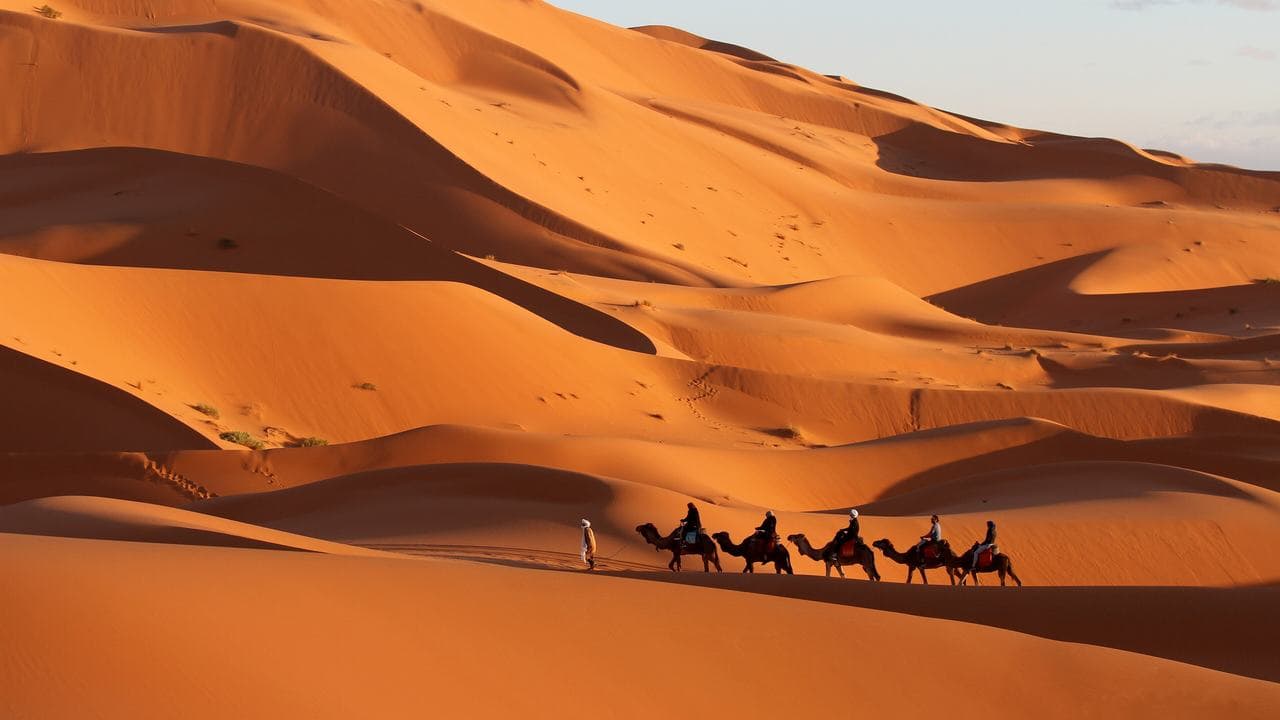
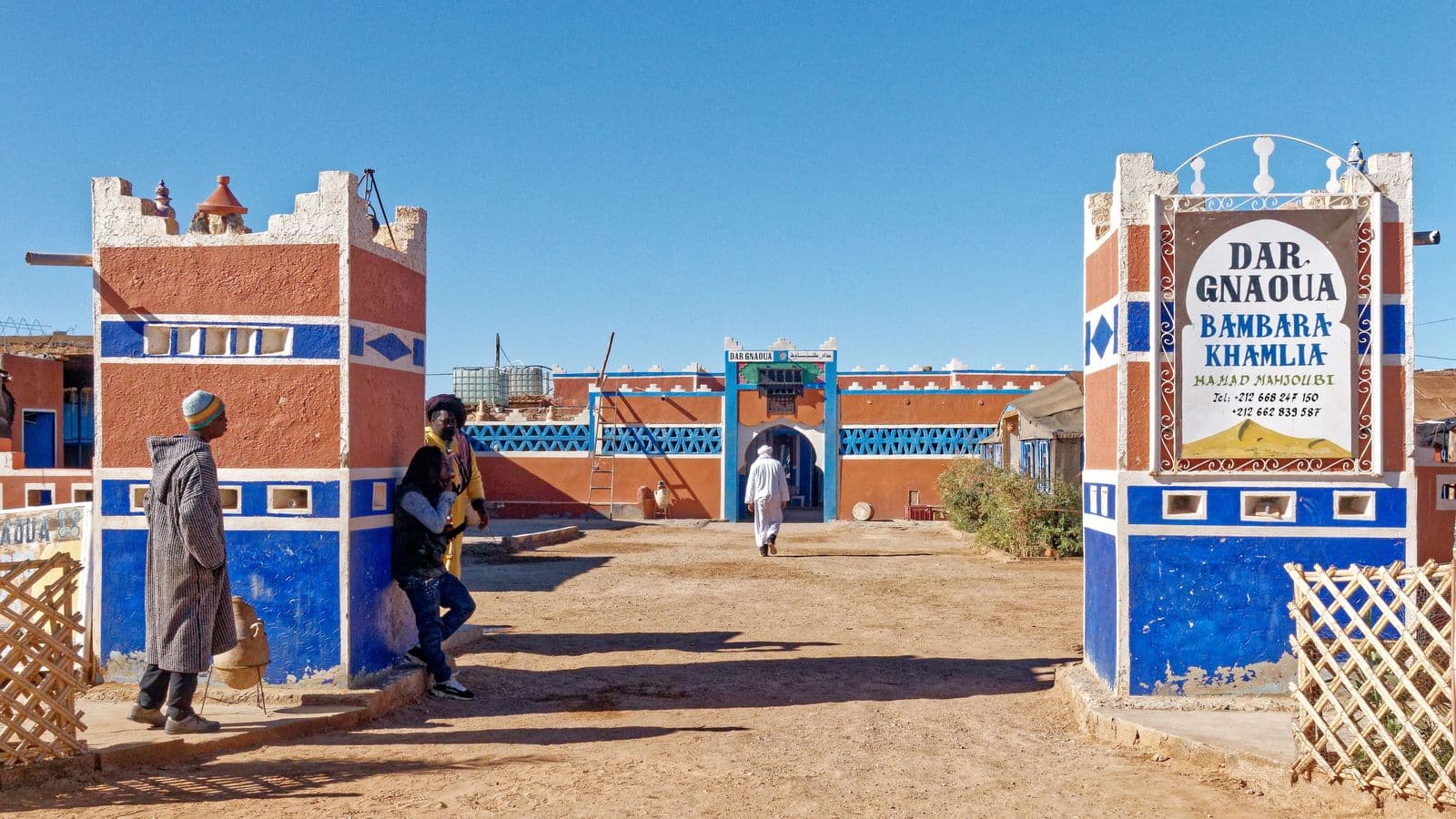
Khamlia lies about 7 km south of Merzouga, on the road that skirts the eastern side of the Erg Chebbi dunes. It is a quiet village of earth and concrete houses, a mosque, a few palm trees and gardens, with the dunes rising just behind. Most visitors arrive on a 4x4 excursion around the erg, often on the second day of a desert tour. See our Merzouga and Erg Chebbi guide for the bigger picture.
Who are the Gnawa of Khamlia?
The families of Khamlia trace their roots to sub-Saharan Africa — to regions of today's Mali, Niger and beyond — from where their ancestors were brought north, often by force, along the trans-Saharan trade routes. Over the centuries, they developed a unique culture blending African rhythms and spiritual practices with Islam and Amazigh traditions. The village was historically a stopover for caravans and a community of farmers and workers who settled on the edge of the dunes.
The word Gnawa refers both to these communities and to their music, which is played at celebrations and during all-night healing ceremonies called lila. In 2019, Gnawa culture was inscribed on UNESCO's list of the Intangible Cultural Heritage of Humanity.
The music: guembri, qraqeb and voices
- The guembri (or hajhouj): a three-stringed bass lute with a camel-skin soundboard, played by the master musician, the maâlem. Its deep, percussive sound drives the rhythm.
- The qraqeb: large iron castanets, played in pairs, producing a constant metallic pulse.
- The tbel: a large drum played with sticks at celebrations.
- Voices and clapping: the maâlem sings a line, the group answers, and the songs build in intensity.
In Khamlia, musicians usually perform in a music house decorated with colourful paintings. Visitors sit on benches or cushions, are served mint tea and listen to several pieces. Sometimes the musicians invite guests to dance — you are welcome to join in or simply enjoy the music.
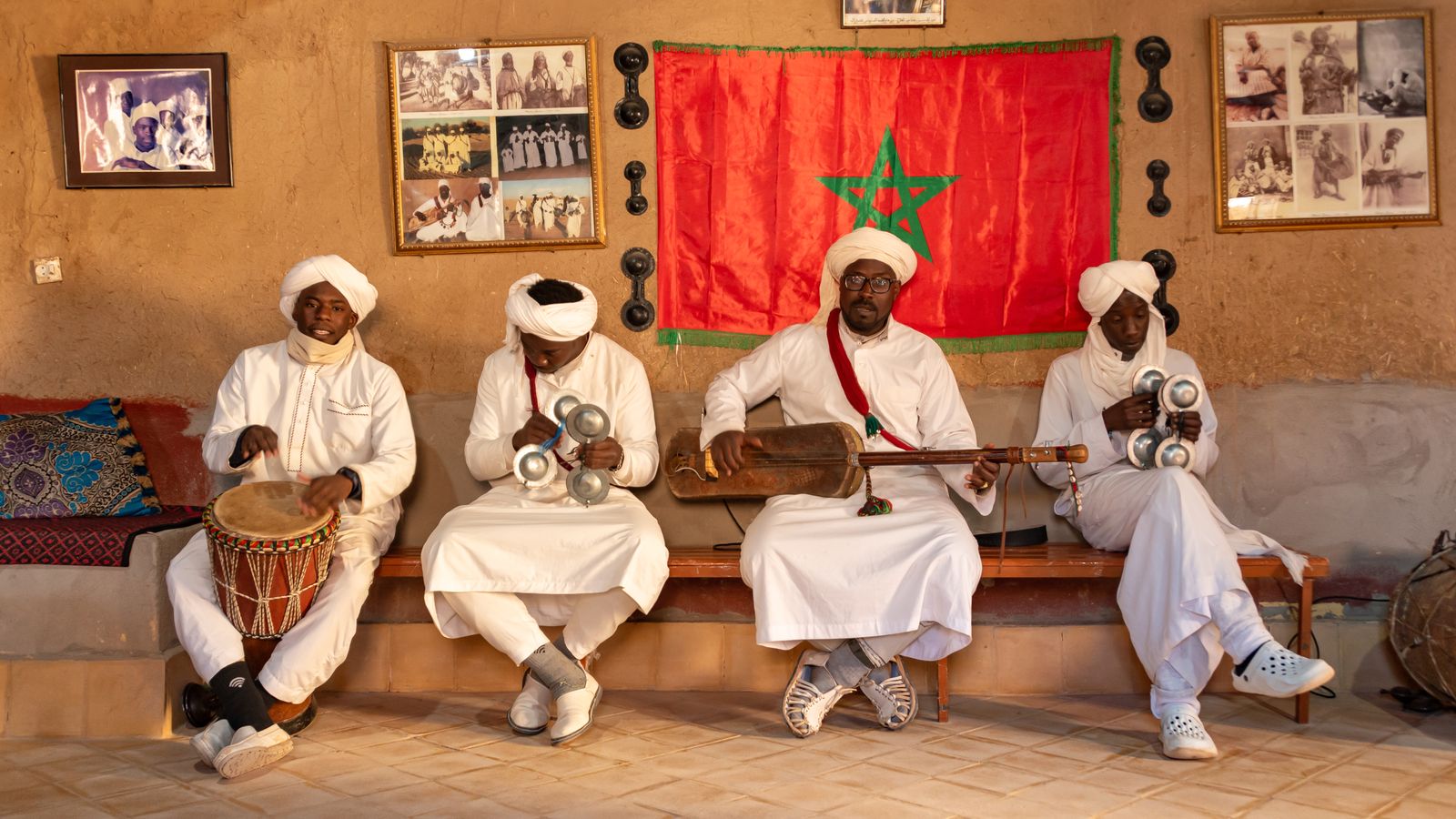
The lila: a night of music and healing
Beyond the short performances for visitors, Gnawa music has a deeper role. During a lila — literally "night" — musicians, a spiritual leader and the host family gather for a ceremony that lasts until dawn. Each sequence of songs is associated with a spirit and a colour, incense is burned, and some participants enter a trance that is believed to heal or bring peace. These ceremonies are private family events, not tourist shows, but understanding them gives meaning to what you hear in Khamlia: rhythms that have carried prayers, memory and healing for generations.
What a visit to Khamlia looks like
A typical stop lasts 45 minutes to an hour: mint tea, a performance of several songs, a short explanation of the instruments and the history of the community, and the chance to buy recordings. There is usually no fixed entrance fee: visitors leave a contribution or buy a CD, which supports the musicians and their families. Your driver or guide will tell you what is customary.
Around the village you can also walk through the small gardens irrigated by wells, see traditional earth houses and, in some families, share bread baked in the sand.
Khamlia and the rest of the erg
The village is usually one stop in a half-day loop around Erg Chebbi by 4x4. Before or after the music, the route often includes a nomad family living in a tent at the edge of the dunes, the old lead and barite mines of the area, the black volcanic plains that contrast with the orange sand and, after good winter rains, the seasonal lake of Dayet Srji where flamingos sometimes stop. Lunch is often a madfouna in Merzouga before the return to the camp. It is a full, varied day that shows the desert is not empty but home to many communities.
Etiquette and tips
- Leave a fair contribution at the end of the performance; it is the musicians' main income from visitors.
- Ask before taking close-up photos of people outside the performance.
- Dress modestly in the village, as everywhere in rural Morocco.
- Combine the visit with the 4x4 tour of the erg, nomad families and lunch in Merzouga.
Gnawa music elsewhere in Morocco
Gnawa musicians also play in the squares of Marrakech and, above all, in Essaouira, which hosts the famous Gnaoua World Music Festival every summer, bringing together Gnawa masters and international musicians. Our Essaouira travel guide has more on the city's Gnawa heritage. And in many desert camps, local musicians play around the fire after dinner — see our desert camp guide.
How to visit Khamlia from Marrakech
Khamlia is part of the full desert day on our 4-day Sahara & Erg Chebbi tour and our 7-day grand tour, both of which include two nights in the dunes so you have time for the 4x4 excursion. See the Marrakech to Merzouga itinerary for details, and our article on Berber culture to understand the many cultures you will meet along the way. Send us your dates on WhatsApp for a personalised quote, or explore all our multi-day tours from Marrakech.