Walk through Essaouira's medina and you will pass more paintings than spice stalls. Canvases hang in doorways, sculptures stand in courtyards and calligraphers work in tiny studios. The town calls itself the city of artists, and it has earned the title: few places in Morocco have such a concentration of creators, or such a surprising story behind them — and the Essaouira art galleries are the best place to discover it.
Here is our guide to the Essaouira art galleries — and to buying art you will still love at home.
The self-taught painters of Essaouira
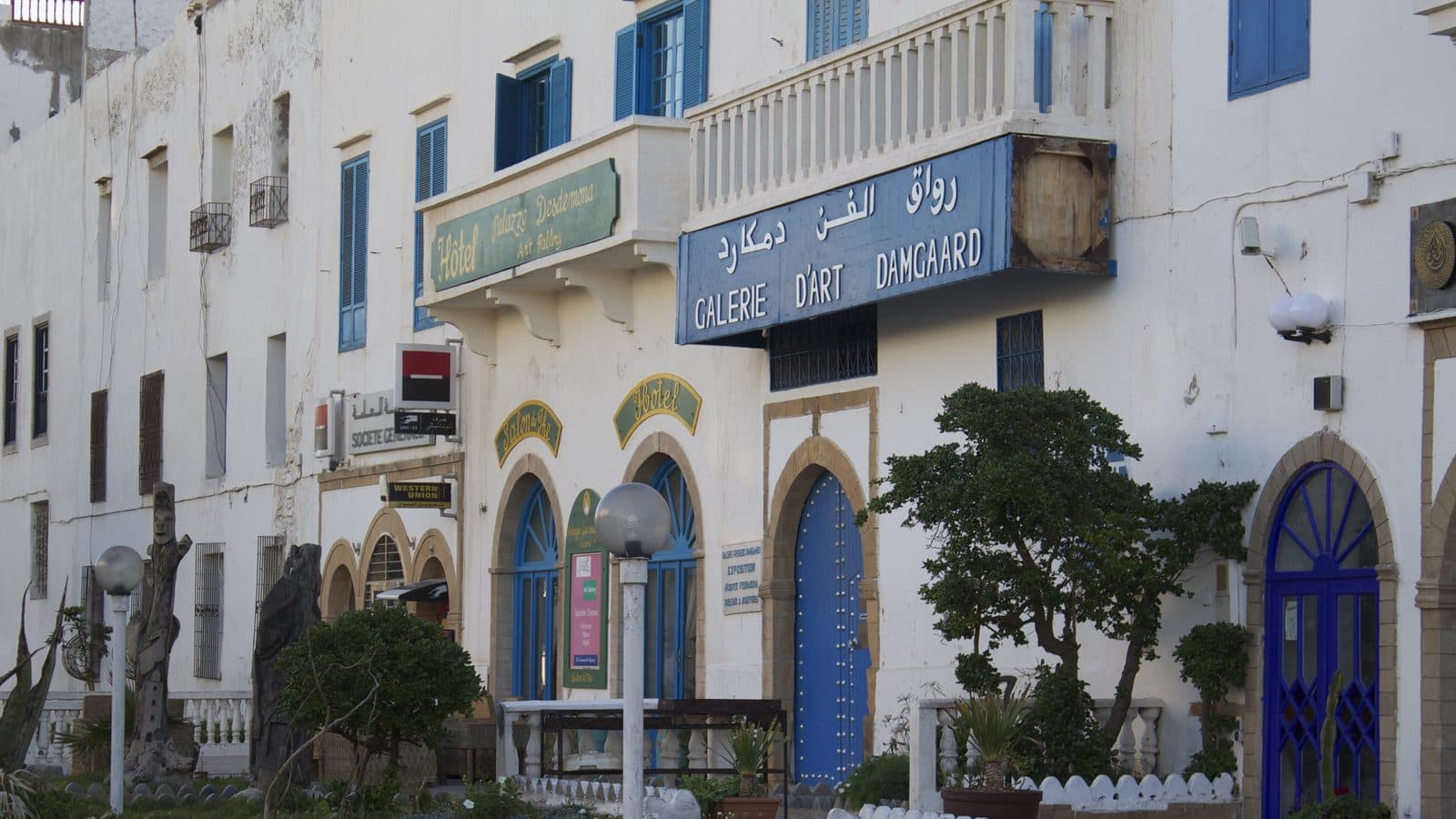
In the 1980s, a Danish gallerist, Frédéric Damgaard, began showing the work of local men who had never been to art school — fishermen, farmers, craftsmen. Their paintings and sculptures, full of colour, Gnawa rhythms and dreamlike figures, became known as the art of the "painters of Essaouira" and were later exhibited in Europe. Names such as Mohamed Tabal, Ali Maimoun and Abdelmalek Berhiss were among the first. Today a new generation continues the tradition alongside contemporary artists who have settled in the town.
Essaouira art galleries worth a visit
- Galerie d'Art Damgaard — opened in 1988, it is the historic home of the Essaouira school of painters and sculptors, in the medina.
- Espace Othello — a gallery on rue Mohammed Layachi showing paintings and sculptures by local and Moroccan artists.
- Medina studios — dozens of small galleries and artists' workshops line the streets between Place Moulay Hassan and the Skala. Many artists are present and happy to talk about their work.
Opening hours change with the seasons and some galleries close for a few weeks a year, so check before going out of your way.
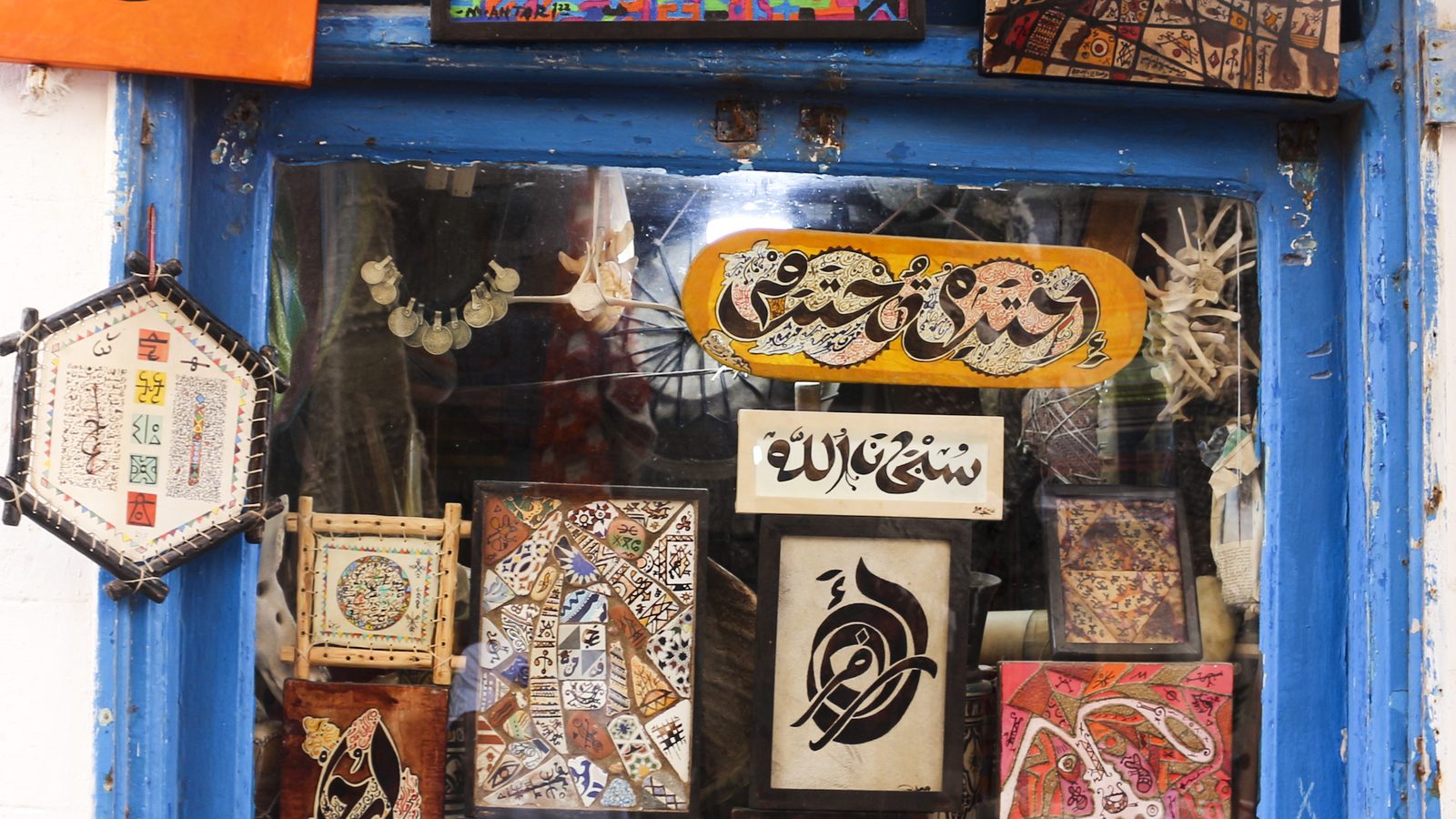
A gallery walk in the medina
You can see the best Essaouira art galleries in a relaxed half day. Start in the morning around Place Moulay Hassan, where several galleries and studios open onto the square and the nearby lanes. Walk on towards the Skala de la Ville: under the ramparts, the thuya cabinetmakers work in their small workshops, and painters often display their canvases along the walls. Cross the medina to the mellah, quieter, where some artists have their studios in old houses. Finish with a mint tea on a terrace and come back the next day for the piece you could not stop thinking about — it is the best way to buy art you will love.
Our tip: visit the galleries in the morning, when artists are often in their studios and happy to talk about their work.
Calligraphy and thuya wood
Two crafts are worth a special look:
- Calligraphy: several calligraphers work in the medina, from classical Arabic scripts to contemporary abstract compositions. You can often commission a name or a word.
- Thuya marquetry: the fragrant root of the thuya tree, which grows in the hills around Essaouira, is carved and inlaid by the cabinetmakers whose workshops nestle under the ramparts of the Skala. Boxes, chess sets and small furniture make beautiful, light souvenirs.
Tips for buying art in Essaouira
- Take your time. Visit a few galleries before choosing; the best works are rarely in the first shop you see.
- Prices are often negotiable in studios and small galleries, much less so in established galleries with fixed prices.
- Ask for a certificate or an invoice with the artist's name and the title of the work.
- Shipping: unframed canvases can be rolled into a tube for the plane; for large works, ask the gallery about shipping and packing.
- Thuya: check that pieces are finished and polished, without cracks.
Good to know: card payment is accepted in established galleries; small studios often prefer cash.
Art events in Essaouira
The galleries come alive during the town's cultural events. In late November, the Rendez-vous de la Photo shows photography across the medina (our guide), and from 10 December 2026 to 10 January 2027 the Casablanca International Biennale brings more than eighty artists to Essaouira (our Biennale guide). Exhibitions are also held at Dar Souiri and the Institut français — see our médiathèque and cinema guide.
Combine art with landscapes
Many Souiri painters draw on the countryside around the town: argan trees, Berber villages, the wild coast. Our half-day excursion along the argan route and coast and the full day to Sidi Kaouki show you that landscape.
Getting to Essaouira
Our Marrakech to Essaouira transfer takes about 2 h 30 door to door, from €100 per vehicle for up to three passengers at the time of writing — and the boot has room for that painting on the way back. From Essaouira-Mogador airport, the airport transfer takes about twenty minutes, from €20.
For the year's festivals and exhibitions, see the Essaouira events calendar, and for a stroll between galleries, our medina and ramparts walking guide.