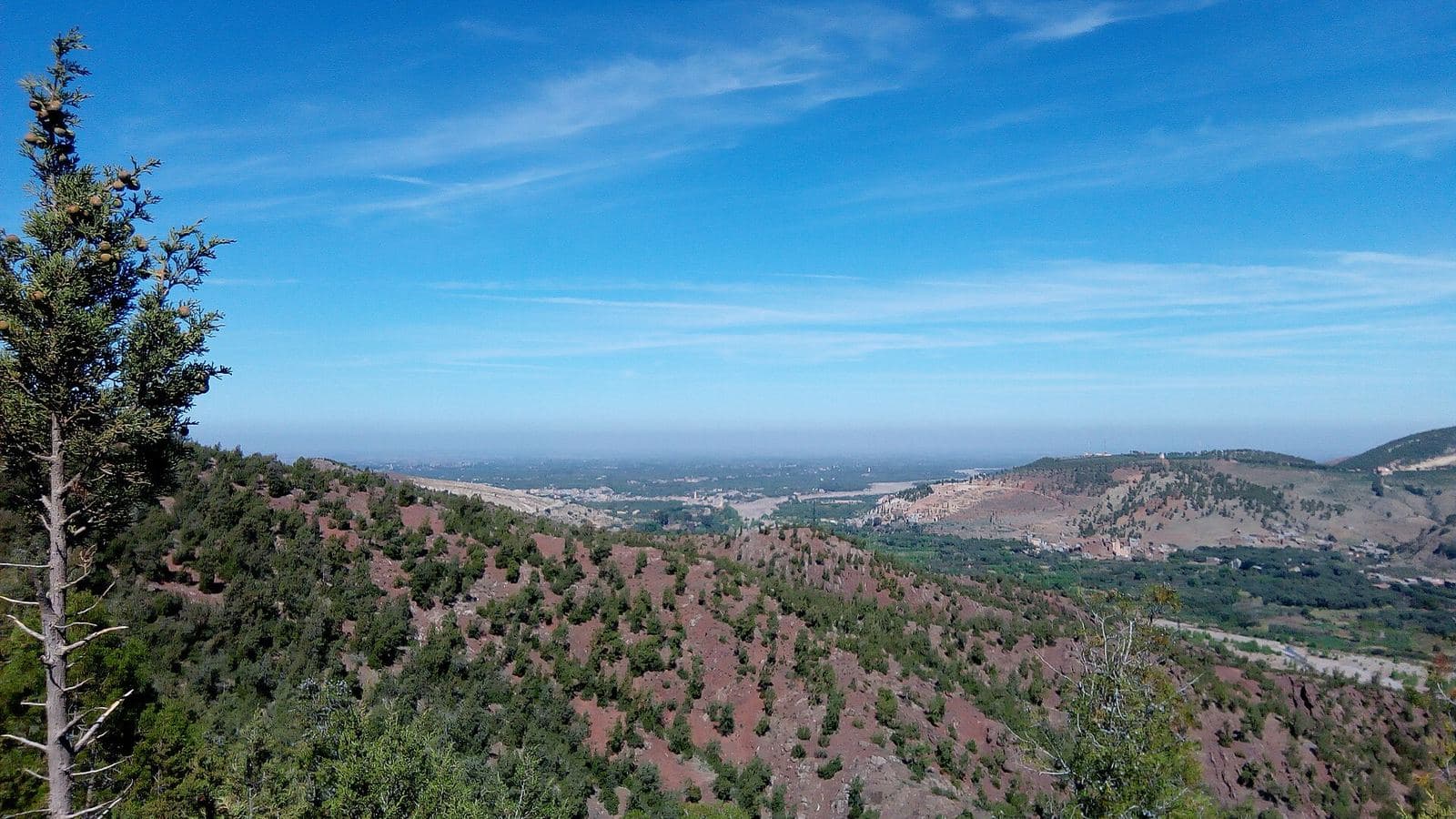
There is a moment on the road south of Marrakech, about forty minutes after leaving the city, when the flat red plain suddenly folds into hills and the snow-capped wall of the High Atlas fills the windscreen. Passengers who were checking their phones look up. That moment is the real start of every Ourika Valley day trip.
The Ourika Valley day trip is the easiest way to swap the medina for mountain air without committing to a trek. Here is how the day actually unfolds on a private excursion, and how to get the most from it.
Where is the Ourika Valley?
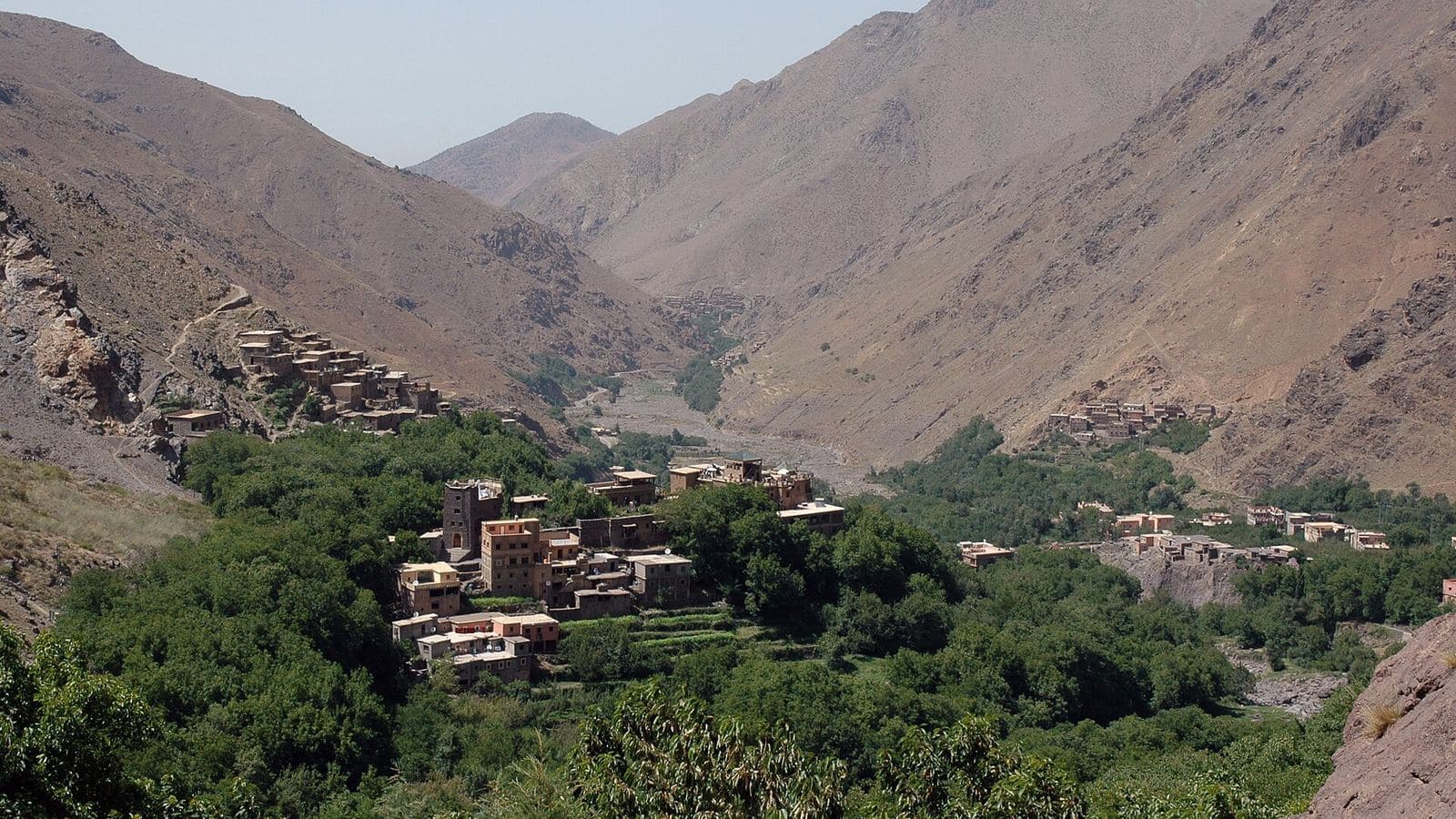
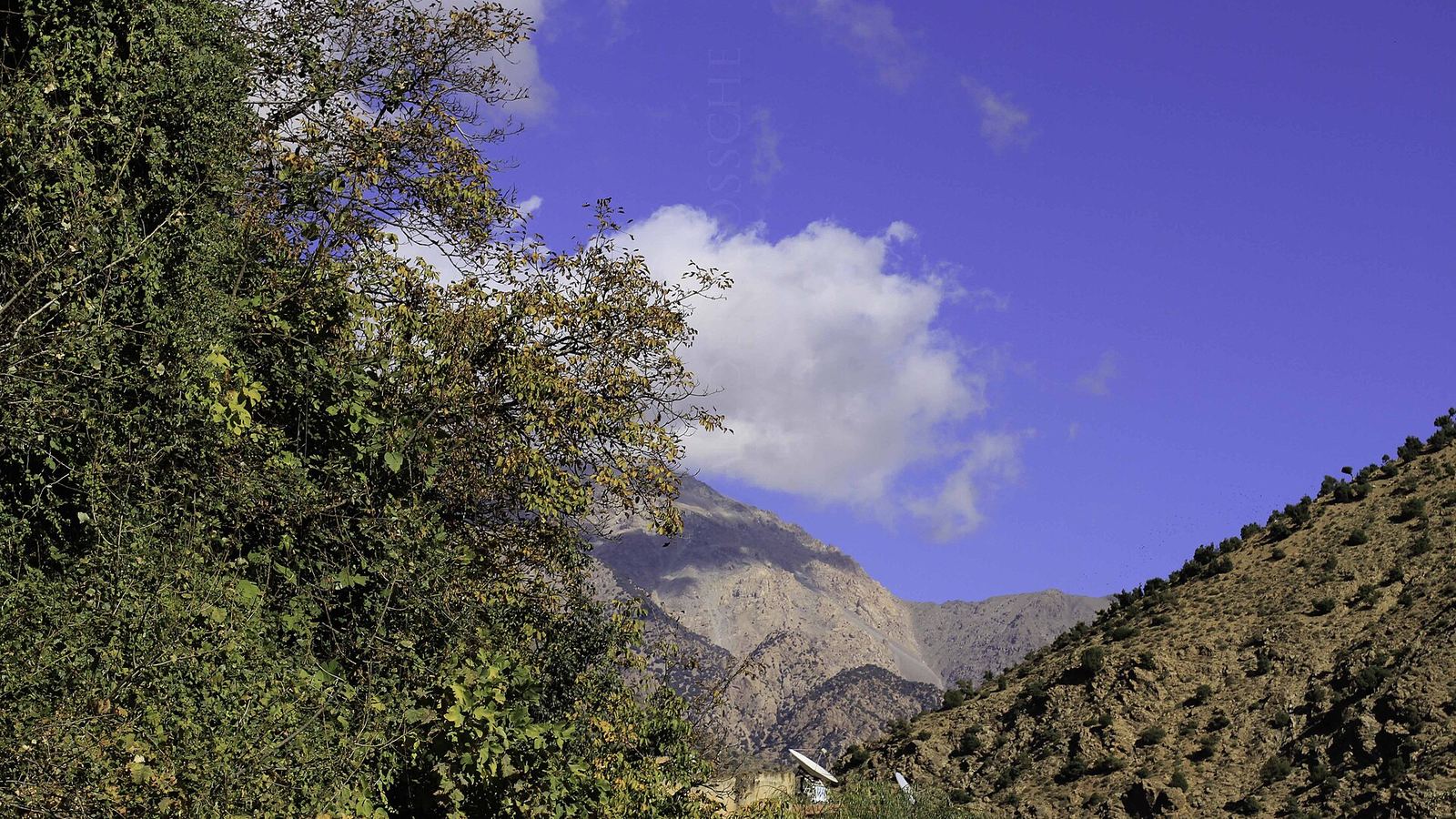
The valley follows the Ourika river into the High Atlas, roughly 60 km south of Marrakech. The road climbs gently past farming villages to Setti Fatma, the last village accessible by car, about an hour and a quarter from the medina. It is a green, narrow valley of walnut trees, terraced fields and adobe villages clinging to the slopes — a completely different Morocco from the one you left an hour earlier.
The Ourika Valley day trip, hour by hour
8:30 — Pickup at your riad or hotel
A private trip starts when it suits you, but leaving between 8 and 9 am is ideal: the road is quiet, the light is soft and you reach the waterfalls before the midday crowds. Your driver meets you at the nearest point to your riad and the car is air-conditioned, with water on board.
9:15 — Into the foothills
The road leaves the city through olive groves and small towns. If you are travelling on a Monday, ask your driver to stop at the weekly souk of Tnine Ourika — tnine means Monday — where villagers from the whole valley come to buy vegetables, spices, livestock and hardware. It is not a tourist market, which is exactly why it is worth a visit.
10:00 — Cooperatives and a Berber house
Along the lower valley, women's cooperatives produce argan oil, herbal remedies and cosmetics. A short stop lets you see the process and buy directly from the producers. Many families also open their traditional earthen houses to visitors: you see the rooms, the kitchen and the rooftop, and share a glass of mint tea. A small tip for the family is appreciated.
11:00 — Setti Fatma and the waterfalls
The road ends at Setti Fatma, where the valley narrows and the river runs fast over boulders. From here, a path climbs to a series of seven waterfalls. The first one, the most visited, takes around 30 to 45 minutes to reach, scrambling over rocks and crossing small bridges. The higher falls need more time and more confidence.
Local guides wait at the start of the path. They know the safest route, which is worth a lot when the rocks are wet, and they expect a fee agreed in advance. You choose how far you go; many guests stop at the first fall, sit in the spray for a while and head back down for lunch.
13:00 — Lunch by the river
Setti Fatma's riverside restaurants are the best part of the day for many people. In warm months, tables and plastic chairs are set out on the rocks, sometimes right in the shallow water, and you eat a slow-cooked tagine with your feet cooled by the river. Lunch is not included in our tour price, which means you choose where and what to eat.
14:30 — The slow way back
On the way down, the driver can stop at viewpoints, at a pottery workshop or simply at a café for another tea. You are usually back at your riad between 4 and 6 pm, tired in the right way.
Best time to go
- Spring (March to May) — our favourite. The waterfalls are at their fullest, the valley is green and fruit trees are in blossom.
- Summer — the valley is noticeably cooler than Marrakech, which is why Moroccan families flock here at weekends. Go on a weekday if you can.
- Autumn — golden walnut trees and quieter paths.
- Winter — snow on the peaks and crisp, clear days. Bring a warm layer.
One safety note: the valley is prone to flash floods during violent summer storms. On stormy days we adapt the plan, and the guides at Setti Fatma know when the path should be avoided.
What to wear and bring
Proper walking shoes or trainers with grip are essential if you want to reach the waterfalls — flip-flops and wet rock do not mix. Bring a hat, sunscreen, a light jacket for the shade and some small change for tips, the guide and the Berber house visit.
Why go private rather than on a group tour?
Group tours from Marrakech are cheaper per seat but run on a fixed timetable, with a lot of time spent picking up other passengers and stopping at the shops the organiser chooses. A private excursion goes at your pace, skips what does not interest you and stops wherever you want.
Our private Ourika Valley day trip is priced per vehicle: at the time of writing from €120 for up to three people, with hotel pickup and drop-off, fuel, parking and waiting time included. For families and small groups, it often costs little more than a shared tour.
Planning the rest of your stay? See our 3-day Marrakech itinerary, and if you are heading to the coast afterwards, our Essaouira full-day excursion shows you the other side of Morocco's countryside — argan forests, wild beaches and Berber markets by the sea.