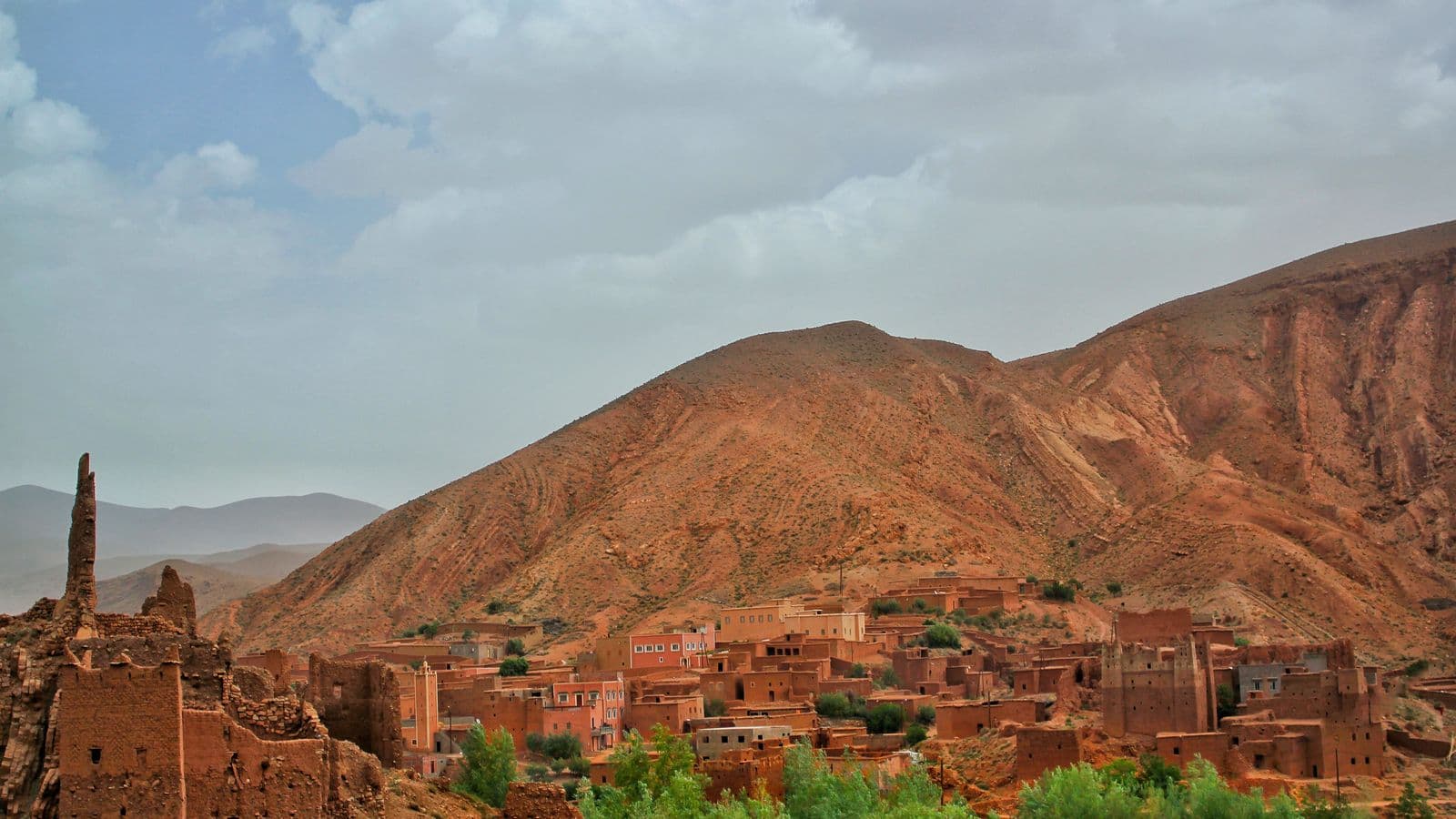
Many travellers on their way to Merzouga discover the Dades valley by night, arriving tired after a long day on the road. Then they wake up, open the shutters and see it: red and mauve cliffs, a ribbon of poplars and walnut trees along the river, earth-built kasbahs clinging to the slopes and, above, the ridges of the High Atlas. It is one of the most beautiful valleys in Morocco, and it deserves more than a night.
Here is our guide to the Dades valley and its neighbour, the Valley of Roses.
Where is the Dades valley?
The Dades river flows down from the High Atlas and meets the road from Ouarzazate to Tinghir at Boumalne Dades, a market town about 115 km east of Ouarzazate. North of Boumalne, a road climbs up the valley for some 60 km, past villages, kasbahs and rock formations, to the narrowest part of the Dades gorges and beyond towards Msemrir.
On our circuits, the Dades is the overnight stop between Marrakech and Merzouga: see the Marrakech to Merzouga itinerary and the 5-day Grand South loop.
The road of a thousand kasbahs
Between Ouarzazate and Boumalne, the road is lined with kasbahs, ksour and palm groves — the so-called "road of a thousand kasbahs". Highlights include the Skoura palm grove and its Kasbah Amridil, and the town of Kelaat M'Gouna, capital of roses. Our feature on the road of a thousand kasbahs tells the story of these earth-built fortresses.
The Valley of Roses
Around Kelaat M'Gouna and up the M'Goun valley, farmers plant hedges of damask roses around their fields. In late April and May the bushes bloom, and families pick the flowers at dawn to be distilled into rose water and precious rose oil. The town celebrates with a rose festival in spring, with music, dancing and garlands of petals. All year round, cooperatives sell rose water, creams and soaps — a lovely, light souvenir.
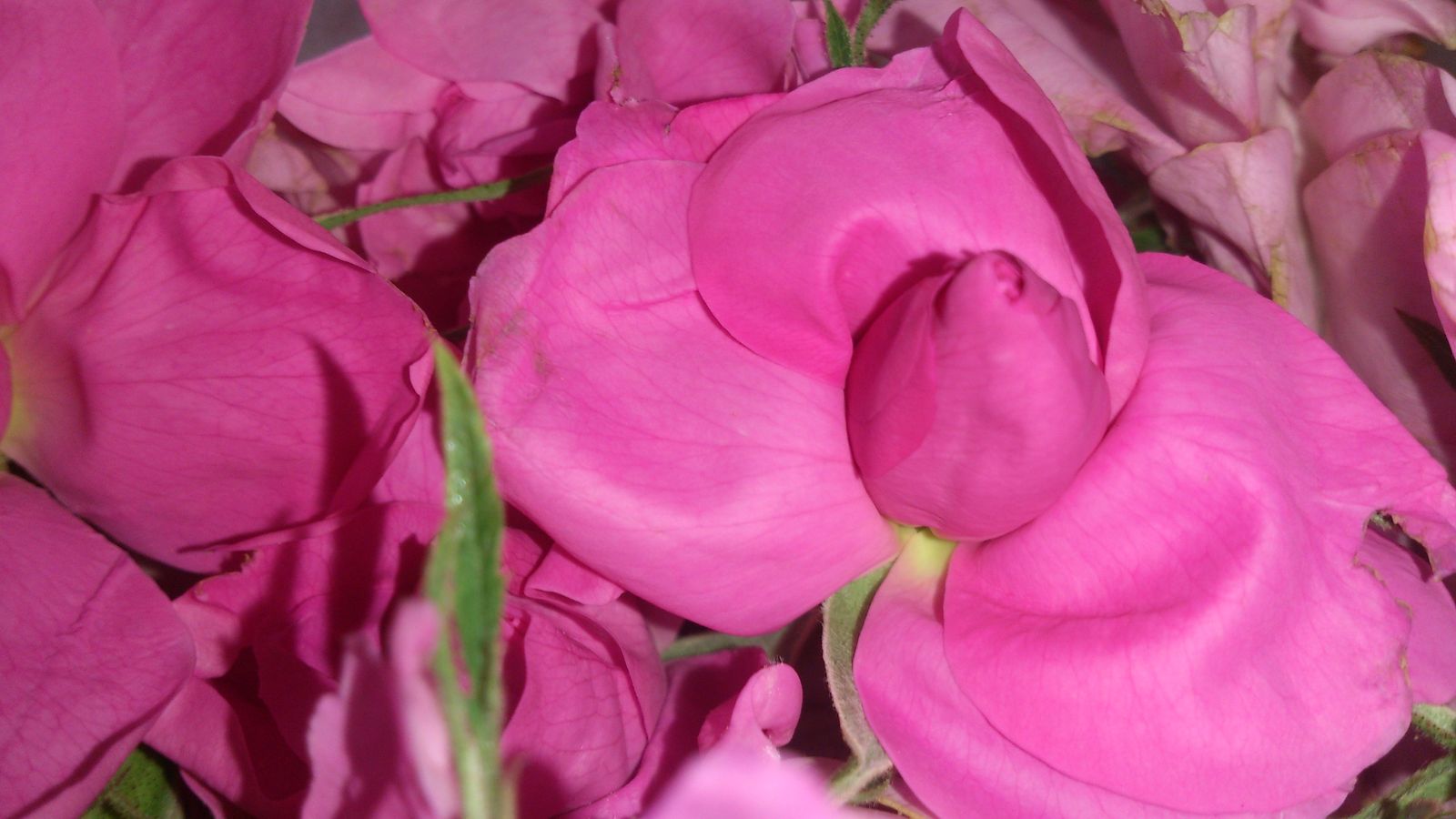
Outside the flowering season, the Valley of Roses is still beautiful: green fields in spring, golden poplars in autumn and quiet villages where you can walk among the terraces with a local guide.
The "monkey fingers" and the Dades gorges
A few kilometres into the Dades valley, the landscape turns surreal. Erosion has sculpted the red conglomerate rock into rounded, finger-like shapes known locally as the "monkey fingers" (or "brain rocks"). A short walk among them, with the river and the poplars below, is one of the most memorable easy hikes of the South.
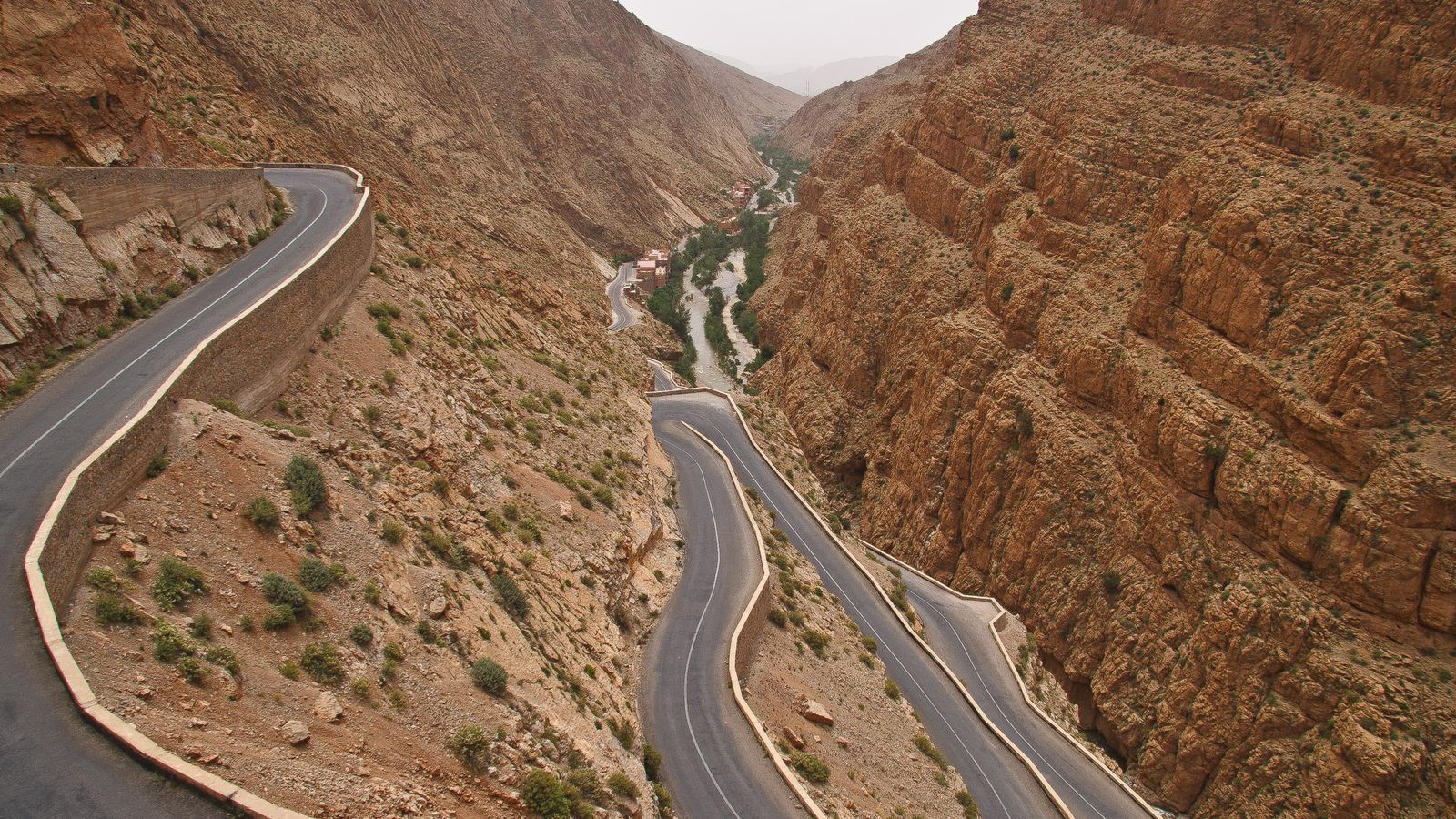
Further up, the valley narrows into the Dades gorges, where the road clings to the cliff above the river and then climbs a famous series of hairpin bends. The viewpoint at the top, with a café terrace overlooking the switchbacks, is one of the classic photographs of Morocco.
Life in the Dades valley
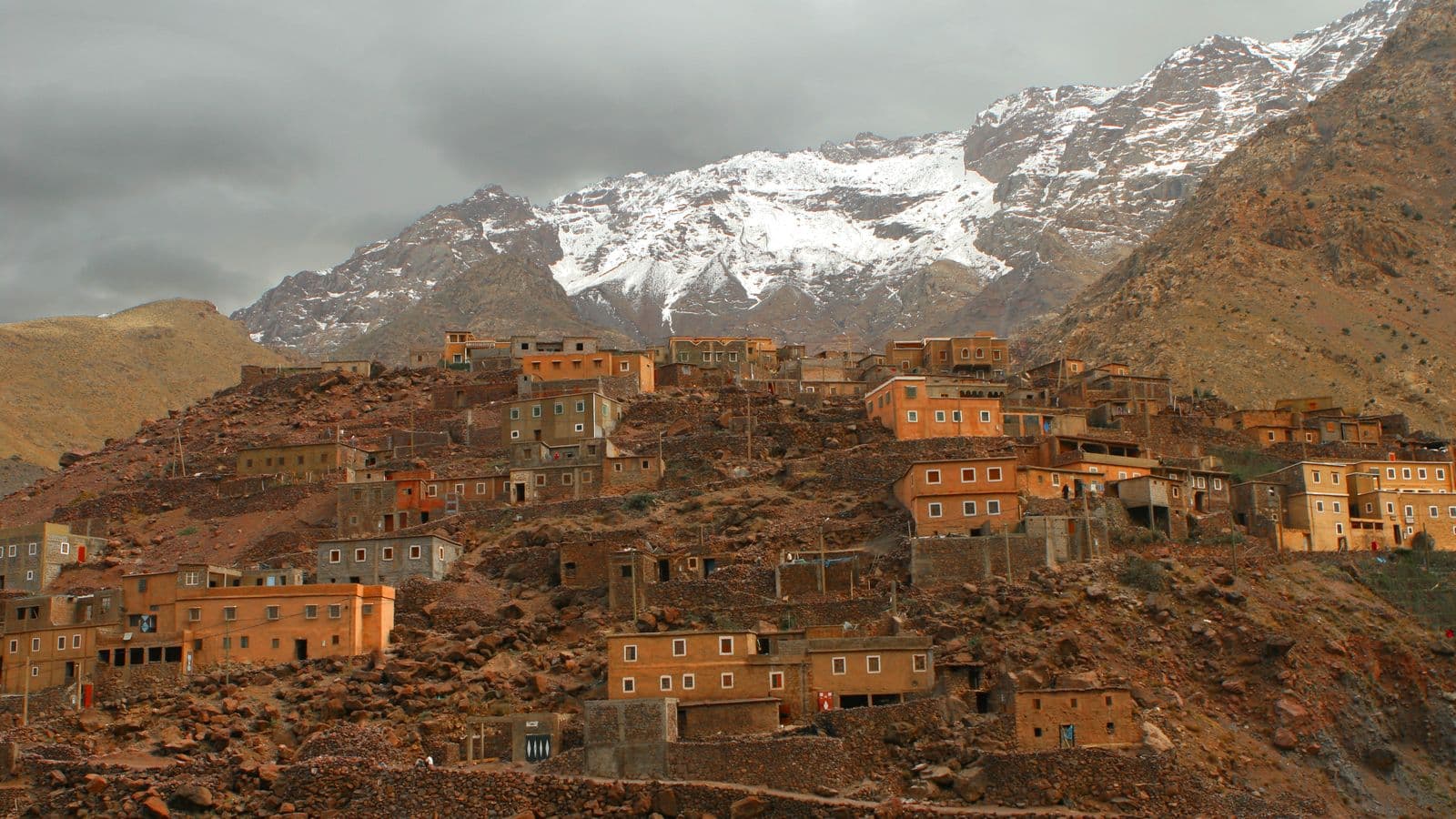
The valley is home to Amazigh farming families whose way of life still follows the river. Every flat strip of land along the Dades is a field of barley, alfalfa or vegetables, shaded by walnut, almond and fig trees and watered by channels whose use is shared by turn between households. Above the fields, villages of rammed earth blend into the cliffs, and the old kasbahs of former local chiefs stand at strategic bends. Walking through them with a guide from the valley is the best way to understand how people have lived here for centuries — and to share a glass of mint tea along the way. Our article on Berber culture gives more background.
Things to do in the Dades valley
- Walk among the rock formations with a local guide (one to two hours).
- Photograph the hairpin bends from the viewpoint at sunset.
- Visit a nomad family higher up the valley, where some still live in caves or tents in summer.
- Hike between villages on old mule tracks, with lunch in a family home.
- Buy rose products at a cooperative in Kelaat M'Gouna.
Where to stay in the Dades valley
The valley is lined with family-run guesthouses and small hotels, many with terraces over the river and views of the cliffs. Most serve dinner, as there are few restaurants. Rooms can be cool in winter, so ask for extra blankets. Our guide to where to stay in southern Morocco explains what to expect.
When to visit
- Late April and May: roses in bloom and green fields — the most beautiful time.
- Autumn: golden poplars and clear light, perfect for photography.
- Winter: crisp and sunny but cold at night; snow on the high peaks.
- Summer: warm days and cool evenings, a welcome break before the heat of the desert.
Dades valley and Todra gorge
The Dades and the Todra are about 1 hour 30 minutes apart, and most circuits include both: the Dades for its landscapes and road, the Todra for its dramatic canyon walk. Read our Todra gorge guide to plan the next stage.
Visit the Dades on a private tour
The Dades valley is included in our 4-day Sahara & Erg Chebbi tour, our 5-day Grand South loop and our 6 and 7-day circuits. Want more time for walks? We can add a second night in the valley. Every circuit is private, with a professional driver and accommodation selected to match your budget. Send us your dates on WhatsApp, or compare our itineraries in the guide to multi-day tours from Marrakech.