In Essaouira, cuisine smells of the sea. Every morning the blue boats unload sardines, sea bream and squid at the port, and a few hundred metres away the spice merchants of the medina pile up cumin, paprika and saffron. A cooking class in Essaouira brings the two together: you shop with a local cook, learn the gestures of Moroccan home cooking and sit down to eat what you prepared. It is one of the most rewarding activities in town — and a perfect plan for a windy afternoon.
Request a Moroccan cooking class in the medina or its countryside cousin, Berber cooking with a local family.
What makes Essaouira's cuisine different
Essaouira's kitchen is Moroccan at heart, with a few local signatures:
- Fish and seafood from the port, often marinated in chermoula — a green paste of coriander, parsley, garlic, cumin, paprika, lemon and olive oil.
- Argan oil, produced by the cooperatives of the surrounding countryside, used raw on salads and bread, and in amlou, a spread of argan oil, almonds and honey.
- Preserved lemons and olives, which give tagines their tangy, slightly bitter depth.
- Spices used with a light hand: Moroccan food is fragrant rather than fiery.
How a cooking class goes
- The market. You meet the cook in the medina and choose vegetables, herbs and spices; some classes stop at the fish market by the port.
- The kitchen. In a traditional house or riad, each participant has a task: peeling, chopping, mixing the chermoula, arranging the tagine.
- Slow cooking. While the tagine simmers, you prepare salads and learn to knead bread or roll couscous.
- Tea time. The cook shows the ritual of mint tea — the high pour, the foam, the three glasses.
- The meal. Everyone sits down together to eat, and you leave with the recipes.
Classes usually last three to four hours and finish with lunch.
What you might cook
| Dish | What it is | The cook's tip |
|---|---|---|
| Fish tagine with chermoula | Fish on a bed of potatoes, tomatoes and peppers | Marinate the fish at least 30 minutes |
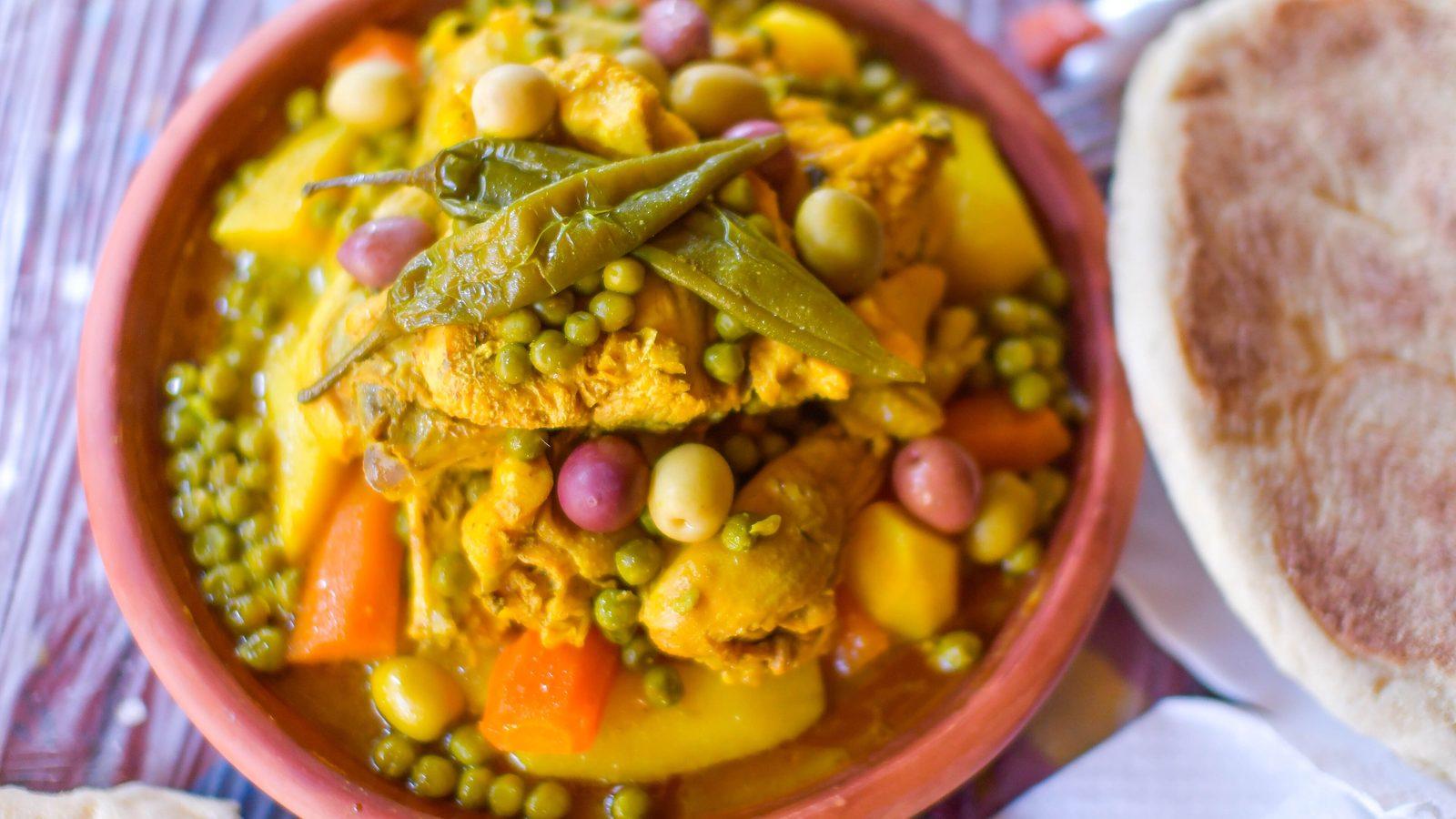
| Chicken with preserved lemon and olives | The classic Moroccan tagine | Add the olives at the end so they stay firm |
| Zaalouk | Smoky aubergine and tomato salad | Cook until it becomes a soft purée |
| Taktouka | Grilled pepper and tomato salad | Peel the peppers while still warm |
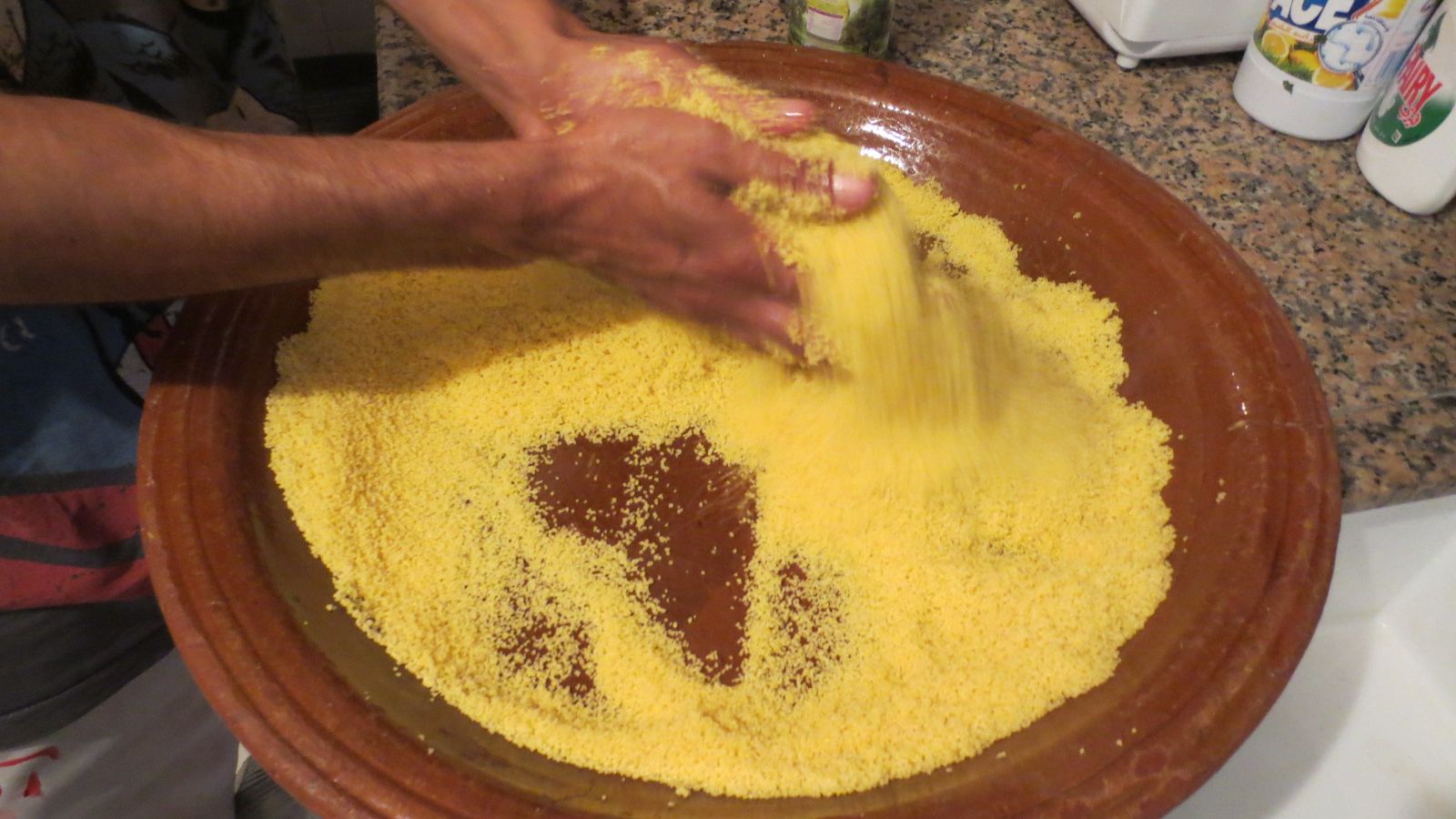
| Couscous | Steamed semolina with vegetables | Steam it twice, separating the grains by hand |
| Mint tea | Green tea, fresh mint and sugar | Pour from high to make the foam |
The menu changes with the season and the market; vegetarian versions are easy to arrange.
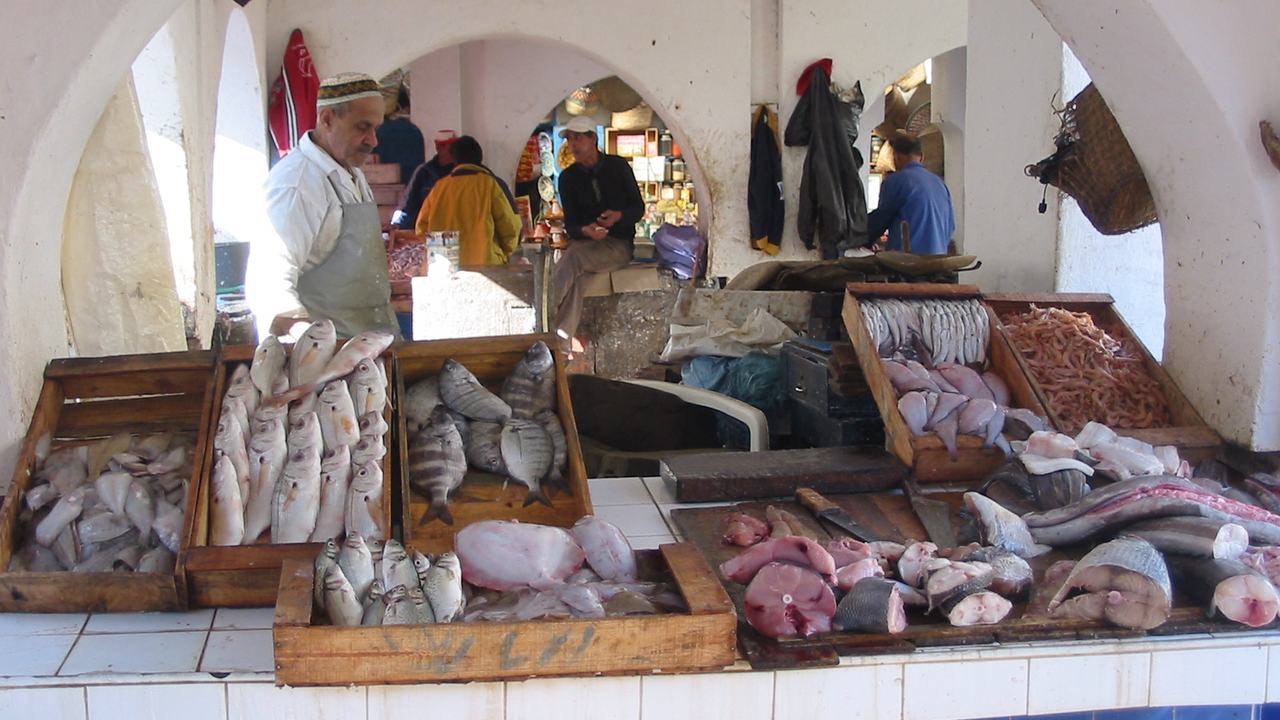
The fish market: a must after the class
Near the port, small stalls sell the day's catch and grill it on the spot: you choose your fish, agree the price by weight and sit at a shared table. It is the simplest and freshest meal in town — read our Essaouira food guide for more addresses and tips.
In the countryside: Berber cooking and argan
For a different atmosphere, the Berber cooking experience takes place in a village of the argan countryside: bread baked in a clay oven, a tagine simmered for hours over charcoal and lunch with the family. Combine it with a visit to an argan oil cooperative, or with our half-day private excursion through the argan route.
A few words of Darija for the kitchen
Your cook will be delighted if you try a few words of Moroccan Arabic: bismillah (said before starting to eat), bnin (delicious), shwiya (a little), bzzaf (a lot), shukran (thank you). Our guide Darija for travellers has twenty more words for your trip.
Spices to bring home
The souk is the best place to buy what you used in class: ras el hanout (a blend that can contain more than twenty spices), sweet paprika, cumin, ginger, a little saffron, and preserved lemons in a jar. Buy whole spices in small quantities from a busy stall, and ask the merchant to vacuum-pack them for the flight. A bottle of culinary argan oil — toasted, nutty and darker than the cosmetic version — is the perfect souvenir from Essaouira.
Practical tips
- Dietary needs: vegetarian menus, allergies and religious restrictions can be taken into account — mention them in your request.
- With children: they love kneading bread and arranging the tagine; classes are family-friendly.
- When: a late-morning class ending with lunch fits perfectly between a morning on the beach and an afternoon in the hammam.
- Bring: curiosity and appetite; aprons and ingredients are provided.
Already cooked in Marrakech? Our guide to Moroccan cooking classes compares the experiences in Marrakech, the Atlas and the desert.
Getting to Essaouira
Most classes take place in the medina, easy to reach on foot. Coming from Marrakech, book a private transfer to Essaouira (about 2 h 30); from the airport, the transfer to the medina takes about 20 minutes. Then discover all our activities in Essaouira.