The road from Marrakech to Merzouga is the great Moroccan road trip: more than 550 kilometres across the High Atlas, past kasbahs and oases, through two spectacular gorges and finally to the golden dunes of Erg Chebbi on the edge of the Sahara. It is too far for a day trip and too beautiful to rush, which is why we recommend at least four days and three nights, ideally with a whole day at Merzouga.
Here is a detailed 4-day itinerary with realistic timings, which we arrange on request with private transport. Our standard programme from Marrakech to Merzouga is the 5-day Grand South & Sahara tour.
Day 1: over the Atlas to Aït Ben Haddou and the Dades gorges
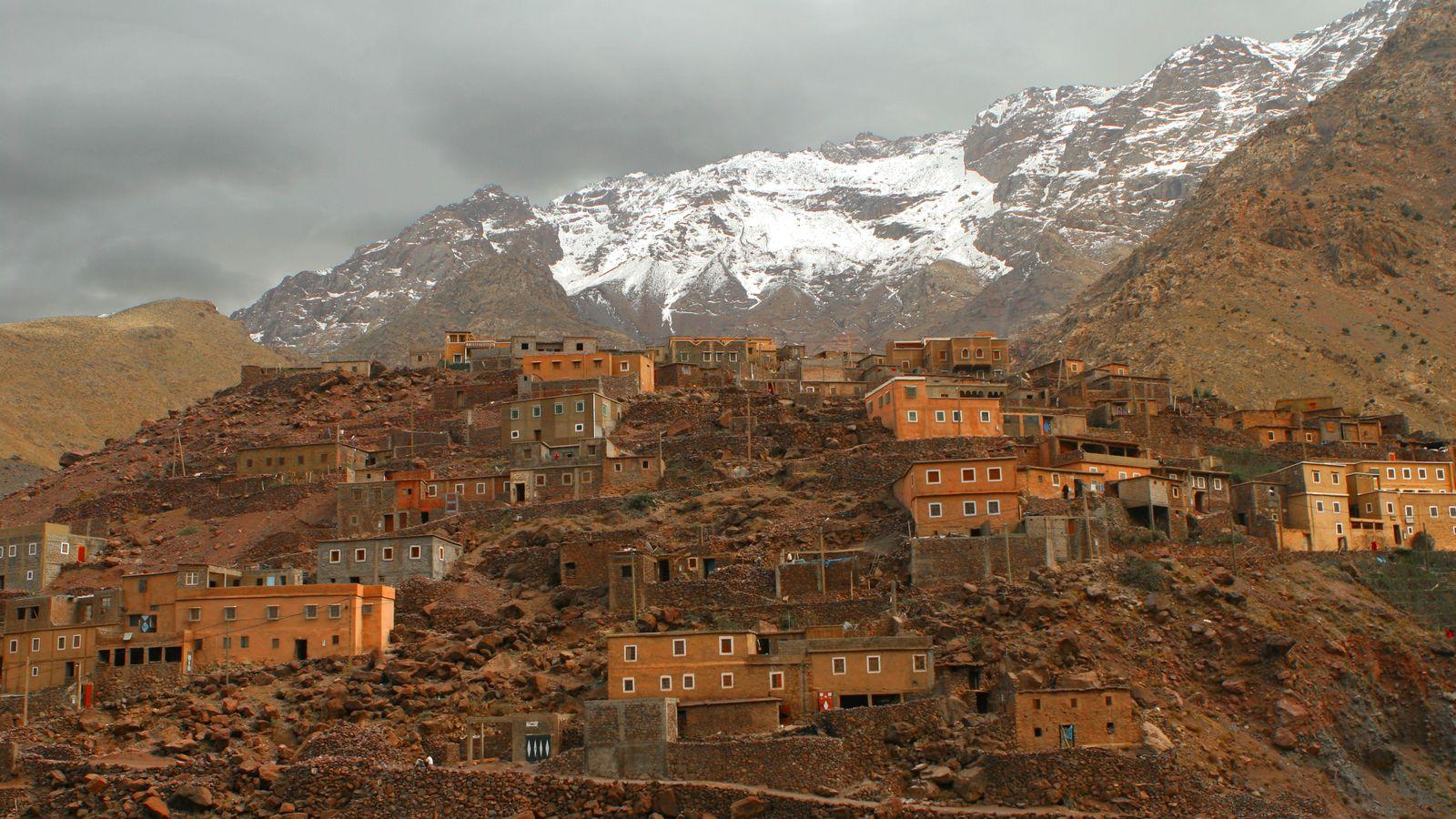
We leave Marrakech around 8 a.m. The first hours are spent climbing the Tizi n'Tichka pass (2,260 m), with stops at viewpoints and in Berber villages selling fossils and minerals. On the far side of the Atlas, the landscape turns ochre and dry.
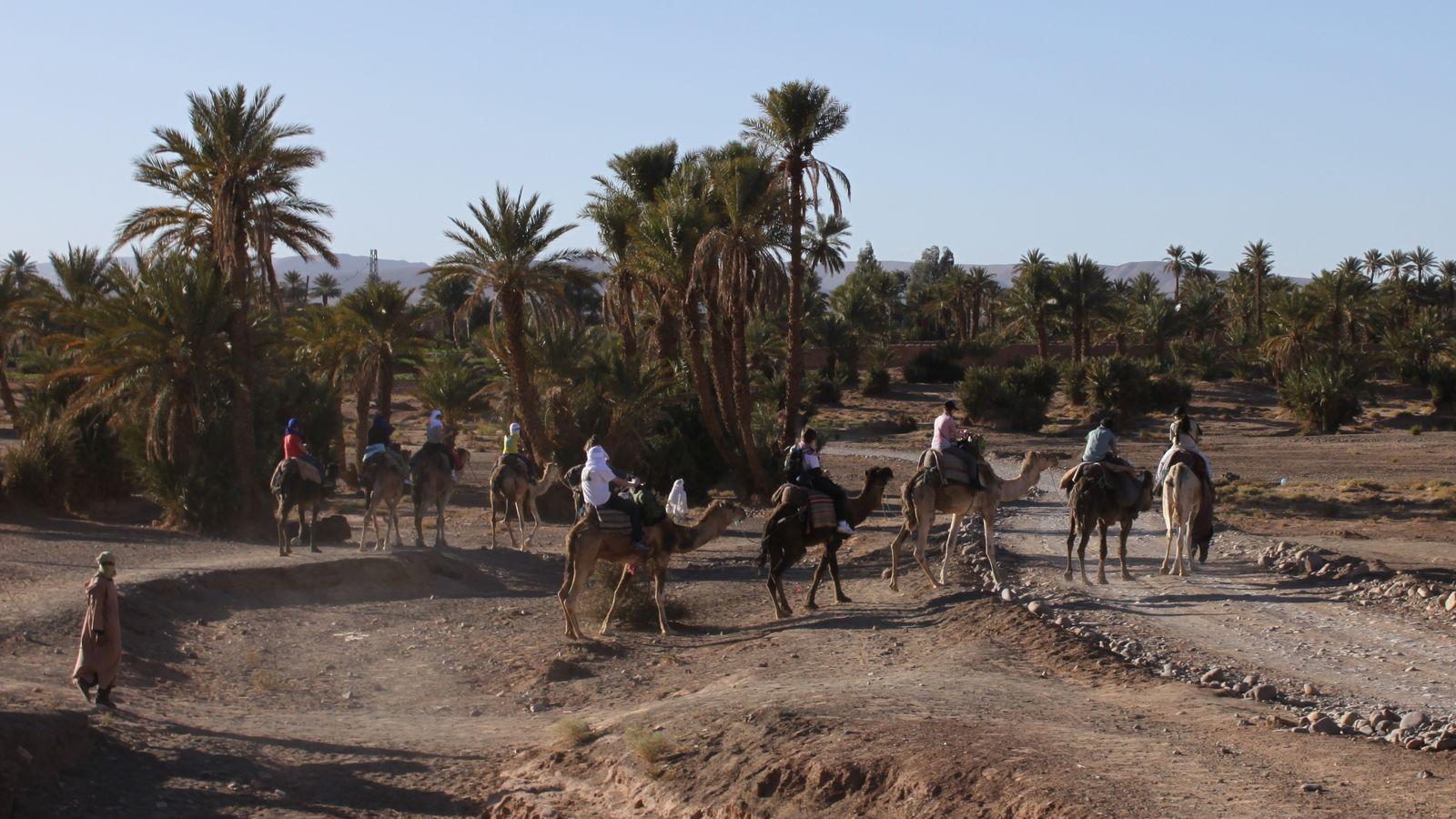
Late morning, you explore Aït Ben Haddou, the UNESCO-listed ksar seen in so many films, before lunch nearby. In the afternoon the road passes Ouarzazate and the palm grove of Skoura, then enters the Valley of Roses around Kelaat M'Gouna, where hedges of damask roses bloom in spring. The day ends with an overnight stop in the Dades gorges, among red cliffs and strange rock formations. Our Dades valley guide tells you what to see there.
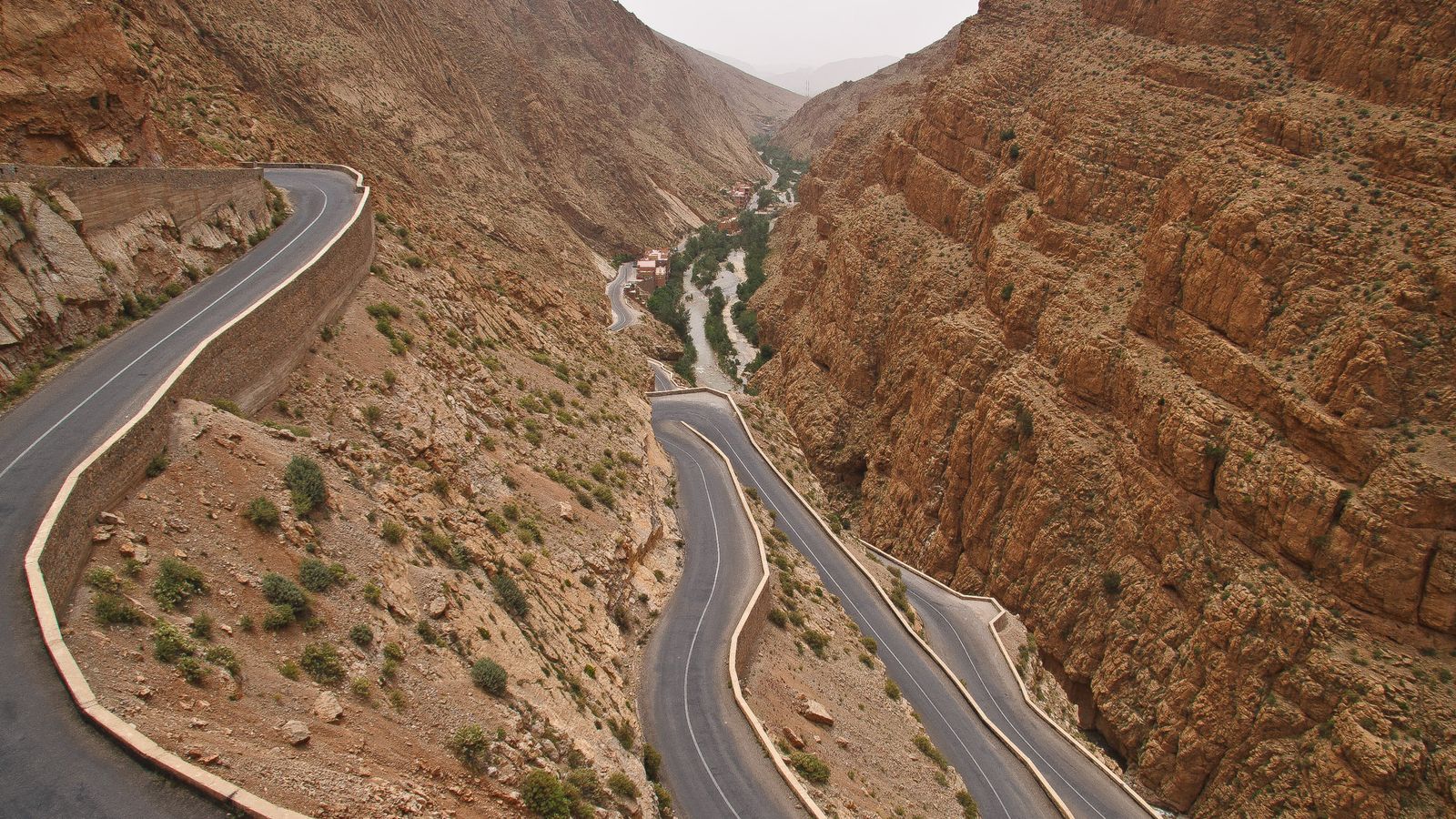
Day 2: Todra gorge and sunset over the Merzouga dunes
After breakfast, a short drive leads to Tinghir and its long palm grove, then to the Todra gorge, where limestone walls rise around 300 metres above a narrow stream. You walk the most dramatic section on foot — it takes about 30 minutes. See our Todra gorge guide.
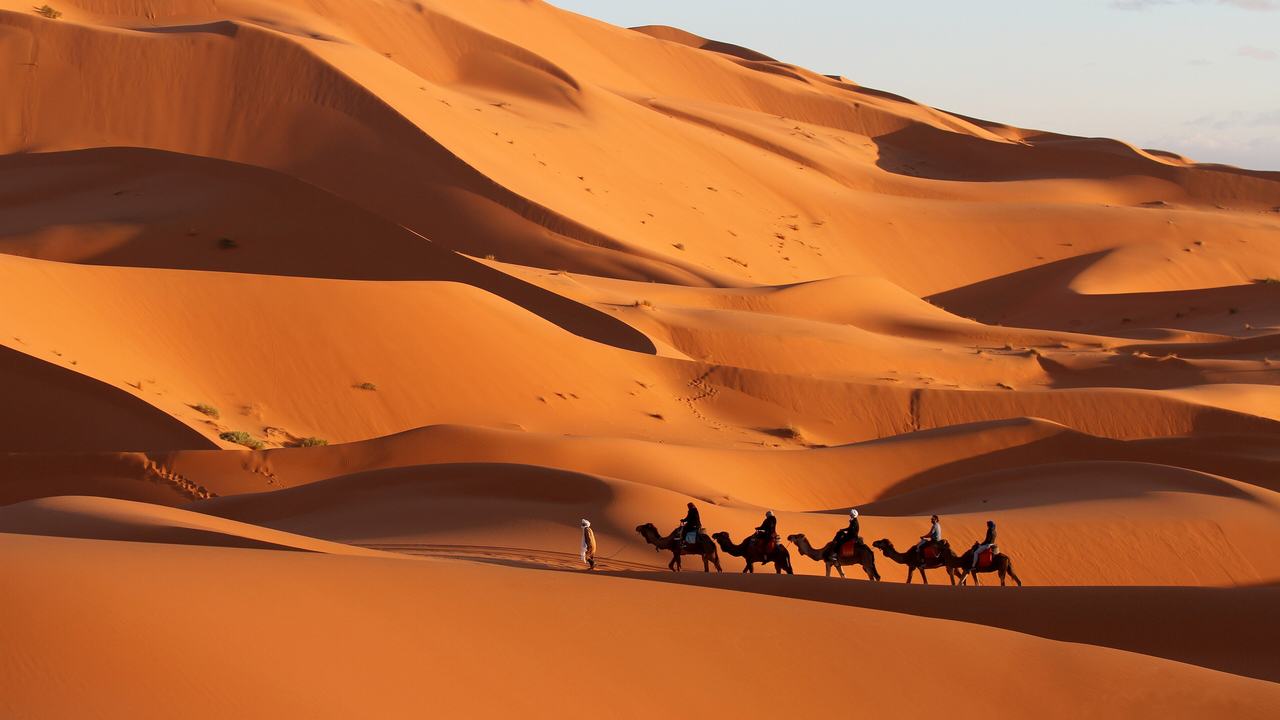
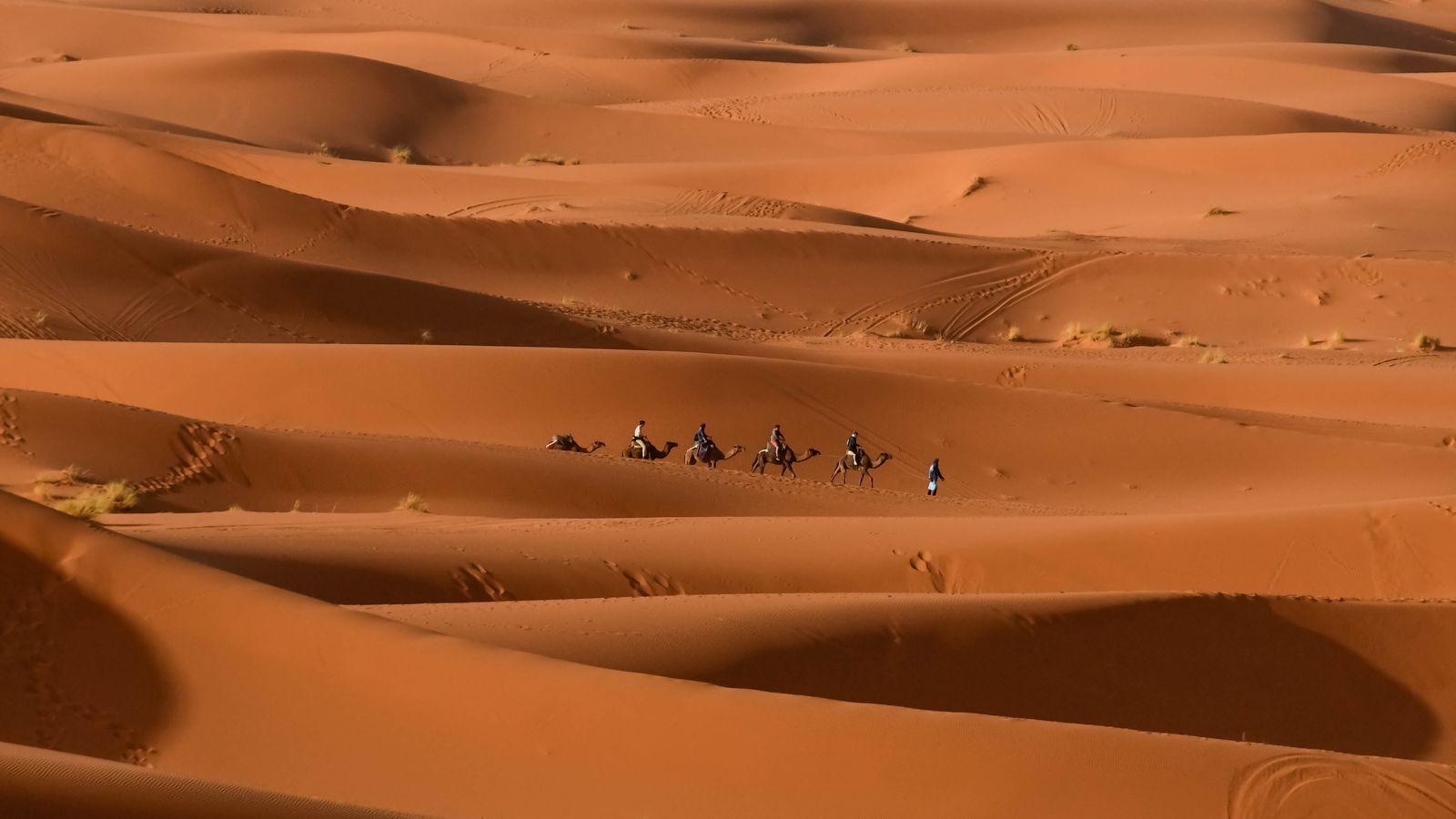
The afternoon road crosses wide, open plains via Tinejdad, Erfoud and Rissani. Then, suddenly, the dunes appear on the horizon: Erg Chebbi, a sea of sand about 22 km long, with crests reaching around 150 metres. You reach Merzouga in time to watch the sun go down over the dunes. Many travellers spend the night in a desert camp reached by camel, with dinner and music around the fire under one of the clearest skies in Morocco; camps and camel rides are booked directly with local providers, and we can share suggestions based on our knowledge.
Day 3: a full day in the desert
This is what makes our route different: instead of leaving the morning after you arrive, you stay. After sunrise from the top of a dune, your driver can take you around the erg, and local operators offer 4x4 excursions deeper into the dunes. Highlights of the day:
- Khamlia, the village of Gnawa musicians, where families descended from sub-Saharan Africa play hypnotic music on the guembri and iron castanets. Our Khamlia guide tells their story.
- Nomad families who still live in tents around the dunes, for tea and an honest conversation about desert life.
- Lunch in the village, often a madfouna, the "Berber pizza" stuffed with meat and spices and baked in the sand.
- In wet years, the seasonal lake of Dayet Srji, sometimes visited by flamingos.
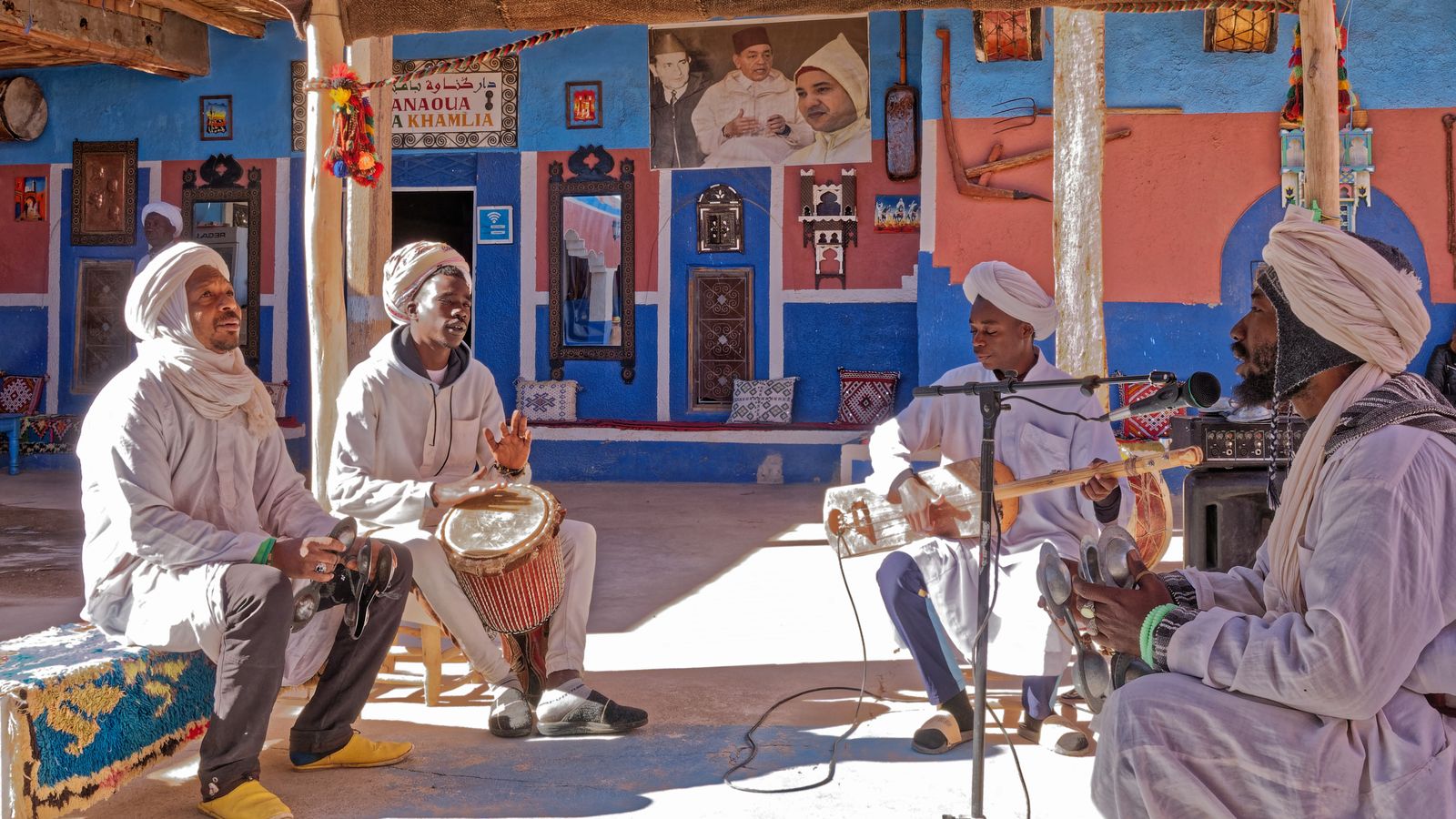
In the afternoon, rest in the shade or book a quad or buggy ride or a sandboarding session with a local operator. You stay a second night in Merzouga. Our desert camp guide explains what to expect if you choose a standard or luxury camp.
Day 4: Merzouga back to Marrakech
The return from Merzouga to Marrakech is the longest day: roughly nine to ten hours of driving with stops, via Tinejdad, Ouarzazate and the Tichka. We leave after an early breakfast, break for lunch on the way and arrive in Marrakech in the evening. If you prefer a gentler finish, you can add an overnight stop in Ouarzazate or Aït Ben Haddou — or extend the trip into our 5-day Grand South loop, which returns via Zagora.
Is Marrakech to Merzouga in 4 days too tiring?
Honestly, the first and last days are long. Two choices make the trip comfortable: an overnight stop in the Dades on the way out, which breaks the journey, and two nights at Merzouga, which means you are not back in the car the morning after arriving. For many travellers, the desert day becomes the highlight of their whole Moroccan holiday. With only three days, we recommend the Zagora tour instead — and if you are weighing this circuit against a cheaper shared bus tour, read our private vs shared desert tour comparison.
When to go and what to bring
- October to April is ideal. Winter nights in the desert are cold, close to freezing in December and January.
- Spring brings roses in the Dades and pleasant days, but sometimes windy, sandy afternoons.
- Summer is very hot; activities are timed for early morning and evening.
Pack layers, a scarf, sunglasses, sunscreen, a headlamp and comfortable shoes. Our Sahara packing list has the full checklist.
Book your Merzouga tour
Rouasse Travels provides the private transport for this route — an air-conditioned vehicle and a professional driver, through licensed tourist transport companies, with hotel pickup in Marrakech. You can book the whole circuit or only some legs. Accommodation (a guesthouse in the Dades, a desert camp) and activities are not included: on request, we share suggestions based on our knowledge, which you book and pay directly. The price depends on your group size, the vehicle and the legs you choose. Send us your dates on WhatsApp for a personalised quote for your Marrakech to Merzouga transport, and see our guide to multi-day tours from Marrakech to compare every option before you decide on Marrakech to Merzouga.