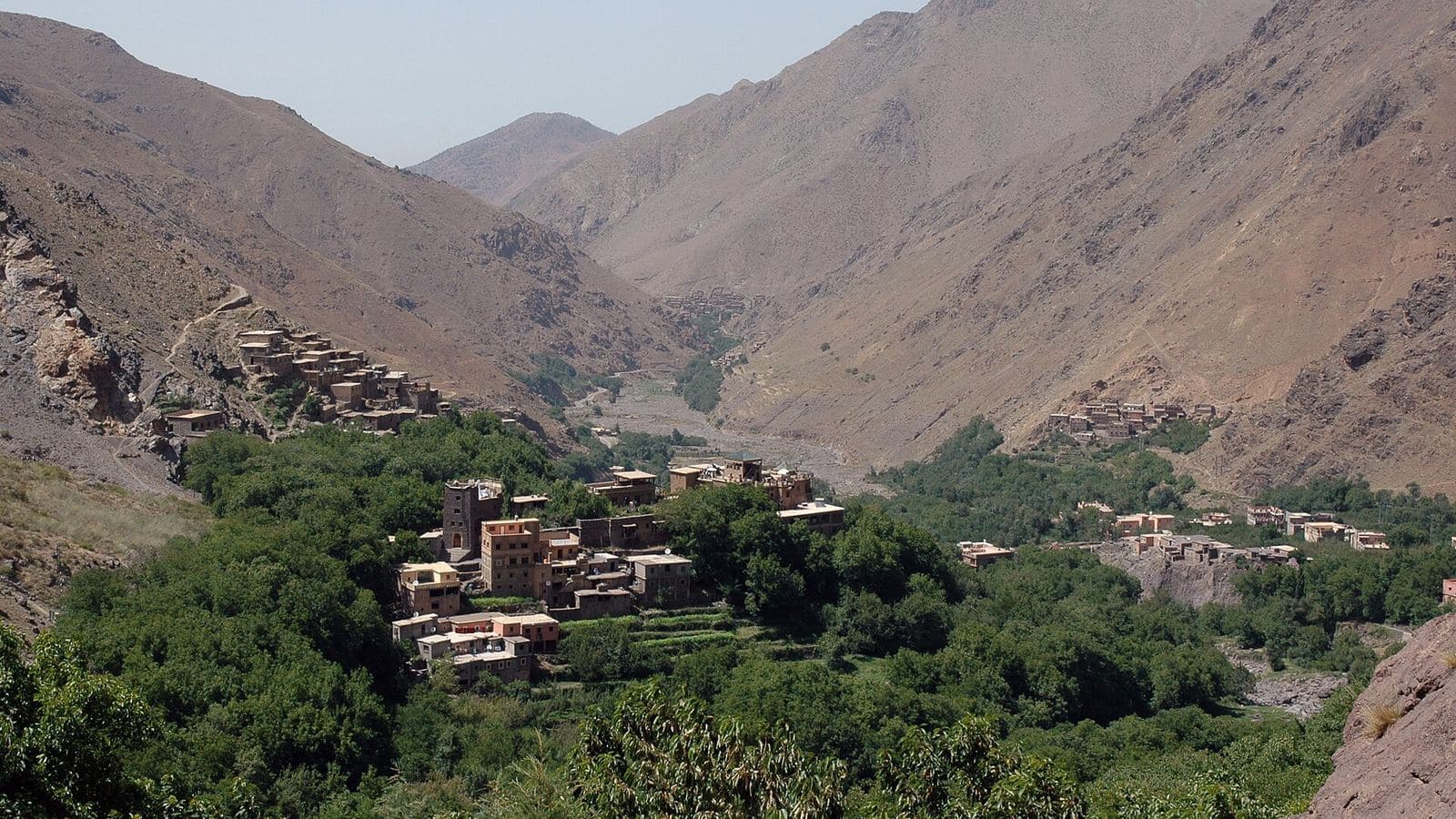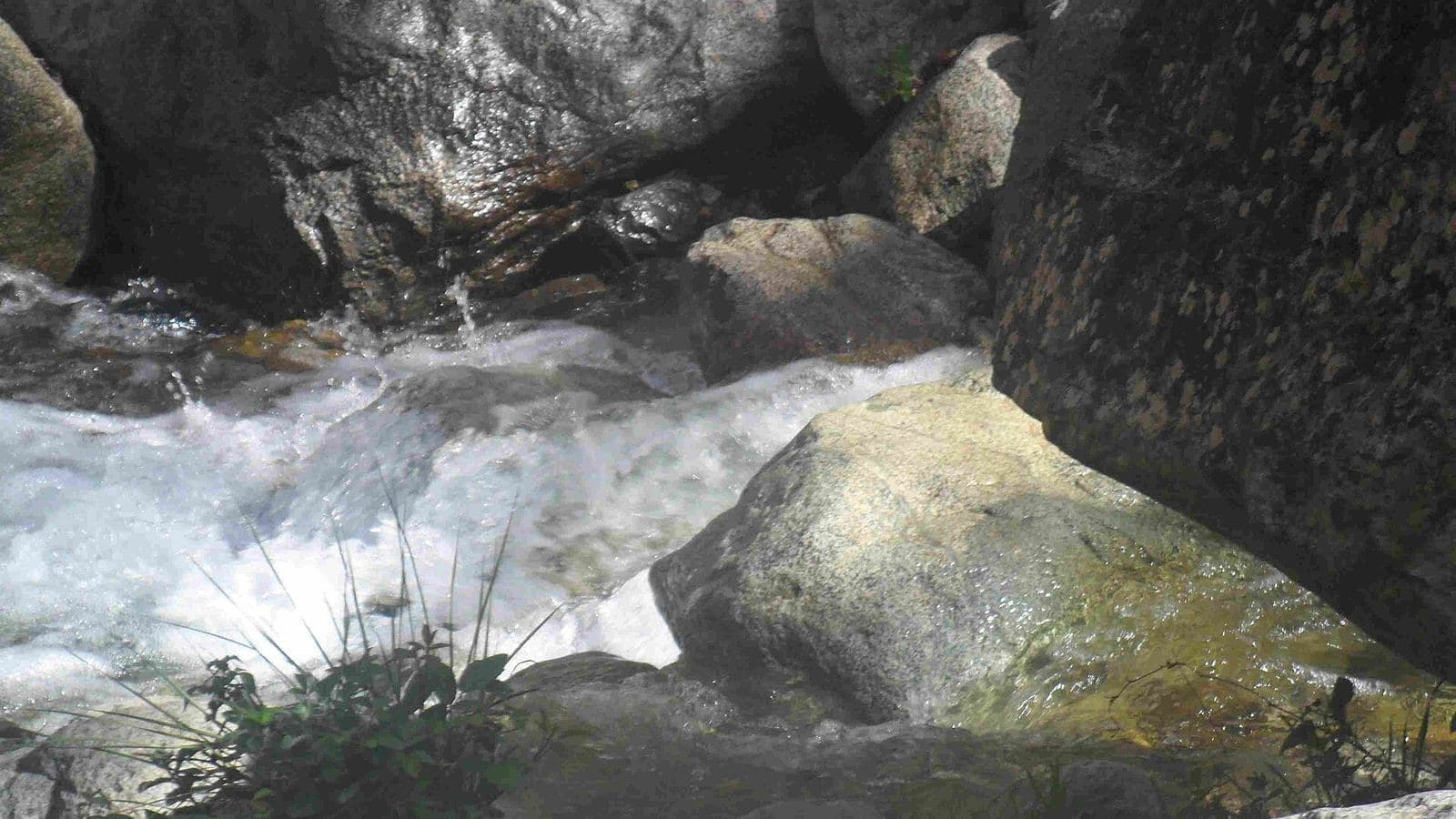
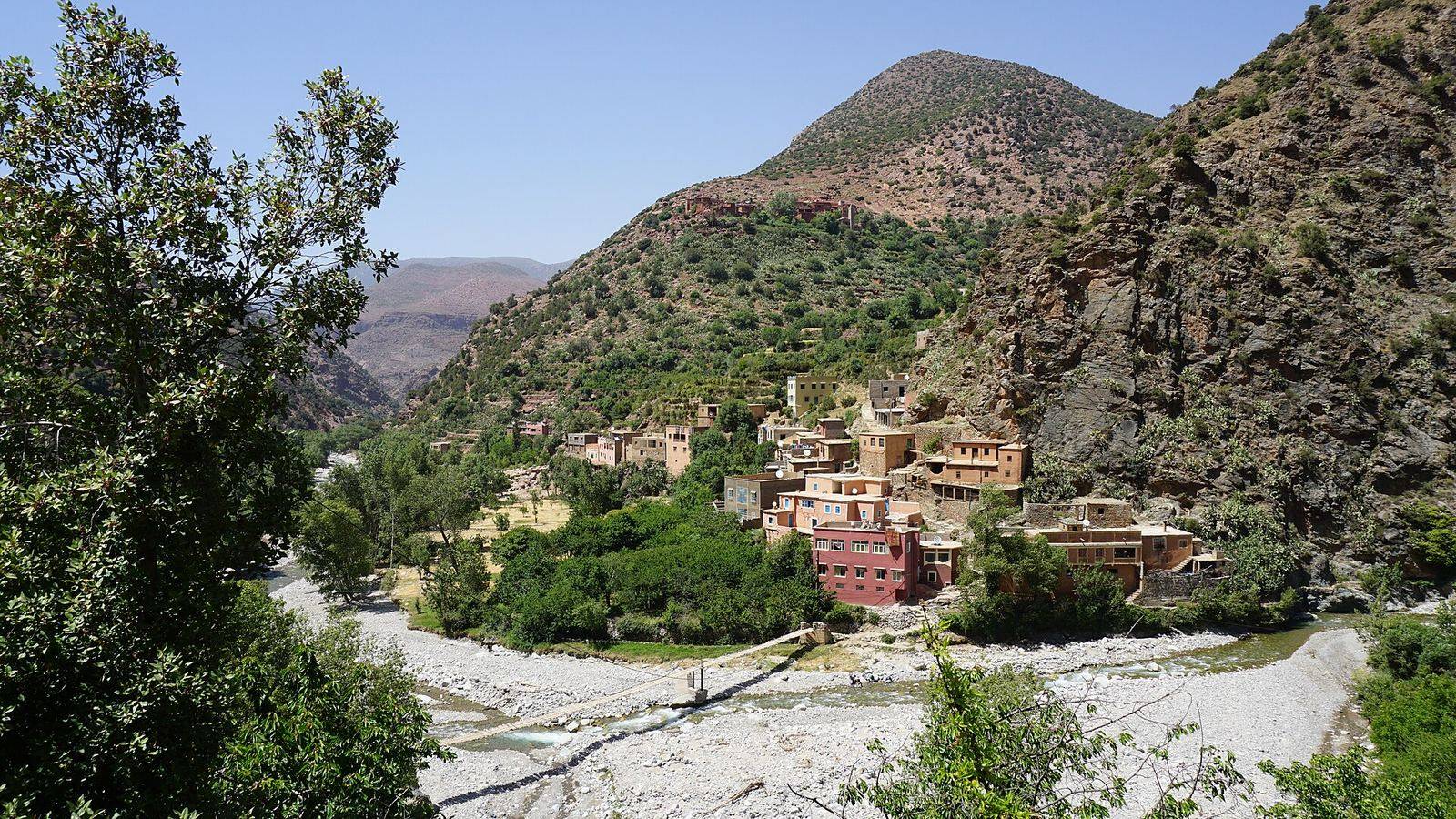
After an hour and a quarter of road, the Ourika Valley simply runs out. The tarmac stops at a village of red houses stacked above a boulder-filled river, cafés set their tables on the rocks, and a path disappears upwards into the mountain. Somewhere above, you can hear water falling. Welcome to the Setti Fatma waterfalls, the most popular natural escape from Marrakech.
Here is everything you need to know before you climb.
Where are the Setti Fatma waterfalls?
Setti Fatma is the last village reachable by road in the Ourika Valley, about 60 km south of Marrakech, at around 1,500 metres of altitude in the High Atlas. Above the village, a mountain stream tumbles down a steep side valley in a series of seven waterfalls. The first is the one most visitors reach; the others are higher, wilder and much quieter.
The village takes its name from a local saint, and every summer, usually in August, it hosts a moussem — a religious festival and market that draws families from across the region.
Getting to the Setti Fatma waterfalls from Marrakech
- Private car with driver — the easiest option. You leave when you want, stop where you like on the way, and your driver waits while you hike. Our private Ourika Valley day trip is built around this.
- Group tour — cheaper per seat, but with a fixed timetable and limited time at the falls. Our comparison of a private tour vs a group tour explains the trade-offs.
- Grand taxi — shared taxis run from Marrakech towards the valley, but you will usually need to change and negotiate, which eats into your day.
The Setti Fatma waterfalls hike, step by step
The first waterfall (30–45 minutes)
From the village, you cross the river on a small footbridge and start climbing. The path is more of a scramble than a trail: you step from boulder to boulder, use your hands now and then, and pass small cafés selling fresh orange juice and mint tea along the way. After 30 to 45 minutes, the valley narrows and the first waterfall drops into a clear, cold pool. Most people sit here for a while, feel the spray and head back down.
The higher falls (half a day)
Continuing to the upper waterfalls turns the outing into a real mountain walk, with steeper sections, loose rock and fewer people. It is beautiful, but it needs good shoes, a head for heights and a local guide. Plan for a half-day round trip if you want to see several of the cascades.
Do you need a guide?
For the first waterfall, it is not strictly necessary, but it is strongly recommended. Local guides wait at the start of the path; they know the safest line across the rocks, which matters a lot when they are wet, and they help children and less confident walkers. For the higher falls, a guide is essential. Agree the fee before you set off. Guide fees and tips are not included in our tour price.
How hard is the hike?
The walk to the first of the Setti Fatma waterfalls suits most people with reasonable mobility and decent shoes. It is short but uneven, with big steps and some slippery sections. It is not suitable for strollers or for people with knee or balance problems. Children usually love it, with a hand held on the tricky bits.
What to wear and bring
- Trainers or walking shoes with good grip — never flip-flops.
- A hat, sunscreen and water.
- A light jacket: the gorge is shaded and cooler than Marrakech.
- Small change for the guide, a drink on the way and the toilets.
- A dry bag or pocket for your phone if you want photos near the spray.
Best time to visit
Spring (March to May) is ideal: the snowmelt fills the Setti Fatma waterfalls, the valley is green and the temperature is perfect for walking. Summer is busy, especially at weekends, when Marrakech families come for the cool air — go on a weekday and leave early. Autumn brings golden walnut trees and calm paths; in winter, the falls can be thinner and the rocks icy in the morning.
One important safety note: the valley is prone to flash floods during violent summer storms. On stormy days we adapt the plan, and you should always follow the advice of local guides.
Lunch by the river
Back in the village, riverside restaurants set tables on the rocks and sometimes in the shallow water itself. Order a tagine, put your feet in the cold river and let the day slow down. Lunch is not included in our excursion, so you choose where and what to eat.
Price of a private trip
Our private Ourika Valley excursion costs, at the time of writing, €120 per vehicle for up to three people, €140 for a van for up to seven and €160 for a minibus for up to seventeen. It includes hotel pickup and drop-off in Marrakech, air conditioning, water, fuel, parking and free waiting time while you hike. Lunch, guide fees, any entry fees and tips are extra.
Make a day of it
On the way to the Setti Fatma waterfalls, you can stop at an argan cooperative (see our argan oil cooperative guide) or, on Mondays, at the Tnine Ourika market — our guide to visiting a Berber market explains how. For the full hour-by-hour day, read our Ourika Valley day trip guide, and to compare it with other escapes, see our selection of the best day trips from Marrakech.