Money is one of those topics that causes quiet stress before a trip: how much cash to carry, whether your card will work, how much to tip without offending anyone. The good news is that managing money in Morocco is simple once you know a few rules. Here is what we explain to our own passengers on the way from the airport.
The currency: the Moroccan dirham
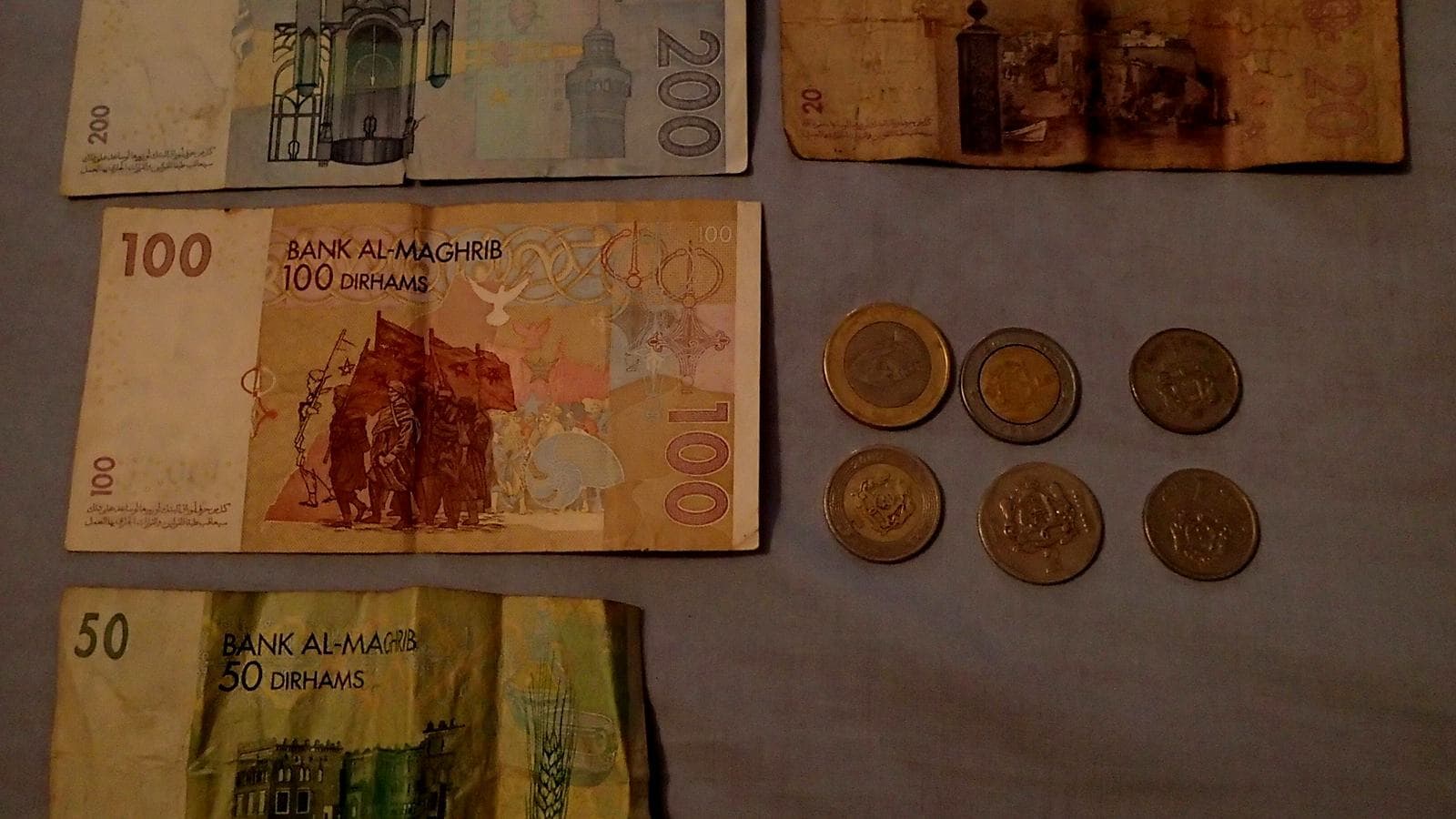
Morocco's currency is the dirham (MAD), divided into 100 centimes. You will use banknotes of 20, 50, 100 and 200 dirhams and coins of 1, 2, 5 and 10 dirhams. In recent years, one euro has been worth roughly ten to eleven dirhams and one US dollar a little less; check the current rate before you travel.
The dirham is a closed currency: you generally cannot buy it before leaving home, so you get it on arrival. Keep your exchange receipts, as they may be requested if you want to change leftover dirhams back at the airport when you leave.
Getting dirhams: ATMs and exchange offices
- ATMs are everywhere in cities, at airports and in most towns. They are the easiest way to get cash. Limits per withdrawal vary by bank, and your own bank may charge fees, so withdraw reasonable amounts rather than many small ones.
- Always choose to be charged in dirhams when the machine or terminal offers a conversion to your home currency — the rate is usually worse.
- Exchange offices (bureaux de change) at airports and in town offer fair, official rates on euros, dollars and pounds. Bring clean, undamaged notes.
- Never change money in the street, whatever rate you are offered.
A good rhythm: withdraw or exchange enough at the airport for your first day or two, then top up in town. Tell your bank you are travelling so your card is not blocked.
Money in Morocco: when cards work and when you need cash
Cards are accepted in most hotels and riads, larger restaurants, supermarkets, modern shops and many petrol stations. Contactless payment is increasingly common in cities.
Cash is essential in the souks, small cafés and restaurants, petits taxis, markets, for entrance fees at some sites and, of course, for tips. In villages and small coastal places such as Imsouane, cash is often the only option.
Carry a mix of small notes and coins: breaking a 200-dirham note for a mint tea or a small purchase can be difficult.
The rial trick in the souks
In markets, older shopkeepers sometimes quote prices in rials, an old unit still used in everyday speech, where twenty rials make one dirham. If a price sounds absurdly high, simply ask "dirham?" — the misunderstanding is usually innocent. Our Marrakech souks guide explains how bargaining works.
Tipping in Morocco
Tipping is customary and appreciated, but never compulsory. Some typical amounts:
- Restaurants: around 10% if service is not included; round up the bill in cafés.
- Porters in the medina: a small amount per bag, typically 10 to 20 dirhams, more for heavy loads or long distances.
- Guides: agree the guide's fee first, then add a tip if you were happy.
- Drivers: a tip for good service is welcome, for transfers as well as day trips, but it is up to you.
- Hammam attendants and riad staff: a tip for the attendant after a scrub, and something for the staff at the end of your stay.
- Small services: a few dirhams for the car-park guardian, the petrol-station attendant or someone who gives you directions at your request.
Keeping your cards safe
Travel with two cards from different networks, such as Visa and Mastercard, and keep one in your accommodation's safe as a backup. Save your bank's emergency number in your phone. Use ATMs inside banks or in busy, well-lit places, cover the keypad when you type your code, and never let anyone "help" you with the machine. If a card is swallowed, contact the bank that owns the ATM during opening hours.
Leaving Morocco with dirhams
Try to spend your coins before your last day, as exchange offices only take banknotes. You can change leftover notes back into euros or dollars at the exchange desks at the airport, usually before security, so keep your receipts. Taking large amounts of dirhams out of the country is restricted, so it is better to spend or change them before you leave.
A few money tips
- Split your cash between your wallet, your bag and your accommodation's safe.
- Count your change, especially when paying with large notes.
- Agree prices before any service — a taxi without a meter, a guide, a camel ride.
- Keep a little extra cash for your last day, including for tips and any airport purchases.
Paying for transfers and excursions
Our transfer and excursion prices are fixed in advance and shown per vehicle on our site — no bargaining and no surprises on the day. From €20 for the Marrakech airport transfer, you can see every route on our pricing page.
For everything else you need to know before travelling, read our Morocco travel tips for first-time visitors and our guide to safety in Morocco. With a few small notes in your pocket, money in Morocco will be the least of your worries.