Morocco is often described through its medinas, its deserts and its tea ceremonies. Yet behind the postcards, the country is changing fast: online public services, start-ups, fibre networks, some of the largest solar and wind projects in Africa. This digital transformation in Morocco is not an abstract policy — it changes the way travellers book, the way remote workers settle and the way businesses in a historic town like Essaouira reach the world. Here is what is happening, and what it means for your trip.
Digital Morocco 2030: the roadmap behind the change
In September 2024, the government presented Digital Morocco 2030, the national strategy for digital transformation in Morocco. Its published ambitions are bold: digitise public services end to end, train far more digital talent every year, support thousands of start-ups and create hundreds of thousands of jobs in the digital economy by 2030. Reported targets include around 240,000 digital jobs and 3,000 start-ups by the end of the decade.
The calendar adds pressure in a good way. After hosting the Africa Cup of Nations in 2025–2026, Morocco is preparing to co-host the 2030 FIFA World Cup with Spain and Portugal — a powerful reason to modernise airports, stations, payments and networks.
For travellers, the most visible effects are already here: online visa procedures for eligible nationalities, more card and contactless payments, digital tickets for trains and some museums, and public information available online.
Connectivity: from 4G everywhere to fibre at home
Mobile internet is one of Morocco's quiet success stories. 4G covers the cities, the main roads and most tourist areas, including the Atlantic coast around Essaouira; prepaid data is affordable and easy to buy at airports. Fibre-to-the-home has spread through the large cities and, increasingly, through medium-sized towns, and new-generation mobile networks are being rolled out, starting with the biggest cities.
What this means in practice: you can work from a riad terrace, navigate with offline maps in the mountains and share your location with your driver in a few seconds. In remote valleys and in the desert the signal still drops — part of the charm, as long as you plan for it.
Clean energy: the other side of Moroccan innovation
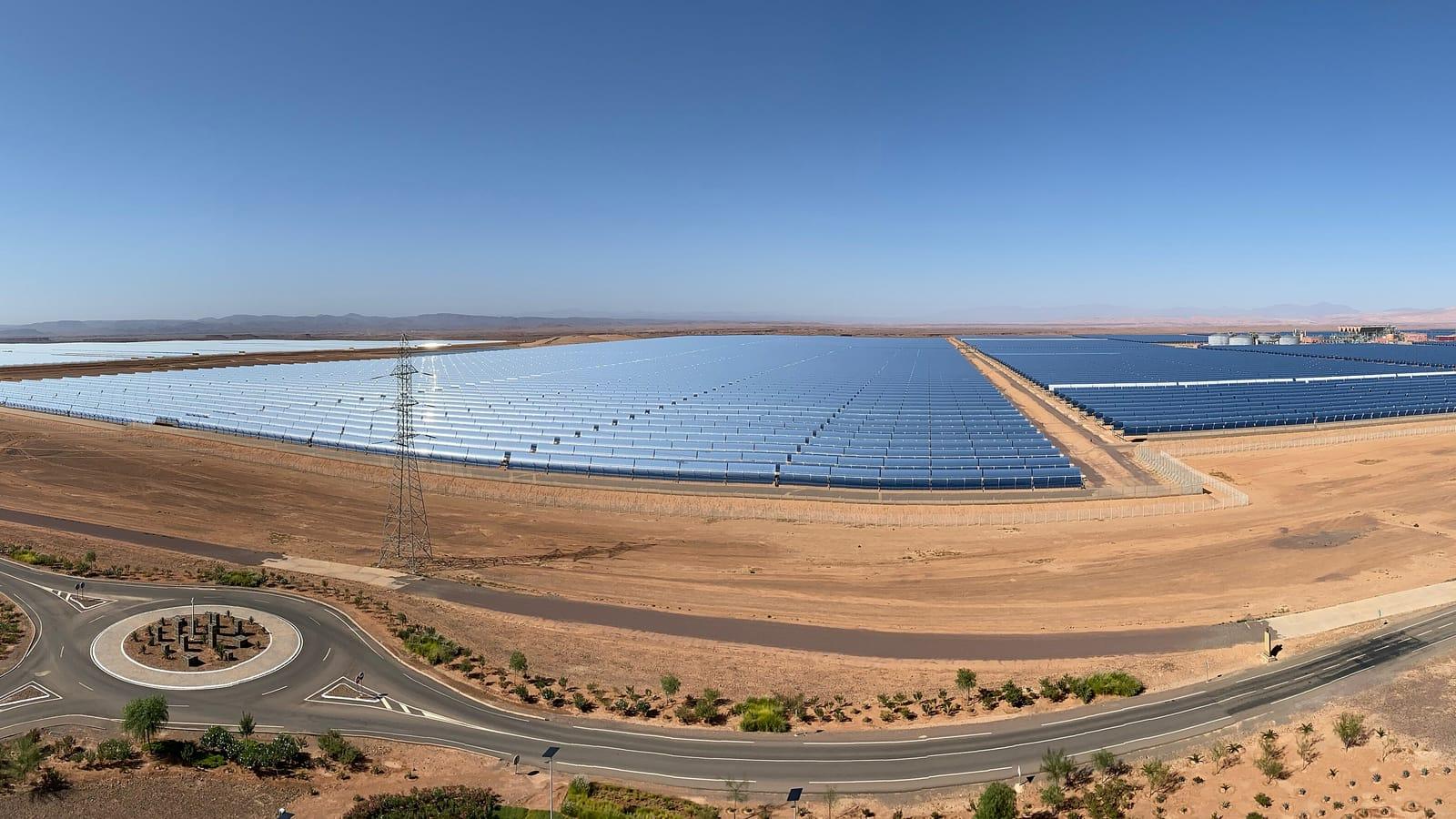
The most spectacular image of digital transformation in Morocco is not a screen but a field of mirrors. Near Ouarzazate, the Noor solar complex is one of the largest concentrated solar power plants in the world, with a central tower that glows on the horizon. Travellers on our circuits through the south pass close to it on the way to the Dadès valley — a striking contrast with the kasbahs nearby. Visits inside require prior permission, but the site gives a sense of scale even from a distance.

Essaouira, the "wind city", has its own role. The trade winds that delight kitesurfers also power the Amogdoul wind farm at Cap Sim, south of town, operating since 2007 with around 60 MW, and the much larger Jbel Lahdid wind farm (about 270 MW) in the province. Renewable energy is a pillar of the country's strategy, and the Atlantic coast is one of its engines.
Want to see this landscape of energy and history? Our Atlas & Aït Ben Haddou circuit and the Grand South & Sahara in 5 days cross Ouarzazate; read our Ouarzazate guide to prepare your stop.
Smart tourism: how booking and travelling have changed
Ten years ago, many trips to Morocco were organised by phone calls and cash on arrival. Today:
- WhatsApp has become the country's business channel. Riads, guides, surf schools and transport companies answer questions, send locations and confirm bookings in minutes.
- Online booking is the norm. You can reserve a private transfer with a fixed price per vehicle before you fly, and receive the driver's details in advance.
- Flight tracking avoids stress. Professional drivers follow arrivals in real time, so a delayed flight is not a problem.
- Maps and reviews guide choices. Travellers compare restaurants, routes and activities before they leave home.
- Artificial intelligence enters the game. Many visitors now draft their itinerary with an AI assistant — useful, but not always realistic; see how to plan a trip to Morocco with AI.
What does not change is the human part: hospitality, local knowledge and the driver who knows where the road is under repair today.
Essaouira: a historic port in the digital age
Founded in the 18th century as a trading port open to the world, Essaouira has always lived from exchange. Its new exchanges are digital. Thuya-wood craftsmen sell to customers abroad, surf and kitesurf schools fill their lessons online, artists exhibit on social networks and festivals reach audiences far beyond the ramparts. Visit a thuya wood workshop and you will often find a smartphone next to the chisels.
The town also attracts a new generation of residents: remote workers and founders who choose the ocean over the office. Our guide to Essaouira for digital nomads explains how to settle there, and our comparison of the best places for digital nomads in Morocco shows how it compares with Marrakech, Taghazout and Agadir.
What the digital transformation in Morocco means for your trip
- Buy a local SIM or eSIM on arrival: you will use it for maps, translation and WhatsApp.
- Download offline maps before the Atlas or the desert.
- Keep cash for souks, taxis and small cafés, even if cards are increasingly accepted.
- Save your bookings offline — a screenshot of your transfer confirmation is enough.
- Check AI suggestions with locals, especially drive times and opening days.
- Travel responsibly: the country's energy transition goes with a growing interest in sustainable tourism in Essaouira and beyond.
How we use technology — and where we don't
At Rouasse Travels, technology serves the trip: online booking, clear fixed prices, a map of every route, WhatsApp answers in several languages and drivers who track your flight. But the route itself is planned by people who drive it every week, who know the best stop for mint tea and the right time to leave Marrakech to avoid traffic. Entrepreneurs curious about the next step can read our analysis of AI and tourism in Morocco.
Planning a trip that mixes heritage, ocean and innovation? Start with the UNESCO-listed medina of Essaouira, add a transfer from Marrakech to Essaouira and contact us for a tailor-made circuit through the south.