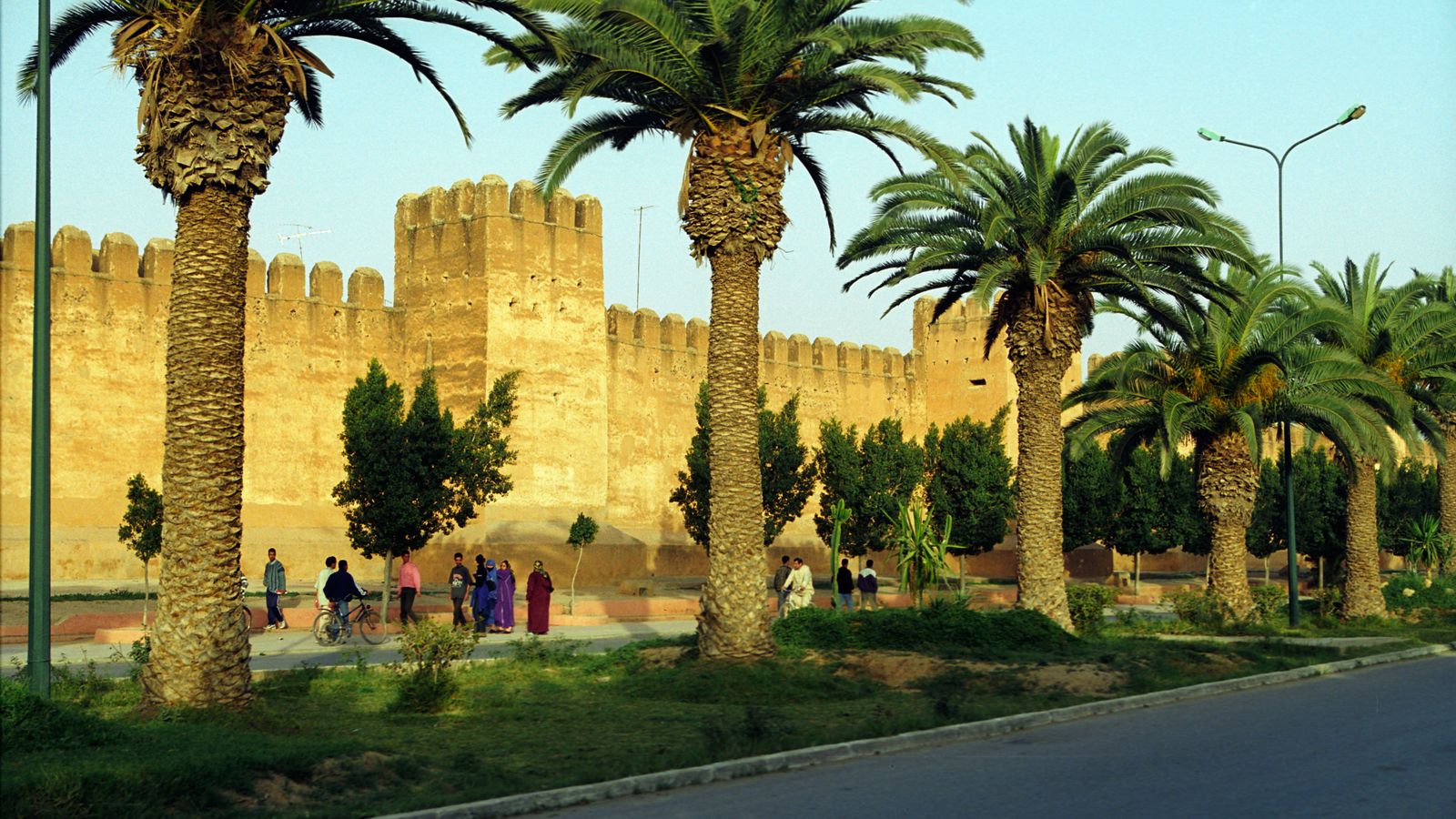
Locals call it "the grandmother of Marrakech", travellers call it "little Marrakech", and both nicknames fit. Taroudant is a walled city of ochre earth in the fertile Souss valley, with crenellated ramparts, palm-lined avenues, horse-drawn carriages and two busy souks — but without the crowds, the hustlers or the traffic of its famous big sister. For many visitors, it is the surprise of their trip.
Here is our guide to Taroudant.
Where is Taroudant?
Taroudant lies in the Souss valley, between the High Atlas to the north and the Anti-Atlas to the south, about 85 km east of Agadir (around 1 hour 15 minutes by road). It is surrounded by orange groves, olive trees and the argan forest, and it makes a natural stop between the desert and the Atlantic coast.
On our 6-day Sahara & Atlantic coast tour, you visit Taroudant on the way from Agadir to Essaouira; on the 7-day grand tour, on the way from Zagora to the coast.
A short history of Taroudant
The town has been an important market of the Souss for centuries. In the early 16th century, the Saadian dynasty made it their capital before conquering Marrakech, and the great ramparts that still surround the medina largely date from that period, rebuilt and repaired many times since. Taroudant prospered from sugar cane, cereals and the caravan trade, and remained a regional capital known for its craftsmen, especially its silversmiths.
The ramparts and gates
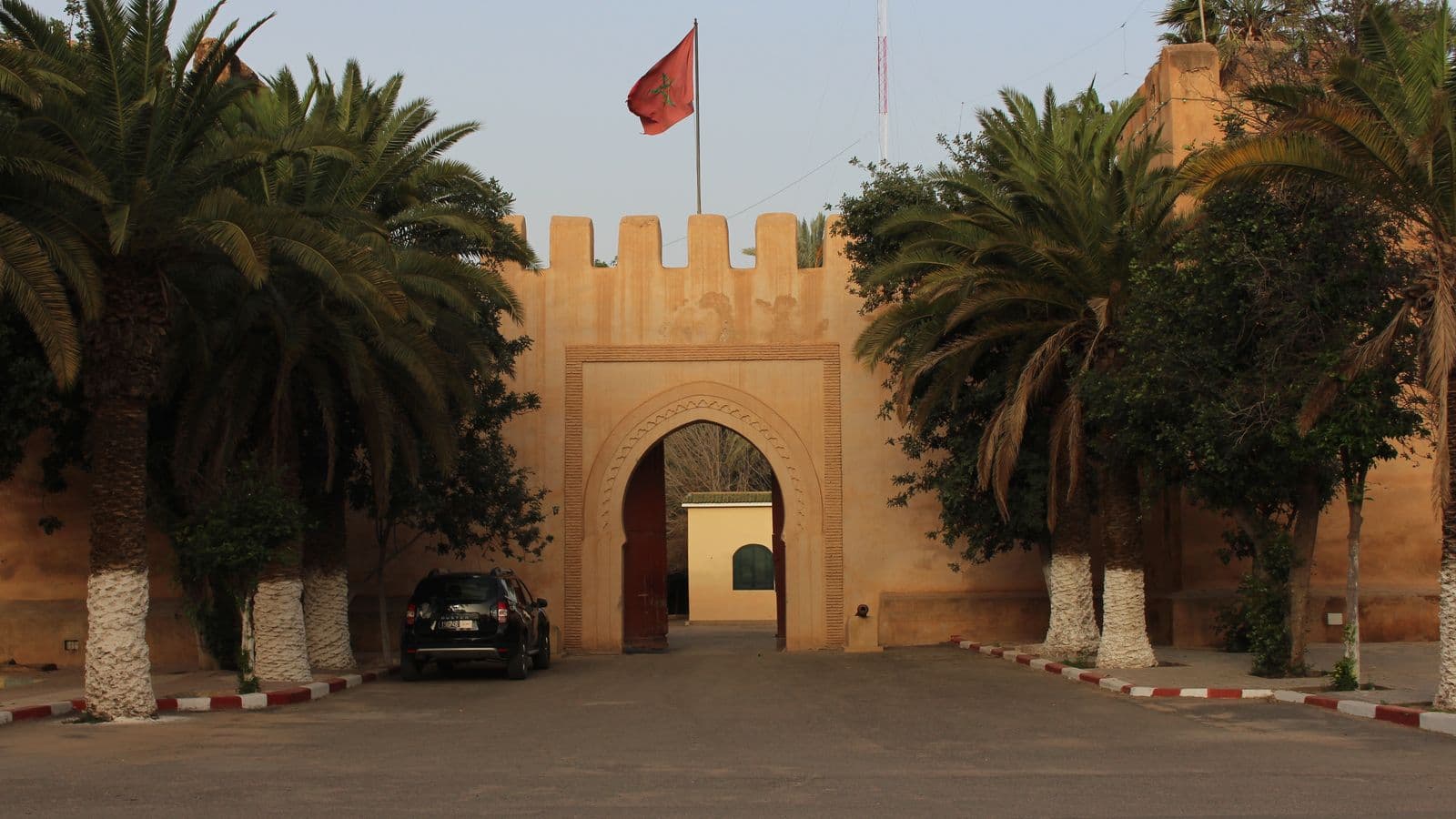
Taroudant's ramparts run for around 7 km around the old town, punctuated by square towers and monumental gates such as Bab El Kasbah, Bab Zorgane and Bab Targhount. The best way to see them is the classic calèche ride: a horse-drawn carriage tour around the walls at the end of the afternoon, when the earth glows golden. It takes about an hour, and you can ask the driver to stop for photos at each gate.
The souks of Taroudant
Taroudant has two main markets, both refreshingly authentic:
- The Arab souk, near Place Assarag, specialises in crafts: silver jewellery, leather goods, carpets, pottery and spices.
- The Berber souk (Jnane Jamaa) is more of a daily market, with fruit, vegetables, herbs, olives and household goods — and a good place to see local life.
Prices are generally lower than in Marrakech, and the atmosphere is calmer: bargaining is expected but rarely aggressive. Our Marrakech souks guide has tips that work here too.
Other things to do in Taroudant
- The kasbah quarter, in the south-east of the medina, the old fortified district of the governors.
- The tanneries, outside the walls, smaller and less crowded than those of Fes or Marrakech.
- Place Assarag and Place Talmoqlate, the two main squares, perfect for a mint tea and people-watching.
- A lunch of local specialities: tagine with argan oil, amlou (a spread of almonds, honey and argan oil) and oranges from the Souss.
Around Taroudant
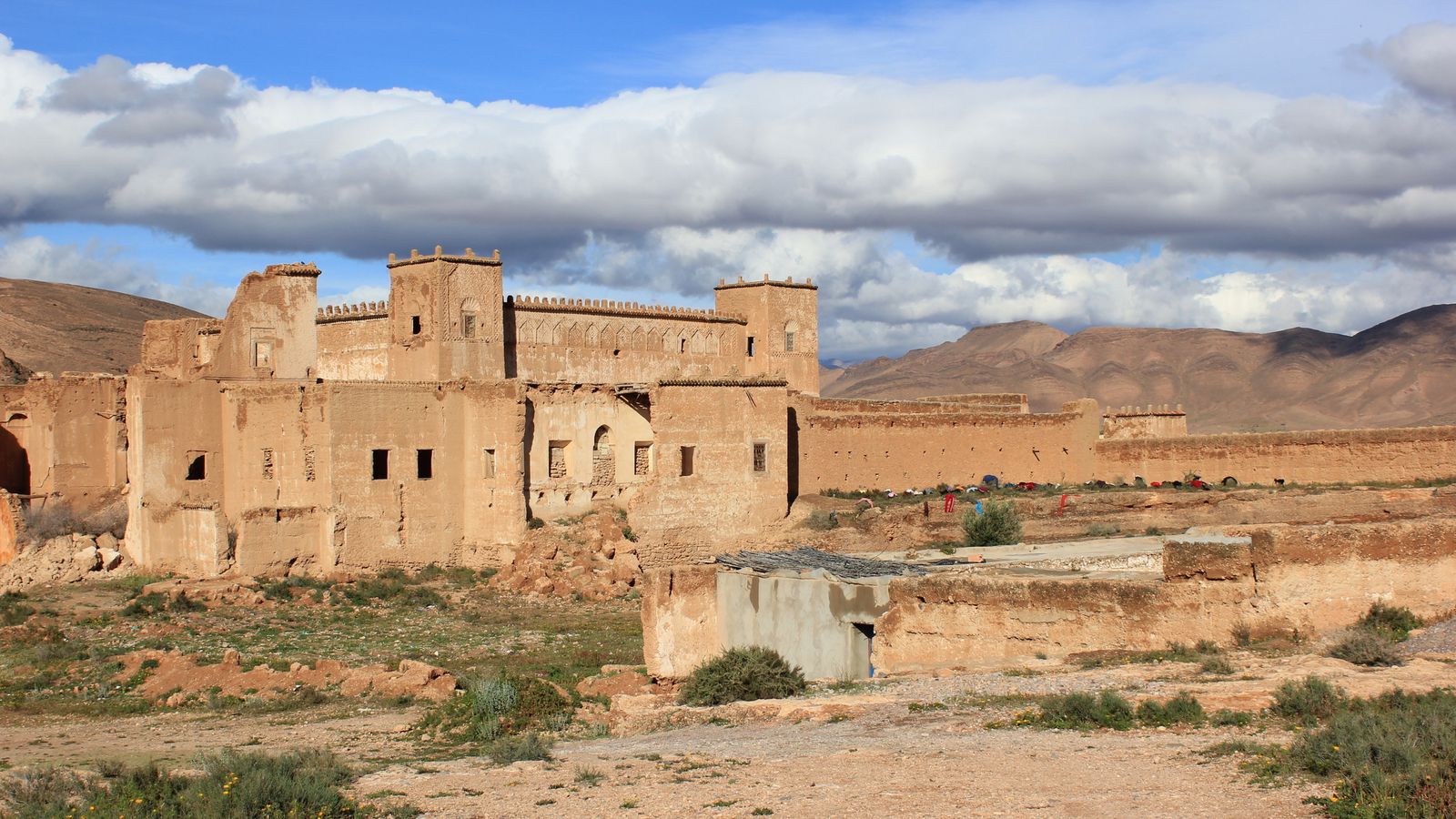
- Tiout, about 35 km to the south-east, a palm oasis with an old kasbah overlooking the valley.
- The argan forest, between Taroudant and the coast, with women's cooperatives producing argan oil. See our argan cooperative guide.
- Taliouine, about 85 km east, capital of saffron and home to a former Glaoui kasbah — a stop on our 7-day tour.
- The Tizi n'Test, a spectacular mountain road climbing over the High Atlas towards Marrakech, past the historic Tinmel mosque.
A suggested afternoon in Taroudant
- 2 p.m.: arrive and check in to your riad, then lunch on a terrace near Place Assarag.
- 3.30 p.m.: wander the Arab souk, stopping at a silversmith's workshop to see jewellery being made.
- 4.30 p.m.: cross to the Berber souk for olives, spices and amlou to take home.
- 5.30 p.m.: calèche ride around the ramparts as the light turns golden, with photo stops at the main gates.
- 7 p.m.: mint tea on Place Talmoqlate, then dinner at your riad.
The next morning, before leaving for the coast or the mountains, a short visit to the tanneries or the kasbah quarter completes the picture.
Where to stay
Taroudant has charming riads inside the walls, often with gardens of orange trees, and garden hotels just outside, some in former palaces surrounded by orchards. A night here is a peaceful change after the desert. Our guide to where to stay in southern Morocco explains the options along the route.
When to visit
Taroudant is pleasant from October to May. Summers in the Souss valley are hot, though the Atlantic is close enough for an escape to the beach in the afternoon.
Getting there
From Agadir, the drive is about 1 hour 15 minutes, which makes Taroudant an easy half-day trip if you are staying on the coast — see our Agadir guide. From Marrakech, you can come via Agadir on the motorway or over the Tizi n'Test pass. On a circuit, Taroudant links the desert and the ocean naturally. Read our Sahara and Atlantic coast tour itinerary to see how, then send us your dates on WhatsApp for a personalised quote.