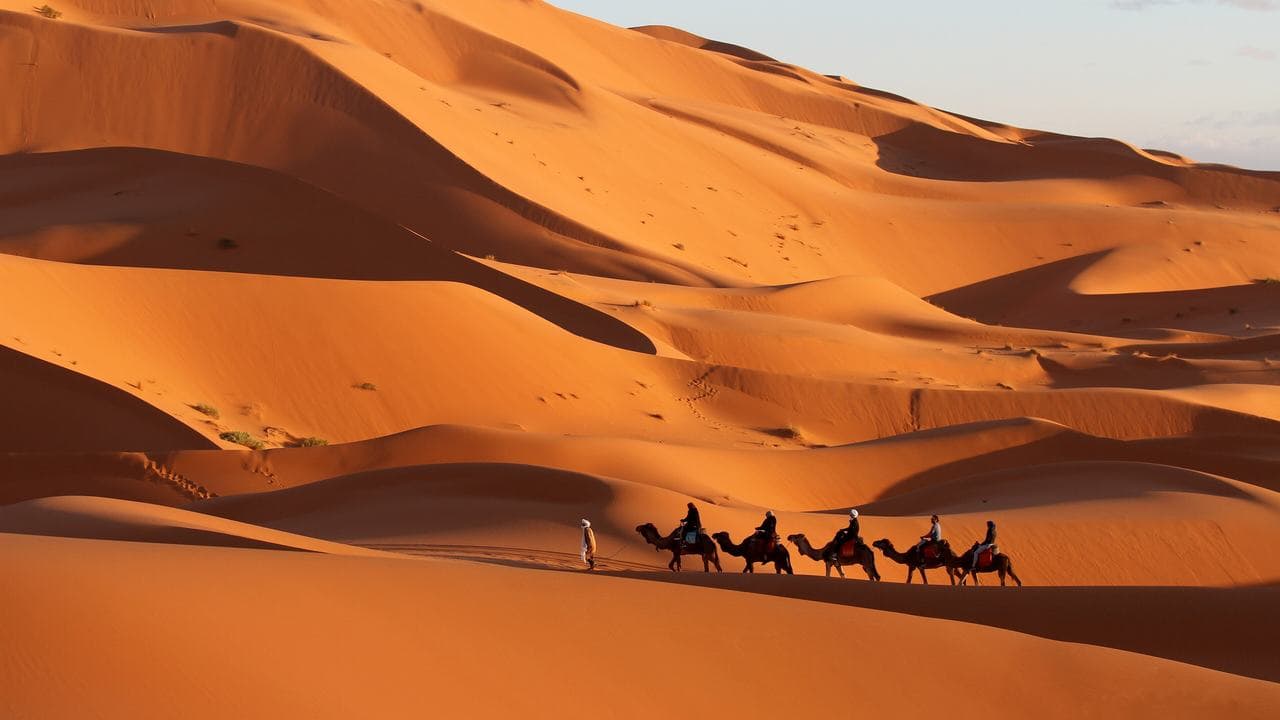
For most of our guests, the night in a desert camp is the moment they have been waiting for since they booked the trip. Arriving by camel at dusk, tea in a tent, dinner around the fire, music, a sky crowded with stars, then the silence — and in the morning, the dunes turning gold. It is magical, and it is also very practical to know what to expect, so here is our honest guide.
Where are the desert camps?
- Merzouga (Erg Chebbi): the most spectacular setting, among high golden dunes. See our Merzouga guide.
- Zagora and M'Hamid: smaller dunes near Zagora, wilder and more remote ones at Erg Chigaga. See our Draa valley guide.
- Agafay: a stone desert 40 minutes from Marrakech, ideal for short stays. See our Agafay desert guide.
Types of desert camp
Standard camps
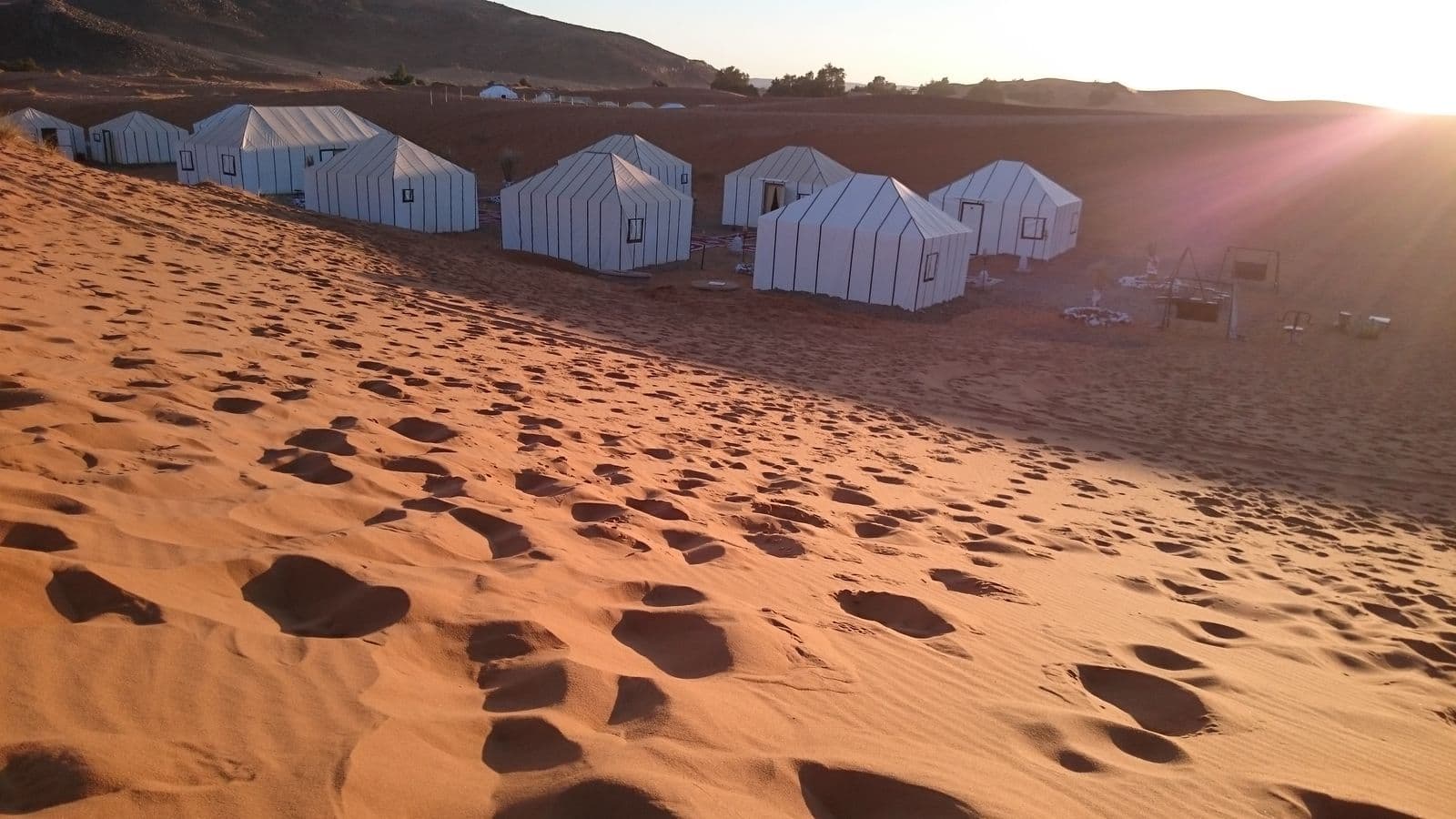
Traditional tents woven from wool or made of canvas, with real beds, blankets and rugs. Bathrooms are often shared, sometimes private, with hot water depending on the camp. Simple, authentic and good value.
Comfort camps
Larger tents with private bathrooms, proper mattresses and electricity for lights and charging, plus a dining tent and a fire pit area.
Luxury camps
Spacious tents with king-size beds, en-suite bathrooms with hot showers, heating in winter, terraces facing the dunes and refined dinners. Some have just a handful of tents, which keeps the atmosphere intimate.
On our circuits, we choose the camp according to your budget and preferences; tell us whether a private bathroom or heating matters to you.
A typical evening and night
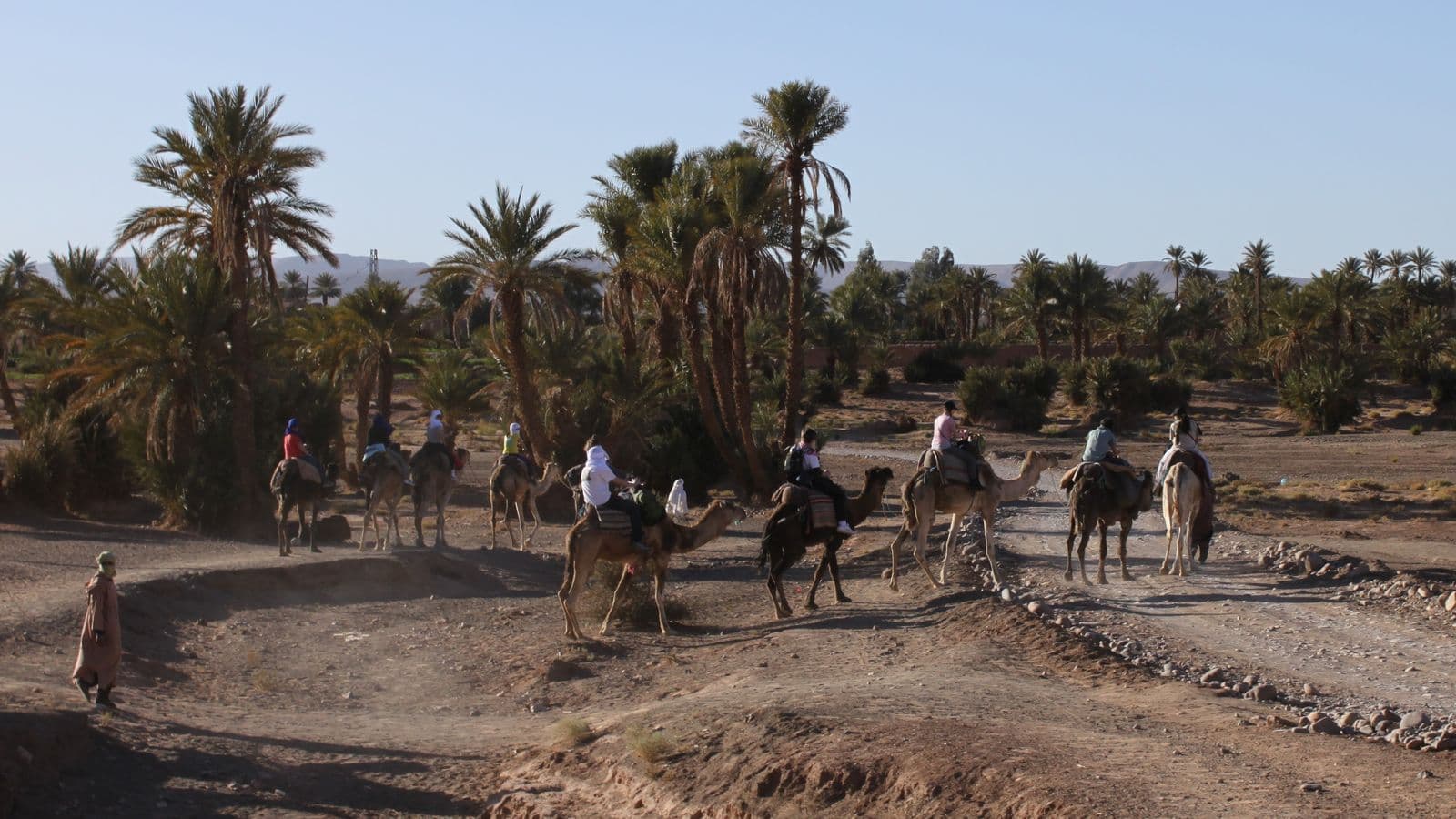
- Late afternoon: your large luggage stays in the vehicle or is driven to the camp; you keep a small bag and set off by camel. Read our camel ride guide.
- Sunset: you stop on a dune crest to watch the sun go down, then reach the camp at dusk.
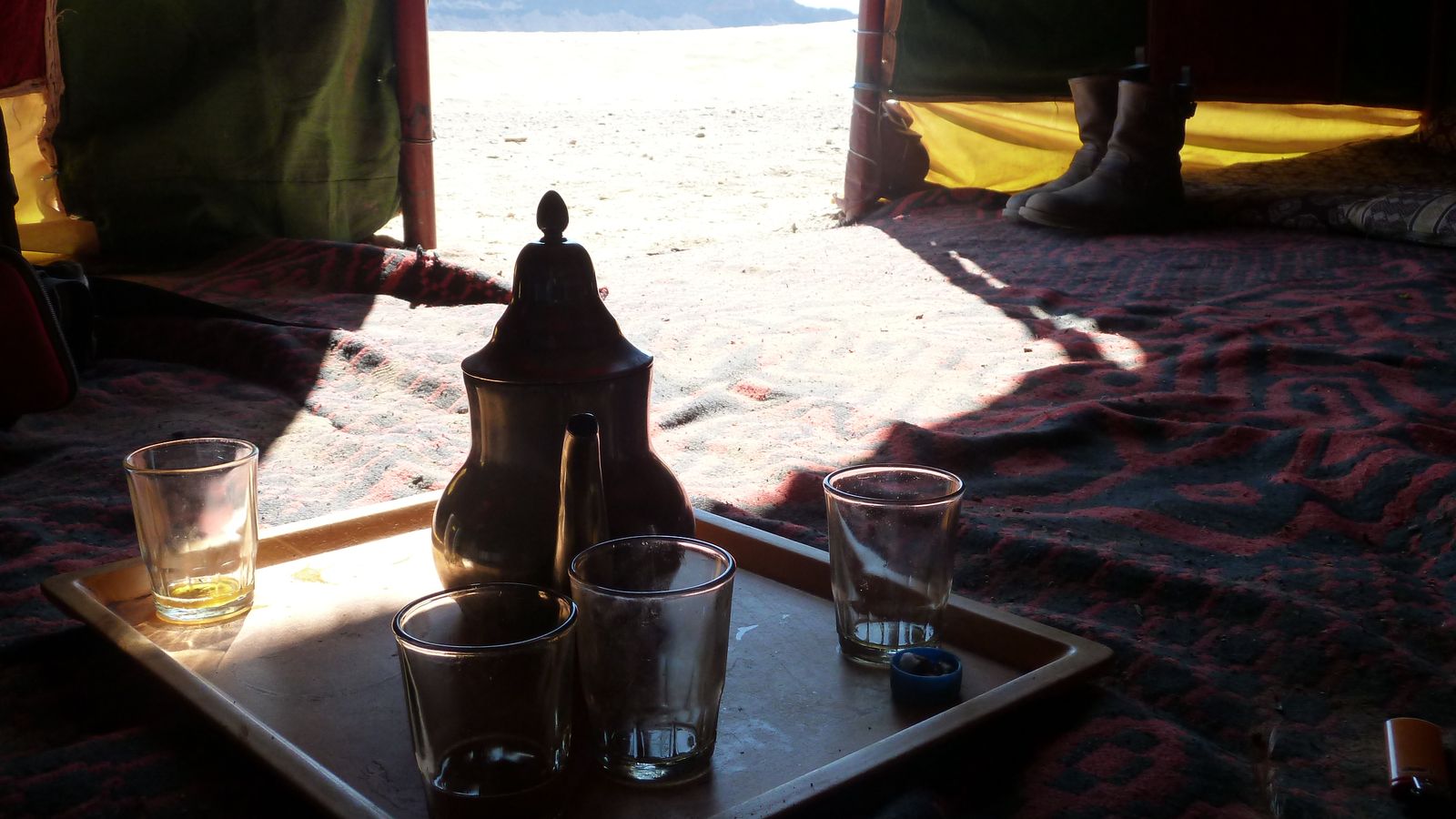
- Tea and settling in: mint tea, a little time to rest in your tent.
- Dinner: usually soup, salads, a tagine or couscous and fruit, served in the dining tent or under the sky. Vegetarian meals are easy to arrange.
- Music and fire: local musicians often play drums and sing around the fire; you are welcome to join in.
- The night: lie on the sand away from the lights and look up. Then sleep, wrapped in blankets.
The stars
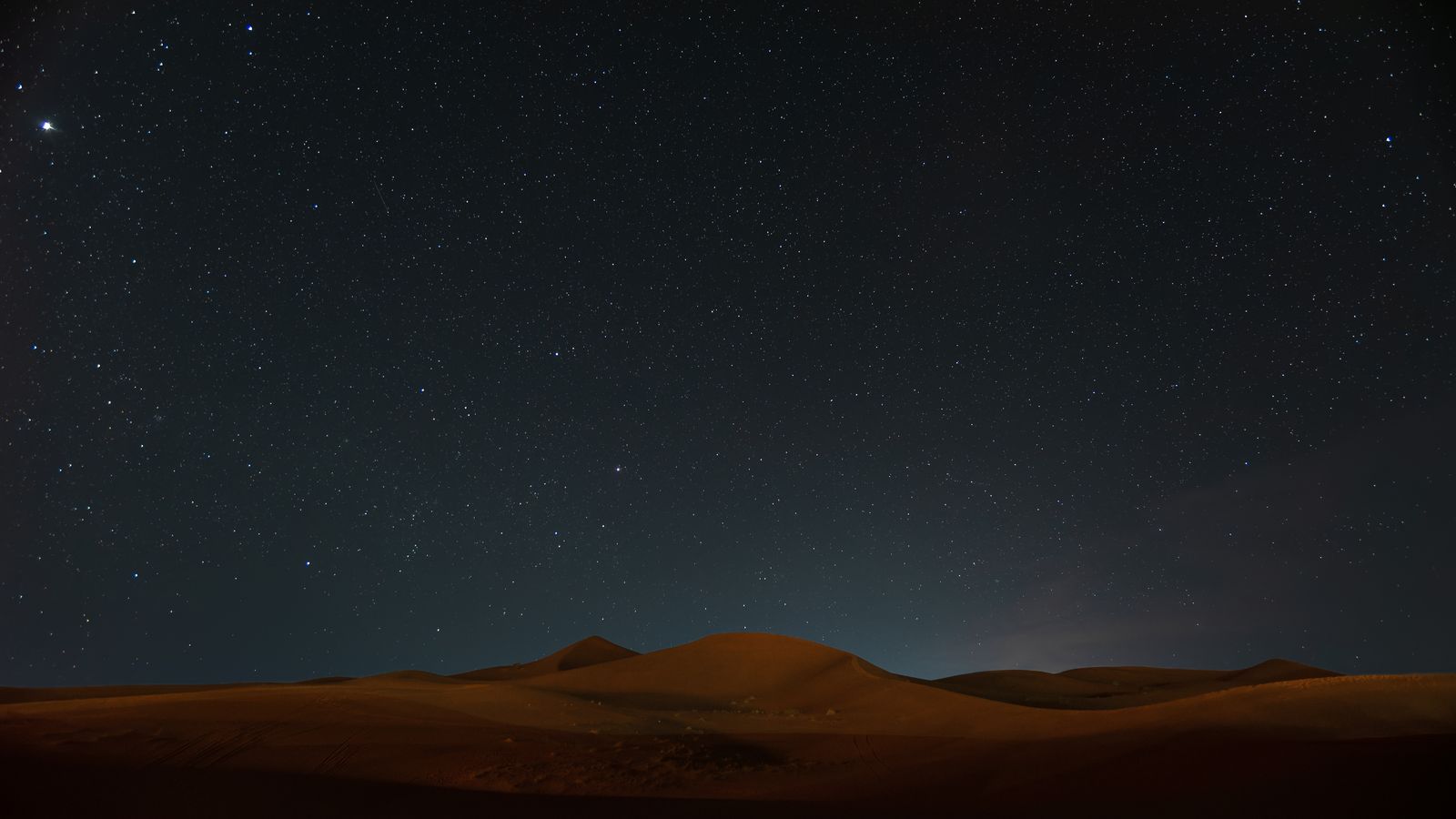
The Sahara has some of the darkest skies you will ever see. On a clear, moonless night, the Milky Way stretches from horizon to horizon and shooting stars are frequent. For the best view, check the moon calendar when you choose your dates — a full moon lights up the dunes beautifully but hides fainter stars. Walk a few metres away from the camp lights and give your eyes ten minutes to adjust.
Sunrise and the morning after
Ask the camp team to wake you about 40 minutes before sunrise. Climb the nearest high dune — slowly, it is steeper than it looks — and sit down to watch the sky turn from deep blue to pink, then the first rays light up the crests one by one. It is often the most emotional moment of the trip. Breakfast follows in the camp: bread, pancakes, jam, honey, eggs, coffee and tea. Then you either ride back by camel or, if you stay a second night, set off on a 4x4 excursion to the Gnawa village of Khamlia and the surrounding oases.
Is it cold at night?
Often, yes. The desert loses its heat quickly after sunset. From November to February, night temperatures can drop close to freezing; in spring and autumn, nights are cool. Camps provide thick blankets and luxury camps often have heaters, but bring warm layers, a hat and socks. In summer, nights are warm and some guests prefer to sleep outside on mattresses under the stars.
Practical questions
- Electricity: most camps run on solar power; you can charge phones, but bring a power bank.
- Wi-Fi: rare and unreliable — enjoy the disconnection.
- Water: precious in the desert; showers are welcome but keep them short.
- Toilets: standard camps may share them; luxury camps have them in each tent.
- Alcohol: policies vary between camps; ask us in advance.
- Safety: camps are staffed day and night by local teams who know the dunes.
How to choose your desert camp
- Location: camps deep in the dunes feel remote; those near the edge are easier to reach and quieter for families.
- Size: smaller camps are calmer; large camps can be lively, with more music.
- Reviews: recent feedback on cleanliness, food and heating matters more than photos.
- Nights: two nights in the desert let you enjoy a full day there — our 4-day Merzouga tour includes them.
Our guide to where to stay in southern Morocco covers the rest of your accommodation on the road, and our Sahara packing list tells you exactly what to bring.
Book your night in a desert camp
A night in a desert camp is included in our circuits to Agafay, Zagora and Merzouga, with the camp category chosen to match your budget. Send us your dates on WhatsApp for a personalised quote, or compare all our itineraries in the guide to multi-day tours from Marrakech.