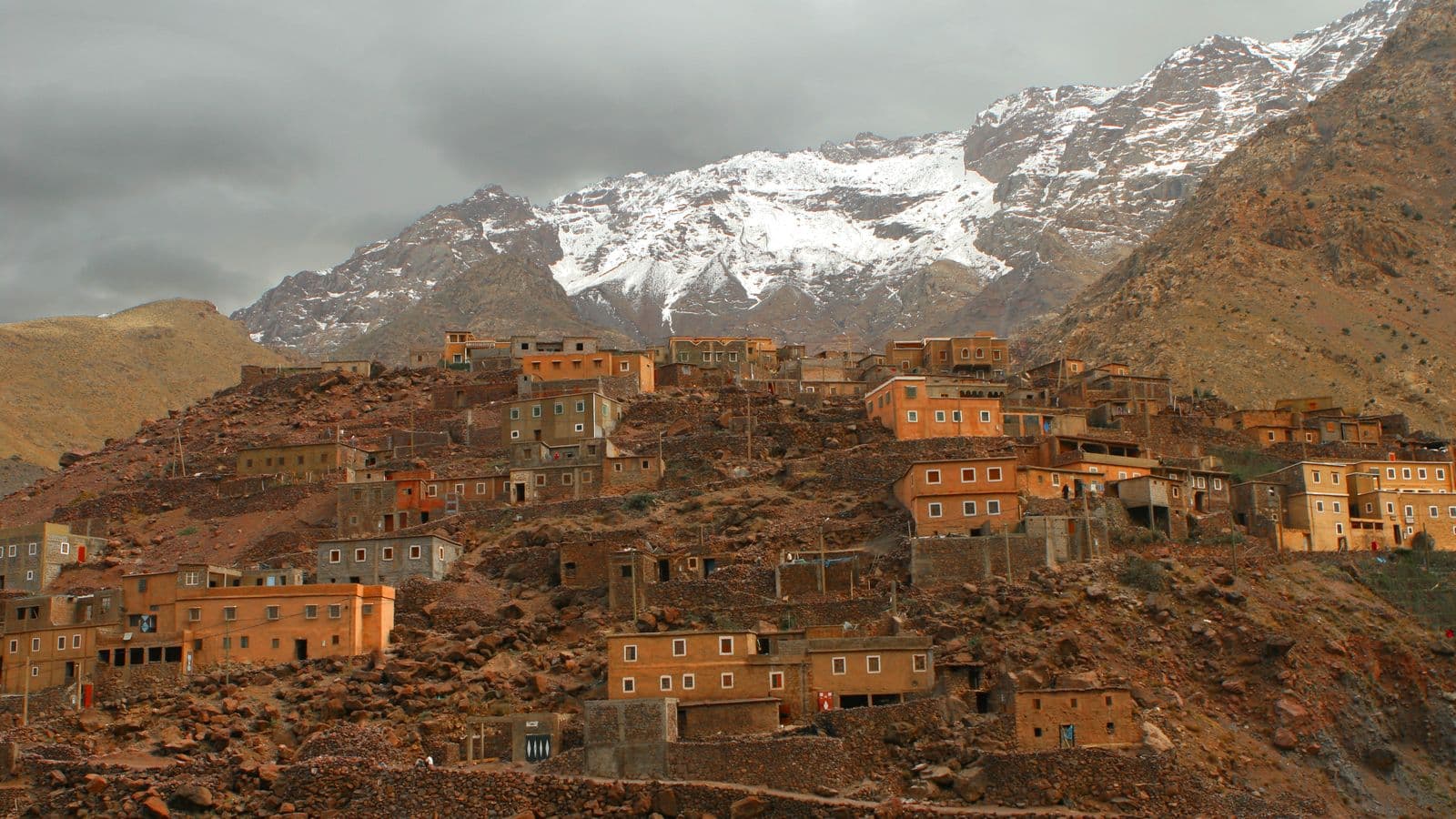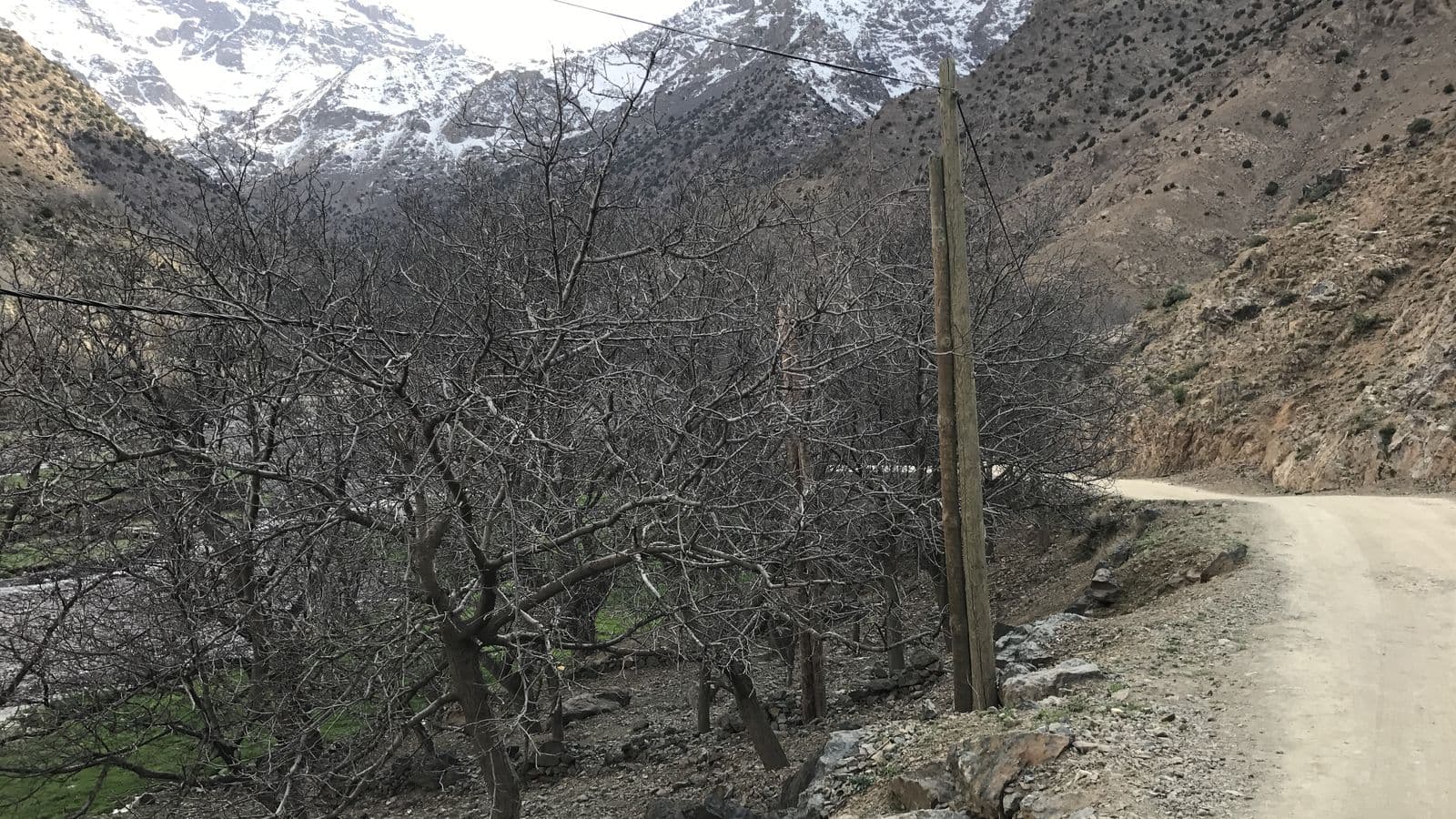
At the end of a winding road from Marrakech, where the asphalt meets rushing streams and walnut trees, lies Imlil, the best-known village of the High Atlas. Trekkers know it as the starting point for Jebel Toubkal, at 4,167 metres the highest summit in North Africa. But you do not need to climb a mountain to fall in love with it: the terraced fields, earth-built hamlets, mule tracks and mint tea on a rooftop facing the peaks are reason enough to come.
Here is our practical guide to Imlil.
Where is Imlil and how to get there
Imlil sits at around 1,740 metres in the Toubkal National Park, about 65 km south of Marrakech. The drive takes roughly an hour and a half: through the Haouz plain, then up the Asni valley, where a large market takes place on Saturdays, and finally along the Rhirhaya river to the village. The road is paved but narrow and winding in its last section.
Most visitors come either on a day trip or as part of a short circuit. Our 3-day Atlas & Agafay tour includes a walk around Imlil and lunch with a Berber family, followed by Lalla Takerkoust lake and a night in the Agafay desert — see the full itinerary.
The best walks around Imlil
Imlil is a walker's paradise, with routes for every level. Always go with a local guide: paths are not signposted and guides know the families, the weather and the shortcuts.
- Imlil to Aroumd (2 to 3 hours return): an easy, classic walk to the village of Aroumd (also spelled Armed), perched on a rocky spur above a wide valley floor. Perfect for families.
- The Tamatert loop (half a day): through walnut and cherry orchards to a pass with views over the Imlil valley, then down through small hamlets.
- Tizi n'Mzik pass (full day): a steeper climb to around 2,450 metres, with sweeping views of the Toubkal massif.
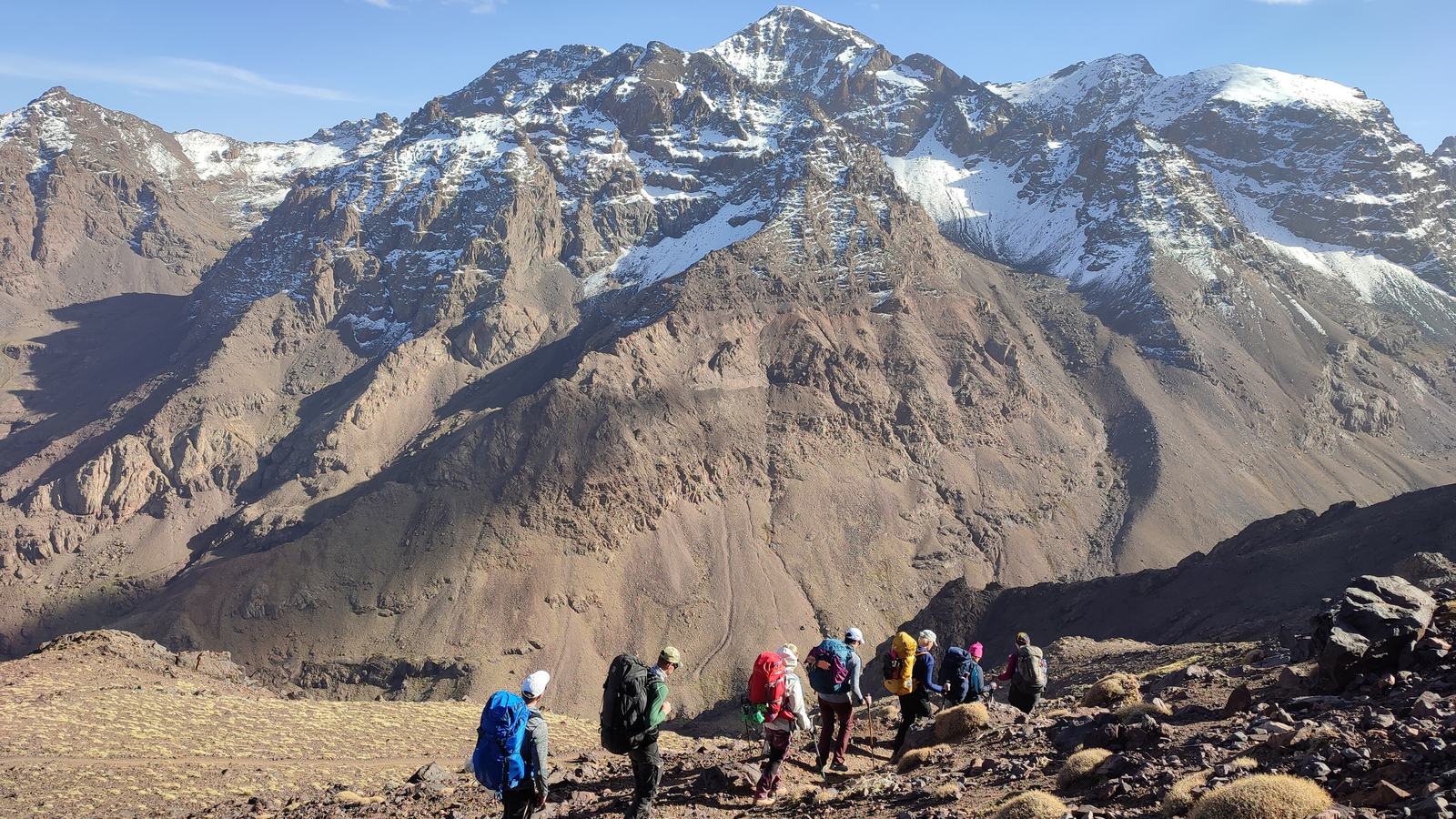
- Toubkal summit (2 days): the trek climbs to the refuge at about 3,200 metres on day one, then to the summit at dawn on day two. It requires good fitness, proper equipment and a certified mountain guide.
Life in Imlil and the surrounding villages
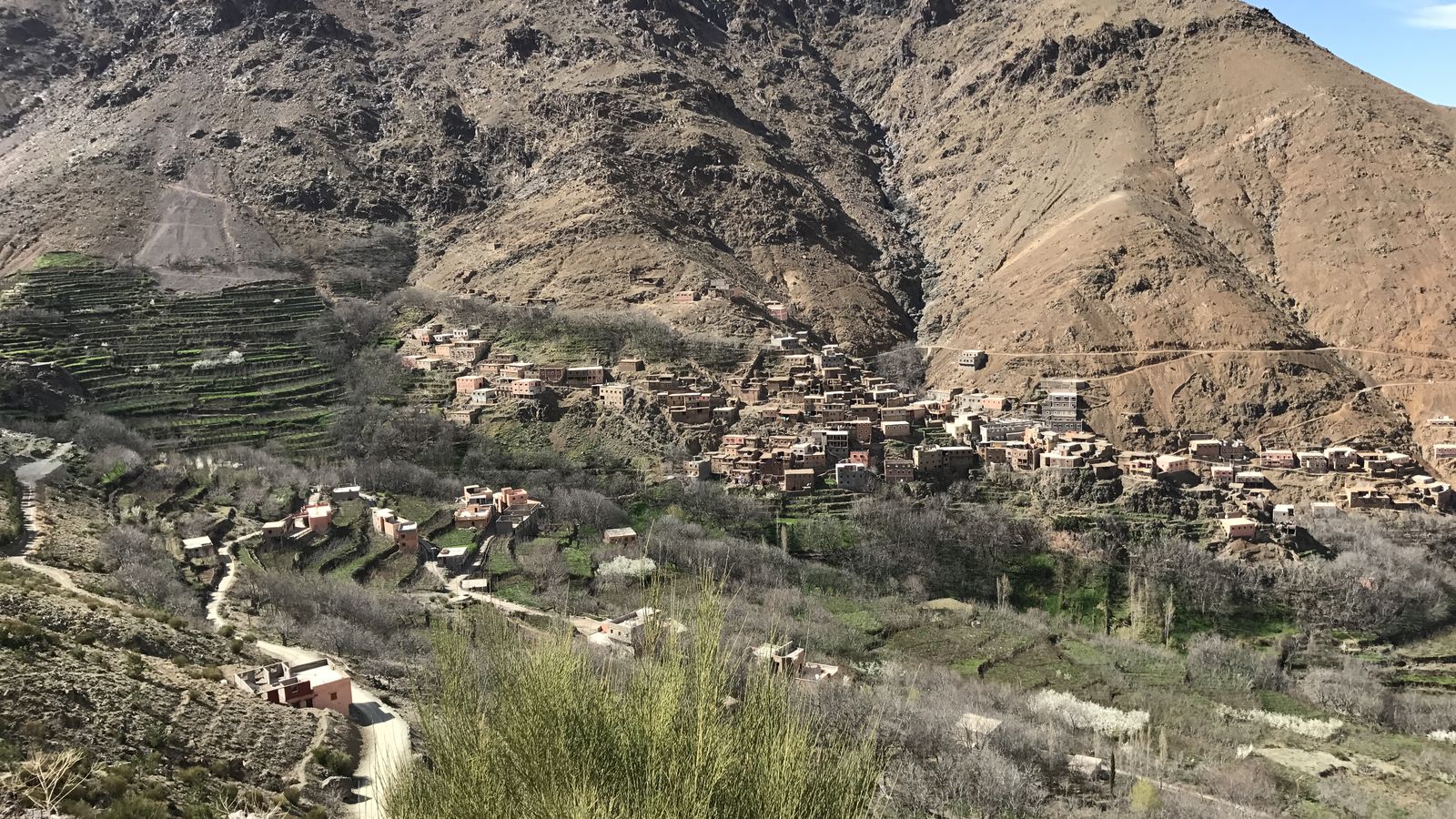
The valley is home to Amazigh (Berber) families who farm tiny terraced fields irrigated by channels shared between households. Walnuts, apples, cherries, barley and vegetables grow on every flat patch of land, and mules are still the main way to carry goods to the higher villages.
The area was hit hard by the earthquake of September 2023. Since then, villages have been rebuilding, and visitors are welcome: hiring local guides, eating in family homes and staying in guesthouses brings income directly to the people of the valley. Our article on Berber culture gives more background on Amazigh traditions.
Where to eat and sleep in Imlil
- Lunch with a family: the highlight for many visitors — a tagine slow-cooked over charcoal, salads, bread and mint tea, often on a terrace facing the mountains.
- Guesthouses (gîtes): simple and welcoming, with shared or private bathrooms and hearty breakfasts.
- Mountain lodges: more comfortable options with views over the valley, open fires in winter and terraces in summer.
Nights are cool even in summer, so a warm layer is always useful. Note that some guesthouses above the village cannot be reached by car: your luggage then goes up by mule while you walk the last few minutes — part of the charm, but pack a small overnight bag if you only stay one night.
When to visit Imlil
- Spring (March to May): the most beautiful season — blossom in the orchards, green terraces and snow still on the peaks.
- Summer (June to September): pleasantly cool compared with Marrakech; the best time for the Toubkal trek.
- Autumn (October to November): golden walnut trees, clear skies and the walnut harvest.
- Winter (December to February): snow on the peaks and sometimes in the village; magical views but cold, and the Toubkal ascent becomes a winter mountaineering climb.
What to bring
Comfortable walking shoes with good grip, a warm fleece or jacket, a hat and sunscreen (the sun is strong at altitude), a refillable water bottle and some cash: there are few card machines in the valley.
Imlil, Ourika or both?
The Ourika valley, east of Imlil, is another popular escape from Marrakech, known for the waterfalls of Setti Fatma. Imlil is quieter, higher and better for walking; Ourika is easier to reach and livelier. Our Atlas mountains guide compares them, and our Ourika valley day trip is a good option if you only have one day.
Plan your visit
A day in Imlil is easy to organise from Marrakech, but staying a night — or combining the valley with the Agafay desert — makes the experience much richer. Every circuit we organise is private, with a professional driver and a local guide for the walk. Send us your dates on WhatsApp, or compare all options in our guide to multi-day tours from Marrakech.