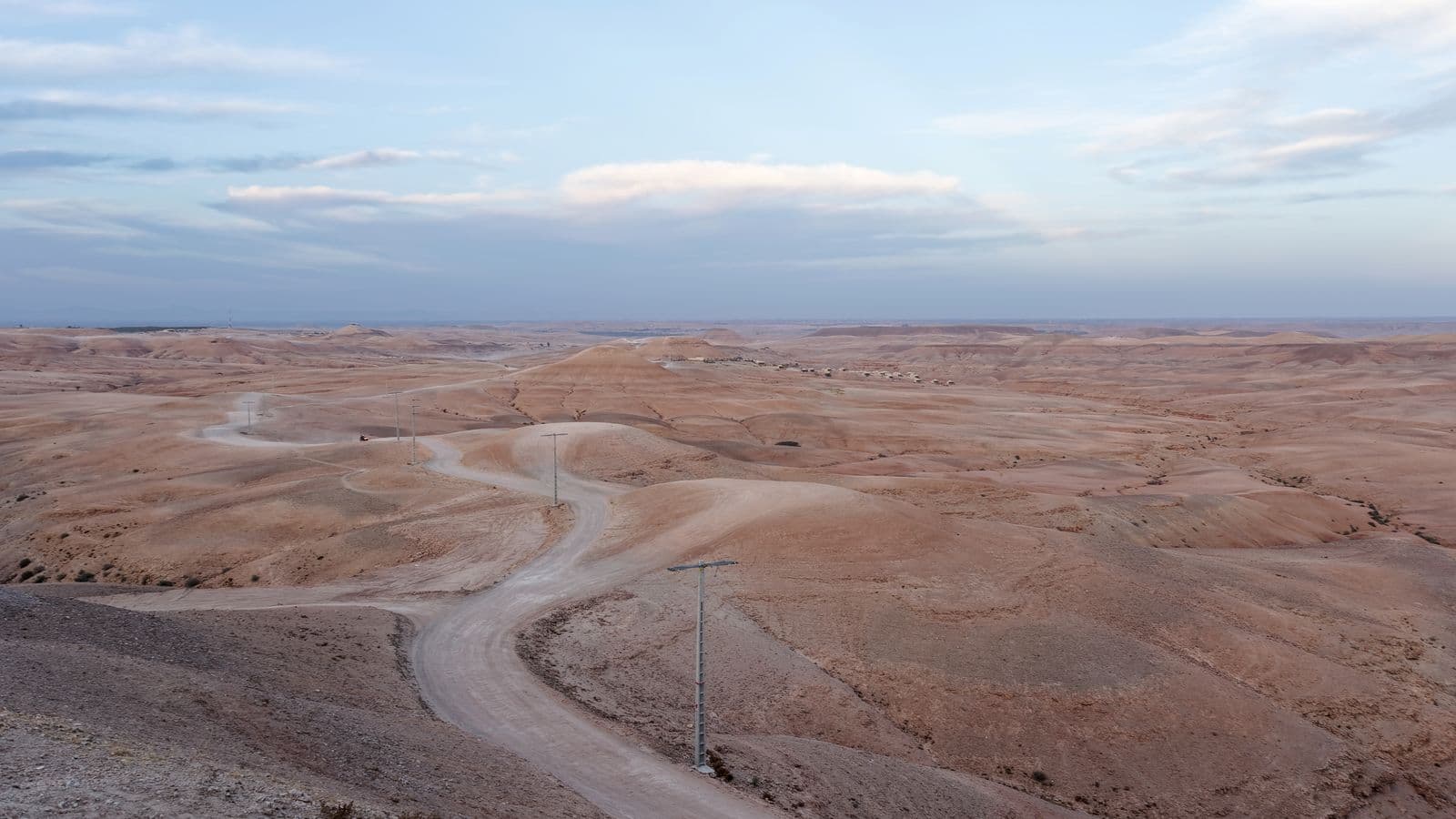
Ask Marrakech locals where to watch the sun go down in silence and many will say the same thing: the Agafay desert. Only around 40 kilometres south-west of the city, this rolling landscape of bare hills and stony plateaus feels a world away from the medina. On a clear day the snow-capped High Atlas fills the horizon, and at night the sky is dark enough to see the Milky Way.
Agafay has become one of the most popular escapes from Marrakech, and for good reason. But it is often misunderstood, so here is our honest guide.
What the Agafay desert is — and what it is not
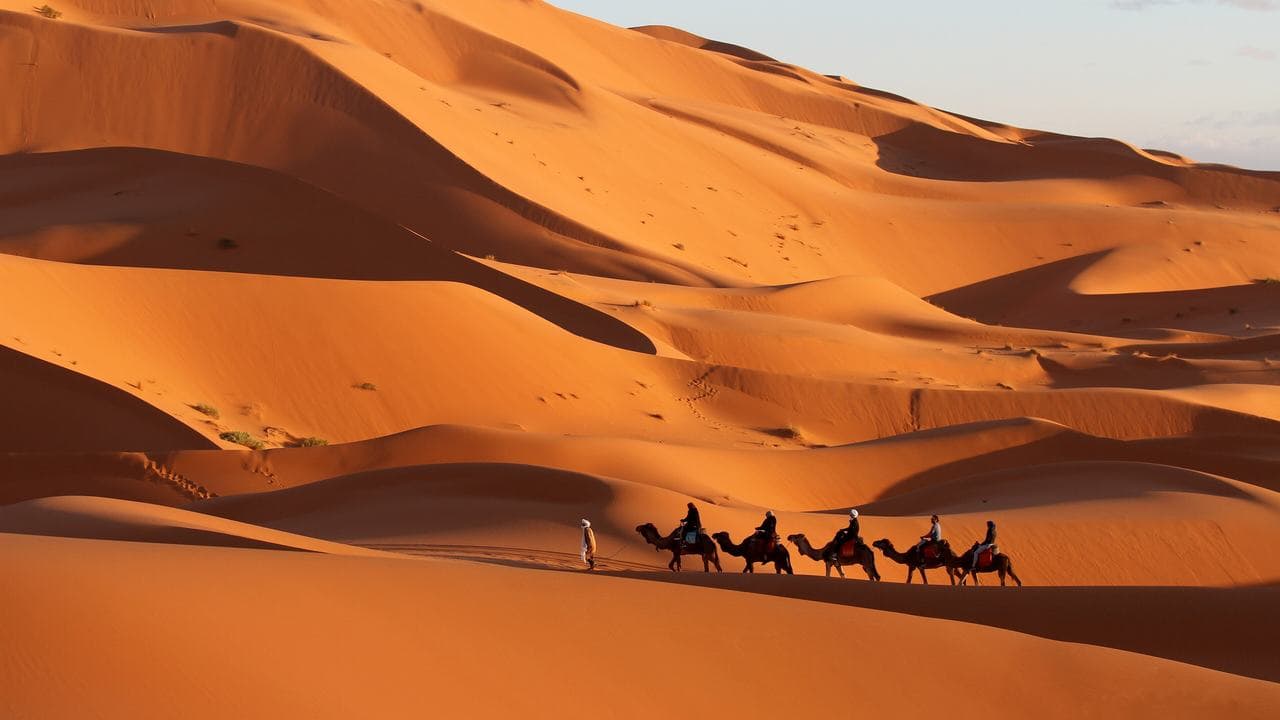
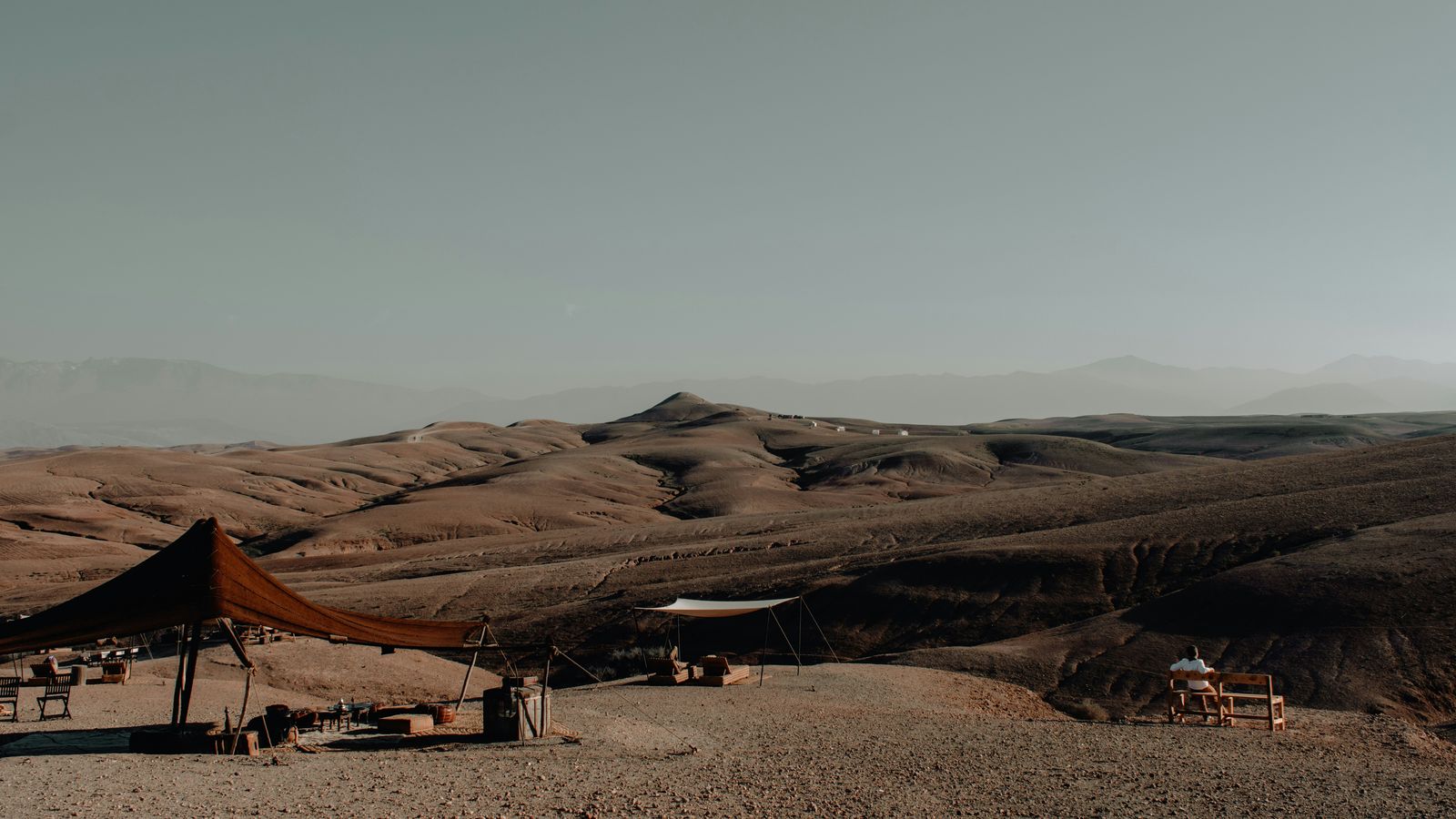
Agafay is a stone desert, sometimes called a hamada: a dry, treeless area of rounded hills, gullies and gravel plains in shades of ochre, beige and pink. There are no high sand dunes here. If you picture camels climbing golden dunes, that is the Sahara around Merzouga or Zagora, many hours further south — see our desert trip from Marrakech guide to compare.
What Agafay offers is different and, for many travellers, more practical: a genuine desert atmosphere, wide horizons, superb light at sunset and real silence, all within 45 minutes to an hour of your riad.
Getting to the Agafay desert
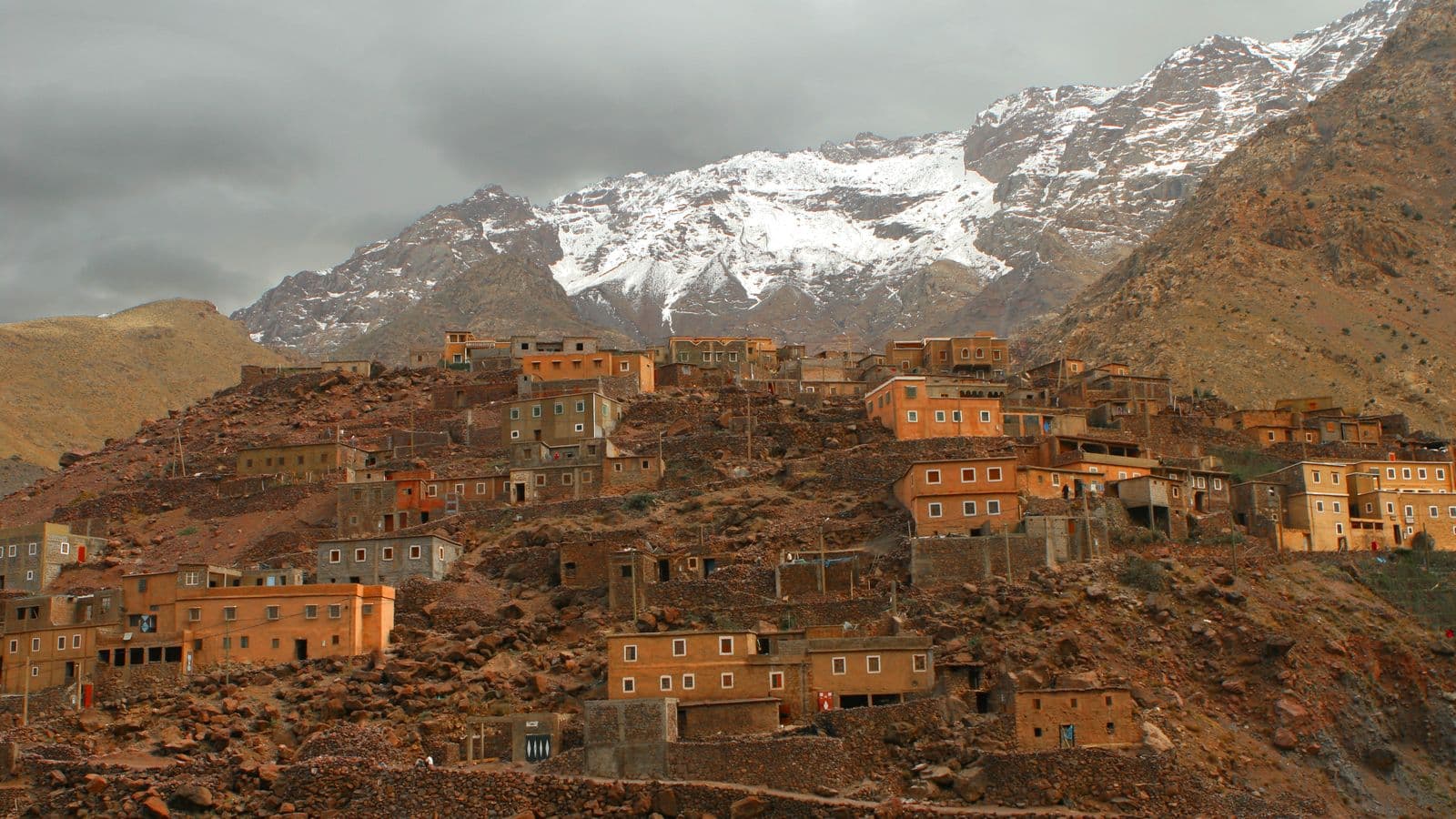
From central Marrakech, the drive takes around 45 minutes to an hour, partly on small rural roads and the final kilometres on dirt tracks. Most camps include pickup in their packages, or you can visit as part of a private trip. Our 3-day Atlas & Agafay tour combines the desert with the mountain village of Imlil and the lake of Lalla Takerkoust, only a few kilometres away.
Choosing a camp in Agafay
Camps range widely in comfort and atmosphere:
- Simple Berber camps: traditional tents, shared bathrooms, a warm welcome and a lower price.
- Comfort camps: tents with real beds and private bathrooms, a restaurant tent and often a pool.
- Luxury lodges: large designer tents or small eco-lodges with terraces, heated rooms in winter and fine dining.
Before booking, check recent reviews, whether dinner and breakfast are included, how far the camp is from its neighbours (some areas are getting crowded) and whether it has heating for winter nights. Our desert camp guide explains what to expect in more detail.
Things to do in the Agafay desert
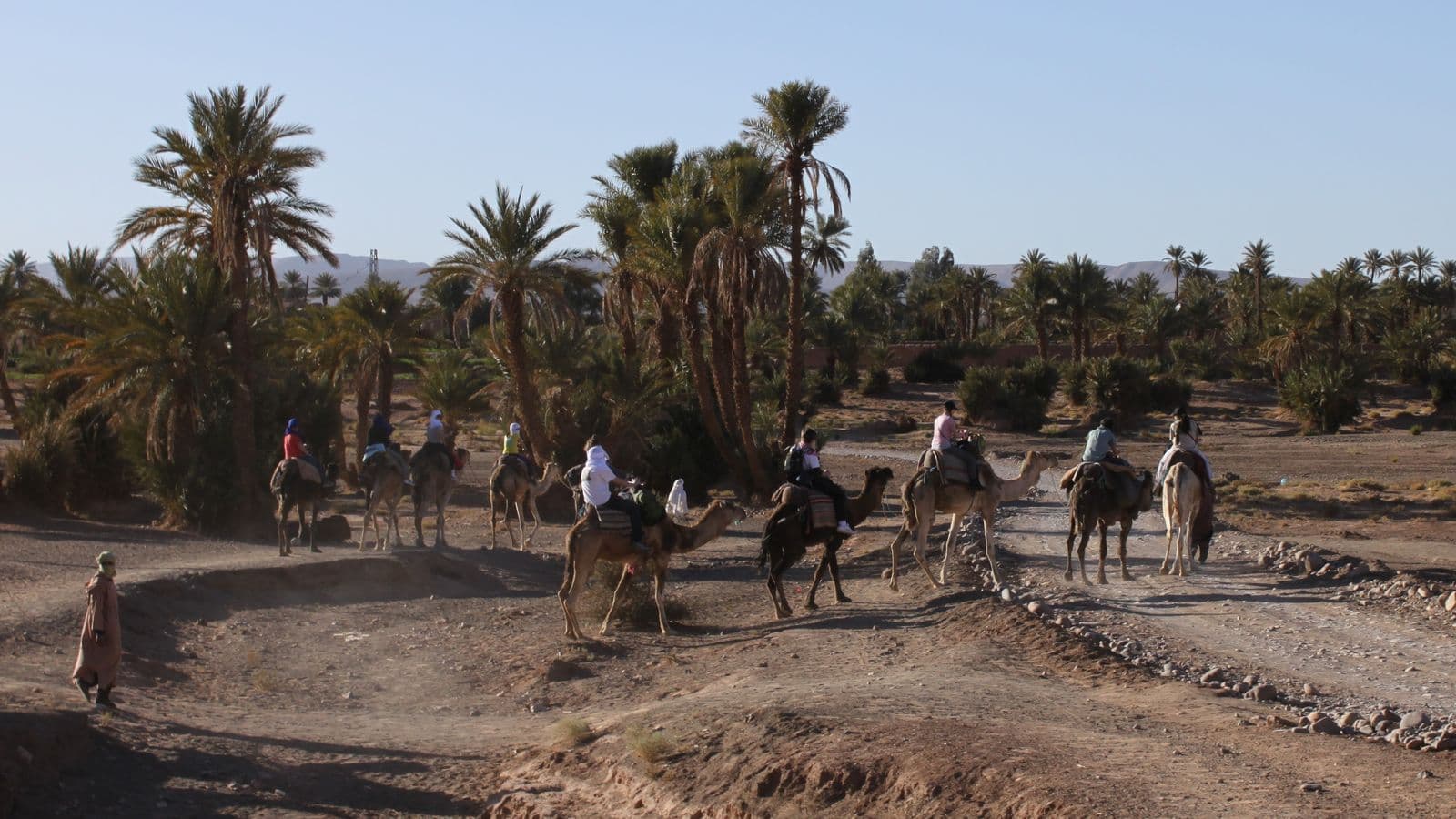
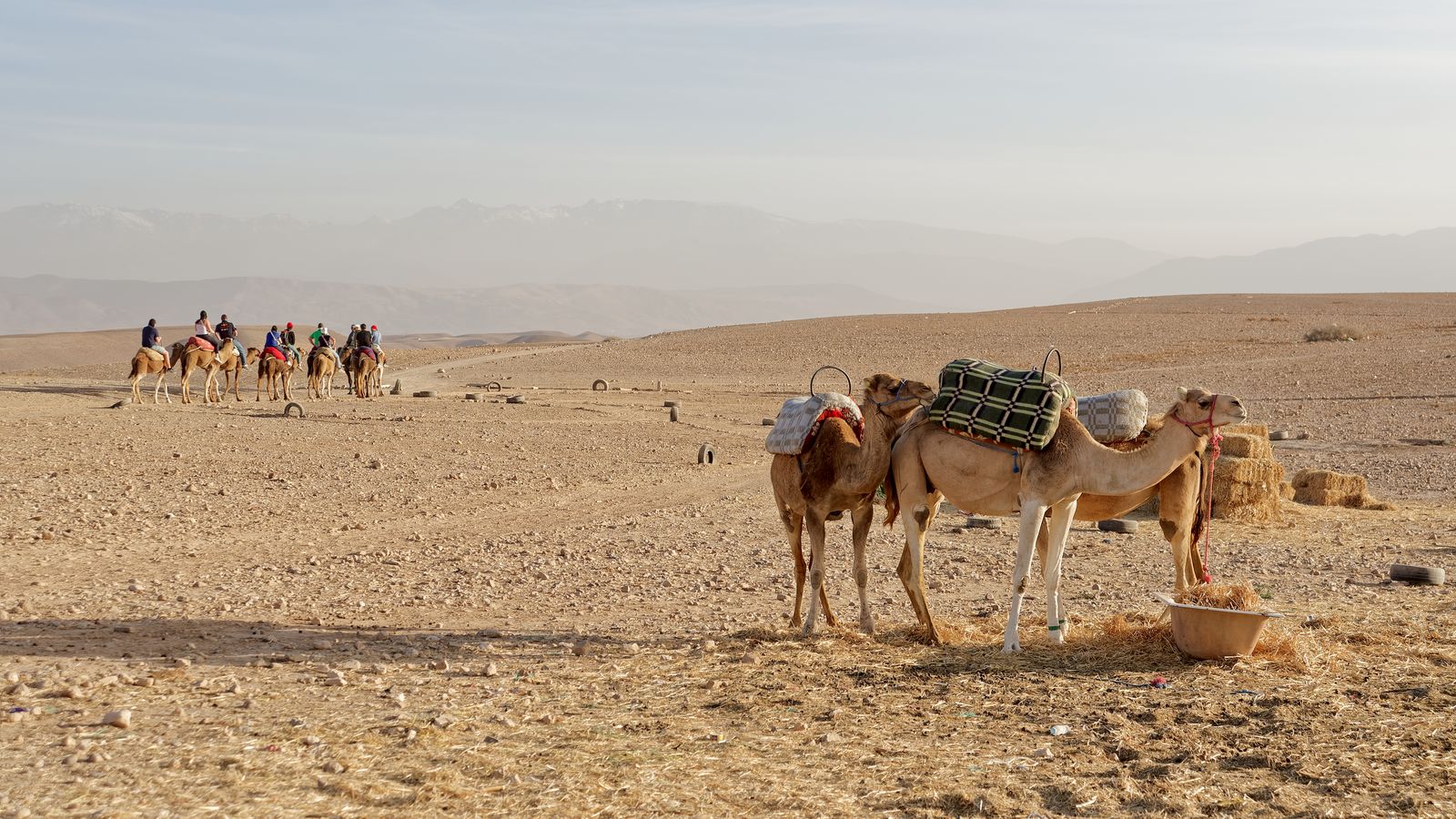
- Camel ride at sunset: usually 30 minutes to an hour, the classic Agafay experience. Our camel ride guide has tips on comfort and animal welfare.
- Quad or buggy: the hills and tracks are ideal for a guided ride of one or two hours. See our quad and buggy guide.
- Horse riding and walks across the plateaus, especially beautiful in the soft morning light.
- Stargazing: away from the city lights, the sky is surprisingly clear. Bring a jacket and lie on a blanket after dinner.
- Dinner under the stars: tagines, couscous, fire pits and often live Gnawa or Berber music.
- Combine with Lalla Takerkoust: the lake is next door — see our Lalla Takerkoust guide.
Afternoon visit or overnight stay?
An afternoon and evening in the Agafay desert (sunset, camel ride, dinner and return to Marrakech around 10 p.m.) is perfect if you have just one free day. An overnight stay is better: you see the stars properly, wake up to sunrise over the Atlas and enjoy the calm before the day visitors arrive. With children, the overnight is often the highlight of the holiday — our family desert guide explains why.
A typical evening in Agafay
- 4 p.m.: pickup at your riad and drive south-west, past olive groves and the first bare hills.
- 5 p.m.: arrival at the camp, mint tea and time to settle in or walk to a nearby viewpoint.
- 6 p.m.: camel ride or quad session timed for the golden hour, when the hills turn copper and the Atlas glows pink.
- 7.30 p.m.: dinner in the restaurant tent or around the fire, often with musicians.
- 9.30 p.m.: stargazing, then either bed in your tent or the drive back to Marrakech.
In winter, sunset comes earlier, so everything shifts forward by an hour or so; in summer, it shifts later, which keeps activities out of the heat.
Best time to visit the Agafay desert
- Spring and autumn: the most comfortable temperatures, clear skies and often snow on the Atlas in early spring.
- Winter: sunny days but cold nights, sometimes close to freezing — choose a heated tent.
- Summer: hot afternoons, often above 40°C; plan activities for late afternoon and enjoy the warm nights.
What to bring
Sunglasses, sunscreen and a hat for the day; a warm layer for the evening all year round; closed shoes for walking or quad riding; a scarf against dust; and a little cash for tips and drinks.
Agafay, Zagora or Merzouga?
If you have one or two days, the Agafay desert is the obvious choice. With three days you can reach the small dunes of Zagora, and with four days or more the great dunes of Erg Chebbi. Our guide to multi-day tours from Marrakech compares the options, and our Atlas & Agafay itinerary shows how to combine the desert with the mountains in a relaxed three-day trip. Send us your dates on WhatsApp and we will help you plan your night in Agafay.