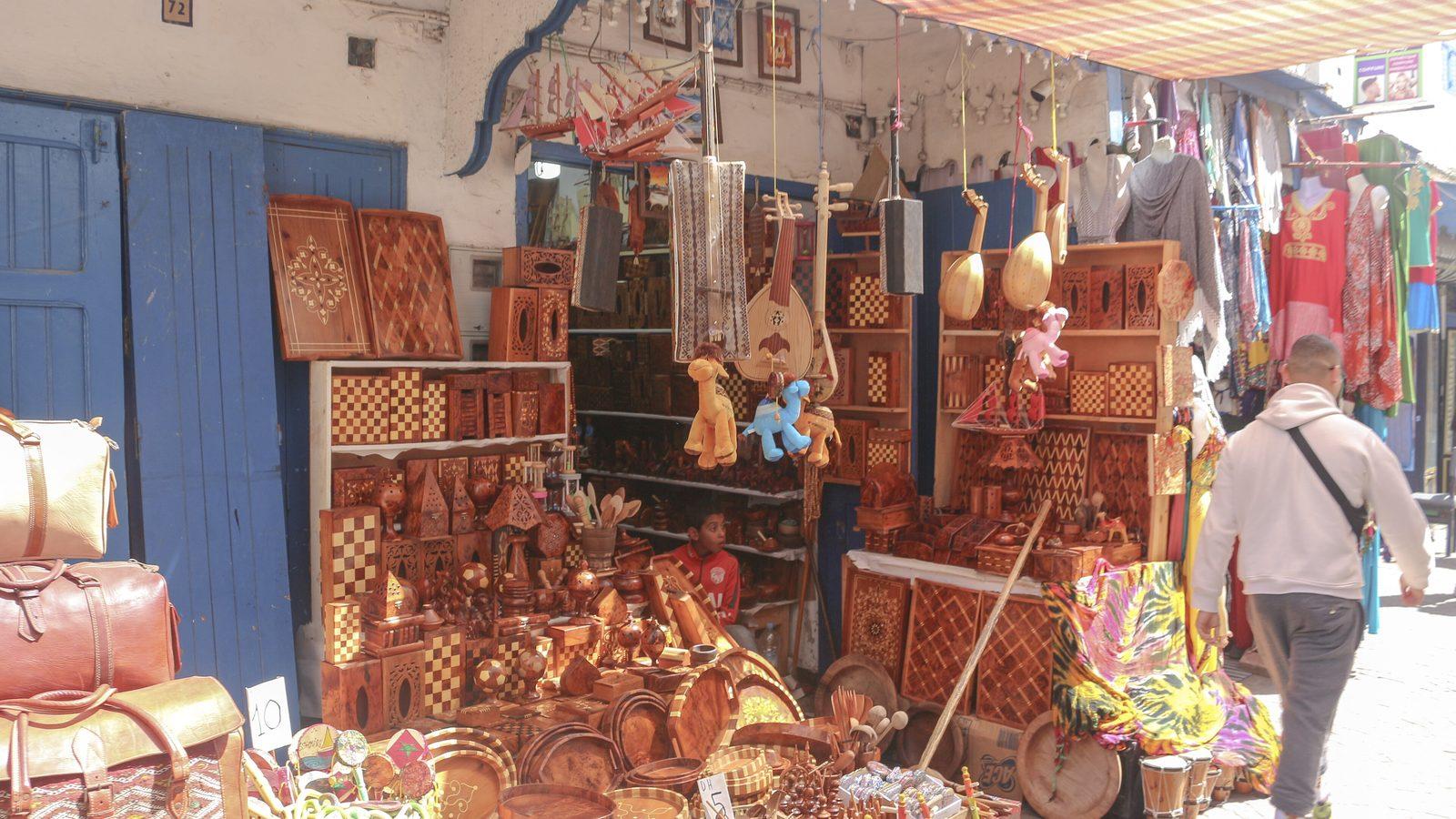
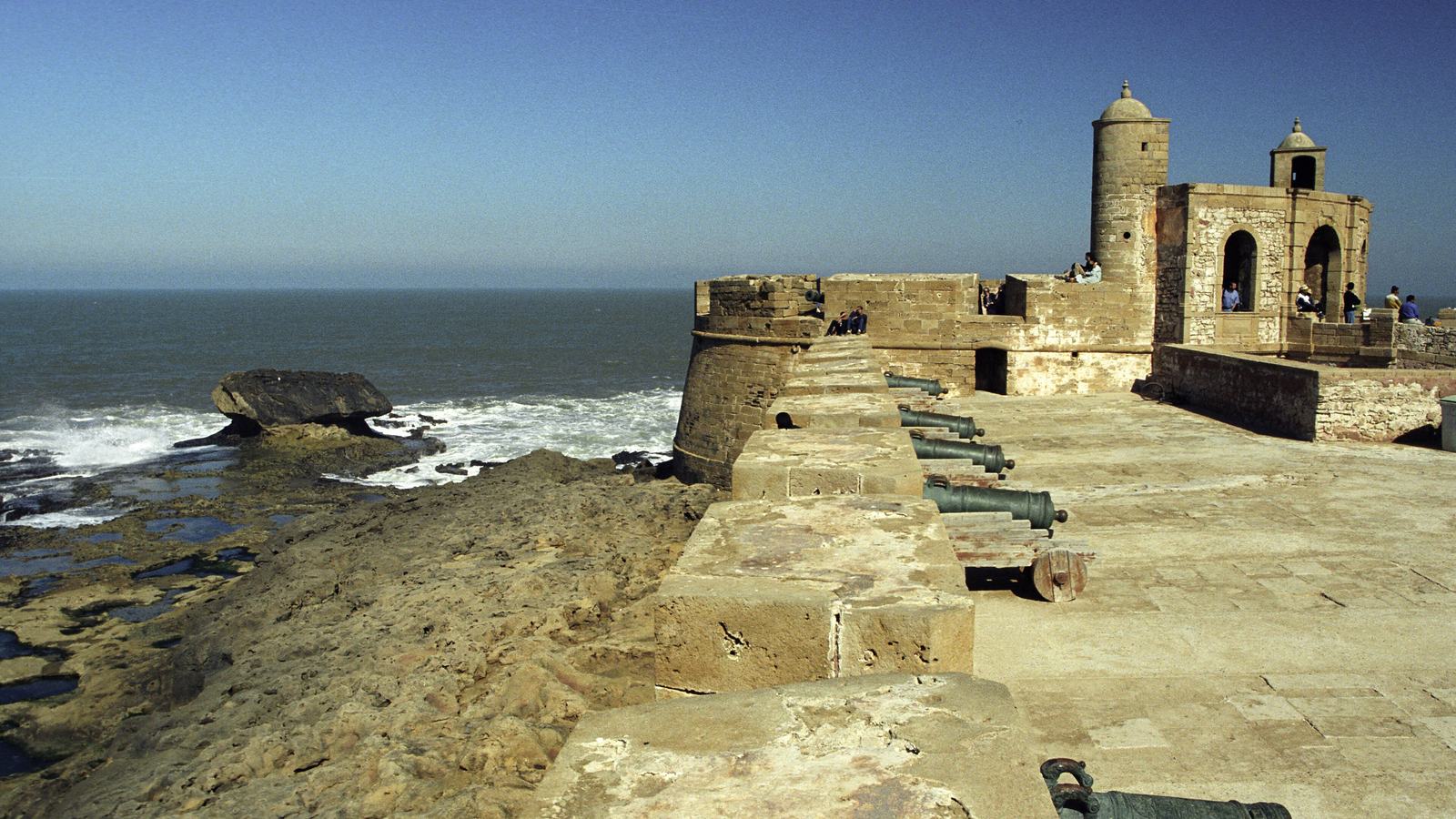
Walk under the arches of the Skala ramparts in Essaouira and a warm, resinous scent fills the air. It comes from the workshops where craftsmen saw, polish and inlay thuya, a wood that grows almost nowhere else in the world. Understanding thuya wood in Essaouira — and even trying the craft yourself — is one of the most authentic cultural experiences in town, and a wonderful activity for families on a windy afternoon.
You can request a thuya wood marquetry workshop on our activities page.
What is thuya?
Thuya is the local name of Tetraclinis articulata, a small conifer native to north-west Africa and a few spots of the western Mediterranean. It grows on the dry hills inland from Essaouira. Two parts are used:
- The trunk and branches, a fine-grained golden wood.
- The burl (la loupe), a growth at the base of the tree, with swirling, dotted patterns and a deep honey colour. It is the most precious part, used for veneers and boxes.
The wood is naturally rich in fragrant resin, which gives it its scent and protects it from insects.
The craftsmen of the Skala
The woodworkers settled in the vaulted workshops built into the Skala de la Ville, the sea bastion of the medina. Families pass the craft from generation to generation. Inside, you see the whole process: rough pieces of burl drying in a corner, the lathe and the saw, the delicate cutting of inlays, the long polishing that brings out the patterns.
How thuya marquetry is made
- Selecting and drying the wood — sometimes for a long time — so it does not crack.
- Cutting and assembling the box or panel.
- Inlay: fine strips of lemonwood, ebony or walnut, and sometimes mother-of-pearl or metal wire, are set into grooves to draw geometric stars and borders.
- Sanding and polishing by hand until the surface shines and the burl reveals its depth.
A simple jewellery box can take hours of work; an inlaid chessboard or a piece of furniture, days.
The workshop experience
In a marquetry workshop, a craftsman shows the tools, explains the different woods and lets you try the gestures: sanding, placing inlays, polishing. Children usually make a small piece — a coaster, a little box lid or a pendant — that they take home. It lasts about an hour and a half, needs no skill and works for all ages from around six with an adult.
| Activity | Duration | For whom |
|---|---|---|
| Visit of a workshop with explanations | 30–45 minutes | Everyone |
| Hands-on marquetry workshop | About 1 h 30 | Families, couples, curious travellers |
| Shopping for a piece with advice | 30 minutes | Anyone looking for a real souvenir |
How to buy genuine, sustainable thuya
- Smell it. Real thuya has a distinctive, cedar-like scent, especially inside a box.
- Look at the pattern. Burl shows irregular swirls and dots; a perfectly repeated pattern may be a printed veneer.
- Check the finish. Good pieces are polished or oiled, not covered with a thick plastic varnish; hinges and corners should be neat.
- Ask about the origin. Thuya forests are protected and overharvesting of burl has been a concern; prefer workshops and cooperatives that work with authorised wood.
- Take your time and bargain kindly — it is part of the experience. Our guide to money in Morocco explains cash and tipping.
Other crafts to discover in the medina
Thuya is only one of Essaouira's living crafts. Along the main streets and in the small souks you will also find:
- Silver jewellery, a tradition long associated with the town's Jewish artisans and still alive in a few workshops.
- Argan products — oils, soaps and creams from the cooperatives of the region.
- Woven goods: rugs, blankets and the striped fabrics of the countryside.
- Leather: babouches, bags and belts, often cheaper here than in Marrakech.
- Contemporary art: Essaouira has a lively art scene, with galleries showing self-taught painters inspired by Gnawa culture.
A slow afternoon in the medina, stopping in the workshops and chatting with the artisans, is one of the nicest things to do in Essaouira — and the best way to bring home souvenirs with a story.
Caring for your thuya object
Keep it away from heat sources and very damp places, dust it with a dry cloth and, once a year, rub it with a drop of neutral oil. The scent will last for years.
Combine it with
- A walk on the ramparts and in the medina with our walking guide.
- A Gnawa music workshop, another living tradition of the town.
- Our half-day private excursion into the argan and thuya countryside.
Getting there
The workshops are in the medina, on foot from most riads. Arriving by air? Our airport transfer to the medina takes about 20 minutes. From Marrakech, book a private transfer to Essaouira, then browse all our activities in Essaouira.