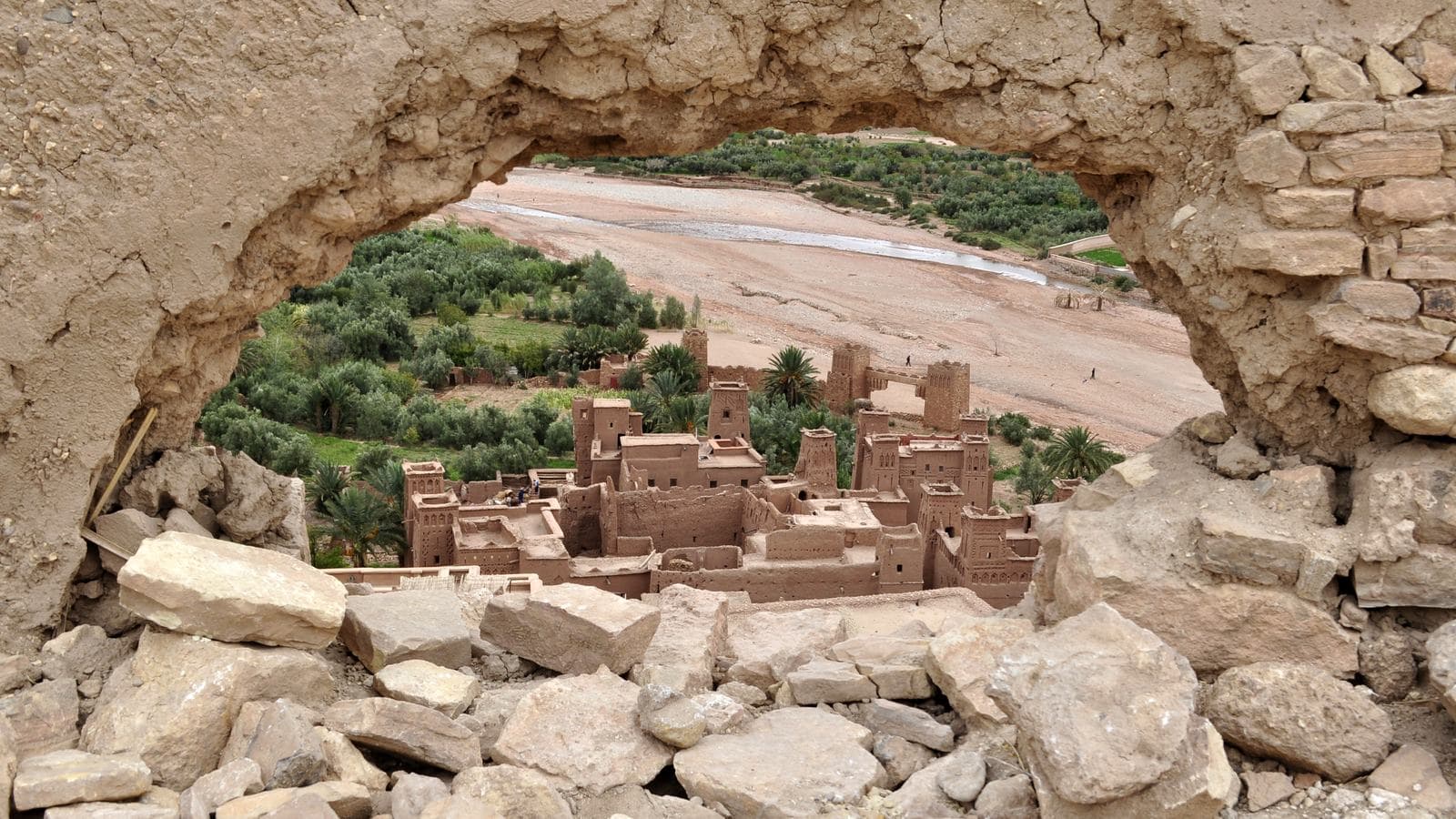
After hours of hairpins over the High Atlas, the road drops into a wide valley of red earth, and suddenly there it is: a whole village of earthen houses and towers stacked up a hillside above a riverbed, glowing orange in the afternoon sun. Aït Benhaddou is one of the most photographed places in Morocco, and one of the few that genuinely lives up to the pictures.
Here is how to make the most of your visit.
What is Aït Benhaddou?
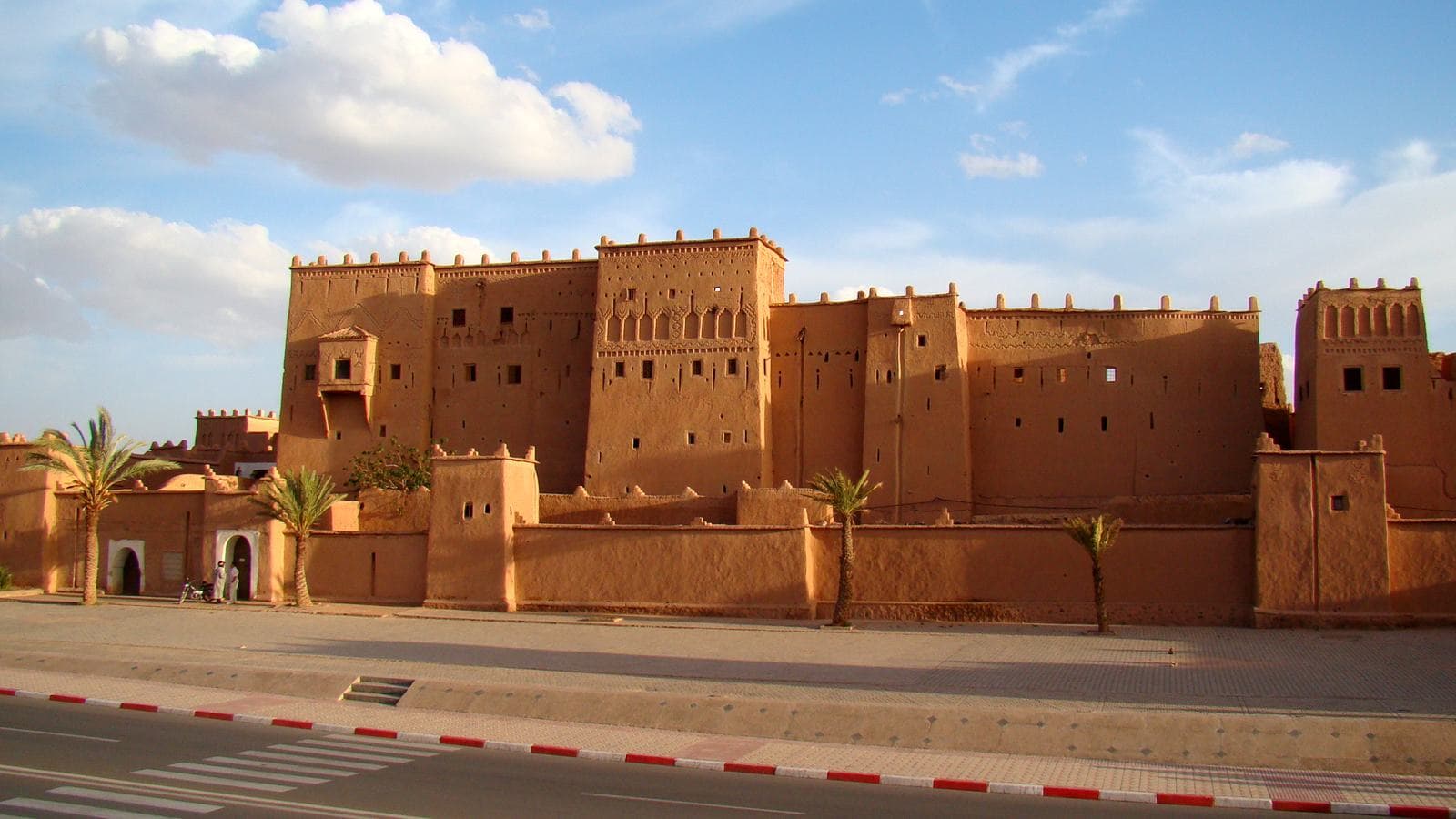
Aït Benhaddou is a ksar, a fortified village of earthen houses built with rammed earth and mud brick, enclosed by walls and watched over by corner towers. It stands on the bank of the Ounila river, about 30 km from Ouarzazate, on what was once the caravan route between the Sahara and Marrakech across the Atlas.
For centuries, merchants and their animals stopped here before or after the mountains. Today the ksar is a UNESCO World Heritage Site, listed in 1987 as a remarkable example of the earthen architecture of southern Morocco. Most families have moved to the modern village across the river, but a few still live inside the walls.
Aït Benhaddou on screen
The ksar looks so much like a film set that film-makers have been using it for decades. Lawrence of Arabia, The Mummy and Gladiator all filmed here, and the village stood in for the city of Yunkai in Game of Thrones. You will recognise corners you have seen on screen without being able to say where — and your guide or driver will happily point them out.
How to visit Aït Benhaddou
Crossing the river
The ksar is reached by a footbridge over the Ounila riverbed. When the river is low, you will also see people crossing on stepping stones and sandbags, but the bridge is simpler with good shoes and a camera in hand.
The lanes and the houses
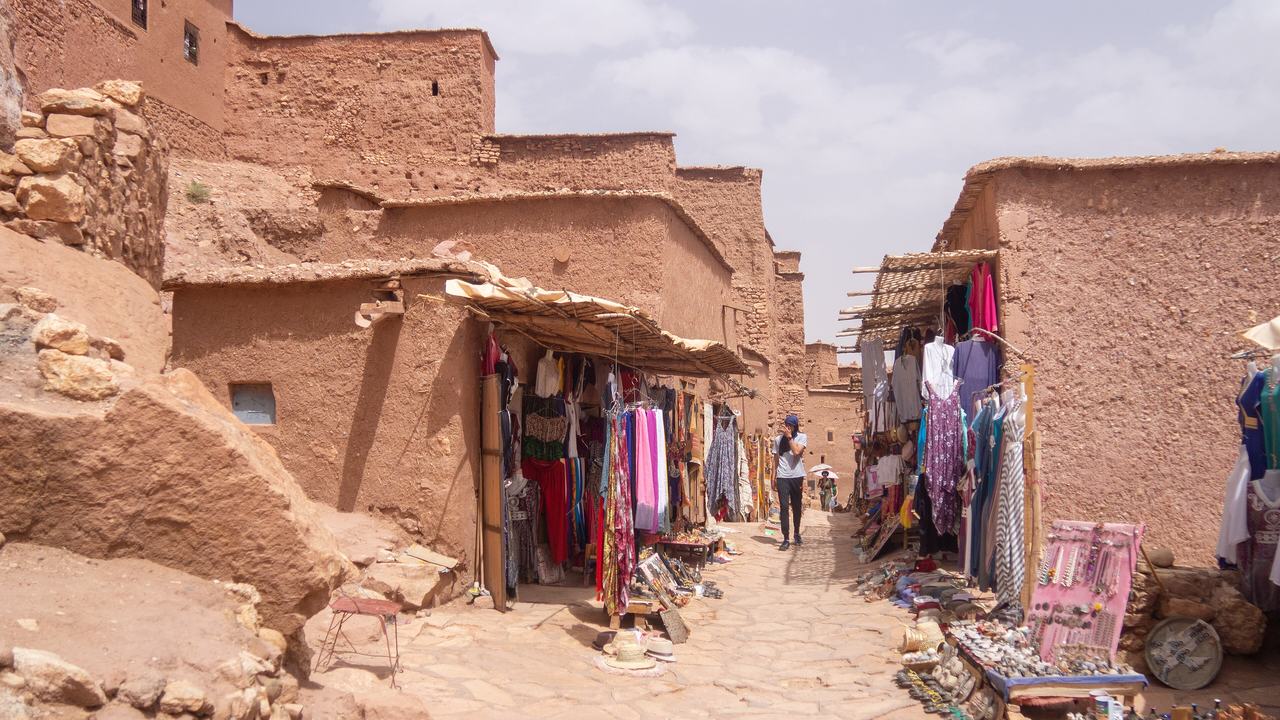
Inside, narrow lanes and stairways wind up between the houses. Some families open their homes to visitors for a small fee, which is a good way to see the rooms, the kitchen and the terraces. Artists sell paintings made with saffron, tea and indigo, often "revealed" by heating the paper over a flame — a nice souvenir, and fun to watch.
The granary at the top
Keep climbing to the ruined granary at the summit of the hill. The view is the reward: the ksar below, the green ribbon of the river, the palm groves and the stony plateau stretching away towards the mountains. Allow one and a half to two hours for the whole visit.
The best time to visit
- Late afternoon is magical: the low sun turns the earthen walls deep orange, and the day-trippers start to leave.
- Early morning is the quietest time, with soft light and cooler air.
- Midday in summer is very hot, with little shade on the upper slopes.
In terms of seasons, spring and autumn are ideal. Winter days are often clear and bright, but nights are cold and snow can affect the Tizi n'Tichka pass.
Getting there from Marrakech
Aït Benhaddou lies on the road from Marrakech to Ouarzazate, across the Tizi n'Tichka pass. Without stops, the drive takes about three and a half hours; with photo stops and lunch, it fills a beautiful day. Our Marrakech to Ouarzazate guide describes the whole road.
With our Marrakech to Ouarzazate private transfer, scenic stops on request are included, so you can visit the ksar on the way before continuing to your hotel. At the time of writing, it costs from €150 per vehicle for up to four passengers, €170 for a van for up to seven and €220 for a minibus. Entry fees, meals and guides are extra.
You can also take the quieter road via Telouet and the Ounila valley, which reaches Aït Benhaddou from the north — our Telouet kasbah guide explains this beautiful detour.
Can you visit it as a day trip from Marrakech?
It is possible, but the return drive is long — around seven hours on the road in total. We honestly recommend staying at least one night in Aït Benhaddou or Ouarzazate, so you can enjoy the sunset and the calm of the evening.
Where to stay
Guesthouses in the modern village across the river offer rooms and terraces with views of the ksar — waking up to that view is unforgettable. Ouarzazate, half an hour away, has a wider choice of hotels; our guide to the things to do in Ouarzazate will help you plan.
Practical tips
- Wear good shoes for the river crossing and the climb.
- Bring water, a hat and sunscreen; shade is rare on the hill.
- Carry cash for house visits, drinks and souvenirs.
- Leave the drone at home: drones are not allowed into Morocco without authorisation.
- Respect the residents: some houses are still homes, so ask before photographing people.
Aït Benhaddou is also the natural gateway to the south. If the desert is calling, read our guide to a desert trip from Marrakech — and let us know your dates so we can plan the road over the Atlas with you.